Source Adjustable Height Balance Beam for Racing, Fitness, and Entertainment
Find 30 Adjustable Height Balance Beam options from China. Compare models with wood, steel, and aluminum materials. View specs for racing, fitness, and entertainment uses. Request quotes for customized OEM/ODM solutions; compare the available evidence and request quotations based on your requirements.
Key considerations
Products List


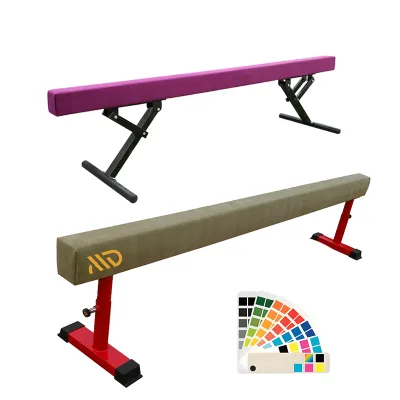
Fig Standard Gymnastic Training Equipment Adjustable Balance Beam for Sale
$1450.00 - $1700.00
MOQ: 4 Pieces

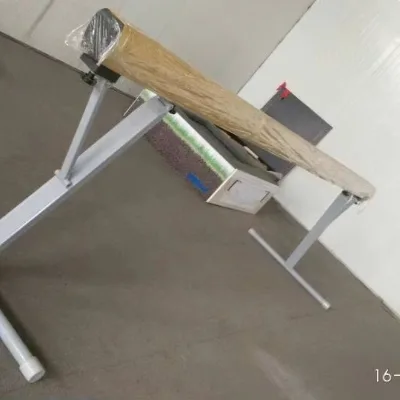
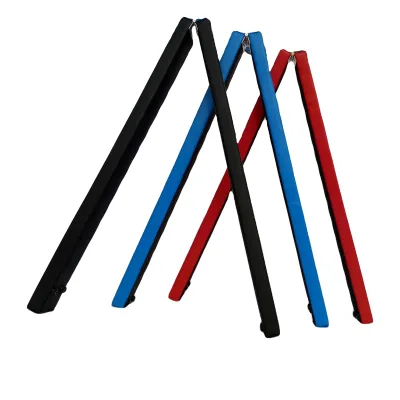
New Product Gymnastics Equipment Floor Competition Training Balance Beam
$15.00 - $100.00
MOQ: 5 Pieces




Comprehensive Sourcing Guide
Adjustable Height Balance Beam Sourcing Guide
An Adjustable Height Balance Beam is a core item for gymnastics training facilities, schools, and children's indoor activity centers, and it is also one of the easier products to misjudge during cross-border procurement. Because the category spans children's recreational beams and competition-oriented training equipment, two listings that look similar in photographs can differ substantially in material construction, adjustment mechanism, and intended user weight. Buyers entering this category should therefore begin by defining their own use case precisely: whether the beam will serve children's indoor play, general fitness programming, or progressive gymnastics training with racing and entertainment usage, since the product attributes observed in current listings cover all of these.
This guide walks through the full sourcing decision in seven stages. It starts with how to read the signals already visible in product listings, then moves into the technical specifications that must be confirmed before ordering, the safety documentation responsible buyers should request, the commercial terms that drive landed cost, and finally the supplier qualification and ongoing quality checks that protect repeat orders. Throughout, only verifiable listing attributes and standard category knowledge are used; where a fact must come from the supplier, the guide says so explicitly rather than assuming a value on your behalf.
Product Scope and Observed Listing Signals
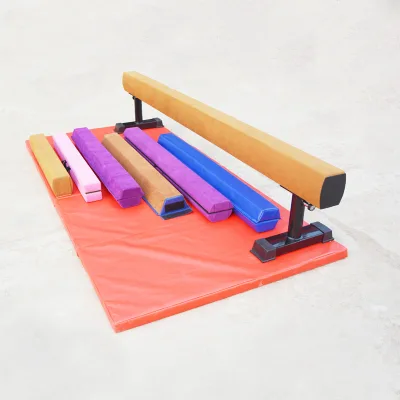
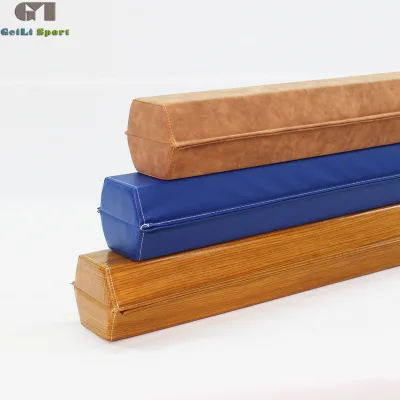
Current listings in this category cluster around a small number of recognizable product families. Wooden balance beams appear with suede-style surfaces, some accepting a Velcro end connection, offered in a five-meter length. Adjustable models are listed with a working height range of 0.9 to 1.4 meters in 50-millimeter increments, using an aluminium oval bar covered with nonskid leather, while other children's beams combine red pine with a steel frame at sizes such as 340 by 45 by 30 centimeters. Model numbers like LDK5019A through LDK5019D, LDK51009, LDK50005, and MD-ET2008 suggest established, cataloged designs rather than one-off builds. Stated origins are China, with Hebei and Shandong provinces represented.
Beyond dimensions, the listing signals that matter most to a buyer are the commercial posture attributes. Multiple listings state that customization is available, that OEM and ODM work is accepted, that a 12-month warranty applies, and that goods ship new in multi-layer protective packaging such as EPE plus woven sack. Minimum order quantities in observed listings run from a single item upward, and stated price ranges span from very low single-digit-dollar items to equipment priced in the thousands of dollars, confirming how wide the quality spectrum is. Treat these attributes as seller-declared observations to be verified, not guarantees that every listing satisfies them.
Technical Specifications to Verify
The first specification to lock down in writing is the height adjustment system itself. One observed listing declares an adjustable range of 0.9 to 1.4 meters with 50-millimeter variations; confirm whether your supplier's mechanism uses pinned supports, telescoping legs, or a crank, and request the exact increment and the locking method. Ask how many adjustment positions exist, whether the mechanism can be operated by one person, and what prevents accidental slippage under load. Length is the second anchor: five meters is a stated standard, but children's beams at 340 centimeters also circulate, so match length to your floor plan and user age group before comparing quotes.
Material construction deserves equal scrutiny because listings range from solid wood with suede surface to steel frames with nonskid-covered surfaces, red pine plus steel hybrids, and aluminium oval bars covered in nonskid leather. For each candidate, request the wood species, treatment against moisture, the covering material and its attachment method, and the steel gauge or tubing specification. Confirm total product weight, since this governs both stability in use and freight cost. Finally, verify assembly requirements: listings note the equipment ships knocked down for assembling, so ask what tools, hardware, and instruction documentation are included and whether assembly is a one-person or two-person job.
Compliance and Safety Documentation
Observed listings declare a certificate set of CE, NSCC, ISO9001, ISO14001, and OHSAS, which is a strong starting signal but should never be accepted at face value. Request the actual certificate copies with scope, issuing body, and validity dates, and check that the scope covers balance beams or indoor sports equipment rather than an unrelated product family. For children's products in particular, ask which toy or playground safety requirements the design has been evaluated against, and what test reports exist for the surface material, coatings, and structural strength. Where a supplier claims conformance to a standard you do not recognize, ask for the report itself.
Buyers supplying schools or commercial play venues should also press on chemical and mechanical safety details that listings rarely state: formaldehyde and heavy-metal limits in wood finishes, phthalate content in any polymer components, and sharp-edge or pinch-point review of the adjustment mechanism. Additionally, some listing pages reference standards such as ASTM F1487 for playground equipment and ASTM F963 for toys; treat these as category reference points to discuss with the supplier rather than confirmed certifications, and ask which, if any, the specific beam has been tested to. Document every answer in the purchase contract so compliance responsibility is allocated before shipment.
Cost Drivers and Commercial Terms
Unit cost in this category is driven by four controllable variables: material choice, adjustment mechanism complexity, covering quality, and order quantity. A solid wood beam with a suede surface and Velcro connection will price differently from a steel-framed adjustable unit with an aluminium oval bar and leather covering, and the observed price spread from roughly one dollar to two thousand dollars across the category reflects exactly this spread in construction. Customization also moves price: custom logos, custom colors such as grey steel or red, and custom packaging are all offered in listings, but each typically adds setup cost, especially at low volumes.
On commercial terms, observed MOQs start at a single item, which favors sample-first buying, but unit prices will improve meaningfully at container-level quantities within the observed MOQ ceiling of around 200 pieces. Clarify incoterms, whether pricing is EXW, FOB, or CIF, and confirm what the four-layer safety packaging described in listings, EPE plus weaving sack, includes versus what requires an upgrade. The stated 12-month warranty should be negotiated into explicit terms: what defects are covered, whether replacement parts ship free, and who bears freight. Payment structure, typically deposit with balance before shipment, should be agreed in writing alongside inspection rights before final payment.
Supplier Qualification and Quality Control
Qualify suppliers through a staged process rather than a single inquiry. Start with a document review: business license, the declared ISO9001 and ISO14001 certificates, and factory photos or a live video walk-through showing beam production, welding or woodworking stations, and the packing line. Verify how long the supplier has produced balance beams specifically, since model numbers such as LDK5019A through LDK5019D indicate an evolved product line, and ask which models are produced in-house versus assembled from purchased components. Confirm OEM and ODM capability directly by asking for examples of previous custom logo or custom color projects.
Quality control should be anchored to a pre-shipment inspection on the first order and on any order with a new specification. Define an inspection checklist covering dimensional accuracy against the agreed size, for example the 5-meter length or the 340 by 45 by 30 centimeter children's format, adjustment function across the full height range, surface covering adhesion, weld and joint integrity, and packaging drop-readiness. Require photos of the actual production run, not stock images, at the packing stage. For repeat orders, keep a retained sample from the approved shipment and specify that subsequent batches must match it, with tolerance limits agreed in the contract.
Long-Term Procurement Checks
Long-term value in this category depends less on the first order than on the repeatability of the second and third. Build a supplier scorecard covering on-time shipment, dimensional consistency between batches, response time on spare-part requests, and warranty claim handling under the stated 12-month terms. Track which components fail first in your own usage environment, typically adjustment hardware, covering seams, or end connections, and negotiate a standing spare-parts kit or agreed part pricing so a single worn component does not force full-unit replacement. Confirm that customization commitments, such as branded logos or custom colors, remain reproducible across future production runs.
Also plan for product evolution and compliance drift. Standards expectations for children's equipment can tighten, and a beam that passed review two years ago may need refreshed documentation for new tenders or insurance requirements; schedule an annual documentation refresh with your supplier covering certificates, test reports, and material declarations. Reconfirm origin and manufacturing location periodically, since listings indicate production in Hebei and Shandong, China, and factory relocations can affect lead time and consistency. Finally, review landed cost annually against freight changes and material price movements, and use your accumulated order history as leverage for improved pricing tiers or priority production slots during peak seasons.
FAQs
What is the standard length of an adjustable balance beam?
The standard length is 5 meters, as specified in the product details. This dimension supports various fitness and entertainment uses. Some models offer customizable lengths to fit specific facility requirements. Buyers should verify the exact length during the customization process to ensure it meets their space constraints and operational needs.
Can the height of the balance beam be adjusted?
Yes, the height is adjustable, typically ranging from 0.9 to 1.4 meters with variations of 50mm. This feature allows users to adapt the beam for different skill levels or training exercises. The adjustable mechanism ensures versatility for both children and adults, making it suitable for diverse fitness and recreational applications.
What materials are used in the construction of these beams?
Materials vary by model, including wood, red pine with steel, or aluminium oval bars covered with nonskid leather. Some versions use a nonskid surface with steel frames. These materials are chosen for durability and safety. Buyers can select based on preferred aesthetics, weight, and specific performance requirements for their intended usage environment.
Is customization available for branding and specifications?
Customization is available, including customized logos and specific design adjustments. OEM and ODM services are offered to meet unique brand requirements. Buyers can request tailored packaging and surface materials. This flexibility allows businesses to align the product with their market identity while maintaining the core functional integrity of the balance beam.
What certifications do these balance beams hold?
Certifications include CE, NSCC, ISO9001, ISO14001, and OHSAS. These standards ensure quality management and environmental responsibility. Buyers should verify specific certification documents for each model. Compliance with these standards is crucial for international trade and ensures the product meets recognized safety and manufacturing benchmarks for global distribution.
What is the minimum order quantity for these beams?
The minimum order quantity is 1 unit, allowing for flexible purchasing. This low MOQ supports trial orders and small-scale procurement. Buyers can order single items for testing or immediate needs. This policy facilitates easier entry for new clients and reduces initial investment risks while allowing for scalable ordering as demand grows.