Source Adjustable Multi-Pole Circuit Breaker Lockout for Household, Industrial, Commercial
Find 30 Adjustable Multi-Pole Circuit Breaker Lockout options from Zhejiang suppliers. Compare models like BD-D06 and BD-D81-7 with customizable colors, CE and ISO certifications, and various payment terms for household, industrial, and commercial applications.
Key considerations
Products List


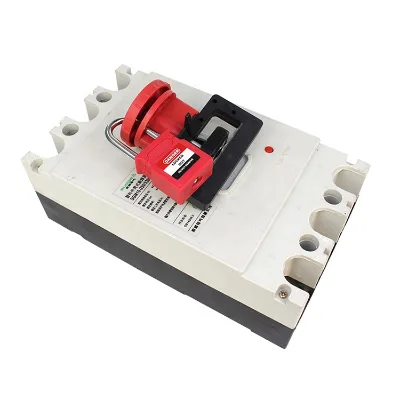

Pull Rod Lock Single or Multistage Miniature Circuit Breaker Safety Lockout
$0.50 - $0.80
MOQ: 500 Pieces


Electrical Lockout Safety Miniature Circuit Breaker Lockout with Fixed Handle
$0.50 - $0.80
MOQ: 500 Pieces

Comprehensive Sourcing Guide
Strategic Sourcing Guide for Adjustable Multi-Pole Circuit Breaker Lockouts
Understanding Product Variants and Technical Specifications
When sourcing adjustable multi-pole circuit breaker lockouts, buyers must first navigate the diverse technical specifications that define product utility. The core keyword implies a device capable of securing multiple poles simultaneously, yet the market offers distinct models tailored to specific breaker types. Based on available product data, the industry provides solutions ranging from miniature circuit breakers to larger molded case circuit breakers. For instance, specific models such as the BD-D05-1 and BD-D05-2 are explicitly designated for use with large circuit breakers, while the BD-D14 model is engineered for breaker handle widths less than 7.7mm. This distinction is critical; a lockout designed for a miniature breaker may not physically engage or secure a larger molded case unit effectively.
Material composition is another primary technical differentiator. The supply chain features products constructed from a blend of plastic and A3 steel, offering a balance of durability and cost. Other variants utilize PA (Polyamide) or Nylon PA, materials known for high impact resistance and electrical insulation properties. The standard for some units is listed simply as "plastic," while others adhere to ABS standards. Buyers should verify that the material selected matches the environmental conditions of the installation site, particularly regarding exposure to chemicals, UV radiation, or extreme temperatures. Furthermore, the physical dimensions are a key constraint; one observed specification lists a size of 49*25mm, which dictates the clearance required around the breaker handle. The application scope is equally varied, with some units suitable for most European and Asian circuit breakers, while others are customized for specific regional standards.
Compliance, Certification, and Regulatory Standards
In the realm of industrial safety, compliance is not merely a formality but a prerequisite for liability protection and operational safety. The sourcing landscape for circuit breaker lockouts presents a mix of certifications that buyers must scrutinize. Commonly observed certifications include CE, ISO9001, ISO14001, and OHSAS18001. These standards indicate that the manufacturer adheres to specific quality management, environmental management, and occupational health and safety protocols. However, the presence of these certifications on a product page does not automatically guarantee that every single unit in a shipment meets the exact same rigorous testing criteria.
Buyers must distinguish between the product standard and the certification status. While some listings cite CE as a product standard, others list it alongside ISO9001 as a certification. It is vital to verify that the specific model being purchased carries the relevant certification for the target market. For example, products originating from Zhejiang, China, often carry CE marks for European export, but the buyer must confirm that the certification is current and valid for the specific batch. The documentation should explicitly state which standards apply to the specific model number, such as the BD-D06 or BD-D81-7. Relying on general statements like "CE" without model-specific verification can lead to non-compliance issues during safety audits. Additionally, the term "OHSAS18001" suggests a focus on occupational health and safety, which is directly relevant to the lockout/tagout (LOTO) function of these devices.
Cost Drivers and Pricing Dynamics
The pricing structure for adjustable multi-pole circuit breaker lockouts is influenced by several factors, including material composition, customization levels, and order volume. The observed price range in the market spans from $0.10 to $6.63 USD. This wide variance suggests that the unit price is highly sensitive to the specific model and the complexity of the manufacturing process. A basic plastic lockout for a standard miniature breaker will likely sit at the lower end of this spectrum, whereas a customized unit made from a blend of A3 steel and plastic, or one with specific color requirements, will command a higher price.
Volume is a significant driver in this category. The Minimum Order Quantity (MOQ) varies widely, ranging from as low as 1 unit to as high as 500 units. This flexibility allows small workshops to procure single units for immediate needs, while large industrial facilities can leverage bulk purchasing to reduce the per-unit cost. However, buyers should be aware that the lowest price points often correspond to standard configurations. Any request for customization, such as specific branding, unique colors, or tailored dimensions, typically increases the cost. The payment terms also play a role in the financial planning of the procurement; standard terms often require a full T/T (Telegraphic Transfer) in advance, which impacts cash flow. Additionally, shipping terms like FOB (Free on Board) or specific delivery windows of 3-5 days after payment receipt can influence the total landed cost, especially when factoring in logistics and insurance.
Typical Applications and Operational Context
The operational context of circuit breaker lockouts is diverse, spanning household, industrial, and commercial environments. The product data indicates that these devices are suitable for a wide array of usage scenarios. In industrial settings, the focus is often on large circuit breakers where safety is paramount during maintenance. The BD-D05 series, for example, is explicitly noted for its suitability for large circuit breakers, making it a primary choice for heavy machinery maintenance. In commercial and household applications, the requirements may shift towards miniature breakers, where space is limited and the lockout mechanism must be compact yet effective.
The application also dictates the mounting method. Most units are designed to be fixed by glue or screw, providing flexibility in installation depending on the surface material and the permanence required. For temporary lockouts, a screw-in mechanism might be preferred for ease of removal, while permanent installations might utilize adhesive bonding. The color coding is another application-specific consideration. Standard colors include red and yellow, but the availability of other colors upon customization allows organizations to implement color-coded safety systems. For instance, red might denote a high-voltage lockout, while yellow indicates a low-voltage or general maintenance lockout. The ability to customize colors supports complex safety protocols where multiple teams are working on different parts of a system simultaneously.
Supplier Evaluation and Service Capabilities
Evaluating a supplier for circuit breaker lockouts requires a deep dive into their service capabilities and operational transparency. The market offers suppliers who provide OEM (Original Equipment Manufacturer) services, allowing buyers to customize the product with their own branding or specific design requirements. This "Support Customization" feature is a key differentiator, enabling companies to align the lockout devices with their internal safety standards. Buyers should verify the extent of this customization; does it include only color changes, or does it extend to material selection and dimensional adjustments?
The origin of the product is another critical factor in supplier evaluation. A significant portion of the supply originates from Zhejiang, China, a region known for its manufacturing capabilities in electrical components. While this offers competitive pricing, buyers must assess the supplier's ability to maintain consistent quality across batches. The availability of free samples is a strong indicator of a supplier's confidence in their product and their willingness to engage in a trial phase. This allows buyers to physically inspect the product for fit, finish, and material quality before committing to a larger order. Furthermore, the transportation options—ranging from express, sea, to air—provide flexibility in managing logistics based on urgency and budget. A supplier offering multiple transportation modes demonstrates a robust logistics network capable of meeting diverse delivery needs.
Quality Control and Long-Term Procurement Considerations
Ensuring long-term reliability requires a robust quality control strategy. The packaging of these products, often listed as "Carton" or "25 PCS in Box," plays a crucial role in protecting the units during transit. However, the internal quality control measures taken by the manufacturer are equally important. Buyers should inquire about the testing procedures used to validate the strength of the locking mechanism and the durability of the materials. While specific test results are not always publicly listed, the presence of certifications like ISO9001 suggests a structured approach to quality management.
For long-term procurement, the consistency of the supply chain is vital. The lead time of 3-5 days after receiving payment is relatively short, which is beneficial for maintaining inventory levels. However, buyers should plan for potential delays, especially during peak seasons or when custom orders are involved. The payment terms, typically requiring full T/T in advance, necessitate a strong relationship of trust with the supplier. To mitigate risks, buyers should consider starting with smaller orders to test the supplier's reliability before scaling up. Additionally, the availability of spare parts or replacement units should be confirmed, as the lockout devices are critical safety equipment that may need replacement after extended use or accidental damage.
Comparative Analysis of Product Models
To assist in decision-making, the following table compares key attributes of the observed product models. This comparison highlights the differences in application, material, and specifications that influence the purchasing decision.
| Model Number | Primary Application | Material Composition | Key Specification | Color Options |
|---|---|---|---|---|
| BD-D06 | General Signage | Plastic and A3 Steel | Customizable | Red; Others Custom |
| BD-D81-7 | General Use | ABS | Size: 49*25mm | Red; Others Custom |
| BD-D05-1 | Large Circuit Breakers | PA (Polyamide) | Suitable for Large Breakers | Yellow; Others Custom |
| BD-D05-2 | Large Circuit Breakers | PA (Polyamide) | Suitable for Large Breakers | Yellow; Others Custom |
| Bd-D05-4 | Household/Industrial | Plastic | Net Weight: 23G | Red, Yellow |
| BD-D14 | Breaker Handle <7.7mm | Nylon PA | Handle Width <7.7mm | Red, Yellow |
This table illustrates that while the core function remains the same, the specific model selection depends heavily on the breaker type and the required material properties. The BD-D05 series is clearly targeted at heavy-duty applications, whereas the BD-D14 is specialized for smaller handle widths. Understanding these nuances ensures that the procurement team selects the correct tool for the specific safety task at hand.
Final Procurement Recommendations
In conclusion, sourcing adjustable multi-pole circuit breaker lockouts requires a balanced approach that considers technical fit, regulatory compliance, and supplier reliability. Buyers should prioritize models that match their specific breaker types and handle dimensions, ensuring that the material composition meets the environmental demands of the installation site. Verification of certifications and standards is non-negotiable, as these documents provide the necessary assurance of safety and quality. By leveraging the flexibility in customization and understanding the cost drivers associated with volume and material, procurement teams can secure a supply chain that supports robust safety protocols. The availability of samples and diverse transportation options further empowers buyers to make informed decisions, ensuring that the selected lockouts provide long-term protection and compliance with industry safety standards.
FAQs
What certifications do adjustable multi pole circuit breaker lockouts carry?
These lockouts typically carry CE, ISO9001, ISO14001, and OHSAS18001 certifications. Buyers should verify that the specific model number, such as BD-D14, explicitly lists these standards on the product page to ensure compliance with safety protocols.
Which materials are used for adjustable multi pole circuit breaker lockouts?
Manufacturers use materials like Plastic, A3 Steel, PA, and Nylon PA for construction. Some models specify ABS standards, while others use a blend of plastic and steel to balance durability and cost for different industrial applications.
How can I customize the color of these lockout devices?
Customization is available for colors like Red and Yellow, with other options possible upon request. The product features support for customization, allowing buyers to select specific hues to match their internal safety color-coding systems.
What is the minimum order quantity for these circuit breaker lockouts?
The minimum order quantity ranges from 1 to 500 units depending on the supplier and model. Small workshops can order single units, while larger facilities may leverage bulk purchasing to reduce per-unit costs significantly.
Can I get free samples of adjustable multi pole circuit breaker lockouts?
Free samples are available for eligible buyers to verify product quality before bulk ordering. This service allows clients to inspect the fit and finish of models like BD-D06 or BD-D14 before committing to a larger purchase.
Which models are suitable for large circuit breakers?
Models such as BD-D05-1 and BD-D05-2 are explicitly designed for large circuit breakers. These units utilize PA material and are engineered to secure larger handles effectively compared to miniature breaker lockouts.
How long does shipping take after payment is received?
Shipping usually takes 3 to 5 days after receiving full payment in advance. Buyers can choose transportation methods including express, sea, or air depending on their urgency and logistical requirements for the delivery.