Source Adjustable Warehouse Storage Shelving for Industrial, Food, Supermarket
Explore 30 listings for Adjustable Warehouse Storage Shelving designed for industrial, food, and supermarket applications. Buyers can compare features like load capacity, height, and customization options across multiple suppliers in China.
Key considerations
Products List


$0.90 - $1.20
MOQ: 1000 kg




Comprehensive Sourcing Guide
Strategic Sourcing Guide for Adjustable Warehouse Storage Shelving
Understanding Adjustable Pallet Racking Systems
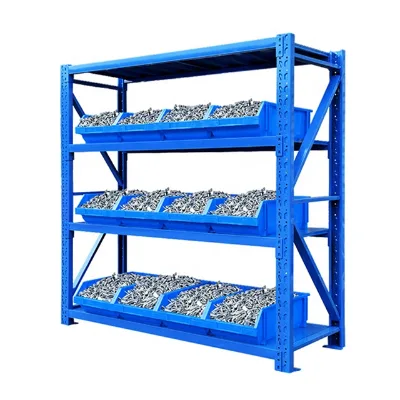
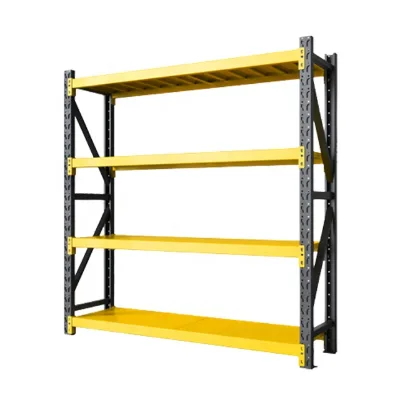
The procurement of Adjustable Warehouse Storage Shelving represents a critical decision for logistics managers and industrial facility planners. The core objective is to secure a system that maximizes vertical space while maintaining the flexibility to adapt to changing inventory profiles. Based on current market observations, the primary category for this equipment is "Pallet Racking," which often features a "Beam-Type Composite Structure" designed for heavy-duty industrial applications. These systems are distinct from fixed shelving units because they offer "Adjustable" mobility, allowing users to reconfigure shelf heights without specialized tools or structural modifications.
The structural integrity of these systems is paramount. The observed market data indicates that the primary construction material is "Steel," chosen for its high tensile strength and durability. This material choice supports a wide range of load capacities, with specific observations noting layer load capacities between 500kg and 4000kg. The height of these units is equally variable, with observed ranges spanning from 5 meters to 15 meters, catering to facilities with varying ceiling clearances. The "Structure" is typically defined as a "Rack" or "Layer Frame," depending on the specific configuration required for the storage medium. Whether the application involves a "Warehouse Rack," "Industrial" facility, "Supermarket," or "Tool Rack," the fundamental design principles remain consistent: stability, modularity, and safety.
Technical Specifications and Configuration Flexibility
When evaluating adjustable shelving, buyers must scrutinize specific technical parameters that define the system's performance. A critical specification is the pitch adjustment mechanism. Market data highlights a specific adjustment increment of "75mm /Pitch," which allows for precise vertical positioning of beams to accommodate items of varying heights. This granularity ensures that space is not wasted on empty vertical gaps, a common inefficiency in rigid storage systems.
The "Usage" profile of these units is broad, covering sectors such as food processing, beverage distribution, clothing storage, and general tool organization. This versatility is supported by the "Development" status of the products, which ranges from "New Type" innovations to "Conventional" designs. Buyers should note that while some models are standard, others offer "Customization" in terms of dimensions and load ratings. For instance, the "prod_standard" field often lists "customization" or specific load ranges like "0-3000KG," indicating that the load capacity is not a fixed universal value but a configurable parameter.
Furthermore, the environmental adaptability of the shelving is a key technical consideration. The observed "Temperature" rating covers "Common Warehouse / Cold Storage," suggesting that certain models are engineered to withstand lower temperatures without compromising structural integrity. This is essential for industries requiring refrigerated storage solutions. The "Layout Design" is frequently described as "Free," implying that the system can be configured to fit irregular floor plans or specific workflow requirements. However, buyers must verify the specific "prod_packing" standards, which vary from "Standard Export Pack" to "Wooden Pallet" or "Standard Cartons," as packaging affects the condition of the goods upon arrival and the ease of on-site assembly.
Compliance, Certification, and Safety Standards
In the B2B procurement of industrial racking, compliance is not merely a formality but a prerequisite for operational safety and insurance validity. The market data reveals a mix of certification statuses, with "ISO" and "ISO9001/ISO14001/ISO18001" appearing as common credentials. These certifications indicate that the manufacturer adheres to international standards for quality management, environmental management, and occupational health and safety. Specifically, the presence of "ISO9001" suggests a commitment to consistent product quality, while "ISO14001" and "ISO18001" (now often referred to as ISO45001) point to environmental and safety protocols.
Buyers must exercise caution regarding certification claims. While "SGS" is listed as a standard in some product observations, and "CE" appears in background data, these should be treated as verification points rather than automatic guarantees. The "prod_standard" field often lists "customized," which means the product may not adhere to a single universal standard but rather to a specific agreement between the buyer and supplier. Therefore, procurement teams should request current, valid certificates for each specific batch or model before finalizing a contract.
Additionally, the "Surface Treatment" process is a critical compliance factor. The observed "Electrostatic Spraying" method is a standard industry practice for preventing corrosion and ensuring a long service life. This treatment is particularly important for units intended for "Cold Storage" or environments with high humidity. Buyers should verify that the surface treatment process aligns with the specific environmental conditions of their facility. Relying on unverified claims about "CE" certification or other standards without physical documentation can lead to significant liability issues in the event of a structural failure.
Cost Drivers and Pricing Dynamics
The pricing of Adjustable Warehouse Storage Shelving is influenced by a complex array of factors, including material costs, customization levels, and logistical requirements. The observed price range in the market spans from $0.5 to $1,250 USD, a vast disparity that reflects the difference between individual components (such as beams or uprights) and complete, high-capacity racking systems. It is essential for buyers to understand that the unit price is rarely a standalone metric; it is often dependent on the total volume and the specific configuration of the order.
Several key variables drive the final cost. First, the "Load Capacity" is a primary cost driver. Systems designed to support 4000kg per layer will inherently cost more than those rated for 500kg due to the increased steel thickness and reinforcement required. Second, the "Height" of the system significantly impacts material usage and shipping volume. Units reaching 15 meters require more steel and specialized engineering compared to 5-meter units. Third, the "Customization" level plays a major role. While "Standard Export Pack" items may be more affordable, fully customized dimensions or unique surface treatments will incur additional charges.
The "MOQ" (Minimum Order Quantity) is another critical financial consideration. The observed MOQ range is 1 to 1000 units, with specific models requiring a minimum of "100 Bays." This high threshold for certain configurations can affect the total cost of ownership for smaller projects. Buyers with lower volume needs may need to negotiate with suppliers or seek out standard models to avoid prohibitive minimums. Additionally, the "Production Time" of 7-15 days for a 1*20FCL (20-foot container) load suggests that lead times can vary based on order size and factory capacity. Buyers should factor these timelines into their budget planning to avoid storage penalties or operational delays.
Typical Applications and Industry Use Cases
Adjustable Warehouse Storage Shelving serves a diverse array of industries, each with unique requirements for storage density and accessibility. The "Usage" data indicates that these systems are deployed in "Warehouse Rack," "Industrial," "Food," "Supermarket," "Tools," "Clothing," and "Beverage" environments. In industrial settings, the "Beam-Type Composite Structure" is ideal for storing heavy machinery parts or raw materials, where the "500-4000kg/Layer" capacity is essential.
The food and beverage sectors often require systems that can withstand "Cold Storage" temperatures. The "Common Warehouse / Cold Storage" temperature rating suggests that specific models are engineered with materials and coatings that resist condensation and corrosion in low-temperature environments. Similarly, supermarkets and retail distribution centers utilize these racks for high-turnover inventory, where the "Adjustable" nature allows for rapid reconfiguration based on seasonal product changes.
For tool and clothing storage, the "Layer Frame" structure provides a more compact solution, often found in workshops or retail backrooms. The "Tool Rack" application highlights the need for organized, accessible storage for smaller, high-value items. In all these scenarios, the "Layout Design" being "Free" allows for optimization of the facility's floor plan, ensuring that the shelving system integrates seamlessly with existing workflows. Whether the application is for bulk storage in a logistics hub or specialized storage in a manufacturing plant, the versatility of adjustable shelving makes it a foundational element of modern supply chain infrastructure.
Supplier Evaluation and Quality Control Protocols
Selecting the right supplier is as critical as selecting the right product. The market data shows origins in "Nanjing," "Suzhou Jiangsu," "Hebei," and generally "China." While these locations indicate a robust manufacturing base, buyers should not assume uniform quality across all suppliers from these regions. Instead, the evaluation process should focus on the supplier's ability to provide verifiable documentation.
Quality control begins with the verification of certifications. Buyers should demand current copies of "ISO9001/ISO14001/ISO18001" certificates and confirm their validity with the issuing bodies. The "Surface Treatment" process, specifically "Electrostatic Spraying," should be inspected for consistency and thickness to ensure long-term durability. Furthermore, the "prod_packing" method must be scrutinized to ensure that the goods are protected during transit. "Standard Export Pack" and "Wooden Pallet" options are common, but the specific packaging details should be agreed upon in the contract to prevent damage.
The "Production Time" of 7-15 days for a standard container load is a benchmark, but buyers should verify the supplier's actual capacity to meet this timeline. Delays in production can disrupt entire supply chains. Additionally, the "MOQ" requirements should be clearly understood to avoid unexpected costs. Suppliers who offer "Free" layout design services can be particularly valuable, as they can optimize the storage solution to fit the specific constraints of the buyer's facility. However, this service should be backed by engineering expertise and a track record of successful installations.
Long-Term Procurement and Lifecycle Management
The procurement of Adjustable Warehouse Storage Shelving is a long-term investment that requires careful lifecycle management. The "Development" status of the products, ranging from "New Type" to "Conventional," suggests that buyers should consider the longevity and supportability of the system. "Conventional" designs often have a longer track record and may offer easier access to replacement parts, whereas "New Type" innovations might offer superior efficiency but could carry higher risks regarding part availability.
Maintenance and serviceability are key factors in the total cost of ownership. The "Serviceability" is noted as "Common Use," indicating that these systems are designed for routine industrial maintenance. Buyers should establish a protocol for regular inspections, particularly for the "Beam-Type Composite Structure" and the "Adjustable" mechanisms. The "75mm /Pitch" adjustment mechanism should be checked for wear and tear to ensure smooth operation over time.
Furthermore, the "Load Capacity" ratings should be regularly reviewed to ensure they align with current inventory weights. Overloading a rack, even if it is rated for 4000kg, can lead to structural fatigue and failure. Buyers should also consider the "Standard" of the product, which may be "customized," and ensure that any modifications made to the system do not void warranties or compromise safety. Finally, the "Production Time" and "MOQ" considerations should be integrated into the procurement strategy to ensure a steady supply of replacement parts or expansion units as the business grows. By treating the shelving system as a dynamic asset rather than a static purchase, buyers can maximize the return on investment and maintain a safe, efficient storage environment.
FAQs
What is the load capacity range for Adjustable Warehouse Storage Shelving?
Layer load capacities typically range from 500kg to 4000kg depending on the specific model configuration. Some systems support up to 3000kg per layer, while others are rated for 300-800kg, requiring verification of the exact model specification before purchase.
How high can Adjustable Warehouse Storage Shelving units be constructed?
These units can be constructed with heights ranging from 5 meters to 15 meters to maximize vertical space. The specific height depends on the facility ceiling clearance and the chosen structural design, such as beam-type composite structures or layer frames.
Can Adjustable Warehouse Storage Shelving be customized for specific needs?
Yes, customization is available for dimensions, load ratings, and surface treatments like electrostatic spraying. Buyers can request specific packing methods such as wooden pallets or standard export packs to suit their logistics requirements.
What certifications are commonly associated with Adjustable Warehouse Storage Shelving?
Common certifications include ISO9001, ISO14001, and ISO18001, indicating adherence to quality and safety standards. Some products may also reference SGS standards, though buyers should verify current certificates for each specific batch.
How long does production take for a standard container load of shelving?
Production time is typically 7 to 15 days for a 1x20-foot container load. This timeline can vary based on the level of customization required and the specific factory capacity at the time of order.
What is the minimum order quantity for Adjustable Warehouse Storage Shelving?
Minimum order quantities range from 1 unit to 1000 units, with some specific models requiring a minimum of 100 bays. Buyers should check the MOQ for the specific model to ensure it aligns with their project volume.
Where are Adjustable Warehouse Storage Shelving units typically manufactured?
Manufacturing origins include Nanjing, Suzhou Jiangsu, Hebei, and other locations across China. Buyers should verify the specific origin for each supplier to understand shipping logistics and potential regional quality variations.