Find Adjustable Vaulting Table for Gymnasiums, Schools, and Training Centers
Source 30 Adjustable Vaulting Table options for gymnastics training and school facilities. Buyers can compare specifications including load capacity, dimensions, and material strength to select the right equipment for their needs.
Key considerations
Products List


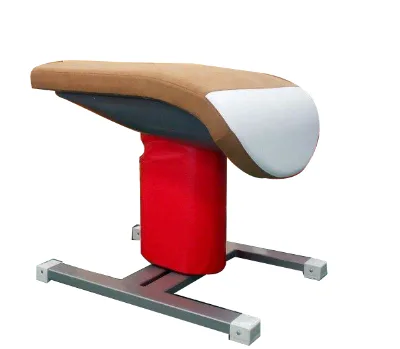


Wholesale Shaker Table Gold Goncentrator Table Machine Gold Shaker Table
$1700.00 - $2300.00
MOQ: 1 Pieces


$150.00 - $500.00
MOQ: 1 Pieces


Comprehensive Sourcing Guide
Strategic Sourcing Guide for Adjustable Vaulting Tables
Understanding the Product Landscape and Technical Specifications
When initiating a procurement strategy for adjustable vaulting tables, buyers must first distinguish between the specific terminology used in industrial lifting contexts and the specialized equipment required for athletic or training applications. The provided market data indicates a strong presence of "Warehouse Scissors Cargo Lifts" and "Fixed Scissor Lift Platforms" with models such as TP-CL-01 and Sjgh1-2.3. While these units share the fundamental mechanical principle of a scissor lift mechanism, their application is explicitly defined for industrial environments like building cranes, warehouse operations, shipboard cranes, and workshop settings. A buyer seeking an "Adjustable Vaulting Table" for gymnastics or sports training must carefully verify if the industrial scissor lift models listed are suitable for human load-bearing or if they are strictly designed for cargo and goods.
The technical specifications observed in the current market for scissor-based lifting platforms reveal a diverse range of capabilities. The load capacity for these industrial units spans from 1 ton to 100 tons, with specific model examples citing capacities of 1000kg and 2000kg. The lifting mechanism typically relies on hydraulic systems, utilizing oil cylinders to drive the scissor action. Power sources are predominantly electric, often paired with AC-driven types, though some configurations may utilize magnetic brakes for safety. The physical dimensions are highly variable; platforms may measure 1800mm by 1200mm or 1230mm by 1220mm, with maximum heights reaching up to 2800mm and minimum heights as low as 185mm. For a vaulting table application, the critical distinction lies in the "Running Mode." The observed data lists both "Stationary" and "Moving" modes, with self-propelled options available. A vaulting table generally requires a stationary, fixed installation to ensure stability during high-impact athletic maneuvers, whereas the "Moving" or "Self-propelled" attributes found in the data suggest mobility for material handling rather than static athletic support.
Compliance, Certification, and Safety Standards
Safety and regulatory compliance are paramount when sourcing equipment that supports human activity, even if the primary market data focuses on cargo lifts. The observed products frequently list certifications such as ISO, CE, and GS. These are critical indicators of adherence to international safety and quality standards. The presence of ISO and CE certifications suggests that the manufacturing processes and product designs have undergone specific conformity assessments. However, buyers must not assume that a product certified for "Explosion-Proof" or "Insulating" features for industrial cargo automatically meets the specific safety requirements for human gymnastics equipment.
The material composition is another vital compliance factor. The supply chain data highlights the use of "High Strength Steel" for the structural components, which is essential for durability. However, for a vaulting table, the surface materials and padding are equally important. The data mentions "Metal Fiber" as a medium material in the context of filter cartridges, which is irrelevant to the vaulting table structure but highlights the diversity of materials in the broader supplier catalog. Buyers must explicitly verify that the "High Strength Steel" used in the scissor mechanism is treated or coated to prevent corrosion and that any moving parts, such as the hydraulic cylinders and magnetic brakes, are enclosed or guarded to prevent pinch points.
Furthermore, the "Installation Method" observed in the data is listed as "Horizontal." This is a standard configuration for floor-mounted lifts. For a vaulting table, the installation must be rigid and level to prevent tipping. The "Customization" attribute is available in the market, which is a positive signal for buyers who need specific dimensions or safety features tailored to their facility. However, buyers should verify that any customizations do not void existing certifications. The "Standard" listed as 1300820990 appears to be a dimensional reference rather than a safety standard code; buyers should request the specific safety standard codes (e.g., ASTM, EN) relevant to gymnastics equipment rather than relying on general product dimensions.
Cost Drivers and Pricing Dynamics
The pricing landscape for lifting platforms is highly variable, with observed listed prices ranging from $7.4 to $14,000 USD. This wide disparity is driven by several key factors. The primary cost driver is the load capacity. Units capable of lifting 100 tons will naturally command a significantly higher price than those rated for 1 ton. The complexity of the hydraulic system also influences cost; models with advanced "Automatic" operation types and specific motor brands like Siemens, Dongyuan, or Wannan may carry a premium over generic electric motors.
The "Driven Type" is another significant cost factor. While "AC" and "Hydraulic" are both observed, the integration of high-performance hydraulic systems with electric power sources often increases the manufacturing cost. Additionally, the "Material" quality plays a role; "High Strength Steel" is a standard, but the grade and thickness of the steel will affect the final price. The "Packing" method, observed as "Wooden Crate," "Wrapping Film," or "Fumigated Wood Case," adds to the logistical costs, particularly for international shipping.
The "MOQ" (Minimum Order Quantity) ranges from 1 to 500 units. Buyers seeking a single Adjustable Vaulting Table for a specific facility may find the lower end of this range accessible, but bulk procurement could unlock better pricing tiers. The "Carrying Capacity" is listed as "Special Weight Level" or "Light Level" in different contexts, which suggests that the market offers both heavy-duty industrial solutions and lighter, perhaps more affordable, options. Buyers should be aware that the lowest price point ($7.4) likely corresponds to a very basic, small-scale unit or a component, whereas the upper end ($14,000) represents a fully featured, high-capacity industrial lift. For a vaulting table, the cost must be balanced against the need for human safety features, which may not be present in the lowest-cost cargo lift models.
Typical Applications and Functional Suitability
The primary applications for the scissor lift platforms observed in the data are industrial: building cranes, warehouse operations, shipboard cargo handling, and workshop environments. These applications prioritize the movement of goods, materials, and heavy equipment. The "Usage" is explicitly defined as "Goods Lift Cargo Lift." This distinction is crucial for a buyer researching "adjustable vaulting tables." A vaulting table is a piece of sports equipment designed for human athletes to vault over, requiring specific stability, surface friction, and impact absorption characteristics that differ significantly from cargo handling.
While the mechanical principle of the scissor lift is adaptable, the intended use case dictates the design. The "Feature" set observed includes "Explosion-Proof" and "Insulating," which are tailored for hazardous industrial environments, not athletic facilities. The "Lifting Mechanism" of "Hydraulic, Scissor Lift, Oil Cylinder" is robust but must be evaluated for its suitability in a dynamic human environment. The "Operation Type" being "Automatic" is beneficial for industrial efficiency but may introduce latency or control issues for a human operator adjusting a vaulting table in real-time.
Buyers must critically assess whether the "Stationary" running mode is sufficient for their needs. If the vaulting table needs to be repositioned, the "Moving" or "Self-propelled" attributes found in the data might be relevant, but these are typically designed for moving loads, not for supporting a human in mid-air. The "Platform" dimensions observed (e.g., 1800mm*1200mm) are large and could potentially serve as a base for a vaulting table, but the surface finish and safety padding are not mentioned in the industrial data. Therefore, the typical applications listed in the source data should be viewed as a starting point for mechanical similarity, not as a direct match for athletic usage.
Supplier Evaluation and Geographic Considerations
The geographic origin of the products is a key factor in supplier evaluation. The data indicates that the primary production location is "Shandong, China," with a general origin of "China." Shandong is a known manufacturing hub for heavy machinery and lifting equipment. Buyers should verify the specific factory location within this region to assess logistics and lead times. The "Product Origin" being listed as "China" suggests that the supply chain is centralized, which can be advantageous for cost but requires careful vetting of individual suppliers.
When evaluating suppliers, buyers should look for those who explicitly offer "Customization" services. Since the standard industrial models are designed for cargo, a supplier willing to customize the platform for human use is essential. The "Model" numbers observed, such as TP-CL-01, Sjgh1-2.3, and Sjg2-0.3, indicate a range of product lines. Buyers should request detailed specifications for these specific models to ensure they meet the structural requirements of a vaulting table. The "Motor Brand" options, including Siemens, Dongyuan, and Wannan, provide insight into the quality of components used. A supplier using top-tier brands like Siemens may indicate a higher commitment to reliability and safety.
The "Packing" standards, such as "Plywood Packing" or "Fumigated Wood Case," are important for international shipping compliance. Buyers should ensure that the supplier adheres to the "Standard" of 1x20'GP for container loading if shipping large quantities. The "Air Volume" and "Filter Cartridge" data, while relevant to dust collectors, indicate that some suppliers may offer a broad range of industrial products. Buyers should ensure they are dealing with a specialist in lifting platforms rather than a generalist who might not understand the nuances of vaulting table safety.
Quality Control and Long-Term Procurement Considerations
Quality control for adjustable vaulting tables must extend beyond the mechanical lifting capability. The "Material" of "High Strength Steel" is a positive indicator, but buyers must verify the welding quality, surface treatment, and fatigue resistance of the scissor arms. The "Brake Type" being "Magnetic Brake" is a specific feature that requires regular maintenance checks to ensure it engages correctly under load. For a vaulting table, the braking system must be fail-safe to prevent any unintended movement during use.
Long-term procurement considerations include the availability of spare parts and maintenance support. The "Lifting Mechanism" involving "Oil Cylinders" and "Hydraulic" systems requires periodic fluid checks and seal replacements. Buyers should inquire about the "Lead Time" for replacement parts, although specific data is not provided in the source. The "Customization" availability suggests that buyers can order specific spare parts or modifications, but this should be confirmed with the supplier.
The "Installation Method" being "Horizontal" implies a floor-mounted setup. Buyers must ensure that the facility floor can support the concentrated loads of the lift mechanism. The "Min. Height" and "Max. Height" ranges observed (e.g., 185mm to 2800mm) provide a baseline for adjustability, but for a vaulting table, the range may need to be more limited to ensure safety. The "Dust Collecting Method" and "Filter Cartridge" data, while irrelevant to the table itself, suggest that some suppliers may offer integrated environmental controls, which could be a value-add for large training facilities.
Buyers should also consider the "Running Mode" in the context of long-term use. A "Stationary" mode is generally preferred for vaulting tables to minimize the risk of accidental movement. If a "Moving" or "Self-propelled" feature is desired for repositioning, the locking mechanisms must be robust. The "Product Standard" listed as 1300820990 is a dimensional reference, but buyers should request the specific safety standards that the product complies with, such as those for gymnastics equipment, to ensure long-term compliance and safety.
Final Procurement Recommendations
In conclusion, sourcing an Adjustable Vaulting Table requires a nuanced approach that bridges the gap between industrial lifting technology and athletic safety requirements. The market data provides a solid foundation of mechanical specifications, including scissor lift mechanisms, hydraulic drives, and high-strength steel construction. However, the primary applications listed are for cargo and goods, necessitating a careful evaluation of whether these units can be adapted for human use. Buyers should prioritize suppliers who offer customization, verify certifications like ISO and CE, and ensure that the specific safety features required for gymnastics are integrated into the design. By focusing on the technical specifications, compliance checks, and long-term maintenance needs, buyers can identify a supplier that delivers a safe, durable, and effective Adjustable Vaulting Table. The wide range of prices and capacities observed allows for flexibility, but the ultimate decision must be grounded in the specific safety and performance requirements of the intended application.
FAQs
Can adjustable vaulting tables be customized for specific dimensions?
Yes, customization is available for these lifting platforms to meet specific needs. Buyers can request tailored dimensions such as platform size or height, but must verify that customizations do not void existing ISO or CE certifications for safety compliance.
What load capacities are available for scissor lift platforms?
Load capacities range from 1 ton to 100 tons depending on the model. Specific examples include units rated for 1000kg and 2000kg, utilizing high-strength steel and hydraulic mechanisms to ensure stability during operation.
Which certifications do these lifting platforms typically hold?
Products frequently hold ISO, CE, and GS certifications indicating adherence to international safety standards. These certifications confirm the manufacturing processes meet quality requirements, though buyers must verify specific safety codes for human use.
How are these units powered and driven?
Units are primarily powered by electric sources with AC-driven types or hydraulic systems. Some models feature magnetic brakes for safety and utilize oil cylinders to operate the scissor lift mechanism efficiently.
What are the standard packaging methods for these products?
Packaging options include wooden crates, wrapping film, fumigated wood cases, or plywood packing. These methods ensure safe transport, with specific standards like 1x20'GP container loading often applied for international shipments.
Can these platforms be moved or are they stationary?
Both stationary and moving modes are available, with some self-propelled options existing. While stationary units offer stability for fixed installations, moving units are designed for material handling rather than static athletic support.
Where are these lifting platforms manufactured?
The primary production location is Shandong, China, with general origins listed as China. Buyers should verify specific factory details within this region to assess logistics, lead times, and supplier reliability.