Source Adjustable Waistband Running Vest for hiking, trekking, and camping
Explore 30 verified listings for an Adjustable Waistband Running Vest designed for outdoor sports. Buyers can compare features like water resistance, capacity, and customization options to find the best fit for trekking, mountaineering, and hiking activities.
Key considerations
Products List
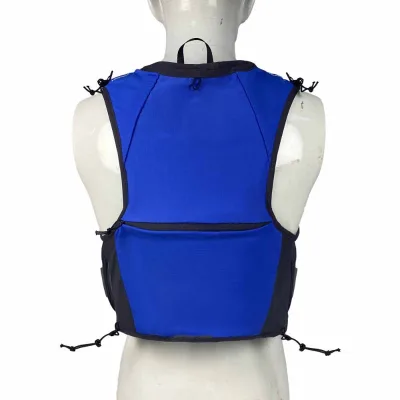

Reflective Adjustable Waistband Sports Running Vest Hydration Jogging Running Vest
$7.80 - $8.80
MOQ: 500 Pieces


Adjustable Weighted Vest Workout Vest for Strength Training Running Walking
$27.45 - $27.55
MOQ: 100 Pieces




Comprehensive Sourcing Guide
Strategic Sourcing Guide for Adjustable Waistband Running Vests
The global market for outdoor athletic apparel has seen a significant surge in demand for hydration and utility vests, particularly those designed for long-distance running, trail hiking, and mountaineering. For procurement professionals and B2B buyers, the specific niche of "adjustable waistband running vests" presents a unique set of challenges and opportunities. Unlike standard t-shirts or jerseys, these garments require precise engineering to ensure stability during high-impact movement while maintaining comfort and hydration capacity. This guide provides a comprehensive, evidence-based framework for sourcing these products, focusing on technical specifications, supplier verification, and quality assurance protocols derived from current market data and industry standards.
Technical Specifications and Functional Design
When evaluating running vests, the primary technical differentiator is the integration of an adjustable waistband with a secure, multi-compartment storage system. The core function of these vests is to carry hydration bladders, nutrition, and emergency gear without impeding the runner's stride. Based on observed product attributes, the ideal vest for this category typically features a "Stretch fabric" or "Polyester" construction, ensuring the garment moves with the body while maintaining durability. The "Water Resistant" or "High Waterproof" capability is a critical specification, as outdoor sports often expose equipment to unpredictable weather conditions.
The physical dimensions of the vest are equally vital. Sourcing data indicates that successful models often adhere to specific size constraints, such as a single package size of approximately 42x20x10 cm or a gross weight ranging between 0.4 kg and 0.8 kg. These metrics suggest a lightweight design intended for "Light Weight" performance. The "Adjustable Straps" mentioned in product profiles are essential for securing the vest to the torso, but the "adjustable waistband" is the specific feature that prevents the vest from bouncing or shifting during high-intensity activities. Buyers must verify that the waistband mechanism, often utilizing a "Zipper" or "Closed Way" system, allows for fine-tuning across different body types, including "Unisex" sizing.
Furthermore, the internal architecture must support "Multiple compartments" to organize gear efficiently. The "Capacity" of these vests is generally categorized as "Under 20L," which is sufficient for hydration bladders and essential supplies without becoming cumbersome. The "Season: All" designation implies that the material and design must be versatile enough for use in varying temperatures, from summer marathons to cooler autumn treks.
Compliance, Certification, and Safety Standards
In the B2B procurement of athletic gear, compliance is not merely a formality but a prerequisite for market access and liability protection. While specific certification statuses can vary by supplier, the industry generally looks for adherence to recognized management and safety standards. Sourcing data highlights the presence of certifications such as "Bscl/Is09001/Sedex" and "Bsclsedextuv,Is0901," indicating that reputable manufacturers often maintain ISO 9001 quality management systems and Sedex ethical trading audits.
Buyers should explicitly verify the "Certificate" status of potential suppliers. Although some background information mentions "CE" or "EN 20471," these should be treated as verification targets rather than guaranteed attributes unless explicitly confirmed in the supplier's documentation. The "Standard" for the product itself may be "customized," meaning the manufacturer must align with the buyer's specific technical requirements rather than a generic industry norm.
The "Quality: Top Level" claim found in product listings is a subjective observation and must be substantiated through objective testing. Procurement teams should request third-party test reports that validate the "Waterproof Level" and the durability of the "Stretch fabric" under stress. Ensuring that the supplier holds valid "Is09001" certification is a strong indicator of a consistent manufacturing process, but it does not guarantee the performance of a specific batch of vests. Therefore, a robust compliance strategy involves requesting current certificates and cross-referencing them with the specific product model numbers, such as "DS-A240205" or "RUN602," to ensure the certification applies to the exact item being ordered.
Cost Drivers and Pricing Structures
Understanding the cost structure of adjustable waistband running vests is essential for negotiating favorable terms. The observed price range in the market spans from USD 4.6 to USD 47.99, a wide variance that reflects differences in material quality, branding, and order volume. Several key factors drive these costs. The primary driver is the "Material" composition; vests utilizing high-grade "Polyester" or specialized "Stretch fabric" with "High Waterproof" coatings will command a premium over basic polyester blends.
The "MOQ" (Minimum Order Quantity) is another significant cost determinant. The data indicates a typical MOQ of 500 pieces, though ranges can extend from 1 to 1000 units. Ordering at or above the 500-piece threshold often unlocks better unit pricing. Additionally, the "Customization" level heavily influences cost. Options such as "Customized Logo Accepted," "Customer Logo," or specific "Color" selections like "Blue" or "Pink" add to the production complexity and expense.
Sample costs also play a role in the initial budgeting phase. A "Sample cost" of USD 50 is a common benchmark, with a "Sample time" of 7-15 days or 10-15 days. Buyers should factor these initial costs into their total procurement budget, understanding that they are often deductible from the final bulk order invoice. The "Selling Units" being listed as "Single item" suggests that while the MOQ is 500, the logistics of shipping and packaging are calculated per individual unit, impacting the overall landed cost.
Typical Applications and Use Cases
The versatility of adjustable waistband running vests makes them suitable for a wide array of "Outdoor Sports." The product attributes explicitly list "Trekking, Outdoor, Mountaineering, Hiking, Camping" as primary use cases. However, the core keyword "running vest" points to a specialized application in endurance sports. The "Hydration Jogging Running Vest" designation confirms that these products are engineered for runners who need hands-free access to water and nutrition.
The "Suit for" category extends beyond just running to include "Mountaineering" and "Trekking," where the ability to carry gear securely over long distances is paramount. The "Adjustable Straps" and "Adjustable waistband" are critical for these activities, ensuring the vest remains stable on uneven terrain. The "Light Weight" attribute is particularly relevant for "Running" and "Jogging," where excess weight can lead to fatigue. Conversely, for "Camping" or "Mountaineering," the "Multiple compartments" and "Water Resistant" features become the primary selling points, allowing users to organize tools, food, and emergency supplies efficiently.
Buyers should consider the "Season: All" attribute when planning their inventory. This suggests that the product is not limited to summer use but is viable for year-round outdoor activities. The "Gender: Unisex" specification further broadens the market potential, allowing retailers to stock a single SKU that serves a diverse customer base, reducing inventory complexity.
Supplier Evaluation and Verification
Selecting the right supplier is the most critical step in the sourcing process. The provided data lists several attributes that can serve as verification points. A reliable supplier should demonstrate a clear "place of origin," with "Fujian, China" being a prominent manufacturing hub for this category. The "Brand Name" associated with the product, such as "Dowsenbags," can be a starting point for research, but buyers must ensure they are dealing with the actual manufacturer or an authorized distributor.
The "Support: OEM/ODM" attribute is a strong indicator of a supplier's flexibility. It suggests the manufacturer is capable of producing private-label goods or customizing designs according to the buyer's specifications. This is essential for brands looking to differentiate their product line. Buyers should verify the "Customization: Available" status and confirm the specific capabilities regarding "Logo" placement and "Color" options.
When evaluating suppliers, the "Single gross weight" and "Single package size" are practical metrics for logistics planning. For instance, a weight of 0.4 kg or 0.5 kg per unit and a package size of 42x20x10 cm will significantly impact shipping costs and container utilization. Suppliers who provide accurate "prod_packing" details, such as "1 PC Flat Into a Polybag" or "PP Bag + Master Carton," demonstrate a level of professionalism in their packaging and shipping protocols.
Quality Control and Long-Term Procurement
Quality control (QC) must be integrated into every stage of the procurement lifecycle. The "Quality: Top Level" claim observed in product listings is an internal assertion and must be validated through external inspection. Buyers should implement a rigorous QC plan that includes pre-production sample approval, in-process checks, and pre-shipment inspections. Key areas to focus on include the integrity of the "Zipper" closure, the durability of the "Stretch fabric," and the effectiveness of the "Waterproof Level."
Long-term procurement considerations involve establishing a relationship with a supplier who can consistently meet the "MOQ" of 500 pieces and maintain the "Sample Time" of 7-15 days. The ability to scale production while maintaining quality is crucial. Buyers should also consider the "Standard" of the product, ensuring that any "customized" standards are clearly documented and agreed upon in the contract.
The "prod_standard" of 441740cm or similar dimensions should be strictly adhered to during production to ensure product consistency. Any deviation in size or weight could lead to customer dissatisfaction. Furthermore, the "Certification" status should be reviewed annually to ensure ongoing compliance with international standards.
Comparative Analysis of Product Attributes
To assist in decision-making, the following table summarizes key attributes observed in the market for adjustable waistband running vests. This comparison highlights the variability in specifications and helps buyers identify the features that align with their specific needs.
| Attribute Category | Observed Specification A | Observed Specification B | Procurement Consideration |
|---|---|---|---|
| Material | Stretch fabric | Polyester | Verify fabric blend for durability vs. flexibility. |
| Water Resistance | Water Resistant | High Waterproof | Match waterproof level to intended climate/usage. |
| MOQ | 500 pcs | 500PCS | Confirm if 500 is the absolute minimum or negotiable. |
| Sample Time | 10-15 days | 7-15 days | Plan lead times accordingly for urgent orders. |
| Weight | 0.4 kg | 0.800kg | Lighter weights preferred for running; heavier for camping. |
| Packaging | 1 PC Flat Into a Polybag | PP Bag + Master Carton | Assess packaging for retail readiness vs. bulk shipping. |
| Certification | Bscl/Is09001/Sedex | Bsclsedextuv,Is09001 | Verify current validity of certificates. |
| Model Number | DS-A240205 | RUN602 | Ensure model number matches the specific design requested. |
Conclusion
Sourcing adjustable waistband running vests requires a meticulous approach that balances technical performance, compliance, and cost efficiency. By focusing on verified attributes such as material composition, waterproofing levels, and certification status, buyers can mitigate risks and ensure the delivery of high-quality products. The wide range of applications, from competitive running to casual hiking, underscores the versatility of these garments, making them a valuable addition to any outdoor sports inventory. Ultimately, successful procurement depends on rigorous supplier evaluation, clear communication of specifications, and a commitment to ongoing quality control.
FAQs
What is the typical MOQ for adjustable waistband running vests?
The typical minimum order quantity is 500 pieces. Some suppliers may accept orders starting from 1 unit, but bulk pricing usually requires meeting the 500-piece threshold to ensure cost efficiency.
How long does sample production take for these vests?
Sample production typically requires 7 to 15 days. Buyers should expect a sample cost of around USD 50, which may be deductible from the final bulk order invoice upon confirmation.
Which certifications do manufacturers usually hold for this product?
Manufacturers often hold ISO 9001, Sedex, and TUV certifications. These standards verify quality management systems and ethical trading practices, ensuring the supplier meets international compliance requirements.
Can I customize the logo and color of the running vest?
Yes, customized logos and colors like blue or pink are available. Suppliers support OEM and ODM services, allowing buyers to specify branding and design details to match their brand identity.
What is the waterproof level of the stretch fabric used?
The fabric features a high waterproof level to protect gear. This ensures the vest remains water-resistant during outdoor sports like hiking or running, even in unpredictable weather conditions.
Where are these vests typically manufactured?
These vests are typically manufactured in Fujian, China. This region is a known hub for producing outdoor sports apparel with established supply chains for materials like polyester and stretch fabric.
What is the capacity range for hydration running vests?
The capacity is generally under 20 liters. This size is sufficient for carrying hydration bladders and essential gear without adding excessive weight during long-distance running or mountaineering activities.