Source Adjusting PH Chemical Liquid Eductor for Lab Study, Teaching, Medical
Find and compare 30 products for Adjusting PH Chemical Liquid Eductor suitable for school training, medical research, and laboratory studies. Buyers can review specifications like accuracy, response time, and output signals to select the right equipment for their needs.
Key considerations
Products List


Differential pH Sensor Enhancing Precision in Liquid Cooling Environments
$139.00 - $163.00
MOQ: 1 Pieces


Oil Volumetric Pump Trainer Teaching Equipment Fluid Mechanics Lab Equipment
$600.00 - $1800.00
MOQ: 1 Pieces




Comprehensive Sourcing Guide
Strategic Sourcing Guide for pH Adjustment and Chemical Liquid Eductor Systems
Understanding the Technical Landscape of pH Control Devices
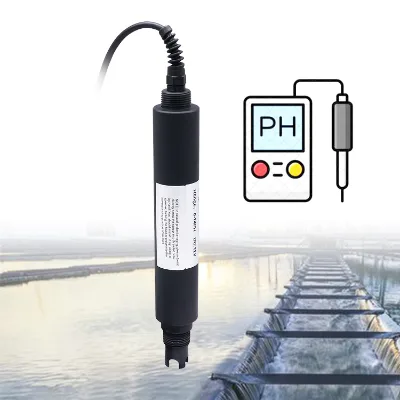
When sourcing equipment for adjusting pH in chemical liquids, buyers must distinguish between active dosing systems, such as eductors, and passive or semi-active measurement and control sensors that facilitate the adjustment process. The provided market data indicates a specific subset of instrumentation focused on electrochemical measurement principles, which are critical for verifying pH levels before and after adjustment. These devices often operate on the principle of electrochemistry, providing high-resolution data necessary for precise chemical balancing. The observed product attributes highlight a "Small Immersion Type" configuration with a direct cable connection, suggesting that for many applications, the primary need is accurate, real-time monitoring rather than the mechanical actuation of an eductor itself.
The technical specifications for these immersion sensors reveal a pH measurement range of 0 to 14, covering the full spectrum of acidity and alkalinity required for most industrial and educational applications. Accuracy is a paramount specification, with observed values reaching 0.01 pH units, which is essential for fine-tuning chemical processes. The response time is noted as 10 seconds in flowing liquids, a metric that dictates how quickly a system can react to a change in chemical composition. For buyers integrating these sensors into a larger pH adjustment loop, this response time determines the latency of the feedback control system. The operating temperature range varies, with some units rated for 0-60℃ and others extending to 0-80℃, necessitating a careful review of the thermal environment where the chemical liquid will be processed.
Compliance and Certification Verification Protocols
In the procurement of scientific and medical instrumentation, verifying compliance with international standards is non-negotiable. The available data points to specific certifications such as CE and RoHS, which are critical for market access in Europe and for ensuring the device does not contain restricted hazardous substances. Additionally, ISO certification is mentioned, indicating adherence to quality management systems. However, buyers must treat these as observations of specific listed products rather than universal guarantees for all pH adjustment equipment.
The electrical safety and environmental protection of the device are equally vital. The observed Ingress Protection (IP) grade is IP68, signifying that the device is dust-tight and capable of continuous immersion in water under conditions specified by the manufacturer. This level of protection is particularly relevant for immersion-type sensors used in chemical liquid environments where splashing or submersion is common. Buyers should verify that the specific model they select matches this IP rating, as lower grades may lead to premature failure in wet chemical environments. Furthermore, the electrical supply requirements, such as 7-30VDC or 16-30VDC, must be compatible with the facility's power infrastructure. The recommended supply voltage of 24VDC for certain instruments suggests a standard industrial control voltage, which simplifies integration but requires confirmation of the specific power supply unit's stability.
Cost Drivers and Procurement Volume Considerations
The cost structure for pH adjustment and measurement systems is influenced by several factors, including the complexity of the sensor, the material composition, and the level of customization available. The observed price range in the market spans from $0.34 to $1,871, a disparity that reflects the difference between simple educational components and complex industrial-grade sensors with advanced signal processing. The lower end of the spectrum likely corresponds to basic educational tools or simple probes, while the higher end encompasses units with digital signal protocols like Hart, advanced output capabilities, and specialized materials.
Minimum Order Quantity (MOQ) is another significant cost driver. The data indicates an MOQ range of 1 to 500 units. For small-scale laboratories or pilot projects, suppliers offering an MOQ of 1 piece allow for low-risk testing and integration. Conversely, large-scale industrial deployments may benefit from bulk purchasing, though the specific price per unit for large volumes is not explicitly defined in the provided facts. Buyers should negotiate based on the total cost of ownership, which includes not only the unit price but also the cost of cables, which are observed to be 5 meters in length, and the potential need for custom modifications. The availability of customization is a key factor for buyers with unique installation requirements, as it allows for tailored cable lengths or connector types, though this may impact lead times and unit costs.
Typical Applications and Operational Environments
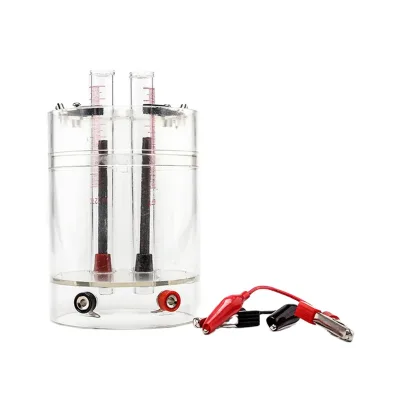
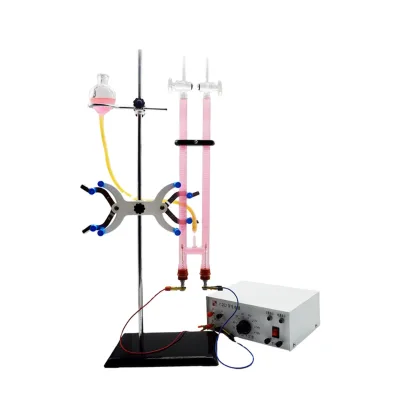
The versatility of pH adjustment and measurement equipment is evident in the wide range of applications described. The data highlights usage in education and science, specifically for primary and secondary schools, teaching, and training. These applications often involve the "Hoffman Water Electrolysis Experimental Device" or similar vertical type diaphragm electrolyzers, which are used to demonstrate chemical principles rather than for large-scale industrial pH control. In these settings, the "Simple Operation" advantage is a critical selection criterion, ensuring that students and educators can focus on the chemical concepts rather than complex instrument setup.
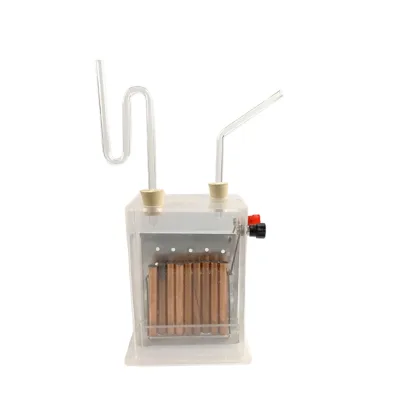
Beyond education, the equipment is utilized in medical research, hospitals, and biochemistry laboratories. The "Water Electrolyte Chemistry Experimental Instrument" is designed for lab studies where precision is paramount. In these environments, the material composition, such as PC+ABS or glass, ensures chemical resistance and durability. The "Natural" color and "Hand painting" craft details suggest a focus on aesthetic and functional design suitable for visible laboratory settings. For industrial applications, the "Direct Cable" connection and "Small Immersion Type" design facilitate easy installation in tanks or pipes where chemical liquids are being adjusted. The ability to operate in a wide temperature range and the robust IP68 rating make these devices suitable for harsh industrial environments where chemical liquids may be hot or corrosive.
Supplier Evaluation and Product Differentiation
Evaluating suppliers requires a deep dive into the specific product attributes and the reputation of the manufacturer. The data identifies "Henan Zhizao" as a brand name associated with these products, originating from Henan, China. While this provides a geographical anchor, buyers should not rely solely on the brand name but must verify the specific model numbers and their corresponding specifications. The market offers a variety of models, including the "RK500-12" for liquid cooling pH sensors and the "803C" or "Z116" for other experimental devices. Each model has distinct characteristics, such as the "Vertical Type Diaphragm Electrolyzer" (Model 2605) versus the "Small Immersion Type" sensor.
Buyers should compare the output capabilities of different models. Some units offer RS485 and 4-20mA outputs, which are standard for industrial automation and allow for integration into Programmable Logic Controllers (PLCs). Others may offer digital signals via the Hart Protocol, providing more advanced diagnostics. The precision of density measurement, noted as 0.001g/cm3 for some instruments, is another differentiator for applications requiring both pH and density monitoring. When evaluating a supplier, buyers must ensure that the product's stated advantages, such as "Simple Operation" or "Direct Cable" connectivity, align with their specific operational needs. It is also crucial to verify the packaging standards, with "1 Piece Per Box" being a common observation, to ensure safe transport and inventory management.
Quality Control and Long-Term Procurement Strategy
Ensuring the long-term reliability of pH adjustment and measurement systems requires a robust quality control strategy. The material specifications, such as "Advanced PVC" or "PC+ABS/Glass+PC+ABS," indicate the durability of the device against chemical exposure. Buyers should request detailed material safety data sheets (MSDS) to confirm compatibility with the specific chemical liquids being handled. The "Hand painting" craft mentioned in the data suggests a level of manual assembly, which can be a double-edged sword; while it may indicate attention to detail, it also necessitates rigorous quality checks to ensure consistency across batches.
For long-term procurement, buyers should consider the maintenance requirements and the availability of replacement parts. The "10 Seconds" response time and "0.01 pH" accuracy are performance metrics that may degrade over time, requiring regular calibration. The "4-20mA Current Output" and "RS485" communication protocols suggest that these devices are designed for integration into automated systems, which reduces the need for manual intervention but increases the complexity of troubleshooting. Buyers should establish a relationship with suppliers who can provide technical support and calibration services. Additionally, the "0-90%" humidity range and "Ambient Temperature" limits of -10 to 60℃ define the environmental boundaries within which the device must operate to maintain its specified accuracy.
Comparative Analysis of Key Product Specifications
To facilitate decision-making, the following table summarizes the key technical specifications observed in the market data for pH-related instrumentation. This comparison highlights the diversity of available options and helps buyers identify the most suitable device for their specific application.
| Specification Category | Observation A (Immersion Sensor) | Observation B (Experimental Device) | Observation C (Industrial Sensor) |
|---|---|---|---|
| Measurement Principle | Electrochemistry | Water Electrolysis | Electrochemistry / Density |
| pH Range | 0-14 pH | N/A (Electrolysis focus) | 0-14 pH (Implied) |
| Accuracy | 0.01 pH | ± 1.5% (General) | 0.001g/cm3 (Density) |
| Response Time | 10 Seconds (Flowing) | N/A | N/A |
| Output Signal | RS485 & 4-20mA | N/A | 4-20mA Current Output |
| IP Rating | IP68 | N/A | N/A |
| Operating Temp | 0-60℃ / 0-80℃ | 0-100℃ | -10 to 60℃ (Ambient) |
| Power Supply | 7-30VDC | 16-30VDC | 24VDC Recommended |
| Material | PC+ABS/Glass | Advanced PVC | N/A |
| Primary Use | Lab Study / Medical | School / Teaching | Industrial / Medical |
This table underscores that while many devices share the electrochemical principle, their specific implementations vary significantly. Buyers must match the specific output, accuracy, and environmental ratings to their process requirements. For instance, a school setting may prioritize the "Simple Operation" and educational focus of the Hoffman device, whereas a medical research facility would require the high accuracy and RS485 connectivity of the immersion sensor. By carefully analyzing these specifications, buyers can make informed decisions that ensure the effective adjustment of pH in chemical liquids while maintaining compliance and operational efficiency.
FAQs
How does the pH sensor measure chemical liquid acidity?
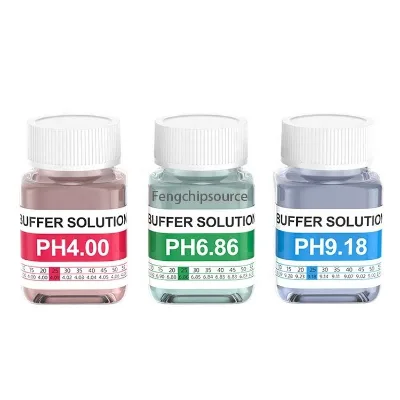
The sensor measures acidity using the electrochemistry principle with a range of 0 to 14 pH. It provides high accuracy of 0.01 pH units and delivers results within 10 seconds in flowing liquids.
What certifications do these pH adjustment instruments hold?
These instruments hold CE, RoHS, and ISO certifications to ensure safety and quality compliance. Buyers should verify specific model documentation as these are observed attributes of listed products rather than universal guarantees.
Which immersion type is best for direct cable connection?
The small immersion type with direct cable connection is ideal for this application. It features an IP68 rating for dust and water protection, allowing continuous immersion in chemical liquids up to 60 degrees Celsius.
Can I customize the cable length for my setup?
Customization is available for buyers with unique installation requirements. Standard cable lengths are observed at 5 meters, but tailored options may affect lead times and unit costs depending on the supplier.
How much does a single pH sensor unit cost?
The observed price range spans from 0.34 to 1871 USD depending on the model and complexity. Simple educational tools are at the lower end, while industrial sensors with advanced protocols cost significantly more.
What is the minimum order quantity for these sensors?
The minimum order quantity ranges from 1 to 500 units depending on the supplier and product type. Small laboratories can often source single pieces for testing, while bulk orders may require higher quantities.
Where are these pH instruments manufactured?
These instruments are manufactured in Henan, China, with Henan Zhizao being a noted brand. Buyers should confirm the specific place of origin for each model to ensure compliance with their regional sourcing policies.