Source Air-Cooled Four-Stroke Marine Engine for Boats, Yachts, and Tenders
Compare 30 air-cooled four-stroke marine engine options with varying power outputs and configurations. Buyers can evaluate specifications like displacement, fuel type, and cooling methods to find suitable units for small boats, yachts, and work tenders.
Key considerations
Products List


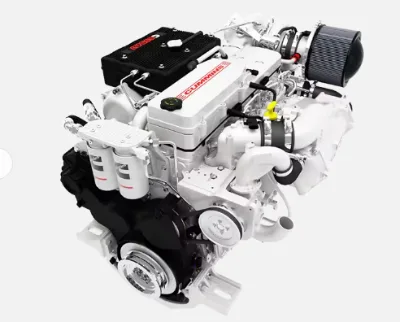

280HP Turbocharged Marine Engine with Intercooler and Charge Air Cooling
$6000.00 - $8000.00
MOQ: 1 Pieces

High Quality Efficient Diesel Marine Engine Advanced Marine Diesel Engine
$26000.00 - $28000.00
MOQ: 20 GP


4 Stroke 6 Cylinders Boat Motor Water-Cooled Weichai Marine Diesel Engine
$4000.00 - $5000.00
MOQ: 1 Pieces


Comprehensive Sourcing Guide
Strategic Sourcing Guide for Air-Cooled Four-Stroke Marine Engines
Procuring a four-stroke marine engine requires a rigorous evaluation of technical specifications, supply chain reliability, and compliance with international maritime standards. While the core keyword suggests an air-cooled configuration, the available market data reveals a complex landscape where cooling systems, cylinder arrangements, and fuel types vary significantly across different product listings. Buyers must navigate between water-cooled industrial diesel units and smaller air-cooled gasoline or diesel outboard options to ensure the selected engine matches the specific operational requirements of their vessel. This guide provides a structured approach to sourcing, emphasizing evidence-based verification of product attributes and supplier capabilities.
Technical Specification Analysis and Cooling System Verification
The primary technical differentiator in this category is the cooling mechanism. The supplied product data explicitly lists "Water-Cooled" as a primary attribute for several high-output engine models, including those with the NTA855, KTA19, and KTA38 designations. These units are characterized by a vertical in-liner, four-stroke configuration with direct injection and turbocharged aspiration. The presence of a "Cooling Cylinder" described as water-cooled indicates that these specific high-power units are not air-cooled. Conversely, other listings in the dataset reference smaller displacement engines with "Engine Capacity" ranging from 1-2L or specific displacements like 196cc, which are often associated with air-cooled designs in the marine sector.
Buyers must exercise extreme caution when filtering for "air-cooled" units. The data shows a mix of "Naturally Aspirated" and "Supercharged" intake pressure impulses, alongside "Compression-Ignition" (Diesel) and "Gasoline" fuel types. For instance, one specific model series (TK139FD, TK140FA) lists a displacement of 196cc and a maximum output of 3.4kw, which aligns with smaller, potentially air-cooled outboard or auxiliary engines. However, other models like the TKF247L and W series are listed with larger capacities and different packing standards, suggesting a broader range of cooling technologies.
The cylinder arrangement is another critical specification. The data confirms an "L" arrangement for certain heavy-duty units, while others are described simply as "Four-Stroke" with "Reciprocating" piston movement. The ignition mode is predominantly "Compression-Ignition" for the larger diesel engines, but "Gasoline" is also listed for smaller units. When sourcing, buyers should verify the cooling method for every specific SKU, as the market contains both water-cooled industrial engines and smaller air-cooled recreational units. Relying on a general category label without checking the specific "Cooling Cylinder" attribute can lead to procurement errors, especially if the vessel's cooling system infrastructure is incompatible with the engine's thermal management design.
Compliance, Certification, and Standard Verification
Navigating the regulatory landscape for marine engines involves verifying adherence to international standards and local maritime regulations. The provided data references the "iso" standard as a general product attribute, though it does not specify the exact ISO number (e.g., ISO 8178 for emissions or ISO 9001 for quality management). Buyers should not assume compliance based solely on the mention of "iso" in a general attribute list. Instead, procurement teams must request specific certification documents from the supplier to confirm that the engine meets the emission standards required for the target market, such as EPA, EU Stage V, or IMO Tier standards.
The dataset also mentions "CE" as a low-confidence background item. This indicates that while CE marking might be present in the broader market, it is not a confirmed, high-confidence attribute for the specific listings provided. Buyers must treat this as a verification point rather than a guarantee. The requirement for CE certification depends heavily on the destination market; for European sales, it is mandatory, but for other regions, it may be irrelevant. Additionally, the data lists specific packaging dimensions, such as "1145440.5cm" and "124x67x53cm," which are standard shipping measurements rather than regulatory certifications.
When evaluating compliance, buyers should also look for evidence of the "Condition" of the engine. The data confirms that units are listed as "New," which is a positive indicator for warranty and performance. However, the absence of specific test results or performance claims in the high-confidence facts means that buyers cannot rely on marketing data alone. The "Standard" attribute in the data sometimes lists dimensions (e.g., "2453x1235x1951mm") rather than technical standards, highlighting the need for buyers to distinguish between physical specifications and regulatory compliance documents.
Cost Drivers and Pricing Structure
The pricing landscape for marine engines is highly variable, with observed listed prices ranging from $77 to $28,000 USD. This wide range reflects the diversity of the product catalog, which includes small, portable 196cc gasoline engines priced at the lower end and large, industrial-grade diesel engines like the NTA855 series at the higher end. The Minimum Order Quantity (MOQ) also varies significantly, from 1 unit to 100 units, influencing the per-unit cost structure.
Several factors drive the cost of these engines. First, the engine type and displacement are primary cost determinants. Larger engines with higher output power, such as those exceeding 6L capacity or offering significant horsepower, command higher prices. Second, the cooling system and aspiration method impact cost; turbocharged and water-cooled systems generally involve more complex manufacturing and higher material costs compared to naturally aspirated, air-cooled units. Third, the brand and origin play a role. The data identifies "Scdc" as a brand and "China" and "Zhejiang Wuyi" as origins. While origin can influence labor and shipping costs, the specific brand reputation and quality control measures are more direct cost drivers.
Buyers should also consider the packaging costs embedded in the price. The data lists various packaging types, including "Plywood Package," "Original Packing," "Wooden Package," "Carton," and "Wooden Cases." Heavy-duty wooden cases for large engines add to the overall cost but are necessary for protection during international shipping. The weight of the units, such as the 2100kg listed for one model, further impacts logistics costs, which may be separate from the unit price or included depending on the Incoterms used.
Typical Applications and Operational Context
The diverse specifications in the data suggest that these engines serve a wide array of applications. The large diesel engines with "Vertical in-Liner" configurations and "Turbocharged" aspiration are typically used in commercial marine vessels, tugboats, or as auxiliary power units (APUs) for larger ships. Their "Direct Injection" combustion type and high displacement make them suitable for heavy-duty, continuous operation where fuel efficiency and torque are paramount.
In contrast, the smaller engines with displacements like 196cc and outputs of 3.4kw are likely intended for small recreational boats, fishing skiffs, or as auxiliary generators. The listing of "Engine Position: Outboard" and "Engine Position: Inboard" indicates versatility in mounting configurations. Outboard engines are common for smaller, agile vessels, while inboard engines are preferred for larger boats requiring a fixed installation. The "Electric Start & Manual Start" systems listed for smaller units highlight their suitability for environments where reliability and ease of use are critical.
The "Fuel Tank Capacity" of 1000ml for smaller units suggests they are designed for short-duration operations or as portable power sources. For larger engines, the fuel tank capacity is not explicitly listed but is implied to be significantly higher given the engine size. Buyers must match the engine's application to the vessel's operational profile. For example, a commercial fishing vessel would require a high-torque, water-cooled diesel engine, whereas a personal watercraft or small dinghy would benefit from a lighter, air-cooled gasoline engine.
Supplier Evaluation and Quality Control Protocols
Evaluating suppliers requires a focus on their ability to provide consistent quality and accurate product information. The data lists "Scdc" as a brand and "China" as the origin, but buyers should not limit their search to a single brand or region. The presence of multiple model numbers (e.g., 4BT, 6BT, 6CT, NTA855, TK139FD) suggests a broad product portfolio, but the variation in specifications indicates that different suppliers may manufacture these models under different quality standards.
Quality control should begin with the verification of the "Condition" of the engine. All listed units are marked as "New," but buyers should request proof of manufacturing date and storage conditions to ensure the engines have not degraded. The "Piston Movement" and "Cylinder Arrangement" should be verified against the physical inspection of the unit upon arrival. For engines with "Compression-Ignition," buyers should verify the fuel injection system's integrity and the turbocharger's condition.
The packaging standards, such as "Plywood Package" and "Wooden Cases," are critical for quality control during transit. Buyers should ensure that the packaging meets the "iso" standards mentioned in the data and is robust enough to protect the engine from moisture and impact. The "Weight" of the units, such as 2100kg, necessitates specialized handling equipment, which suppliers should be able to facilitate. Buyers should also verify the "Start System" functionality, ensuring that both "Electric Start" and "Manual Start" mechanisms operate correctly before finalizing the purchase.
Long-Term Procurement and Maintenance Considerations
Long-term procurement success depends on the availability of spare parts and the ease of maintenance. The "Four-Stroke" design is generally more fuel-efficient and environmentally friendly than two-stroke engines, but it requires regular oil changes and valve adjustments. The "Engine Oil Mixing Ration" of 600ml listed for smaller units indicates specific maintenance requirements that buyers must account for in their operational planning.
Buyers should also consider the "Aspiration" method. Turbocharged engines offer higher power density but may require more frequent maintenance of the turbocharger and intercooler systems compared to naturally aspirated units. The "Intake Pressure Impulse" being either "Supercharged" or "Naturally Aspirated" will influence the long-term maintenance schedule and the availability of specific replacement parts.
Furthermore, the "Fuel Type" is a critical long-term consideration. Diesel engines offer better fuel economy and durability but may require different fuel storage and handling protocols compared to gasoline engines. The "Displacement" and "Maximum Output Power" will determine the fuel consumption rates, which are essential for calculating long-term operational costs. Buyers should also verify the "Engine Position" to ensure that the mounting configuration remains compatible with the vessel's design over its lifespan, as modifications can be costly and complex.
In conclusion, sourcing a four-stroke marine engine involves a careful balance of technical verification, compliance checks, and cost analysis. By focusing on the specific attributes provided in the data and avoiding assumptions about cooling systems or certifications, buyers can make informed decisions that align with their operational needs and long-term maintenance strategies. The wide range of available models and specifications offers flexibility, but it also demands a rigorous due diligence process to ensure the selected engine delivers the performance and reliability required for marine applications.
FAQs
Are air-cooled four-stroke marine engines available in this catalog?
The catalog primarily lists water-cooled industrial diesel engines like the NTA855 series. Smaller units with displacements around 196cc may be air-cooled, but buyers must verify the cooling cylinder attribute for each specific model to confirm the cooling method.
What fuel types are used for these marine engines?
Both diesel and gasoline fuel types are listed across the product range. Larger industrial engines typically use diesel with compression ignition, while smaller outboard units may operate on gasoline, requiring buyers to check the specific fuel type attribute for each model.
Can I find engines with a four-stroke configuration?
Yes, the product data confirms that four-stroke engines are available in this category. These units feature reciprocating piston movement and are offered in various configurations including vertical in-liner designs suitable for both inboard and outboard marine applications.
What is the price range for these marine engines?
Listed prices range from 77 to 28,000 USD depending on the engine size and specifications. Smaller portable units are priced at the lower end, while large industrial diesel engines with turbocharged aspiration command significantly higher prices.
Do these engines come with customization options?
Customization is available for the products listed in this catalog. Buyers can request specific modifications, though they must verify the exact scope of customization with the supplier to ensure it meets their operational requirements.
What packaging standards are used for shipping?
Engines are shipped in various packaging types including plywood packages, wooden cases, and cartons. The specific packaging depends on the engine weight and size, with heavy units often requiring robust wooden cases for protection during transit.