Source Air Cooled MIG Welding Torch for Construction, Machinery, and Hand Use
Find 30 Air Cooled MIG Welding Torch models with varying operating currents, lengths, and certifications. Buyers can compare specifications like duty cycle, wire diameter, and connector types to select the right tool for construction, machinery, or hand applications.
Key considerations
Products List


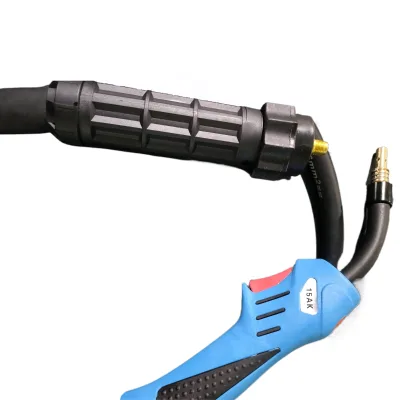


Black Wolf CO2 MIG/Mag Welding Torch
$25.99 - $28.99
MOQ: 5 Pieces
Changzhou Golden Globe Welding and Cutting Equipment Co., Ltd.


Comprehensive Sourcing Guide
Strategic Sourcing Guide for Air Cooled MIG Welding Torches
Selecting the right air-cooled MIG welding torch is a critical decision for industrial procurement teams, as this component directly influences weld quality, operator safety, and production throughput. Unlike water-cooled systems designed for high-amperage continuous duty, air-cooled torches rely on ambient air circulation to dissipate heat, making them ideal for specific operational ranges and environments. This guide synthesizes available market data to help buyers navigate the technical landscape, verify compliance, and evaluate suppliers without relying on unverified claims or speculative pricing models.
Technical Specifications and Performance Parameters
When evaluating air-cooled MIG welding torches, the primary technical differentiator is the operating current rating. The supply chain presents a variety of models with distinct amperage capabilities. For instance, specific models in the current market are rated for 400A when using CO2 gas and 350A when utilizing mixed gases. Other variants, such as the PMT42 series, are observed to handle 400A with CO2 but drop to 260A for mixed gas applications. It is essential to match the torch rating to the specific welding process and gas mixture intended for the application. A mismatch can lead to premature torch failure or inconsistent weld beads.
The physical dimensions of the torch are equally significant. The cable length, which houses the consumables and cooling channels, varies across the market. Observed specifications indicate lengths ranging from 0.9 meters to 1.6 meters for certain compact models, while heavy-duty industrial units may feature lengths of 3 meters, 4 meters, or even 5 meters. The maximum welding thickness is another critical specification; some units are engineered to handle plates between 5mm and 10mm, while others are rated for thicker sections up to 10mm to 15mm. Buyers must verify that the wire diameter compatibility aligns with their filler metal requirements, with observed ranges spanning from 0.8mm to 1.6mm.
Portability and size are also key factors. While some units are described as "standard" size, others are explicitly marketed as "portable," which may influence the choice for mobile welding teams or tight workspace environments. The rear connector type is a crucial interface detail; the Euro connector is a common standard observed in the current inventory, ensuring compatibility with standard welding power sources. However, buyers should always confirm the connector type against their existing equipment to avoid costly adapter purchases or compatibility issues.
Compliance, Certification, and Safety Standards
In the B2B procurement of welding equipment, verifying certifications is non-negotiable. The market data indicates that reputable manufacturers often provide a suite of certifications to demonstrate adherence to international safety and quality standards. Commonly observed certifications include ISO9001 for quality management, CCC for China Compulsory Certification, CE for European conformity, RoHS for restriction of hazardous substances, and TUV for safety testing. Some listings also reference ISOCE and GS marks, which further validate the product's compliance with specific regional safety regulations.
It is important to note that certification status is not uniform across all listed products. While many models carry a "CE" standard, others may be labeled with "International standard" or specific regional marks like "ISOCE." Procurement teams must not assume that every listed product possesses every certification mentioned in the broader market. Instead, buyers should request specific certification documentation for the exact model number being purchased. The presence of a "Natural Gas" attribute in some listings suggests a potential confusion with gas welding torches; buyers must ensure the product is specifically an air-cooled MIG torch and not a gas welding torch intended for oxy-fuel applications, as the safety standards and gas pressures differ significantly.
Cost Drivers and Pricing Structures
The pricing for air-cooled MIG welding torches exhibits a wide variance, with observed ranges spanning from $5 to $1,400 USD. This broad spectrum reflects differences in build quality, brand reputation, amperage ratings, and included accessories. Lower-priced units typically correspond to entry-level models with shorter cable lengths and lower amperage ratings, suitable for light-duty or maintenance tasks. Conversely, high-end models with extended lengths, higher current ratings (such as 400A), and robust cooling systems command premium prices.
Minimum Order Quantity (MOQ) is another significant cost driver. The market shows MOQs ranging from a single unit to 99 units. For small workshops or pilot projects, suppliers offering an MOQ of 1 are preferable to avoid excess inventory costs. However, for large-scale industrial deployments, negotiating MOQs closer to the upper limit of the observed range may unlock volume discounts. Buyers should also consider the packaging format, which varies from neutral packing (1 set per box) to bulk carton packing (5 sets per carton). Bulk packaging can reduce shipping costs per unit but requires adequate storage space and handling capabilities.
Typical Applications and Operational Context
Understanding the intended application is vital for selecting the correct torch. The data indicates that these torches are utilized in both "Hand" and "Machinery" applications. Hand-held operations typically favor lighter, more portable torches with shorter cable lengths to enhance maneuverability. In contrast, machinery applications, such as automated welding cells or robotic arms, often require longer cables (up to 5 meters) to accommodate the reach of the robotic arm and ensure flexibility in the workspace.
The duty cycle is a critical performance metric for continuous operations. An observed duty cycle of 60% is common, meaning the torch can operate at its rated current for 6 minutes out of a 10-minute period without overheating. This specification is crucial for high-volume production environments where continuous welding is required. If the application demands higher duty cycles, buyers must investigate whether the specific model supports extended operation or if water-cooled alternatives are necessary. Additionally, the type of gas used (CO2 vs. mixed gases) affects the thermal load on the torch, and the selected model must be rated for the specific gas mixture to ensure longevity.
Supplier Evaluation and Lead Time Considerations
Evaluating suppliers requires a focus on reliability and transparency. The observed delivery times vary significantly, with some suppliers offering a lead time of 5 to 15 workdays, while others quote a flat 20 days. These timelines can be influenced by the supplier's location, with many products originating from Changzhou, Jiangsu, China. Buyers should verify the actual production capacity and current order backlog of the supplier before committing to a purchase, as lead times can fluctuate based on demand.
When assessing a supplier, look for evidence of consistent quality control and a clear communication channel. The presence of multiple certifications (ISO, CE, RoHS) is a positive indicator, but it should be backed by recent audit reports. Suppliers who provide detailed product specifications, including exact model numbers and technical datasheets, are generally more reliable than those offering vague descriptions. Furthermore, the ability to provide neutral or custom packaging options can be a differentiator for buyers with specific branding or logistics requirements.
Quality Control and Long-Term Procurement Strategy
Implementing a robust quality control (QC) process is essential for mitigating the risks associated with welding equipment procurement. Buyers should establish clear acceptance criteria based on the technical specifications provided, such as operating current, cable length, and connector type. Random sampling and functional testing upon receipt are recommended to verify that the torches meet the stated performance standards. For large orders, third-party inspection services can provide an additional layer of assurance.
Long-term procurement considerations involve building a sustainable supply chain. This includes evaluating the availability of consumables, such as contact tips and nozzles, which are specific to the torch model. A supplier that offers a comprehensive range of compatible consumables can reduce downtime and simplify inventory management. Additionally, buyers should consider the warranty terms and after-sales support. A supplier that stands behind their product with a clear warranty policy demonstrates confidence in their manufacturing quality.
To summarize, sourcing air-cooled MIG welding torches requires a meticulous approach that balances technical requirements, compliance verification, and cost efficiency. By focusing on the specific operating parameters, verifying certifications, and evaluating supplier reliability, buyers can secure high-quality equipment that meets their operational needs. The wide range of available options allows for tailored solutions, but the responsibility lies with the buyer to validate each claim and ensure the selected product aligns with their specific welding applications.
| Specification Category | Observed Range / Value | Verification Requirement |
|---|---|---|
| Operating Current | 250A to 400A (CO2/Mixed) | Confirm gas type compatibility |
| Cable Length | 0.9m to 5.0m | Match workspace reach requirements |
| Wire Diameter | 0.8mm to 1.6mm | Verify filler metal compatibility |
| Duty Cycle | 60% (Common) | Confirm for continuous use needs |
| Certifications | ISO9001, CE, RoHS, TUV, CCC | Request valid certificates per model |
| Lead Time | 5-20 Workdays | Confirm current production schedule |
| MOQ | 1 to 99 Units | Negotiate based on order volume |
| Origin | Changzhou, Jiangsu, China | Verify shipping logistics |
By adhering to these guidelines and maintaining a disciplined approach to verification, procurement teams can effectively navigate the complex market for air-cooled MIG welding torches, ensuring that the final selection delivers optimal performance and value.
FAQs
What operating current ratings are available for air cooled mig welding torches?
Available models support operating currents ranging from 250A to 400A depending on the gas type used. Specific units handle 400A with CO2 gas and 350A with mixed gases, while others may drop to 260A for mixed gas applications.
Which certifications do Air Cooled MIG Welding Torch manufacturers typically provide?
Reputable manufacturers often provide certifications including ISO9001, CE, RoHS, TUV, and CCC to ensure safety and quality compliance. Some listings also reference ISOCE and GS marks, though buyers must verify specific certificates for each model.
How long is the delivery time for Air Cooled MIG Welding Torch orders?
Delivery times typically range from 5 to 15 workdays, though some suppliers may quote up to 20 days. These timelines depend on the supplier's production capacity and current order backlog in regions like Changzhou, Jiangsu, China.
Can I find air cooled mig welding torches with customizable packaging options?
Yes, customization is available for packaging, with options ranging from neutral packing of one set per box to bulk carton packing of five sets. Buyers should confirm specific packaging requirements with the supplier to ensure compatibility with their logistics needs.
What is the minimum order quantity for purchasing air cooled mig welding torches?
Minimum order quantities vary significantly, ranging from a single unit to 99 units depending on the supplier. Small workshops can source single units, while large industrial deployments may negotiate higher volumes to unlock potential discounts.
Which cable lengths are standard for air cooled mig welding torches?
Cable lengths vary from compact 0.9 to 1.6 meters for portable models to heavy-duty industrial units up to 5 meters. The correct length depends on the specific application, whether it involves hand-held operations or machinery with extended reach requirements.