Source Al Alloy Handle Wire Cutter for construction, maintenance, and decoration
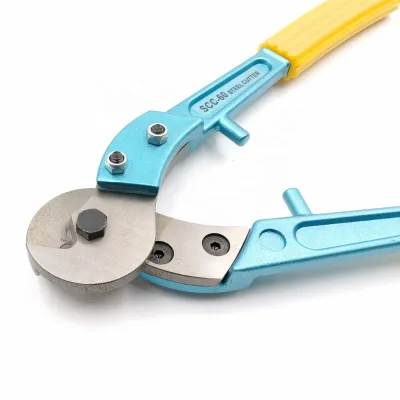
Compare 30 Al Alloy Handle Wire Cutter options from verified suppliers. These tools feature high carbon steel blades, box joint structures, and anti-slip grips for cutting steel wire ropes up to 7mm in diameter across industrial and building applications.
Key considerations
Products List


Comprehensive Sourcing Guide
Strategic Sourcing Guide for Aluminum Alloy Handle Wire Cutters
Understanding the Product Category and Core Specifications
When sourcing manual steel rope cutters, specifically those featuring aluminum alloy handles, buyers must first distinguish between general wire cutters and heavy-duty cable shearing tools. The core keyword "Al Alloy Handle Wire Cutter" points to a specific subset of industrial hand tools designed for durability and reduced operator fatigue. Based on observed market data, these tools are characterized by a robust construction where the handle material is explicitly identified as aluminum alloy, often paired with vinyl grips to ensure a secure hold during high-torque operations. The blade composition is typically forged from high carbon steel or stainless steel, providing the necessary hardness to shear through steel wire ropes without dulling prematurely.
The physical dimensions of these tools vary significantly depending on the intended application. Observed specifications indicate a wide range of lengths, from compact models measuring 210mm to heavy-duty variants extending up to 760mm. A common large-scale specification for these cutters is a size of 60011033mm, which suggests a substantial jaw opening and leverage capability. The weight of these units also fluctuates; while some lightweight models weigh as little as 0.315kg, heavier industrial versions can reach 1.7kg. This variance in weight and length directly correlates to the cutting capacity, with larger tools generally capable of handling thicker wire ropes.
The structural design of these cutters often employs a box joint mechanism, which is critical for maintaining alignment and preventing the blades from spreading under pressure. The shape of the cutting head is typically described as a "round mouth," optimized for gripping and shearing cylindrical objects like steel wire ropes. The maximum opening capacity for these tools is observed to be around 1 inch, a specification that buyers must verify against their specific wire diameter requirements. The cutting range is a critical performance metric; specific models are rated for cutting steel wire ropes with a maximum diameter of 7mm, while others are rated for a cross-sectional area of up to 500mm². Understanding these exact specifications is the first step in narrowing down the supplier pool to those who can meet the precise mechanical demands of the project.
Technical Performance and Application Scenarios
The application of aluminum alloy handle wire cutters extends beyond simple cutting tasks; they are engineered for multi-functional use in demanding environments. The primary application scenarios identified in the market include heavy-duty shearing and industrial maintenance. In the context of building construction and building decoration, these tools are indispensable for trimming rebar, cutting tension cables, and managing wire rope installations. The "Multi Functional" attribute frequently listed for these products suggests they are designed to handle various tasks beyond just cutting, potentially including crimping or stripping, although the primary function remains shearing.
The durability of these tools is a key selling point, with features such as being sturdy, portable, and anti-slip being standard expectations. The aluminum alloy handles contribute significantly to the tool's portability by reducing overall weight compared to steel handles, while the vinyl grips enhance the anti-slip feature, ensuring safety during prolonged use. The "Forging type" blade construction indicates a manufacturing process that aligns the grain structure of the steel, enhancing toughness and resistance to chipping. This is particularly important when cutting hardened steel wire ropes, where a brittle blade could fail catastrophically.
Buyers should note that while the tools are marketed for "Adult" application age, the physical demands of using a 1.7kg tool with a 760mm length require significant physical strength. Therefore, the selection of the tool size must be matched to the operator's capability and the specific task's frequency. For instance, a 210mm cutter weighing 0.315kg is suitable for light maintenance or precision work, whereas the 600mm model is better suited for heavy construction sites. The "Customized" standard attribute implies that manufacturers may offer variations in handle color, shaft style (typically straight), or specific length adjustments to meet unique client requirements.
Cost Drivers and Pricing Dynamics
The pricing of aluminum alloy handle wire cutters is influenced by several distinct factors, resulting in a broad observed price range from $0.10 to $13,750 USD. This wide disparity is not indicative of quality differences alone but reflects the scale of purchase, the complexity of the tool, and the inclusion of additional services. The lower end of the spectrum likely represents single-item sales of standard models, while the higher end may encompass bulk industrial orders, specialized heavy-duty variants, or packages that include custom branding and extensive packaging.
Material costs play a significant role in the final price. The use of high carbon steel or stainless steel for the blades, combined with aluminum alloy for the handles, creates a baseline cost that is higher than tools made entirely of stamped steel or plastic. The manufacturing process, specifically the forging of the blades, adds value and cost compared to casting or stamping methods. Furthermore, the "Customization" and "OEM" (Original Equipment Manufacturer) capabilities offered by suppliers introduce variable costs. Buyers seeking custom logos, specific handle colors, or unique packaging solutions should anticipate a price premium over standard off-the-shelf models.
The packaging method also affects the unit cost. While standard models may come in simple paper boxes, industrial orders often require carton or palletized packaging to ensure safety during long-distance shipping. The "Selling Units" are typically listed as single items, but the Minimum Order Quantity (MOQ) can range from 1 to 1200 units. A higher MOQ generally results in a lower per-unit cost due to economies of scale in production and shipping. Buyers must balance the need for immediate inventory against the cost benefits of bulk purchasing. It is essential to verify the specific MOQ and pricing structure with the supplier, as these figures are not static and depend heavily on the specific model and order volume.
Supplier Evaluation and Verification Protocols
When evaluating suppliers for aluminum alloy handle wire cutters, buyers must adopt a rigorous verification process to ensure product quality and reliability. The "Place of Origin" for these tools is predominantly China, a major hub for tool manufacturing. However, the geographic location alone does not guarantee quality. Buyers should focus on the supplier's ability to provide detailed product specifications, including the exact material composition of the blades and handles. The "Material" attribute often lists "Steel," "High Carbon Steel," or "Stainless Steel," and buyers must confirm which specific grade is used for their intended application.
Certification and standard compliance are critical areas of verification. While the provided data indicates that the "prod_standard" is often "Customized," this does not mean the tools lack standards. Buyers should request evidence of compliance with international safety and quality standards, such as ISO certifications or specific tool safety regulations relevant to their region. The "Customization" and "OEM" attributes suggest that suppliers are willing to adapt their products, but this flexibility must be balanced with strict quality control measures. Buyers should inquire about the supplier's quality assurance processes, including in-line inspections and final testing protocols.
The "Feature" list, which includes "Multi Function," "Durable," and "Portable," should be treated as observations rather than guaranteed claims. Buyers must request test results or performance data to substantiate these claims. For example, if a supplier claims a tool can cut a 7mm wire rope, the buyer should ask for verification of this cutting range under load. Additionally, the "Structure" of the tool, specifically the "Box Joint," should be inspected to ensure it is robust and free from defects. A thorough supplier evaluation should also consider the supplier's responsiveness, their ability to handle custom orders, and their track record in the industry.
Quality Control and Inspection Standards
Quality control for aluminum alloy handle wire cutters involves a multi-stage inspection process to ensure that the tools meet the required specifications and performance standards. The first stage of inspection should focus on the material integrity. Buyers must verify that the blades are indeed forged from high carbon steel or stainless steel, as specified, and that the handles are made of genuine aluminum alloy. The presence of vinyl grips should be confirmed for their anti-slip properties and durability. Any signs of poor welding, uneven forging, or substandard materials should be grounds for rejection.
The dimensional accuracy of the tool is another critical quality control parameter. The observed specifications, such as lengths of 210mm, 430mm, 760mm, and the size of 60011033mm, must be strictly adhered to. Deviations in these dimensions can affect the tool's leverage and cutting efficiency. The "Maximum opening capacity" of 1 inch must be verified to ensure the tool can accommodate the intended wire rope diameter. The "Cutting Range" claims, whether for a 7mm diameter or 500mm² cross-section, must be validated through practical testing.
Packaging quality is also a vital aspect of quality control. The "Package" type, whether paper box, carton, or carton/pallet, must be sufficient to protect the tool during transit. For bulk orders, the packaging must be robust enough to prevent damage from stacking or rough handling. The "Product Name" and "Model" (e.g., J75, LK-500, 808-330A, LK-250) should be clearly marked on the product and packaging to ensure traceability. Buyers should establish a clear inspection protocol that includes visual checks, dimensional measurements, and functional testing before accepting any shipment.
Long-Term Procurement and Maintenance Considerations
Long-term procurement of aluminum alloy handle wire cutters requires a strategic approach that goes beyond the initial purchase. Buyers should consider the lifecycle of the tool, including maintenance requirements and the availability of replacement parts. The "Forging type" blades are designed for longevity, but they may eventually require sharpening or replacement. Suppliers that offer OEM services may be better positioned to provide custom replacement blades or handle components, ensuring that the tool remains operational for an extended period.
The "Customization" aspect of these tools allows for branding and specific design features that can enhance the tool's utility in a specific industry. However, customization should not compromise the tool's fundamental performance. Buyers should ensure that any customizations, such as specific handle colors or shaft styles, do not interfere with the tool's ergonomics or safety features. The "Multi Functional" nature of these tools suggests they may be used in various scenarios, so the design should be versatile enough to handle different tasks without frequent adjustment or replacement.
Sustainability and environmental impact are increasingly important in procurement decisions. The use of aluminum alloy handles, which are recyclable, is a positive attribute. Buyers should inquire about the supplier's environmental practices and the recyclability of the packaging materials. The "Standard" of the product, often listed as "Customized," should ideally align with recognized environmental and safety standards. By focusing on long-term value rather than just initial cost, buyers can ensure a reliable supply of high-quality wire cutters that meet their operational needs for years to come.
Final Procurement Checklist and Decision Framework
To conclude the sourcing process, buyers should utilize a comprehensive checklist to evaluate potential suppliers and products. This checklist should include verification of the material composition, dimensional accuracy, and cutting capacity. The "Application" and "Use Place" should be confirmed to ensure the tool is suitable for the intended environment, whether it is building construction or industrial maintenance. The "Weight" and "Length" specifications must be matched to the operator's physical capabilities and the specific task requirements.
The "Selling Units" and "MOQ" should be clearly defined to avoid misunderstandings regarding order quantities and pricing. The "Packaging" details must be agreed upon to ensure safe delivery. Finally, the "OEM" and "Customization" options should be discussed to determine if they add value to the procurement. By systematically addressing these factors, buyers can make informed decisions that align with their quality standards, budget constraints, and operational needs. The goal is to secure a reliable supply of aluminum alloy handle wire cutters that deliver consistent performance and safety in the field.
FAQs
What is the maximum cutting capacity for steel wire rope?
The tool can cut steel wire ropes with a maximum diameter of 7mm. Some models are also rated for a cross-sectional area up to 500mm² depending on the specific product configuration.
Which handle material is used for these wire cutters?
The handles are constructed from aluminum alloy and often feature vinyl grips. This combination reduces operator fatigue while providing a secure, anti-slip hold during heavy-duty shearing operations.
Can I request customization for these cable cutters?
Yes, customization is available for these products. Buyers can request specific handle colors, shaft styles, or branding options, though the standard models come with pure or colorful handles.
What is the typical weight range for these tools?
The weight varies significantly by model, ranging from 0.315kg for compact units to 1.7kg for heavy-duty industrial versions. The specific weight depends on the length and intended application scenario.
How long are the different models of these cutters?
Available lengths include 210mm, 430mm, and 760mm for various applications. A large-scale specification also lists a size of 600*110*33mm for heavy-duty shearing tasks in construction.
What is the maximum opening capacity of the jaws?
The maximum opening capacity is observed to be 1 inch. This dimension ensures the tool can accommodate wire ropes up to the specified 7mm diameter or 500mm² cross-section.
Which blade construction type is used for durability?
The blades are typically of the forging type made from high carbon steel or stainless steel. This construction enhances toughness and resistance to chipping when cutting hardened steel wire ropes.