Source All Terrain ATV Tyre for Golf Carts, UTVs, and Sand
Find 30 All Terrain ATV Tyre options from Chinese manufacturers for golf carts, UTVs, and sand applications. Buyers can compare rubber specifications, sizes, and certifications like CCC and DOT directly from verified suppliers.
Key considerations
Products List


20X10-10 All Terrain Vehicle Orv Sxs Power Sport Quad Buggy ATV Tire Wheel Tyre
$26.50 - $55.00
MOQ: 500 Pieces


off Road Tyre ATV Tubeless Tire/All Terrain Vehicle Tubeless Tire Farm Wheel
$10.00 - $28.00
MOQ: 300 Pieces


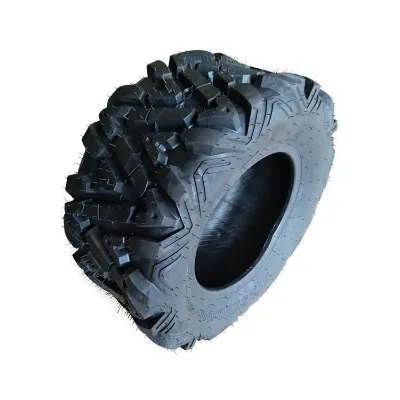


$10.00 - $12.00
MOQ: 1000 Pieces

Comprehensive Sourcing Guide
Strategic Sourcing Guide for All-Terrain ATV Tires
Navigating the global market for all-terrain ATV tires requires a disciplined approach that balances technical performance with rigorous supplier verification. The core keyword "All Terrain ATV Tyre" encompasses a diverse range of products designed for specific vehicle classes and environmental conditions. Buyers must understand that while the general category is broad, the specific attributes of the tire—ranging from tread patterns to construction materials—determine its suitability for distinct applications. This guide synthesizes available market data to provide a framework for evaluating potential suppliers and products without relying on unverified claims or speculative pricing models.
Technical Specifications and Construction Standards
The technical foundation of an all-terrain ATV tire lies in its dimensional specifications and material composition. Based on observed market data, tire sizes vary significantly to accommodate different vehicle architectures. Common model designations include sizes such as 18x9.5-8, 20x11-10, 22x11-9, and larger off-road configurations like 30x10r14 and 32x10r15. These dimensions are not arbitrary; they correspond to specific rim widths and vehicle clearances. Buyers must verify that the listed "Tire Size" matches their vehicle's OEM requirements exactly, as mismatches can lead to handling instability or mechanical failure.
Material composition is another critical technical factor. The primary material observed in this category is rubber, which provides the necessary elasticity and grip. However, the internal structure is equally important. Specific listings indicate the use of Terylene cord, a synthetic fiber known for its high tensile strength and resistance to heat and moisture. This construction detail is vital for tires intended for heavy-duty use or high-speed operation. Additionally, the tire type is frequently specified as "Tube Type," which implies the need for an inner tube during installation. Buyers should confirm whether the tire design is tubeless or tube-type, as this affects the inflation system and maintenance protocols.
The tread pattern is the defining characteristic of an all-terrain tire. Observed pattern names such as Ar05, Ar06, Ar07, Ar08, and Ar30 Bruiser Vt suggest a variety of compound designs. These patterns are engineered to handle mixed surfaces, including hard pack, loose loam, grass, gravel, and desert conditions. The "Bruiser" style, for instance, typically indicates a more aggressive tread block designed for mud and soft surfaces, while the Ar05/Ar06 series may lean towards a balanced approach for general utility. When evaluating a product, the buyer must ensure the pattern name aligns with the intended terrain, as a pattern optimized for hard pack may struggle in deep mud, and vice versa.
Compliance, Certification, and Regulatory Standards
In the B2B procurement of automotive components, compliance is non-negotiable. The market data highlights several key certifications that indicate a supplier's adherence to international quality and safety standards. The most frequently observed certifications include CCC (China Compulsory Certification), CE (Conformité Européenne), ISO9001, DOT (Department of Transportation), E4, and ECE (Economic Commission for Europe).
These certifications serve as proof of regulatory compliance in various markets. For instance, the DOT and E4 markings are essential for tires intended for sale and use in North American and European markets, respectively. The presence of ISO9001 certification suggests that the manufacturing facility operates under a documented quality management system. However, buyers must treat these certifications as observations of specific listings rather than universal guarantees for every product in the category. It is the procurement team's responsibility to request valid, current certificates for the specific batch of tires being ordered.
Furthermore, product standards often reference specific dimensions or manufacturing protocols. Observed standards include dimensions like 498mm x 498mm x 230mm and 506mm x 506mm x 204mm, which likely refer to packaging or specific test configurations rather than tire dimensions themselves. Buyers should verify that the "prod_standard" listed by the supplier corresponds to the actual physical specifications of the tire, ensuring that the product meets the regulatory requirements of the destination country. Relying on a supplier's claim of compliance without requesting the physical documentation is a significant risk in international trade.
Cost Drivers and Pricing Dynamics
Understanding the cost structure of ATV tires is essential for effective budgeting. The observed price range in the market spans from $2 to $99.99 USD. This wide variance is driven by multiple factors, including tire size, tread complexity, material quality, and order volume. Smaller sizes, such as 12-inch or 14-inch variants, typically fall at the lower end of the spectrum, while larger, more aggressive off-road tires like the 30x10r15 command higher prices.
The "Best Price" and "Very Cost-Effective" descriptors found in product listings are marketing terms rather than fixed numerical values. Actual pricing is heavily influenced by the Minimum Order Quantity (MOQ). The observed MOQ range extends from 1 unit to 1000 units, with specific shipping constraints noted as 1x20gp (20-foot general purpose container) or 40hq (40-foot high cube container) for mixed sizes. Suppliers often offer tiered pricing structures where the unit cost decreases significantly as the order volume approaches a full container load.
Other cost drivers include customization and packaging. The availability of customization allows buyers to tailor tread patterns or branding, which can incur additional tooling or setup fees. Packaging options, ranging from "Unpacked" to "Wrapped by Film" or "Bag/Carton/Pallet," also impact the final landed cost. Buyers must calculate the total cost of ownership, including shipping, insurance, and customs duties, rather than focusing solely on the unit price. A lower unit price may be offset by higher logistics costs if the order does not fill a container efficiently.
Typical Applications and Terrain Suitability
The versatility of all-terrain ATV tires is their primary selling point, but this versatility is segmented by specific application areas. The market data categorizes these tires for use in ATV Sport, ATV Utility, Golf Cart, Lawn & Garden, and Sand/Moto off-road applications. This segmentation is crucial because a tire optimized for a utility vehicle carrying heavy loads will differ significantly from one designed for a high-speed sport ATV.
Terrain styles further refine the application scope. The observed categories include Hard Pack, Loose Loam, Medium, Grass, Gravel, and Desert. A tire with a pattern like Ar30 Bruiser Vt is likely better suited for Mud, Soft, and Sand surfaces, offering the necessary self-cleaning properties and traction. Conversely, patterns like Ar05 or Ar06 may be more appropriate for mixed terrain where durability and wear resistance on hard surfaces are prioritized.
Buyers must align the tire's application profile with their operational reality. For example, a fleet manager for a golf course should prioritize tires designed for "Lawn & Garden" with a focus on low noise and turf protection, whereas a mining or construction contractor might require "ATV Utility" tires with reinforced sidewalls for rocky or gravelly environments. Misalignment between the tire's design intent and the actual operating environment can lead to premature wear, safety hazards, and increased replacement costs.
Supplier Evaluation and Market Dynamics
Evaluating a supplier requires a focus on their operational capabilities and market reach. The data indicates that the primary production origin is the China Mainland, with specific hubs like Qingdao noted. This region is a major manufacturing center for rubber products, offering a dense ecosystem of suppliers. However, the presence of a location does not guarantee quality; it is merely a starting point for due diligence.
Key indicators of a reliable supplier include their import and export capabilities. Listings mentioning "Have Own Export License" suggest a level of maturity in handling international logistics and compliance documentation. Additionally, the "Main Markets" data, which includes North America, South America, and Eastern Europe, indicates that the supplier has experience shipping to diverse regulatory environments. This experience is a positive signal, as it implies familiarity with the documentation and standards required by these regions.
Lead times and delivery capabilities are also critical evaluation metrics. Descriptors like "Big Production Ability" and "Fast Delivery" suggest that the supplier has the capacity to handle large orders without significant bottlenecks. However, buyers should verify these claims against historical performance data or references from other clients. The condition of the product is listed as "New," which is a baseline expectation, but buyers should also inquire about the warranty terms. A standard "1 Year" warranty is observed, but the specific terms of coverage, such as what constitutes a defect versus normal wear, must be clearly defined in the contract.
Quality Control and Long-Term Procurement Considerations
Implementing a robust quality control (QC) strategy is essential for mitigating risks in the procurement of rubber products. Given that the product is made of rubber and involves complex molding processes, variability in the final product is a possibility. Buyers should establish clear acceptance criteria based on the observed specifications, such as tire size, tread pattern, and material composition.
Long-term procurement considerations extend beyond the initial purchase. The availability of customization is a significant advantage for buyers looking to build a long-term partnership with a supplier. The ability to request "Customized" features or specific branding can help differentiate a buyer's product line. However, this also requires a clear understanding of the MOQ for custom orders, which may be higher than standard stock items.
Sustainability and supply chain resilience are increasingly important. While specific environmental certifications are not explicitly detailed in the provided data, the presence of ISO9001 suggests a commitment to process consistency. Buyers should consider the supplier's ability to maintain consistent quality over time and their capacity to scale production in response to market fluctuations. The "Fast Delivery" capability is a strategic asset, but it must be balanced against the risk of rushing production, which could compromise quality.
In conclusion, sourcing all-terrain ATV tires requires a methodical approach that integrates technical verification, compliance checks, and supplier evaluation. By focusing on the specific attributes observed in the market—such as the Terylene cord construction, the variety of tread patterns, and the range of certifications—buyers can make informed decisions that align with their operational needs. The wide price range and diverse applications offer flexibility, but they also demand careful analysis to ensure that the selected product delivers the expected performance and value.
FAQs
What certifications do all terrain atv tyres typically have?
These tyres commonly hold certifications such as CCC, CE, ISO9001, DOT, E4, and ECE. Buyers must verify that specific listings include valid certificates for their target region, as compliance varies by batch and supplier rather than being universal for all products in the category.
Which tire sizes are available for all terrain atv tyres?
Available sizes range from small 12-inch variants to larger 32x10r15 configurations. Specific models include 18x9.5-8, 20x11-10, and 30x10r14, requiring buyers to match exact dimensions to their vehicle's rim width and clearance to ensure safe handling and performance.
Can buyers request customization for all terrain atv tyres?
Yes, customization is available for tread patterns and branding on many listings. However, custom orders often involve different minimum order quantities compared to standard stock items, so buyers should confirm specific MOQ requirements and potential setup fees before placing an order.
How does the MOQ affect pricing for all terrain atv tyres?
The minimum order quantity ranges from one unit to 1000 units, with pricing heavily influenced by volume. Larger orders, such as those filling a 20-foot or 40-foot container, typically secure better unit costs, making volume a critical factor in the final landed price.
What materials are used to construct all terrain atv tyres?
The primary material is rubber, often reinforced with Terylene cord for high tensile strength. The construction is frequently tube type, meaning an inner tube is required during installation, which buyers must account for when planning their inventory and maintenance protocols.
Which terrains are suitable for all terrain atv tyres?
These tyres are designed for hard pack, loose loam, grass, gravel, and desert conditions. Specific patterns like Ar30 Bruiser Vt are better suited for mud and soft surfaces, while others like Ar05 offer balanced performance for mixed terrain applications.
Where are all terrain atv tyres typically manufactured?
Production originates primarily from the China Mainland, with specific hubs like Qingdao noted. Buyers should verify the origin on each listing and ensure the supplier holds a valid export license to handle international logistics and compliance documentation for their destination market.