Source Aluminum Alloy Baby Tricycle for Play, Travel, and Learning
Source Aluminum Alloy Baby Tricycle options from 30 verified listings. Compare features like wheel size, weight, and customization to find the right ride for boys and girls aged 3 to 8 years.
Key considerations
Products List


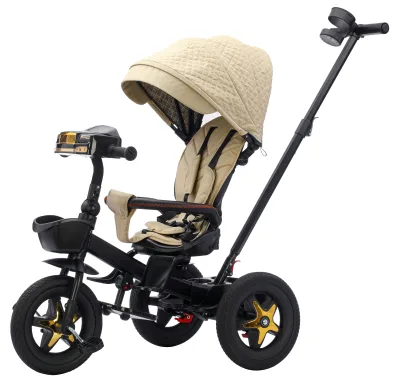


Hot Sale Kids Tricycle Two- Seat Tricycle with Back Pedal Children Tricycle
$9.00 - $10.00
MOQ: 1 Pieces


New Model Tricycle for Kids Folding for Mom and Baby Tricycle Gold Baby
$33.00 - $35.00
MOQ: 500 Pieces


Comprehensive Sourcing Guide
Strategic Sourcing Guide for Aluminum Alloy Baby Tricycles
Understanding the Market Landscape and Material Reality
The procurement of baby tricycles represents a specialized segment within the broader children's vehicle market, where safety, durability, and regulatory compliance are paramount. When sourcing a product described as an "Aluminum Alloy Baby Tricycle," buyers must first reconcile the specific material requirements with the actual data available in the current supply chain. While the core keyword emphasizes aluminum alloy, the provided product facts reveal a diverse mix of frame materials currently available from suppliers, including steel and plastic. This discrepancy highlights a critical first step in the sourcing process: verifying the material composition of specific listings against the desired specification.
In the observed product data, several models are explicitly listed with a "Steel" frame and "Steel" rim material, such as the Bc010 and Bc011 series. Conversely, other models like the BLK-2016 are noted to have a "Plastic" frame. The absence of explicit "Aluminum Alloy" frame listings in the immediate high-confidence facts suggests that buyers must actively filter suppliers or request specific material certifications to ensure the product matches the "aluminum alloy" keyword. Aluminum is often preferred for its lightweight properties and corrosion resistance, which are essential for a product intended for young children. However, without explicit confirmation in the product attributes, a buyer cannot assume the material composition. The procurement strategy must therefore begin with a rigorous request for product specifications that explicitly state the frame material as aluminum alloy, rather than relying on general category assumptions.
Technical Specifications and Dimensional Analysis
When evaluating the technical specifications of baby tricycles, dimensions, wheel sizes, and weight are the primary indicators of suitability for the target age group. The observed data indicates a wide range of wheel sizes, including 8", 10", and 12" options. The Bc010 model, for instance, lists wheel sizes of 8", 10", and 12", while the HX9101H series specifies a 12" wheel. The choice of wheel size is directly correlated with the age of the user. The data shows models categorized for "< 3 Years" and others for "3-8 Years." A smaller wheel size, such as 8", is typically more appropriate for toddlers under three years of age, offering better stability and a lower center of gravity. Larger wheels, such as 12", are generally designed for older children within the 3-8 year range, providing a smoother ride over varied terrain.
Weight is another critical technical factor. The net weight (N.W.) of a tricycle affects portability and ease of use for parents. The observed data lists a net weight of 7.8 Kg for one model and another at 10kg, while a third model is listed at 16kg. For an aluminum alloy tricycle, the expectation is a lighter unit compared to steel counterparts. If a buyer is specifically seeking an aluminum model, they should expect the weight to align closer to the lower end of the observed spectrum (around 7.8kg to 10kg) rather than the heavier 16kg units which may indicate steel construction. Furthermore, the folded dimensions are crucial for storage. The data shows packed sizes ranging from 573749 cm to 1105665 cm. Buyers must verify if the tricycle offers a "Folded" state, as some models are listed as "Unfolded" only, which impacts logistics and home storage capabilities.
Compliance, Certification, and Safety Standards
Safety compliance is non-negotiable in the children's product sector. The supplied facts explicitly mention "CE" certification for certain products. The CE mark indicates conformity with health, safety, and environmental protection standards for products sold within the European Economic Area. For a buyer sourcing aluminum alloy tricycles, verifying that the specific model carries valid CE certification is a mandatory step. However, the data also notes that some models have a "1 Year" warranty while others offer "5 Years." While warranty duration is not a direct certification, it often reflects the manufacturer's confidence in their product's durability and safety standards.
Beyond the CE mark, buyers must investigate other potential standards depending on the target market. For instance, the United States market typically requires compliance with ASTM F963, while the European market may also reference EN 71. The provided facts do not list these specific standards, so the procurement team must request proof of compliance with local regulations. Additionally, the "Condition" of the product is listed as "New" for several models, which is a baseline requirement for safety. Buyers should also check for specific safety features such as brakes. The data confirms that some models come "with Brake," which is essential for older children (3-8 years) who may travel at higher speeds. For younger children (under 3 years), the presence of a brake is less critical but still a valuable safety feature for parental control.
Cost Drivers and Pricing Dynamics
The pricing for baby tricycles varies significantly based on material, complexity, and customization options. The observed price range in the data spans from $5 to $135.38 USD. This wide variance suggests that the lower end of the spectrum likely corresponds to simpler, possibly plastic or basic steel models with minimal features, while the higher end likely includes aluminum alloy frames, advanced braking systems, and premium branding. When sourcing an aluminum alloy tricycle, buyers should anticipate pricing toward the mid-to-high end of this range, as aluminum is a more expensive raw material than steel or plastic.
Minimum Order Quantity (MOQ) is another significant cost driver. The observed MOQ ranges from 1 to 500 pieces. Some models have an MOQ of 100 PCS, while others require 500 PCS. For buyers testing the market or looking for smaller batches, finding a supplier with a lower MOQ (such as 1 or 100) is advantageous, though it may come with a higher unit price. Customization is listed as "Available" for several models, with options for color, pattern, and logo. Custom-made features typically increase the unit cost and may extend the lead time. Buyers must weigh the cost of customization against the brand value it adds. Additionally, the packing method, such as "85% SKD Packing" or standard "Carton" packing, affects shipping costs. SKD (Semi-Knocked Down) packing can reduce volume and shipping expenses but requires assembly at the destination, adding labor costs.
Supplier Evaluation and Geographic Considerations
The geographic origin of the products is a key factor in supplier evaluation. The data indicates that the products originate from various locations in China, including "Wenzhou" and "Hebei." Wenzhou is known for its manufacturing capabilities in hardware and light industrial goods, while Hebei is a major hub for steel and general manufacturing. When evaluating suppliers for aluminum alloy tricycles, buyers should verify the specific factory location to ensure it aligns with the desired material expertise. A supplier in Hebei might have strong steel capabilities but less experience with aluminum extrusion, whereas a Wenzhou-based supplier might be more versatile.
Supplier reliability is also indicated by the warranty terms. The data shows warranties ranging from 1 year to 5 years. A 5-year warranty on a tricycle is a strong indicator of high-quality construction and a supplier's confidence in their product. Buyers should prioritize suppliers offering longer warranty periods, as this reduces the risk of post-sales issues. Furthermore, the availability of customization (Color, Pattern, Logo) suggests a flexible manufacturing process. Buyers should assess the supplier's ability to handle custom orders without compromising quality. The "Condition" being listed as "New" for all observed models is a positive sign, but buyers should still request factory audits or third-party inspection reports to ensure consistent quality control.
Quality Control and Long-Term Procurement Strategy
Implementing a robust quality control (QC) strategy is essential for maintaining product integrity. Given the mix of materials observed (Steel, Plastic, and the desired Aluminum Alloy), QC must focus on material verification. Buyers should request mill certificates for aluminum alloys to confirm the grade and composition. For models with foam wheels, as seen in the BLK-2016 listing, QC should include checks for wheel durability and attachment security. The packing standards, such as the specific dimensions (e.g., 612740 cm or 935847 cm), must be verified to ensure that the product arrives without damage.
Long-term procurement considerations involve building a relationship with suppliers who can scale with demand. The data shows a high-confidence fact of "Customization: Available," which implies that suppliers are willing to adapt to buyer needs. For a long-term strategy, buyers should negotiate volume discounts that align with the observed MOQ ranges. If a buyer plans to order 500 pieces, they should leverage this volume to negotiate a lower unit price, potentially moving closer to the lower end of the $5-$135.38 range. Additionally, buyers should consider the "Suitable for" demographic. Models suitable for "Boys, Girls" and "Baby" indicate a broad market appeal. Sourcing a versatile model that covers multiple age groups (e.g., 3-8 years) can maximize inventory turnover.
Finally, the "Folded" vs. "Unfolded" attribute is a strategic differentiator. Models that fold are more attractive to consumers in urban environments with limited storage space. Buyers should prioritize suppliers who offer reliable folding mechanisms, as this feature can be a key selling point. By focusing on these technical and operational details, buyers can navigate the complexities of the baby tricycle market and secure high-quality aluminum alloy products that meet safety standards and customer expectations.
Comparative Analysis of Product Attributes
To assist in decision-making, the following table summarizes key attributes observed in the product data, highlighting the variations in material, age suitability, and dimensions.
| Attribute | Model Bc010 Series | Model HX9101 Series | Model BLK-2016 |
|---|---|---|---|
| Frame Material | Steel | Plastic | Plastic |
| Wheel Size | 8", 10", 12" | 12" | 10" |
| Target Age | < 3 Years | 3-8 Years | Not Specified |
| Net Weight | 7.8 Kg | 15.7kg - 16kg | 10kg |
| Warranty | 5 Years | 1 Year | Not Specified |
| Folded State | Unfolded | Folded | Not Specified |
| Origin | China | Wenzhou, China | Hebei, China |
| Certification | CE | Not Specified | Not Specified |
This comparison underscores the importance of verifying material specifications. While the Bc010 series offers a 5-year warranty and CE certification, it is constructed with steel. The HX9101 series is heavier and has a shorter warranty. The BLK-2016 uses plastic. Buyers seeking aluminum alloy must look beyond these specific listings or request custom specifications from suppliers to ensure the material matches the core keyword requirements.
FAQs
What certifications are available for baby tricycles?
CE certification is available for certain baby tricycle models. Buyers should verify specific listings to ensure the product carries valid CE marks for European compliance before purchasing.
Which wheel sizes are offered for different age groups?
Wheel sizes include 8, 10, and 12 inches depending on the model. Smaller 8-inch wheels suit children under three years, while 12-inch wheels are designed for ages 3 to 8 years.
Can buyers request customization for colors and logos?
Customization is available for color, pattern, and logo on specific models. Buyers must confirm with suppliers that these custom-made features align with their branding requirements and order volumes.
How does the frame material affect the tricycle weight?
Frame materials vary between steel, plastic, and potentially aluminum alloy. Steel models like the Bc010 series weigh around 7.8 kg, while plastic models may weigh up to 16 kg depending on construction.
What is the minimum order quantity for these tricycles?
Minimum order quantities range from 1 to 500 pieces across different suppliers. Some models require 100 pieces, while others may demand 500 pieces as a baseline for bulk procurement.
Do these tricycles come with a warranty?
Warranty periods vary from 1 year to 5 years depending on the manufacturer. A 5-year warranty indicates high confidence in durability, while 1-year terms are also common for specific models.