Source Aluminum Alloy Anti-Slip Bath Chair for Home Care
Compare 30 Aluminum Alloy Anti-Slip Bath Chair options from verified suppliers. These adjustable chairs feature manual power supply, white or blue finishes, and weight capacities up to 150 kg for safe bathing in hip areas; compare the available evidence and request quotations based on your requirements.
Key considerations
Products List


Bath Stool Shower Chair with Backrest Quick Detacbale Legs Adjustable Height
$13.50 - $14.50
MOQ: 100 Pieces

Non-Slipheight Adjustable Bath Chair with Armrests and Backrest for The Elderly
$17.50 - $18.50
MOQ: 100 Pieces




Comprehensive Sourcing Guide
Aluminum Alloy Anti-Slip Bath Chair Sourcing Guide
Procuring aluminum alloy anti slip bath chairs requires a careful balance between material durability, ergonomic design, and strict safety compliance for wet environments. These chairs are essential for assisting individuals with limited mobility, ensuring stability and comfort during bathing routines. The primary focus for buyers is identifying units that offer robust weight capacity while maintaining a lightweight profile for easy handling. Aluminum alloy is preferred for its corrosion resistance and structural integrity, making it suitable for high-humidity settings where steel might rust and plastic might crack over time.
Buyers must navigate a diverse market with varying specifications, from manual operation models to those with adjustable heights. The observed product range indicates significant variation in dimensions, weight capacities, and packaging standards, which directly impacts logistics and storage efficiency. Understanding these nuances is critical for selecting the right unit for specific end-user needs, whether for home care or institutional use. This guide outlines the key technical, compliance, and commercial factors to consider when sourcing these specialized medical and assistive devices.
Product Scope and Observed Listing Signals
The current market listings reveal a wide spectrum of bath chair configurations, primarily categorized by their structural type and operational features. Products are identified by specific model numbers such as SC-3201, SC-3100KDRB, and TBB787LY, each presenting distinct physical attributes. For instance, some models are explicitly labeled as chairs with adjustable heights, ranging from 69.5 to 79.5 cm or up to 102.5 cm, catering to different user heights and bathroom fixtures. The power supply is consistently noted as manual, indicating that these are non-electric, mechanically operated devices that rely on user or caregiver interaction for positioning and adjustment.
Material composition is a critical differentiator, with aluminum alloy being a prominent feature in several listings, ensuring lightweight yet sturdy construction. Color options vary, with white and blue finishes commonly observed, allowing for aesthetic integration into various bathroom decors. The weight capacity is a vital safety metric, with observed limits ranging from 100 kgs to 150 kg, reflecting the diverse needs of users. Additionally, packaging dimensions vary significantly, from compact boxes measuring 415x340x380mm to larger cartons, which influences shipping costs and warehouse storage requirements for bulk purchasers.
Technical Specifications to Verify
When evaluating technical specifications, buyers should prioritize the dimensional accuracy and structural stability of the bath chair. Key measurements include total length, width, and height, which must align with the intended user’s body size and the bathroom’s spatial constraints. For example, models with a seat depth of 41-42 cm and seat widths of 47 cm provide adequate support without being overly bulky. The net weight of the unit, ranging from 2.0 kgs to 9.7 kgs, is crucial for caregivers who need to lift or reposition the chair frequently, ensuring it is manageable yet substantial enough to remain stable during use.
Adjustability features are another critical technical aspect to verify, particularly for chairs designed for users of varying heights. Adjustable height mechanisms should be smooth, secure, and easy to operate, allowing for precise positioning relative to the bathtub or shower floor. The total height range, such as 74-82 cm or 102.5 cm, should be clearly defined to ensure compatibility with standard bathroom fixtures. Additionally, the use site, typically the hip or general seating area, dictates the ergonomic design of the seat and backrest, which should provide sufficient support to prevent slouching or discomfort during extended bathing sessions.
Compliance and Safety Documentation
Compliance with international safety standards is non-negotiable for bath chairs, given the high-risk environment of wet, slippery surfaces. Buyers must verify that products hold relevant certifications, such as CE and ISO, which indicate adherence to strict manufacturing and safety protocols. These certifications ensure that the materials used are non-toxic and that the structural design can withstand expected loads without failure. The presence of these marks provides assurance that the product has undergone rigorous testing for stability, durability, and material safety, reducing liability risks for healthcare providers and distributors.
Safety features extend beyond certification to include design elements that prevent accidents, such as anti-slip feet and secure locking mechanisms for adjustable parts. Buyers should request detailed documentation on load testing and material composition to confirm that the aluminum alloy and any plastic components are resistant to corrosion and degradation from prolonged water exposure. Additionally, clear labeling of weight capacity and usage instructions is essential for end-users to operate the chair safely. Ensuring that all safety documentation is up-to-date and accessible helps in maintaining a safe bathing environment and complies with regulatory requirements in various markets.
Cost Drivers and Commercial Terms
The cost of aluminum alloy bath chairs is influenced by several factors, including material quality, manufacturing complexity, and packaging efficiency. Models with adjustable heights and additional ergonomic features typically command higher prices due to the increased engineering and assembly requirements. The observed price range of 7.8 to 75.56 USD reflects this variability, with basic models being more affordable and advanced, feature-rich units costing more. Buyers should consider the total cost of ownership, including shipping and handling, which can be significant given the varying packaging dimensions and weights.
Minimum Order Quantities (MOQs) also play a crucial role in pricing and procurement strategy, with observed ranges from 1 to 300 units. Larger orders often benefit from economies of scale, resulting in lower per-unit costs, but require careful inventory management to avoid excess stock. Customization options, such as specific colors or branding, may incur additional fees and affect lead times. Buyers should negotiate clear commercial terms, including payment methods, warranty periods, and return policies, to mitigate financial risks and ensure a smooth procurement process.
Supplier Qualification and Quality Control
Selecting a reliable supplier is paramount to ensuring the consistent quality and safety of aluminum alloy bath chairs. Buyers should verify the supplier’s manufacturing capabilities, including their experience in producing medical or assistive devices, and their adherence to quality management systems. Requesting samples for physical inspection is a critical step to assess build quality, material finish, and the functionality of adjustable components. Suppliers with a proven track record of exporting to international markets are often more familiar with compliance requirements and quality expectations.
Quality control processes should be transparent and rigorous, covering raw material inspection, in-process checks, and final product testing. Buyers should inquire about the supplier’s defect rate and their procedures for handling non-conforming products. Additionally, verifying the supplier’s ability to provide consistent packaging and labeling is essential for maintaining brand integrity and ensuring safe transport. Establishing a strong relationship with a qualified supplier helps in maintaining product quality, ensuring timely deliveries, and facilitating effective communication for any post-sales support or issues.
Long-Term Procurement Checks
Long-term procurement success depends on continuous monitoring of product performance and supplier reliability. Buyers should establish feedback loops with end-users to gather insights on the durability, comfort, and safety of the bath chairs in real-world conditions. This feedback can inform future purchasing decisions and help identify any recurring issues that need to be addressed with the supplier. Regular audits of supplier quality control processes and compliance documentation are also necessary to ensure ongoing adherence to standards and regulations.
Market trends and technological advancements in assistive devices should be monitored to stay competitive and meet evolving customer needs. Buyers should be open to exploring new models or features that offer improved functionality or cost-efficiency. Additionally, maintaining a diversified supplier base can mitigate risks associated with supply chain disruptions or quality inconsistencies. By proactively managing these long-term factors, buyers can ensure a sustainable and reliable supply of high-quality aluminum alloy anti slip bath chairs for their customers.
FAQs
What material is used for the Aluminum Alloy Anti-Slip Bath Chair?
The chair frame is made of aluminium, which keeps the seat lightweight while supporting stable use in wet bathroom environments. Listed units weigh between about 2.0 kg and 9.7 kg depending on the model, making them easy to reposition. Anti slip features are built into the seating design, and color options observed include white and blue finishes.
How much weight can the bath chair safely support?
Documented weight capacities across listed models range from 100 kg to 150 kg, so buyers should confirm the rating of the specific model before ordering. The aluminium frame and adjustable height legs provide the load-bearing structure. Always match the chosen capacity to the end user's needs and check product specifications for the exact model you intend to purchase.
Can the height of the bath chair be adjusted?
Yes, height is adjustable on the listed chairs, with observed settings such as 69.5 to 79.5 cm and 74 to 82 cm total height. This lets users set a comfortable seat level for transfer in and out of the bath or shower. Height ranges differ by model, so review the specification table for the model you plan to source.
Which certifications do the listed bath chair products carry?
The product listings show CE and ISO certification, which are commonly required for medical and rehabilitation seating sold to institutional buyers. Certification matters for customs clearance and hospital procurement in many regions. Buyers should request current certificate copies from the specific supplier when placing orders, since documentation is issued per production batch and should be verified before shipment.
How is the bath chair packed for shipping?
Packing formats vary by model and include cartons holding multiple units, such as 800 by 550 by 495 mm cartons with 4 pieces, and single-piece carton boxes. Carton packing protects the aluminium frame during transit and suits both retail and wholesale shipments. Confirm carton dimensions and units per carton with your supplier so freight costs and warehouse space can be planned accurately.
Can I order customized bath chairs for my market?
Yes, customization is listed as available for these products. Buyers can typically discuss color choices such as white or blue, branding, and specification adjustments with suppliers before ordering. Customized orders may differ from the standard non-customized versions in packaging, lead time, and minimum order quantities, so clarify all customized requirements in writing and request samples before confirming a bulk purchase.
What are the seat dimensions of the listed models?
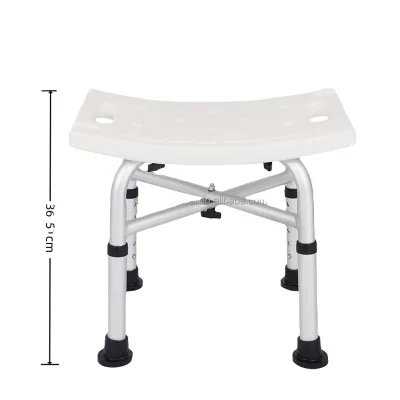
Observed seat dimensions include a 41 cm seat depth on one model and 47 cm seat width with 42 cm seat depth on a higher-capacity model. Overall sizes range from compact 51 by 41 cm footprints to larger 81.5 by 57.5 cm units. These dimensions matter for fitting the chair into bathtubs or shower stalls, so compare model specifications before ordering.
Which model suits users who need a higher weight capacity?
Models listed with a 150 kg weight capacity are appropriate for users needing bariatric support, and one such model measures 81.5 by 57.5 cm overall with a 47 cm seat width and a net weight of 9.7 kg. Larger seating surfaces generally provide better stability. Verify the capacity rating and dimensions on the exact model listing before finalizing your sourcing decision.