Source AMR Chassis for Automotive, Welding, and Shipbuilding
Compare 30 AMR Chassis units from verified suppliers for automotive, welding, and shipbuilding applications. Evaluate specifications like load capacity, battery life, and control modes to find the right autonomous mobile robot solution for your industrial needs.
Key considerations
Products List


60kg AMR Robot Chassis Open Sdk Mobile Robot Base with Slam Navigation
$2880.00 - $2980.00
MOQ: 1 Sets


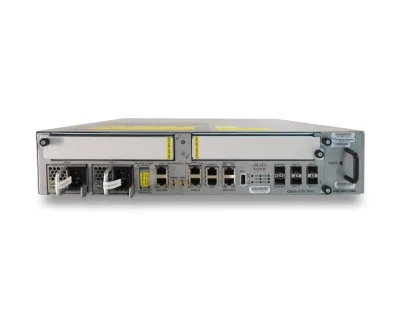


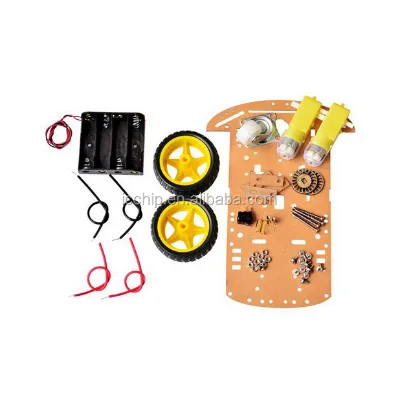

Agv Robot Chassis Autonomous Delivery Automatically Obstacle Avoidance 500kg AMR
$4000.00 - $70000.00
MOQ: 1 Pieces


Agv Robot Chassis 650kg Industrial Base Moving Transportation Equipment Agv
$2000.00 - $25000.00
MOQ: 1 Pieces

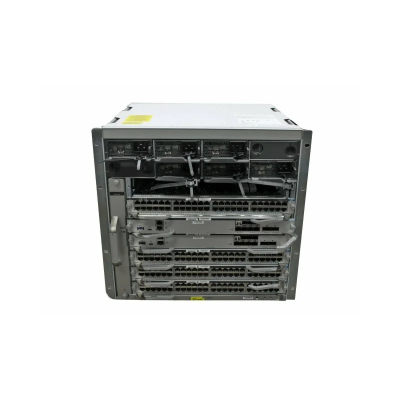


$1.56 - $3.89
MOQ: 100 Pieces


Comprehensive Sourcing Guide
Strategic Sourcing Guide for AMR Chassis Procurement
Understanding the Technical Architecture of AMR Chassis
When sourcing an Autonomous Mobile Robot (AMR) chassis, the primary objective is to identify a platform that aligns with specific operational requirements while maintaining structural integrity. The chassis serves as the foundational skeleton of the robot, integrating the drive system, battery, and control electronics. Based on current market observations, AMR Chassis are available with distinct drive modes, including electric and mechanical configurations. Electric drive modes are prevalent in modern applications due to their efficiency and ease of integration with advanced control systems. In contrast, mechanical drive modes may be selected for specific heavy-load scenarios or legacy compatibility.
A critical technical differentiator is the control mode. Buyers must distinguish between "Continuous Path Control" and "Point to Point Control." Continuous Path Control is essential for applications requiring smooth, uninterrupted motion, such as material handling along a fixed route or complex assembly line tasks. Point to Point Control, conversely, is suitable for applications where the robot moves between discrete locations, such as loading and unloading stations. The selection of the control mode directly impacts the software architecture and the precision of the robot's navigation.
The physical dimensions of the chassis are equally vital. Observed standard configurations include models with dimensions around 450mm in length and 450mm in width, as well as larger units reaching 804mm in length and 590mm in width. These variations dictate the aisle width requirements for deployment. For instance, a chassis designed for narrow environments may require an aisle width of approximately 95cm, whereas larger units might need more substantial clearance. The weight of the chassis itself varies, with observed units ranging from 28kg to 32kg, excluding the payload. This self-weight is a crucial factor when calculating the total energy consumption and the required battery capacity.
Performance Metrics and Load Capacity Analysis
The performance of an AMR Chassis is defined by its ability to move reliably under load. The load capacity is a primary specification that varies significantly across different models. Some chassis are engineered to handle payloads around 60kg, making them suitable for light-to-medium duty tasks in the automotive or R&D sectors. Other heavy-duty models support capacities up to 300kg, catering to industries like shipbuilding, metal fabrication, and construction where heavy components must be transported.
Speed is another critical performance metric. The cruising speed of these units typically ranges from 0.2m/s to 0.8m/s for standard models, while more agile units may achieve speeds between 0.1m/s and 1m/s. This range allows buyers to match the robot's speed to the workflow of the facility. A slower speed may be preferred for safety in high-traffic areas, while a faster speed is necessary for high-throughput logistics.
Battery performance is intrinsically linked to the operational time of the chassis. The working time for these units generally falls between 6 to 8 hours for standard configurations, with some advanced models supporting 8 to 15 hours of continuous operation. This duration is determined by the battery capacity, which is observed to be around 10400mAh at 37V in certain models. The charging time is also a key consideration, with typical recharging cycles taking between 4 to 6 hours. The recharging current is specified at 3A for some units, indicating the power requirements for the charging infrastructure.
| Parameter | Standard Range | Heavy-Duty Range |
|---|---|---|
| Load Capacity | ~60 kg | Up to 300 kg |
| Operating Time | 6-8 hours | 8-15 hours |
| Cruising Speed | 0.2-0.8 m/s | 0.1-1.0 m/s |
| Chassis Weight | 28-32 kg | Varies by model |
| Battery Capacity | ~10400mAh/37V | Varies by model |
| Charging Time | 4-6 Hours | 4-6 Hours |
Compliance, Safety, and Certification Verification
In the B2B procurement of industrial robotics, compliance and safety are non-negotiable. Buyers must verify that the AMR Chassis is equipped with robust safety features. Standard safety configurations often include safety laser scanners, obstacle detection sensors, emergency stop buttons, and collision avoidance systems. These features are essential for ensuring the safety of human operators working in close proximity to the robots.
The operating system of the chassis also plays a role in compliance. Some units run on Android 5.1, which offers a flexible environment for application development and integration. However, buyers should verify that the software environment meets the specific security and data privacy standards required by their industry, particularly in sectors like aerospace and automotive where data integrity is paramount.
While specific certification labels may not be explicitly listed in all product descriptions, buyers should request documentation confirming adherence to relevant international safety standards. The origin of the product is a factor in compliance; many units originate from manufacturing hubs in China, such as Shenzhen, Guangdong. Buyers should ensure that the supplier can provide evidence of compliance with the safety regulations of the destination country. Additionally, the condition of the product should be verified as "New" to ensure that the safety systems have not been compromised by previous use.
Cost Drivers and Pricing Structure
The pricing of AMR Chassis is influenced by a complex array of factors, including load capacity, drive mode, control system sophistication, and battery capacity. The observed price range in the market is extensive, spanning from approximately $1.56 to $70,000. This wide variance reflects the difference between basic chassis platforms and fully integrated, high-capacity systems.
The Minimum Order Quantity (MOQ) is another significant cost driver. Some suppliers offer an MOQ of just 1 unit, which is ideal for pilot projects or small-scale deployments. Others may require an MOQ of up to 1000 units, which is more typical for large-scale industrial rollouts. Buyers must align their procurement strategy with their volume needs to optimize unit costs.
Customization is a major factor in pricing. Many suppliers offer customization options, which can significantly increase the cost but allow for tailored solutions. The packaging method, whether carton, wooden box, or wooden case, also impacts the final price, especially for international shipping where robust packaging is required to prevent damage during transit. Buyers should request a detailed breakdown of costs to understand the value proposition of each component, including the battery, control system, and safety sensors.
Typical Applications and Industry Suitability
AMR Chassis are versatile platforms designed to serve a wide range of industries. The automotive industry is a primary application area, where chassis are used for moving parts and components along the assembly line. The welding, loading, forging, and R&D sectors also utilize these robots for tasks requiring precise movement and heavy load handling.
The shipbuilding and metal fabrication industries benefit from the high load capacity of certain chassis models, which can handle heavy steel components and large assemblies. The construction industry similarly relies on AMRs for material transport in challenging environments. The aerospace industry requires high precision and reliability, making the advanced control modes and safety features of these chassis essential.
The application of the chassis is often dictated by the specific needs of the facility. For example, a chassis with a narrow aisle capability of 95cm is ideal for facilities with limited space, while a unit with a 300kg load capacity is necessary for heavy industrial applications. Buyers should assess their specific workflow requirements to select the most suitable chassis. The operating system, such as Android 5.1, allows for the deployment of remote navigation and other advanced features that can enhance productivity in these diverse industries.
Supplier Evaluation and Quality Control Protocols
Evaluating a supplier for AMR Chassis requires a rigorous assessment of their capabilities and track record. Buyers should verify the supplier's ability to provide after-sales service, with a standard offering of 1 year of support being common. This support is crucial for maintaining the operational uptime of the robots.
Quality control is paramount. Buyers should request detailed specifications regarding the build quality, including the materials used for the chassis and the reliability of the drive system. The condition of the product should be confirmed as "New" to avoid issues related to wear and tear. The packaging method, such as wooden cases or cartons, should be evaluated to ensure it meets the requirements for safe transportation.
Lead times are a critical factor in the procurement process. While some suppliers may offer delivery times of 5-7 days for samples, bulk orders may have different timelines. Buyers should clarify the lead time for their specific order volume and ensure it aligns with their project schedule. The ability to customize the chassis is also a key evaluation criterion, as it allows for the integration of specific sensors or interfaces required for the application.
Long-Term Procurement and Integration Considerations
Long-term procurement of AMR Chassis involves more than just the initial purchase; it requires a strategy for integration, maintenance, and scalability. The integration of the AMR system should be supported by the supplier, with capabilities for AMR system integration being a key feature to verify. This support ensures that the chassis can be seamlessly incorporated into the existing factory infrastructure.
The remote navigation deployment capability is a significant long-term advantage, allowing for centralized management and monitoring of the robot fleet. This feature is particularly valuable for large-scale deployments where manual intervention is impractical. Buyers should also consider the scalability of the platform, ensuring that the chosen chassis can be expanded or upgraded as operational needs evolve.
Finally, the total cost of ownership (TCO) should be calculated, including the initial purchase price, maintenance costs, and energy consumption. The battery capacity and charging time are key factors in determining the energy efficiency of the system. By carefully evaluating these long-term considerations, buyers can make informed decisions that ensure the sustained success of their AMR deployment.
FAQs
What is the load capacity of the FBOT25F chassis?
The FBOT25F chassis supports a load bearing capacity of around 60kg. This model features a weight of 32kg and operates with a continuous path control mode suitable for automotive industry applications.
Which control mode does the FBOT24F model utilize?
The FBOT24F model utilizes Point to Point Control for its operations. It is designed for tasks in welding, loading, forging, and R&D sectors with a self-weight of 28kg and dimensions of 450mm by 450mm.
Can the AMR Chassis support heavy industrial applications?
Yes, certain AMR Chassis models support heavy industrial applications with a load capacity of up to 300kg. These units are suitable for shipbuilding, metal fabrication, and construction industries while offering safety laser scanners.
How long does the battery last on the standard model?
The standard model provides a working time of 6 to 8 hours on a single charge. It utilizes a 10400mAh/37V battery and requires approximately 4 hours for a full recharge cycle.
What is the minimum order quantity for the AMR Chassis?
The minimum order quantity for the AMR Chassis is 1 unit. This allows buyers to start with a single unit for pilot projects or small-scale deployments without needing bulk commitments.
Which industries are suitable for the WBOT11B chassis?
The WBOT11B chassis is suitable for the shipbuilding, metal fabrication, construction, automotive, and aerospace industries. It features a mechanical drive mode and supports AMR system integration for complex workflows.
What safety features are included with the chassis?
The chassis includes safety laser scanners, obstacle detection sensors, an emergency stop button, and a collision avoidance system. These features ensure safe operation in environments with human workers nearby.
Can the chassis be customized for specific needs?
Yes, customization is available for the chassis to meet specific operational requirements. Buyers can request tailored solutions while ensuring the product remains in new condition with a one-year after-sales service.