Source Moisturizing Whitening Hand Cream for daily care, nourishment, and skin repair
Explore 30 listings of Moisturizing Whitening Hand Cream from verified suppliers offering OEM customization and various packaging sizes. Buyers can compare certifications, MOQs, and lead times to find the best fit for their brand needs.
Key considerations
Products List


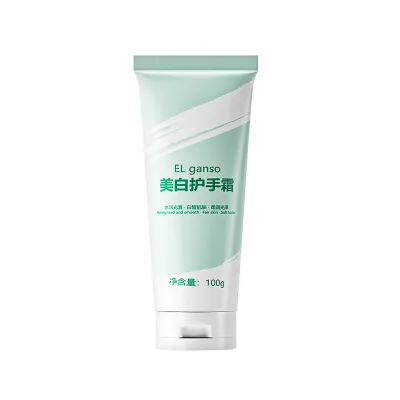


Natural Anti Aging Moisturizing Handcream Whitening Hand Cream for Dry Skin
$1.12 - $2.00
MOQ: 1000 Pieces


OEM ODM Skin Care Moisturizing Nourishing Whitening Hydrating Hand Cream
$0.80 - $2.50
MOQ: 1000 Pieces


High Quality Skin Care Moisturizing Nourishing Whitening Hydrating Hand Cream
$0.80 - $2.50
MOQ: 1000 Pieces


Private Label Skin Care Moisturizing Nourishing Whitening Hydrating Hand Cream
$0.80 - $2.80
MOQ: 1000 Pieces

Hand Cream Nourishing Whitening Moisturizing Anti-Cracking Hand Cream Lotion
$0.10 - $3.50
MOQ: 5000 Pieces



Comprehensive Sourcing Guide
Strategic Sourcing Guide for Moisturizing Whitening Hand Cream
The global demand for personal care products has elevated the Moisturizing Whitening Hand Cream category into a high-volume B2B sector. Buyers entering this market must navigate a complex landscape of formulation science, regulatory compliance, and supply chain logistics. The core objective is to secure a product that delivers effective hydration and skin brightening while adhering to strict quality standards. This guide provides a structured approach to sourcing, analyzing the specific technical attributes, certification requirements, and operational variables observed in the current market.
Technical Specifications and Formulation Attributes
Understanding the physical and chemical specifications of the product is the first step in defining a procurement requirement. The market offers a diverse range of packaging formats and volumes, which directly influences the unit cost and shipping logistics. Observed data indicates that standard container sizes vary significantly, with common specifications ranging from 30ml to 200ml, and specific models like HC101 or HC-101 often associated with 30ml or 35ml volumes. Other listings highlight a 50ml standard, while bulk or alternative packaging may utilize a 300g standard. The container material is predominantly plastic bottles, though the final packaging often involves a secondary box or carton layer.
The formulation itself is critical for meeting the "moisturizing whitening" claim. Ingredients observed in the supply chain include hyaluronic acid, mineral components, and other unspecified additives. The functional profile is explicitly defined as nourishing and moisturizing, with a specific feature set targeting whitening. The fragrance profile is frequently noted as natural with floral notes, catering to a female demographic, although some products are marketed for all ages or adults specifically. The product model numbers, such as OL-302 or HC287, serve as unique identifiers for specific formulations or batch types. Buyers must verify that the specific model number aligns with the desired volume and ingredient profile, as the "whitening" claim requires rigorous substantiation regarding the active agents used.
Compliance and Certification Verification
In the personal care industry, certification is not merely a marketing asset but a prerequisite for market access and consumer trust. The observed supply chain demonstrates a high frequency of specific certifications, including GMP (Good Manufacturing Practice), MSDS (Material Safety Data Sheet), and FDA registration. Some suppliers also list SGS, FSC, and Saso certifications, indicating a capacity to meet international and regional regulatory standards.
Buyers must treat these certifications as verification points rather than automatic guarantees. The presence of GMP and FDA status suggests adherence to manufacturing hygiene and safety protocols, while MSDS is essential for logistics and safety data. The ISO 9001 and ISO 22716 standards are often referenced in the broader industry context, though specific instances in the current data pool require careful verification against the supplier's actual documentation. When evaluating a potential partner, the procurement team should request current, valid certificates for the specific production facility. It is crucial to confirm that the certification covers the specific product line being sourced, as a facility may hold a general GMP certificate while a specific hand cream line operates under a different regulatory framework.
Cost Drivers and Pricing Dynamics
The pricing structure for Moisturizing Whitening Hand Cream is influenced by a combination of volume, customization, and packaging complexity. The observed price range in the market spans from $0.08 to $3.99 USD per unit. This wide variance is driven by several factors. The primary cost driver is the order volume, with Minimum Order Quantities (MOQ) ranging from 10 units to 10,000 units. Specific listings indicate an MOQ of 5,000 pieces for certain OEM configurations, while other suppliers may accept smaller orders, sometimes as low as 10 units, though this often carries a premium per-unit cost.
Packaging plays a significant role in the final price. Products packaged in individual boxes or cartons with a density of 48 pieces per carton incur higher material and labor costs compared to bulk-packed items. The customization level also impacts pricing; OEM (Original Equipment Manufacturer) and ODM (Original Design Manufacturer) services allow for private labeling and formula adjustments, which typically increase the unit cost compared to standard stock items. Additionally, the inclusion of sample units, which are often available for free or at a nominal cost, should be factored into the initial budget, as these do not always reflect the mass production cost structure.
Supplier Evaluation and Operational Capabilities
Selecting the right supplier requires a deep dive into their operational capabilities and geographic location. The supply base is concentrated in key manufacturing hubs in China, with specific origins noted in Hangzhou, Zhejiang, and Guangdong. These regions are known for their mature cosmetic manufacturing ecosystems. The supply type is predominantly OEM/ODM, indicating that most suppliers are equipped to handle private label requests and custom formulation development.
When evaluating suppliers, buyers should assess their flexibility regarding order sizes. While many suppliers have high MOQs, some advertise the ability to accept small orders, which is beneficial for market testing or startups. The lead time for mass production is a critical operational metric; observed data suggests a standard delivery window of 20 to 25 days. This timeline should be validated against the supplier's current production schedule, as delays can disrupt inventory planning. Furthermore, the availability of samples is a key indicator of supplier confidence and responsiveness. Most suppliers offer free or available samples, allowing buyers to physically verify the texture, scent, and packaging quality before committing to a large order.
Quality Control and Product Standards
Quality control (QC) is the backbone of a successful procurement strategy, ensuring that the final product meets the promised specifications. The product standards observed include specific volume measurements (30ml, 35ml, 50ml, 300g) and packaging dimensions, such as a single package size of 11.5 x 16.5 x 2.3 cm. These physical attributes must be consistently maintained across production batches.
Buyers should establish a rigorous QC protocol that includes visual inspection of the packaging, verification of the net weight, and testing of the product's physical properties. The "whitening" and "moisturizing" claims require specific performance testing. While specific test results are not provided in the general market data, buyers must request stability testing reports, microbiological testing results, and efficacy data from the supplier. The ingredient list, which includes hyaluronic acid and minerals, must be verified to ensure no undeclared allergens or prohibited substances are present. The use of natural fragrances and floral scents should be confirmed to ensure they align with the target market's preferences and regulatory restrictions on certain fragrance compounds.
Long-Term Procurement and Market Considerations
Sourcing is not a one-time transaction but a long-term partnership that requires strategic planning. The market for Moisturizing Whitening Hand Cream is competitive, with a wide array of models and features available. Buyers should consider the scalability of their supplier. A supplier that can handle an initial order of 5,000 pieces must also have the capacity to scale to 10,000 or more without compromising quality or lead times.
The customization aspect is a significant long-term advantage. The ability to tailor the formula, packaging, and branding allows buyers to differentiate their product in a crowded market. However, this requires clear communication and documentation to ensure that the custom specifications are replicated accurately in every batch. The "Advantage: Accept Small Orders" feature noted in some listings suggests a supplier willing to support new entrants, but buyers must balance this flexibility with the cost implications of smaller runs.
Furthermore, the geographic origin of the product impacts logistics and import duties. Sourcing from China, specifically from Zhejiang or Guangdong, offers access to a robust supply chain but requires careful management of shipping times and customs clearance. The delivery time of 20-25 days is a baseline that must be integrated into the overall supply chain timeline. Buyers should also monitor the regulatory landscape, as standards like ISO 22716 for cosmetic GMP may become more strictly enforced, necessitating ongoing compliance checks.
Comparative Analysis of Sourcing Options
To assist in decision-making, the following table compares key attributes observed across different sourcing options in the market. This comparison highlights the trade-offs between cost, volume, and customization.
| Attribute | Option A: High Volume OEM | Option B: Small Order ODM | Option C: Standard Stock |
|---|---|---|---|
| MOQ | 5,000 - 10,000 PCS | 10 - 500 PCS | 100 - 1,000 PCS |
| Price Range | $0.08 - $1.50 USD | $2.00 - $3.99 USD | $1.00 - $2.50 USD |
| Customization | Full (Formula, Label, Pack) | Partial (Label, Pack) | None (Standard) |
| Lead Time | 20-25 Days | 15-20 Days | 7-10 Days |
| Certifications | GMP, FDA, MSDS, SGS | GMP, MSDS | GMP, MSDS |
| Packaging | Box, Carton (48/CTN) | Box, Carton | Box |
| Sample | Free (Costs may apply) | Free | Free |
This table illustrates that while high-volume OEM options offer the lowest unit cost, they require significant capital commitment and longer lead times. Small order ODM options provide flexibility but at a higher price point. Standard stock options offer speed but lack the differentiation provided by private labeling. Buyers must align their choice with their business stage, budget, and market strategy.
Conclusion
Sourcing Moisturizing Whitening Hand Cream requires a balanced approach that weighs technical specifications, regulatory compliance, and cost efficiency. The market offers a wide spectrum of options, from basic stock items to fully customized OEM solutions. By rigorously verifying certifications, understanding the cost drivers related to volume and packaging, and establishing clear quality control protocols, buyers can secure a reliable supply chain. The observed data suggests that while the market is diverse, success depends on selecting a supplier that aligns with the specific needs of the brand, whether that is low MOQ flexibility, high-volume cost efficiency, or advanced customization capabilities. Continuous monitoring of supplier performance and regulatory changes will ensure long-term success in this dynamic sector.
FAQs
What certifications are available for Moisturizing Whitening Hand Cream?
Available certifications include GMP, FDA, MSDS, SGS, FSC, and Saso. Buyers should verify that these documents are current and specific to the production facility before placing an order to ensure regulatory compliance.
How much is the minimum order quantity for OEM production?
The minimum order quantity typically ranges from 10 to 10,000 pieces depending on the supplier. Some listings specify an MOQ of 5,000 pieces for specific OEM configurations, while others may accept smaller trial orders.
Which packaging formats are standard for this product?
Standard packaging includes plastic bottles with volumes like 30ml, 35ml, 50ml, or 300g. These are often packed in boxes or cartons, with a common density of 48 pieces per carton for shipping efficiency.
Can I get free samples before placing a large order?
Free samples are available from many suppliers to verify product quality. Buyers should confirm sample availability and any associated shipping costs before committing to mass production which typically takes 20 to 25 days.
What ingredients are used in Moisturizing Whitening Hand Cream?
Common ingredients include hyaluronic acid, mineral components, and natural floral fragrances. The formulation focuses on nourishing and moisturizing functions, with specific whitening features requiring verification of active agents.
Where are the manufacturers located for this product?
Manufacturers are primarily located in China, with specific origins in Hangzhou, Zhejiang, and Guangdong. These regions host mature cosmetic manufacturing ecosystems capable of handling both OEM and ODM requests.