Source anti-aging rejuran skin booster for Face, Pores, Scars
Compare 30 listings for anti-aging rejuran skin booster from South Korea suppliers. Options include various vial counts, shelf lives, and certifications like CE and ISO for face treatment and skin repair.
Key considerations
Products List
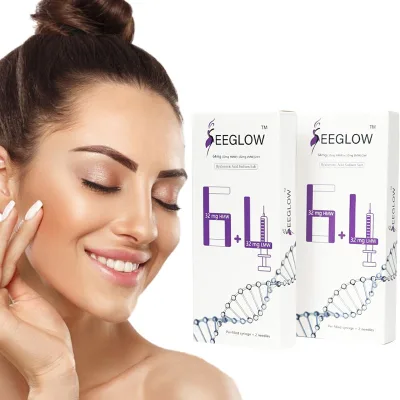


Rejuran Skin Booster Stimulate Collagen Production Repair Scars Reduce Pores
$135.00 - $150.00
MOQ: 1 Pieces


Rejuran Skin Booster3+3 Repair Ba Rri Er, Wrinkle Removal and Anti-Aging
$190.00 - $210.00
MOQ: 1 Pieces


Premium Anti-Aging Collagen Growth Booster with Hyaluronic Acid Rejuran Hb
$90.00 - $108.00
MOQ: 5 Pieces


New Rejuran Healer for Full Face and Skin Rejuvenation Skin Booster Pdrn
$250.00 - $260.00
MOQ: 1 Boxes


Comprehensive Sourcing Guide
Strategic Sourcing Guide for Anti-Aging Rejuran Skin Booster Products
Understanding the Product Category and Core Specifications
The anti-aging Rejuran skin booster represents a specialized category within medical aesthetics, distinct from traditional dermal fillers due to its primary mechanism of action. Based on available market data, these products are fundamentally characterized as injectable solutions designed for facial application, specifically targeting skin texture, hydration, and repair. The core active material identified in this category is often associated with polynucleotide formulations, though some listings explicitly reference Hyaluronic Acid as a component, indicating a diverse range of formulations under the broad "Rejuran" umbrella.
Buyers must first distinguish between the specific product models observed in the supply chain. The data indicates multiple distinct configurations, including the "Rejuran Healer," "Rejuran Tone-up Booster," and "Rejuran Skin Booster." These variations are not merely marketing terms but correspond to specific technical standards and vial counts. For instance, one observed standard configuration is "3pdrn+3amino," suggesting a specific ratio of polynucleotides and amino acids. Another common specification is "2ml X 3vials + 2ml X 3vials," while others are listed as "6Vial" or "2ml X 6vials." The physical form is consistently described as a gel, with colors ranging from transparent to white, which may indicate different batch compositions or specific product lines.
The origin of these products is a critical initial filter. The supplied facts consistently point to South Korea as the manufacturing origin, with specific references to "Korea" and "South Korea." This geographic provenance is significant in the context of regulatory compliance and manufacturing standards, as South Korea is a recognized hub for advanced aesthetic injectables. When sourcing, buyers should verify that the product origin matches the documentation provided by the supplier, ensuring that the "South Korea" designation is supported by official certificates of origin rather than just marketing claims.
Technical Specifications and Formulation Standards
When evaluating the technical specifications of Rejuran skin boosters, precision is paramount. The product is not a monolithic entity but a collection of specific models with varying volumes and vial counts. The observed net weights and volumes include 2 ml units, 3 ml units, and combinations thereof. For example, one specific model is listed with a standard of "3ml3+3ml3," while another is "2ml X 3vials + 2ml X 3vials." These specifications dictate the dosage and the total treatment capacity per box.
The formulation standards vary significantly across the observed listings. Some products adhere to a "rejuran healer" standard, while others are categorized under "2*1ml" or "6Vial" standards. It is essential for procurement teams to understand that "Rejuran" is a brand or product family name, and the specific standard (e.g., "3pdrn+3amino") defines the chemical composition and intended efficacy. The "Rejuran Tone-up Booster" is noted for effects such as whitening, firming, and anti-aging, whereas the "Rejuran Skin Booster" is associated with repairing scars and reducing pores.
Packaging is another critical technical aspect. The standard packaging is identified as a "Box," but the internal configuration varies. Buyers must verify the exact number of vials per box, as this directly impacts inventory management and cost-per-treatment calculations. The shelf life also varies, with observed ranges including 2 years, 3 years, and durations of 6-24 months for the effects of the treatment itself. These discrepancies highlight the necessity of checking the specific batch documentation for the exact expiration date and storage requirements, as the "Shelf Life" attribute is not uniform across all SKUs.
Compliance, Certification, and Regulatory Verification
In the medical aesthetics sector, compliance is the primary gatekeeper for successful procurement. The supplied data indicates that products in this category often carry "CE" and "ISO" certifications. Specifically, "CE ISO" and "CE" are listed as available certificates. However, the presence of these certifications in a product listing does not guarantee their validity for the specific buyer's jurisdiction. Buyers must independently verify that the CE mark corresponds to the specific directive applicable in their region (e.g., EU MDR) and that the ISO certification covers the specific manufacturing facility and product line.
The distinction between "Disinfection" and "Without Disinfection" in the product attributes suggests a need for careful handling and storage protocols. Some listings indicate the product arrives with disinfection, while others do not. This variance requires the buyer to establish clear Standard Operating Procedures (SOPs) for the receiving and storage of these goods. If a product is listed as "Without Disinfection," the buyer must ensure their facility has the capacity to perform terminal sterilization or that the product is intended for immediate use under sterile conditions by a licensed professional.
Furthermore, the "Certification" attribute must be cross-referenced with the product's intended use. The product is explicitly defined for "Injection" and "Face" use. This classification places it in a higher regulatory tier compared to topical skincare. Buyers should demand proof of the specific certification numbers and the issuing authority. Relying solely on a supplier's claim of "CE ISO" without requesting the certificate documents is a significant procurement risk. The "Stock" availability, listed as "Yes" or with specific quantities like "5000," should also be verified against the supplier's ability to provide valid regulatory documentation for those specific units.
Cost Drivers, Pricing, and Order Economics
The economics of sourcing Rejuran skin boosters are influenced by several factors, including the specific model, volume, and packaging configuration. The observed price range in the market is between 30 and 260 USD. This wide range suggests that the cost is not determined by a single variable but by the combination of the product standard, the number of vials, and the brand positioning. A "2ml X 3vials" box will likely command a different price point than a "3ml3+3ml3" configuration.
The Minimum Order Quantity (MOQ) is another critical cost driver. The data shows an MOQ range from 1 to 30 units, with specific listings stating "1 Box," "1boxes," or simply "1." This flexibility allows for smaller initial orders, which is beneficial for testing the market or for clinics with lower patient volumes. However, buyers should be aware that lower MOQs might come with a higher unit price. The "Customization" attribute is listed as "Available," which could imply that bulk orders or specific packaging requests might alter the pricing structure.
Payment terms are also a factor in the total cost of ownership. The observed payment methods include "Paypal, West Union, Money Gram, T/T." Each of these methods carries different transaction fees and processing times. For large B2B transactions, T/T (Telegraphic Transfer) is often the most cost-effective, while Western Union or Money Gram might be used for smaller, urgent orders but at a higher fee. Buyers should calculate the total landed cost, including shipping and payment processing fees, rather than focusing solely on the base product price.
Supplier Evaluation and Logistics Management
Selecting a reliable supplier for medical injectables requires a rigorous evaluation process beyond just price and availability. The "Delivery Time" is a key performance indicator, with observed ranges of "3-7 Days" and specific mentions of "3days." This indicates a generally fast logistics network, likely utilizing express carriers. The "Shipment" methods listed include "DHL/UPS/FedEx/EMS/Eub," which are reputable international couriers. However, the choice of carrier affects the cost and the temperature control during transit, which is critical for maintaining the integrity of the gel-based product.
The "Stock" status is another vital metric. Listings indicate "Stock: Yes" and specific quantities like "5000," suggesting that some suppliers maintain significant inventory. However, buyers should verify the freshness of this stock, especially given the varying shelf lives of 2 to 3 years. A supplier with "5000" units in stock might have older batches that are closer to expiration, which could impact the usable lifespan of the product for the end-user.
When evaluating suppliers, buyers should also consider the "Customization" capability. If a buyer requires specific packaging or labeling for their region, the supplier's ability to accommodate these requests is a sign of operational maturity. Additionally, the "Disinfection" status should be part of the supplier's quality assurance protocol. A supplier that offers pre-disinfected products or provides clear instructions for post-receipt disinfection demonstrates a higher level of quality control.
Quality Control and Long-Term Procurement Strategy
Quality control in the procurement of Rejuran skin boosters extends beyond the initial purchase. The "Effect" attributes, such as "Repair Scars Reduce Pores," "Whitening, Firming, Anti-Aging, Anti-Wrinkle," and "Skin Booster," must be validated against clinical expectations. Buyers should ensure that the supplier provides batch-specific test results or quality assurance documents that confirm the product meets the stated standards, such as "3pdrn+3amino" or "2ml X 6vials."
Long-term procurement strategies should focus on building relationships with suppliers who offer consistent quality and reliable logistics. The "Delivery" time of 3 days and the availability of multiple shipping options suggest that a stable supply chain is feasible. However, buyers should plan for potential disruptions by maintaining a buffer stock, considering the "Shelf Life" of 2 to 3 years. This buffer ensures that the clinic or distributor can continue operations even if supply chain delays occur.
Finally, the "Use" of the product is strictly for the "Face" and involves "Injection." This necessitates that the procurement process includes verification of the end-user's qualifications. Buyers should ensure that their distribution channels are limited to licensed medical professionals who can safely administer these injectables. The "Material" composition, whether Hyaluronic Acid or polynucleotide-based, must be clearly documented to prevent any confusion or misuse. By adhering to these quality control measures and maintaining a strategic approach to inventory and supplier relationships, buyers can ensure a sustainable and compliant supply of anti-aging Rejuran skin boosters.
Comparative Analysis of Product Models
To assist in decision-making, the following table summarizes the key variations observed in the Rejuran product line based on the provided data. This comparison highlights the diversity in specifications that buyers must navigate.
| Product Name | Standard / Model | Volume Configuration | Shelf Life | Key Effects | Origin |
|---|---|---|---|---|---|
| Rejuran Healer | rejuran healer | 2ml X 3vials + 2ml X 3vials | 3 Years | Repair Scars, Reduce Pores | South Korea |
| Rejuran Tone-up Booster | 6Vial | 2ml X 3vials + 2ml X 3vials | 2 Years | Whitening, Firming, Anti-Aging | South Korea |
| Rejuran Skin Booster | 2ml X 6vials | 2ml X 6vials | 2 Years | Repair Scars, Reduce Pores | South Korea |
| Rejuran Skin Booster3+3 | 3ml3+3ml3 | 3ml3+3ml3 | 3 Years | Skin Booster | South Korea |
| Rejuran (General) | 3pdrn+3amino | 2 ml | 3 Years | Anti-Aging | Korea |
This table underscores the importance of specifying the exact model and standard when placing an order. The variations in shelf life and volume configuration directly impact the cost per treatment and the inventory turnover rate. Buyers should use this data to align their procurement orders with their specific clinical needs and patient demographics.
FAQs
What is the origin of the anti-aging rejuran skin booster?
The product originates from South Korea, as confirmed by multiple listings. Buyers should verify that the certificate of origin matches this specific geographic designation to ensure authenticity and compliance with manufacturing standards.
Which certifications are available for these injectable products?
Products often carry CE and ISO certifications, with some listings specifying CE ISO. Buyers must independently verify that these certificates correspond to the specific directive applicable in their region before purchasing.
How long is the shelf life of the anti-aging rejuran skin booster?
Shelf life varies between two and three years depending on the specific batch and model. Buyers should check the exact expiration date on the packaging rather than relying on general estimates to ensure product viability.
Can buyers customize the packaging for bulk orders?
Customization is available for specific orders, allowing for tailored packaging requests. This option may influence pricing and lead times, so buyers should confirm the feasibility and costs with the supplier before placing an order.
What is the minimum order quantity for these skin boosters?
The minimum order quantity ranges from one box to thirty units depending on the supplier. Some listings specify an MOQ of one box, while others allow for single unit orders to facilitate market testing.
How quickly can the anti-aging rejuran skin booster be delivered?
Delivery times typically range from three to seven days using express carriers like DHL or FedEx. Buyers should confirm the specific lead time with the supplier to ensure it aligns with their operational schedule.