Source Anti-Explosion Manual Wrench for Drilling, Mining, and Exploration
Compare 30 listings for the anti-explosion manual wrench designed for geological exploration, mining, and heavy-duty drilling. These tools feature carbon steel or chrome-vanadium construction with metric and American standards to suit various industrial applications.
Key considerations
Products List


Manual Adjustable Wrench 6-12" Large Open Multi-Function Adjustable Wrench
$1.72 - $4.63
MOQ: 1000 Pieces


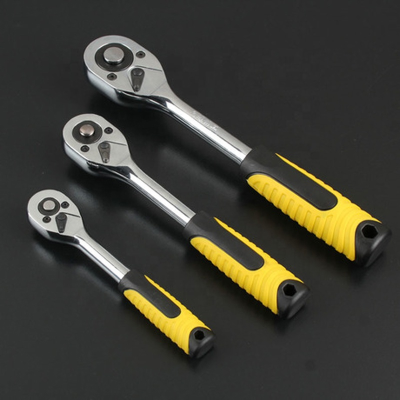
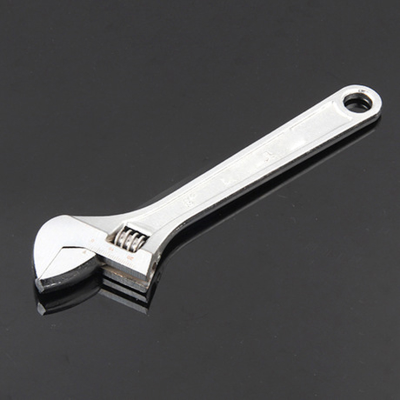
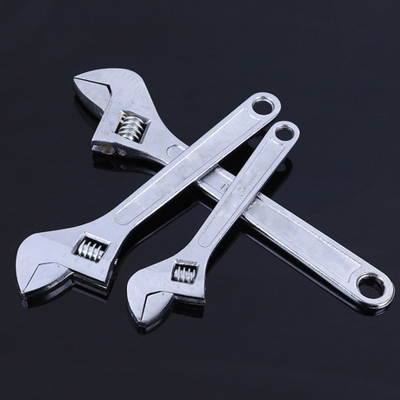


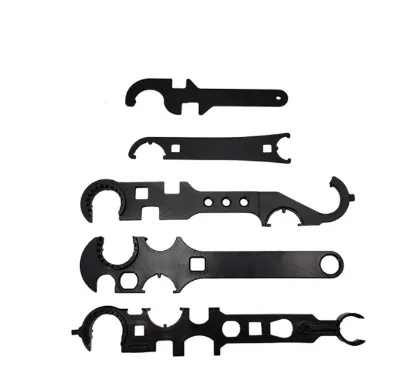




Comprehensive Sourcing Guide
Strategic Sourcing Guide for Anti-Explosion Manual Wrenches
Understanding the Technical Landscape of Heavy-Duty Wrenches
When sourcing anti-explosion manual wrenches, buyers must first navigate a complex landscape of product definitions that often blend general tooling with specialized industrial equipment. The core keyword suggests a tool designed for environments where spark generation poses a significant risk, yet the available product data reveals a diverse array of specifications that require careful filtering. The observed product range includes items explicitly labeled as "Heavy Duty Pipe Wrench" and "Combination Wrench," indicating that the market offers both specialized pipe-handling tools and general-purpose fastening instruments under this category.
A critical observation in the current market data is the variation in material composition. While some listings specify "Chrome-vanadium Steel," a standard for high-strength general tools, others explicitly mention "Carbon Steel and Alumin" or "Alumin + steel." This distinction is vital for anti-explosion applications. Non-ferrous alloys, such as aluminum-bronze or beryllium-copper (though the latter is not explicitly listed in the provided facts, the presence of aluminum suggests non-sparking potential), are typically preferred in hazardous zones to prevent ignition. Buyers must verify if the "Anti-Explosion" feature is inherent to the specific alloy composition or a surface treatment. The data notes "Chrome" as a surface treatment, which is a plating process. While chrome provides corrosion resistance, it does not inherently make a steel tool non-sparking. Therefore, the presence of the "Anti-Explosion" attribute in the product keywords must be cross-referenced with the material specification to ensure the tool meets safety requirements for volatile environments.
The physical dimensions and types of wrenches available are equally varied. The data indicates a range of sizes, including specific American Standard lengths of 18", 24", 36", and 48" for heavy-duty pipe wrenches. Conversely, combination wrenches are listed with lengths ranging from 160mm to 300mm and widths from 9.6mm to 19.8mm. This suggests that a single supplier may offer a broad catalog, but the buyer must select the specific form factor that matches the application. The "Working Mode" is consistently listed as "Manual," confirming that these are hand-operated tools rather than pneumatic or electric variants. The "Folded" attribute appears in conflicting states, with some products listed as "Folded" and others as "Unfolded," likely referring to the storage state or a specific design feature of adjustable wrenches. Buyers should clarify if the "Folded" state implies a compact storage design or a specific mechanical configuration relevant to the job site.
Compliance and Certification Verification Protocols
In the realm of anti-explosion equipment, certification is not merely a marketing point but a fundamental requirement for operational safety. The provided product facts list "CE" as a certification. The CE mark indicates conformity with health, safety, and environmental protection standards for products sold within the European Economic Area. However, for anti-explosion tools, the CE mark alone is often insufficient without specific directives regarding equipment for explosive atmospheres (such as the ATEX directive in Europe or equivalent standards in other regions).
Buyers must exercise extreme caution when interpreting the "Standard" attributes listed in the product data. The data references multiple standard types: "Metric," "British," "German Type," "European Type," and "American Type." It also lists specific standard models like "18" 24" 36" 48" heavy duty wrench" and "8mm-24mm." These refer to dimensional standards rather than safety certifications. The presence of "DIN 894" in the low-confidence background suggests a German standard for combination wrenches, but this is marked as low-confidence and should not be asserted as a fact for every product.
When evaluating a supplier, the buyer must demand documentation that explicitly links the "Anti-Explosion" claim to a recognized safety standard. The product facts mention "Anti-Magnetic" as a feature alongside "Anti-Explosion." This is a significant technical detail. In certain geological or petrochemical exploration contexts, magnetic fields can interfere with sensitive equipment or indicate the presence of ferrous materials that might spark. A tool that is both anti-explosion and anti-magnetic suggests a specialized non-ferrous alloy construction. However, the data also lists "Carbon Steel" as a material for some combination wrenches. Carbon steel is generally ferromagnetic and prone to sparking upon impact. This creates a potential contradiction in the product listing.
To resolve this, the procurement team must verify the specific batch or model number against the certification. If a product is listed as "Carbon Steel" but claims to be "Anti-Explosion," the buyer must request proof of a specific surface treatment or alloy modification that mitigates sparking, or consider this listing a misclassification. The "CE" certification should be accompanied by a Declaration of Conformity that specifically addresses the hazardous environment classification (e.g., Zone 0, 1, or 2). Without this specific linkage, the "Anti-Explosion" attribute remains an unverified claim. The "Made in China" origin is noted in the data, and while China is a major manufacturing hub, the quality of safety compliance can vary significantly between factories. Buyers should not assume that the CE mark on a Chinese-manufactured tool automatically guarantees compliance with international anti-explosion standards without independent verification.
Cost Drivers and Pricing Structure Analysis
The pricing landscape for manual wrenches is highly variable, with observed listed prices ranging from $0.06 to $220. This wide spectrum reflects the diversity in product type, material quality, and intended application. The lower end of the price range likely corresponds to standard carbon steel combination wrenches or basic pipe wrenches intended for general industrial use. These items, priced around $0.06 to a few dollars, typically lack the specialized non-sparking alloys required for true anti-explosion environments.
Conversely, the upper end of the price range, reaching up to $220, likely corresponds to heavy-duty pipe wrenches with specialized features. The data mentions "Heavy Duty Pipe Wrench" with lengths up to 48 inches. A 48-inch wrench is a massive tool, often used for large-diameter pipes in oil and gas infrastructure. The cost driver here is the sheer volume of material, the precision required for the jaw mechanism, and potentially the specialized alloy if it is indeed non-sparking. The "Anti-Explosion" and "Anti-Magnetic" features, if genuine, would significantly increase the manufacturing cost due to the expense of non-ferrous metals like aluminum-bronze or beryllium-copper.
The Minimum Order Quantity (MOQ) also plays a critical role in the effective cost per unit. The observed MOQ range is 1 to 10,000 units. Some listings specify an MOQ of 1000 pieces per color, while others allow for single-unit purchases. For a buyer seeking a small batch of specialized anti-explosion tools, an MOQ of 1000 may be prohibitive, forcing them to pay a premium for smaller quantities or to consolidate orders with other buyers. The "Suooly Ability" is listed as 1,000,000 pieces per month, indicating that high-volume suppliers are available, but this capacity does not necessarily translate to lower unit costs for small orders.
Payment terms and logistics further influence the total cost of ownership. The data indicates payment terms of "LC/Tt" (Letter of Credit / Telegraphic Transfer), which are standard for international B2B transactions but may require upfront capital or banking fees. The delivery time is noted as "25 days" or "35 days after we get the 30% deposit." These lead times must be factored into the procurement budget, as delays can impact project schedules. The "Port" is listed as "Nignbo /Shanghai," which are major Chinese ports, but shipping costs from these locations to the buyer's destination will vary based on volume and freight rates.
Typical Applications and Operational Context
The application data provided offers a clear picture of where these tools are intended to be used. The "Use" field explicitly mentions "Geological Exploration Core Drilling," and the "Suitable Rock Range" includes "Soft, Middle Hard, Hard Rock." This suggests that the heavy-duty pipe wrenches are designed for the rugged environment of mining and geological surveying. In these settings, the ability to grip large pipes or casing in difficult terrain is paramount. The "Key Words" such as "Water Swivel," "Subs," "Hoisting Plug," and "Wireline Winch" further reinforce the connection to drilling and well construction operations.
However, the "Anti-Explosion" attribute introduces a different application context. While geological exploration can involve hazardous gases, the primary driver for anti-explosion tools is typically the petrochemical, oil and gas, or chemical processing industries. In these sectors, tools are used in areas where flammable gases, vapors, or dust may be present. The "Usage" field lists "All Machine and Engier Car," which is a broad statement, but in the context of anti-explosion, it implies maintenance and assembly work in hazardous zones.
The "Working Mode" being "Manual" is consistent with these applications, as power tools are often prohibited in explosive atmospheres due to the risk of electrical arcing. Manual wrenches provide a safe alternative for tightening and loosening fittings. The "Handle Color" is listed as "Metallic," and the "Colour" options include "Grey /Black /Red and So on." In industrial safety, color coding is often used to distinguish between different types of tools or to indicate specific safety ratings. Buyers should verify if the color of the wrench has any specific safety meaning in their operational environment.
The "Condition" is listed as "New," and the "Warranty" is 12 months. This is a standard expectation for industrial tools, but in high-wear environments like drilling, the actual service life may be shorter. The "OEM" (Original Equipment Manufacturer) availability suggests that suppliers can customize the tools with branding or specific modifications, which is useful for large organizations that require uniform tooling across their fleet.
Supplier Evaluation and Capability Assessment
Evaluating suppliers for anti-explosion manual wrenches requires a rigorous approach beyond simple price comparison. The data indicates that the "prod_origin" is "China," and the "Port" is "Nignbo /Shanghai." While this provides a geographical baseline, it does not guarantee quality or compliance. The "Suooly Ability" of 1,000,000 pieces per month suggests a large-scale manufacturing capability, but buyers must verify if this capacity is dedicated to high-quality safety tools or if it includes lower-grade general-purpose items.
The "OEM" attribute being "Yes" is a positive indicator of supplier flexibility. It suggests that the manufacturer can adapt the product to specific buyer requirements, such as custom packaging, branding, or even specific dimensional adjustments. However, the "Feature" is listed as "Ordinary" for some items, which may contradict the "Anti-Explosion" claim. Buyers must distinguish between suppliers who offer genuine specialized tools and those who simply label standard tools with safety keywords.
The "Stock" status is listed as "Have Stock," which is advantageous for urgent procurement needs. However, the "Delivery Time" of 25 to 35 days after a deposit suggests that even with stock, the logistics and quality control processes may take time. Buyers should clarify if the "Have Stock" refers to finished goods ready for immediate shipment or if it includes raw materials.
When evaluating a supplier, the buyer should request a detailed product specification sheet that aligns the "Anti-Explosion" claim with the specific material composition. If the material is listed as "Carbon Steel," the supplier must provide a technical justification for the anti-explosion claim, such as a specific heat treatment or surface coating. The "Certification" of "CE" should be verified with the issuing body to ensure it covers the specific hazardous environment classification. Additionally, the "Warranty" of 12 months should be reviewed for exclusions related to misuse or harsh environmental conditions.
Quality Control and Long-Term Procurement Strategy
Ensuring the quality of anti-explosion manual wrenches is a continuous process that extends beyond the initial purchase. The "Surface Treatment" of "Chrome" is noted in the data, which provides corrosion resistance but does not inherently ensure non-sparking properties. Buyers should implement a quality control protocol that includes visual inspection for surface defects, dimensional verification against the listed standards (e.g., "Metric," "American Standard"), and material testing to confirm the alloy composition.
For long-term procurement, the "MOQ" of 1000 pieces per color may require a strategic approach. If the buyer's annual demand is lower, they may need to negotiate a lower MOQ or consolidate orders with other buyers to meet the threshold. The "Payment Term" of "LC/Tt" is standard, but for long-term relationships, buyers might negotiate more favorable terms, such as partial payments or credit periods, to improve cash flow.
The "Product Packing" is listed as "Carton," "Gunny Bage/Carton/Pallet," which indicates that the packaging is designed for bulk shipping. Buyers should ensure that the packaging is robust enough to protect the tools during transit, especially if they are being shipped to remote locations like drilling sites. The "Warranty" of 12 months provides a safety net for manufacturing defects, but buyers should also consider the availability of spare parts or replacement tools in case of damage in the field.
In conclusion, sourcing anti-explosion manual wrenches requires a meticulous approach that balances technical specifications, compliance verification, and supplier evaluation. The diverse range of products, from standard carbon steel wrenches to heavy-duty pipe wrenches, offers options for various applications, but the "Anti-Explosion" claim must be rigorously validated. By focusing on material composition, certification details, and supplier capabilities, buyers can ensure they procure tools that meet the stringent safety requirements of hazardous environments. The long-term success of the procurement strategy depends on maintaining a clear understanding of the product attributes and continuously monitoring the supplier's ability to deliver consistent quality and compliance.
FAQs
What certifications do anti-explosion manual wrenches have?
The products listed carry CE certification for European compliance. However, buyers must verify specific hazardous environment directives like ATEX, as the CE mark alone may not guarantee anti-explosion safety without additional documentation linking it to explosive atmospheres.
Which materials are used for anti-explosion manual wrenches?
Materials include chrome-vanadium steel, carbon steel, and aluminum-steel alloys. While some listings claim anti-explosion features, carbon steel is ferromagnetic and sparks easily, so buyers must confirm if non-ferrous alloys are used for true spark-free performance.
How long is the delivery time for these wrenches?
Delivery times range from 25 days to 35 days after a 30% deposit is received. Specific lead times depend on the supplier and order volume, with some manufacturers offering stock availability for immediate shipment while others require production time.
Can I customize the wrenches with my own brand?
Yes, OEM services are available for customization of the wrenches. Suppliers can accommodate branding requests, but buyers should confirm minimum order quantities per color, which are often set at 1000 pieces, and verify if specific alloy modifications are possible.
What is the minimum order quantity for these tools?
Minimum order quantities vary from 1 piece to 10,000 pieces depending on the supplier. Some listings specify an MOQ of 1000 pieces per color, while others allow single-unit purchases, so buyers must check specific supplier terms before placing an order.
Where are these manual wrenches manufactured?
The products originate from China, with major ports including Ningbo and Shanghai. Buyers should note that while the origin is documented, the quality of safety compliance for anti-explosion tools varies, requiring independent verification of certification documents.
What is the warranty period for these wrenches?
The standard warranty period is 12 months for new condition products. This coverage applies to manufacturing defects, but buyers should clarify if the warranty extends to wear and tear in high-stress environments like geological exploration or drilling operations.