Source anti-glare led digital menu board for Restaurants Hotels Bars
Explore 30 listings for the anti-glare led digital menu board suitable for restaurants, hotels, and bars. Buyers can compare specifications like voltage, material, and customization options from verified suppliers in China.
Key considerations
Products List


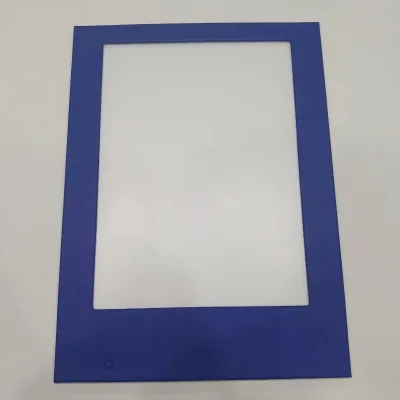
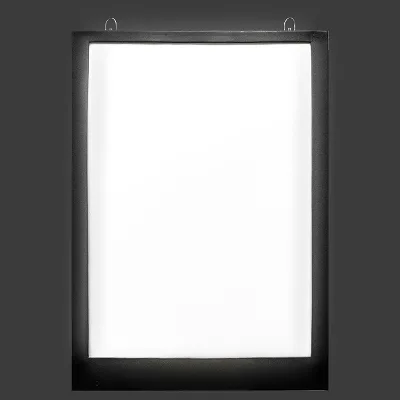
Advertising Board Ultra-Thin Illuminated Led Backlit Outdoor Menu Display Board
$25.36 - $40.57
MOQ: 10 Minimum
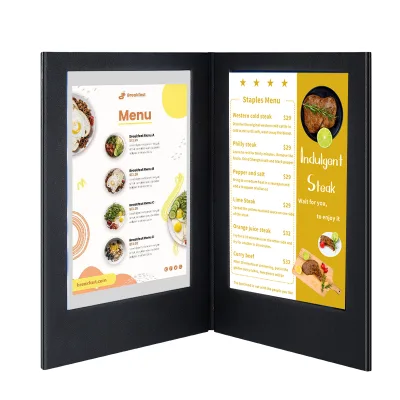
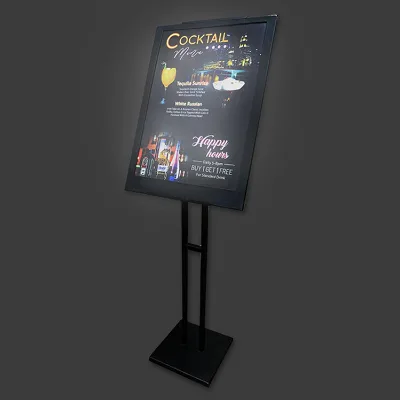
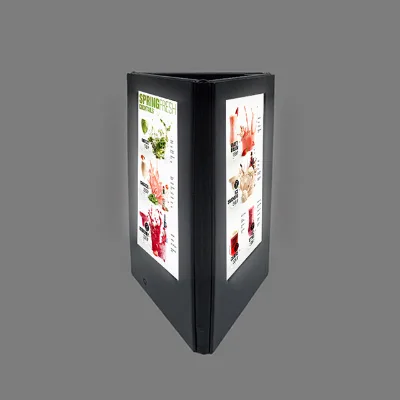
Cheap Magnetic Slim Restaurant Backlit Light Panel Display Led Menu Board
$17.00 - $28.00
MOQ: 10 Minimum
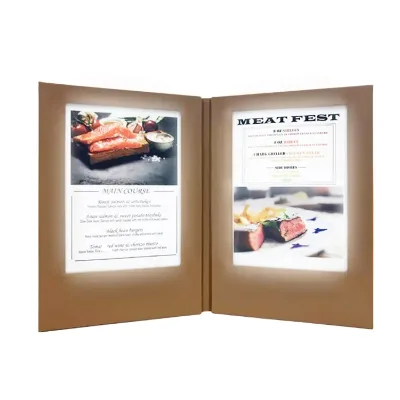


Advertising LED Menu Board LED Restaurant Menu Light Signs Menu Light Box
$15.00 - $25.00
MOQ: 20 Pieces


Wall Mounted Advertising Display Electronic Signage LED Menu Board Light Box
$14.00 - $18.00
MOQ: 20 Pieces


Hot Sale Desktop Menu Board Double Side Illuminate Light Box LED Poster A4 Frame
$4.80 - $15.00
MOQ: 1 Pieces


High Brightness Window Facing Display LCD Advertising Player Semi-Outdoor Digital Menu Board
$559.00 - $1099.00
MOQ: 1 Pieces
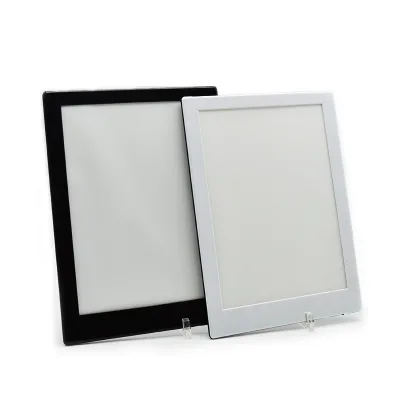
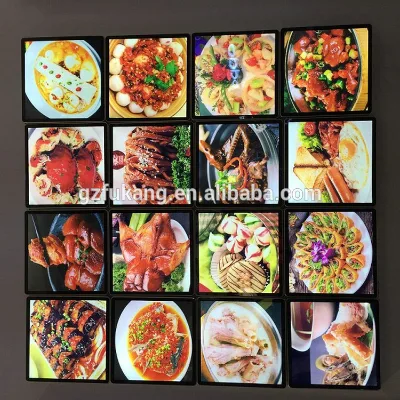
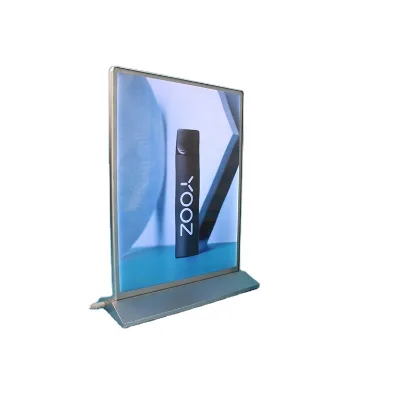


Comprehensive Sourcing Guide
Strategic Sourcing Guide for Anti-Glare LED Digital Menu Boards
Procuring anti-glare LED digital menu boards requires a nuanced understanding of the intersection between optical engineering, supply chain logistics, and regulatory compliance. In the hospitality sector, where ambient lighting varies from dimly lit wine bars to brightly lit fast-food chains, the ability to maintain screen visibility without causing visual discomfort is paramount. This guide synthesizes available product attributes and industry standards to provide a structured approach for buyers evaluating suppliers in this specialized category. The focus remains on evidence-based criteria, ensuring that procurement decisions are grounded in verifiable specifications rather than marketing assertions.
Optical Performance and Technical Specifications
The core functionality of an anti-glare LED digital menu board lies in its ability to deliver high contrast and readability under diverse lighting conditions. When evaluating technical specifications, buyers must look beyond the basic "LED" designation. The provided data indicates that specific models are designed with features such as "rechargeable" capabilities and suitability for "dim areas," suggesting a focus on low-light performance. However, the term "anti-glare" implies specific optical treatments, such as matte surface finishes or specialized diffusers, which are not explicitly detailed in the supplied product attributes but are critical for the "anti-glare" keyword.
Voltage compatibility is a primary technical constraint. The observed data reveals a split in power requirements, with some units operating at "220V" while others support a broad range of "Ac 110-240V." For international procurement, the 110-240V range offers significant logistical advantages, reducing the need for voltage converters and ensuring compatibility with local grid standards in North America, Europe, and Asia. Power consumption is another critical metric; observed listings cite a "100 W" power rating for certain units. Buyers must verify if this figure represents peak consumption or average operational load, as this directly impacts energy costs and heat generation within the menu board enclosure.
The physical construction also dictates optical performance. Materials such as "PC" (Polycarbonate) are noted for the lamp body, offering durability and light diffusion properties. For the menu cover itself, "High quality PVC faux leather" is a common core material, which may influence the texture and light scattering of the surrounding frame. The "Cool White" color temperature (CCT) is a specific observation from the data, indicating a preference for brighter, more clinical illumination often associated with modern digital displays. However, buyers should verify if the supplier offers variable color temperatures, as "Cool White" may be too harsh for upscale dining environments that prefer warmer tones.
Compliance and Certification Verification
Navigating the regulatory landscape is essential for B2B procurement, particularly when importing electronic goods. The supplied product facts list several certifications, including "CE," "RoHS," "GS," "FCC," and "C-Tick." These represent a robust baseline for market entry. CE certification indicates conformity with health, safety, and environmental protection standards for products sold within the European Economic Area. RoHS compliance ensures the restriction of hazardous substances, which is a standard requirement for electronic manufacturing globally.
The presence of "FCC" (Federal Communications Commission) certification is particularly relevant for the US market, indicating that the device does not emit harmful levels of radio frequency interference. "C-Tick" is the Australian compliance mark, suggesting the product meets electromagnetic compatibility standards for that region. "GS" (Geprüfte Sicherheit) is a German safety mark, often recognized internationally as a sign of rigorous testing.
However, the presence of these certifications in a product listing does not guarantee that every unit in a shipment is compliant. Buyers must request valid, up-to-date test reports from the supplier rather than relying solely on the certification logos displayed on the product page. It is crucial to verify that the specific model number, such as "GS0404101003" or "LED-HSPVC100-1V," matches the certification documents. Discrepancies between the model number on the certificate and the actual product can lead to customs seizures or legal liabilities. Furthermore, while the data mentions "Custom service" and "Acceptable Custom," buyers must ensure that any custom modifications do not void existing certifications, as altering the internal circuitry or external housing can affect electromagnetic emissions and safety ratings.
Cost Drivers and Pricing Structure
Understanding the cost structure of LED menu boards is vital for budgeting and negotiating. The observed price range spans from $1.6 to $1099 USD, a variance that reflects differences in size, complexity, and customization levels. The lower end of the spectrum likely corresponds to basic, small-format units or components, while the higher end encompasses large, feature-rich digital displays with advanced power management and custom branding.
Several factors drive these costs. First, the "Power Source" is a significant differentiator. Units described as "rechargeable" with "Battery" power sources typically command a premium due to the inclusion of lithium-ion cells and charging circuitry. In contrast, hardwired units operating at 220V or 110-240V may be less expensive but require professional installation. Second, the "Material" composition affects pricing. While "PC" and "PVC faux leather" are standard, the quality of the leather and the thickness of the polycarbonate can vary, influencing the final unit cost.
Customization is another major cost driver. The data explicitly states that "Customization" is "Available" and "Acceptable Custom" is an option. This includes custom sizes, such as "A4, A5, Letter, Legal, F4 or customize," and branding elements like "blind deboss," "silk screen," or "foil stamping." Each of these customizations adds to the production time and cost. The "Lead Time" of "7-10 Business Days" or "10-14 working days" also impacts pricing; expedited orders often incur surcharges. Buyers should be aware that the "Single gross weight" varies significantly, from 10.000 kg to 20.000 kg, which directly influences shipping costs. Heavier units, likely due to larger battery packs or thicker materials, will require more expensive freight solutions.
Typical Applications and Usage Scenarios
The versatility of LED digital menu boards makes them suitable for a wide array of hospitality environments. The supplied data lists specific usage scenarios including "Restaurant, Hotel, Bar, Cafe, Club, Lounge, SteakHouse, Bar&Grill, Resort." This breadth of application underscores the need for adaptable designs. For instance, a "SteakHouse" or "Lounge" may prioritize the "rechargeable" feature to allow for flexible placement without the constraint of nearby power outlets, while a "Bar&Grill" might require a larger display size to accommodate extensive menu items.
The "Product Feature" of being "suitable to read in the dim area" is particularly relevant for evening service in bars and clubs, where ambient lighting is low. However, the "anti-glare" aspect becomes critical in brighter environments, such as a "Resort" lobby or a "Cafe" with large windows. The "Color" attribute is noted as "Multi-colored," which suggests the potential for dynamic visual effects, though buyers must confirm if this refers to the backlighting or the physical casing.
The "Insert Size" options, ranging from "A3, A2" to "A4, A5, Letter, Legal," indicate that these boards are often designed to hold physical menus or cards, with the LED backlighting illuminating the content. This hybrid approach combines the tactile nature of traditional menus with the visibility of digital lighting. The "Packing" method, described as "Packaged with Vacuum Bubble" or "opp bag + sponge + carton," is designed to protect the fragile LED components during transit, which is essential for maintaining the optical clarity of the display upon arrival.
Supplier Evaluation and Operational Capabilities
When selecting a supplier, buyers must assess their operational capabilities beyond the product listing. The data indicates a "place of origin" in "Guangdong, China" and "Chengdu China," regions known for their manufacturing clusters. However, the specific "brand name" is listed as "OEM" in some entries and "Dragon Gear" in others, highlighting the prevalence of private labeling. Buyers seeking a long-term partnership should verify if the supplier is willing to provide a consistent brand identity or if they operate strictly as an OEM manufacturer.
The "Production lead time" of "10-14 working days" suggests a moderate production cycle, but this can vary "depend the quantity." Buyers should clarify the capacity for scaling orders, especially during peak seasons. The "Single package size" of "40X30X32 cm" provides a baseline for logistics planning, but larger custom units will require different freight arrangements.
Quality control is another critical evaluation point. The "prod_packing" of "Plywwod Case" for certain items suggests that high-value or fragile units are shipped in reinforced packaging, which is a positive indicator of care in handling. However, buyers should request a quality assurance protocol that includes pre-shipment inspections, specifically checking for dead pixels, uneven lighting, and structural integrity of the "Lamp Body Material." The "Standard" of "Custom service" implies flexibility, but buyers must ensure that the supplier has a robust process for managing custom orders to avoid errors in branding or sizing.
Quality Control and Long-Term Procurement Considerations
Ensuring the longevity and reliability of LED menu boards requires a proactive approach to quality control. The "Life(h)" specification is listed as "Type:Flex LED Strip," which is a vague descriptor. Buyers must request the specific lifespan in hours (e.g., 50,000 hours) and the conditions under which this lifespan is guaranteed. The "Heating Method" being "Electric" necessitates an understanding of thermal management; excessive heat can degrade the "High quality PVC faux leather" and shorten the life of the LED components.
For long-term procurement, the availability of spare parts is crucial. Buyers should inquire about the supply chain for replacement LED strips, batteries, and power adapters. The "Customization" aspect, while attractive, can complicate long-term maintenance if the supplier changes their component sourcing. Therefore, it is advisable to lock in specifications for the initial order to ensure future compatibility.
The "Logo" options, including "blind deboss," "silk screen," and "foil stamping," offer branding opportunities but require precise quality checks. Misalignment or fading of these logos can detract from the professional appearance of the menu board. Buyers should request samples of the branding process before committing to a large order.
Finally, the "MOQ" (Minimum Order Quantity) range of 1-100 units provides flexibility for both small startups and large chains. However, buyers should negotiate pricing tiers based on volume to optimize costs. The "Selling Units" being "Single item" suggests that the supplier is capable of handling small orders, but bulk discounts may be available for larger quantities. By focusing on these evidence-based criteria, buyers can navigate the complex market of anti-glare LED digital menu boards with confidence, ensuring they secure products that meet their specific operational and aesthetic requirements.
FAQs
What certifications do these menu boards have?
These units carry CE, RoHS, GS, FCC, and C-Tick certifications. These marks indicate compliance with safety and environmental standards for Europe, the US, and Australia, ensuring the products meet international regulatory requirements for electronic goods.
Can I request custom sizes for the menu board?
Yes, customization is available for insert sizes including A4, A5, Letter, Legal, F4, or fully custom dimensions. Buyers can also specify branding methods like blind deboss or foil stamping to match their specific restaurant or hotel branding needs.
How long does production take for these orders?
The standard lead time ranges from 7 to 14 business days depending on the order quantity. This duration covers the manufacturing process and quality checks before the items are packed and prepared for shipment from the origin locations.
Which voltage options are supported for international use?
The products support both 220V and AC 110-240V power inputs. The 110-240V range is particularly suitable for global procurement as it allows direct use in North America, Europe, and Asia without requiring external voltage converters.
What materials are used for the lamp body and cover?
The lamp body is constructed from PC material, while the cover core uses high-quality PVC faux leather. These materials provide durability and specific light diffusion properties suitable for various hospitality environments like bars, cafes, and hotels.
Can the menu boards be used in dimly lit areas?
Yes, specific models are designed to be rechargeable and suitable for reading in dim areas. This feature makes them ideal for evening service in lounges, clubs, and restaurants where ambient lighting is low but visibility is required.