Source anti-overflow electric coffee maker for Hotel Car Commercial
Compare 30 listings for the anti-overflow electric coffee maker suitable for hotel, car, commercial, and household use. Buyers can evaluate specifications including 800W power, 600ml capacity, and CE certification from Zhejiang suppliers.
Key considerations
Products List
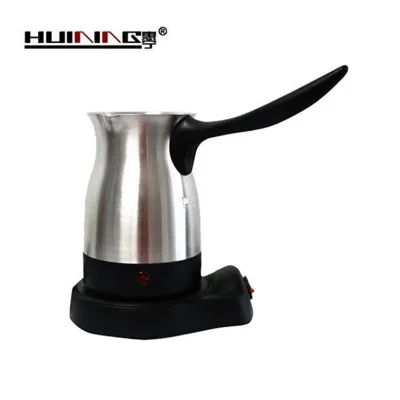


Factory Stainless Steel Coffee Cooker Maker Electric Turkish Coffee Maker
$5.50 - $6.00
MOQ: 3000 Pieces


Portable Automatic Espresso Coffee Machine Mini Electric Household Coffee Maker
$11.17 - $14.35
MOQ: 50 Pieces


Comprehensive Sourcing Guide
Strategic Sourcing Guide for Anti-Overflow Electric Coffee Makers
Understanding Product Architecture and Technical Specifications
The modern anti-overflow electric coffee maker represents a specialized segment within the small appliance market, designed to balance high-volume output with safety mechanisms that prevent liquid spillage during the brewing cycle. Based on current market observations, these units are frequently categorized as semi-automatic espresso coffee makers or electric Greek coffee makers, depending on the specific brewing method and regional terminology. The core architecture typically involves a stainless steel body paired with a heat-resistant plastic handle, a material combination selected to ensure durability while managing thermal conductivity.
Technical specifications for these units often center on a power rating of 800W, operating at standard voltages of 220V or 230V with a frequency of 50-60Hz. The pressure rating for many observed models is listed as 0 bar, indicating that these specific units rely on steam working principles rather than high-pressure pump systems found in commercial espresso machines. The water tank capacity is a critical variable, with observed models featuring a 600ml (0.6L) capacity, suitable for brewing approximately four cups. This capacity aligns with the "less than 5 cups" classification often seen in product data.
The physical dimensions are standardized for shipping and storage efficiency. A typical single package size measures 25cm in length, 17cm in height, and 11cm in width. The net weight of the unit is generally recorded around 8.2kg, with a gross weight of 9kg per unit, though some data points suggest a single gross weight of 0.940kg for the packaged item, indicating variations in packaging density or specific model iterations. The control mode is predominantly manual, requiring user intervention to initiate the brewing process, which distinguishes these devices from fully automated systems. The housing material is consistently identified as stainless steel, providing a robust exterior, while the internal processing material involves coffee powder as the primary input.
Compliance Framework and Certification Verification
In the B2B procurement of electrical appliances, compliance is not merely a regulatory formality but a prerequisite for market access. The anti-overflow electric coffee maker must adhere to a rigorous set of international standards to ensure safety and electromagnetic compatibility. Buyers should verify that the product carries specific certifications such as CE, CB, and RoHS. These marks indicate conformity with European safety directives, basic safety requirements, and restrictions on hazardous substances, respectively.
Further scrutiny is required for markets with stricter electromagnetic interference (EMI) regulations. The product data indicates the presence of EMC (Electromagnetic Compatibility) and EMF (Electromagnetic Field) certifications, which are essential for ensuring the device does not interfere with other electronic equipment. Additionally, certifications like GS (Geprüfte Sicherheit) and LFGB (German Food and Feed Code) suggest compliance with German safety standards and food safety regulations, which are often adopted as benchmarks for global quality.
When evaluating a supplier, procurement teams must request valid test reports that correspond to these certifications. The presence of a certification mark on the product does not automatically guarantee validity; the documentation must be traceable to an accredited testing laboratory. Buyers should also confirm the "Private Mold" status, which is listed as "No" in observed data, implying that the product utilizes existing tooling. This can be a double-edged sword: while it may reduce initial tooling costs, it limits the ability to customize the external design significantly without incurring high minimum order quantities (MOQs) for new molds.
Cost Drivers and Pricing Structure Analysis
The pricing landscape for anti-overflow electric coffee makers is characterized by a wide variance, with observed listed prices ranging from $2.10 to $1,789.00 USD. This broad spectrum is not indicative of a single product category but rather reflects differences in material quality, brand positioning, production volume, and included features. The lower end of the price range likely corresponds to basic models with standard stainless steel bodies and plastic components, while the higher end may include premium finishes, advanced safety features, or bundled accessories.
Several key factors drive the cost of these units. First, the material composition plays a significant role. Models utilizing a full stainless steel body versus those with plastic housing components will have different cost structures. Second, the power source versatility affects pricing. Units designed to operate on both electric power (220V/230V) and vehicle power supplies (12V/24V) for automotive or commercial use require more complex internal circuitry, increasing manufacturing costs. Third, the customization level is a major cost driver. While customization is available, the extent of this customization—such as logo placement, color options (White or Optional), and packaging modifications—directly impacts the unit price.
The MOQ (Minimum Order Quantity) is another critical cost variable. Observed MOQs range from 1 to 3,000 units. A buyer ordering a single unit will pay a significantly higher per-unit cost compared to a buyer placing an order for 3,000 units. The "Selling Units" are typically listed as single items, but bulk purchasing is often structured in cartons containing 12 pieces. Understanding the relationship between volume and price is essential for budgeting. Buyers should also consider the "Free Spare Parts" after-sales service as a value-added component that can reduce the total cost of ownership, even if the initial unit price is higher.
Operational Applications and Market Segmentation
The versatility of the anti-overflow electric coffee maker allows it to serve multiple market segments, from residential households to commercial enterprises. The primary applications listed include Hotel, Car, Commercial, and Household use. This multi-application capability is a result of the dual power source design, which allows the device to function in fixed locations with standard electrical outlets as well as in mobile environments like vehicles.
In the household sector, these machines are marketed as convenient solutions for making espresso, milk, and tea. The semi-automatic procedure and steam working principle make them suitable for users who desire a hands-on brewing experience without the complexity of professional-grade equipment. The compact dimensions (25x17x11cm) and manageable weight make them ideal for kitchen countertops in residential settings.
For the commercial and hotel sectors, the reliability and safety features are paramount. The anti-overflow function is particularly valuable in high-volume environments where spillage can lead to safety hazards or equipment damage. The ability to brew approximately four cups per cycle supports small-to-medium service operations. In the automotive sector, the vehicle power supply capability enables the machine to be used in caravans, RVs, or delivery vehicles, expanding the utility of the product beyond traditional coffee shops.
| Application Sector | Key Requirements | Relevant Product Attributes |
|---|---|---|
| Household | Compact size, ease of use, aesthetic finish | Manual Control, White/Optional Color, 600ml Capacity |
| Commercial/Hotel | Durability, safety, high volume handling | Stainless Steel Body, Anti-overflow Feature, 1 Year Warranty |
| Automotive | Dual power capability, vibration resistance | Vehicle Power Supply, Electric Power Source, Compact Dimensions |
Supplier Evaluation and Quality Assurance Protocols
When selecting a supplier for anti-overflow electric coffee makers, buyers must conduct a thorough evaluation based on verifiable data points rather than marketing claims. The place of origin for these products is consistently identified as Zhejiang, China, a region known for its manufacturing ecosystem. However, the specific location within the province is not provided, and buyers should request detailed factory addresses to verify logistics capabilities.
Quality assurance should focus on the consistency of the product attributes. For instance, the "Single Package Size" and "Dimensions" must match the physical product to avoid shipping discrepancies. The "Gross Weight" and "Net Weight" figures should be verified against actual samples to ensure accurate freight cost calculations. The "Warranty" period of 1 Year is a standard offering, but buyers should clarify the scope of coverage, particularly regarding the "Free Spare Parts" provision.
The "Procedure" is listed as Semi-Automatic, and the "Working Principle" is Steam. Buyers should request demonstration videos or sample units to verify that the anti-overflow mechanism functions correctly under various conditions. The "Customization" availability should be confirmed with specific lead times and cost implications. Additionally, the "Plug Type" compatibility (AU, UK, EU, US) must be aligned with the target market's electrical standards to prevent returns or regulatory issues.
Long-Term Procurement and After-Sales Strategy
Sourcing these appliances requires a long-term perspective that extends beyond the initial transaction. The "After-sales service provided" includes free spare parts, which is a significant advantage for maintaining operational continuity. However, the definition of "spare parts" must be clarified. Buyers should determine if this includes heating elements, gaskets, or only external components. The "Warranty" of 1 Year is a baseline; buyers should negotiate extended warranty terms for large commercial orders.
The "Private Mold" status being "No" suggests that the product design is standardized. This can be beneficial for maintaining consistent quality but limits differentiation. For buyers seeking a unique market position, the "Customization" option becomes the primary lever for differentiation. This could involve branding, color variations, or specific packaging requirements. The "Qty/CTN" of 12 pieces is a standard packing configuration, but buyers should verify if this can be adjusted to optimize container utilization and reduce shipping costs.
Lead times and production capacity are critical for supply chain stability. While specific lead times are not provided in the source data, buyers should establish clear timelines for production and delivery. The "MOQ" range of 1 to 3,000 units offers flexibility, but buyers should assess the supplier's ability to scale production to meet demand spikes. Finally, the "Certification" status must be maintained over time. Regular audits and re-certification checks are necessary to ensure that the product continues to meet the required standards as regulations evolve.
In conclusion, the anti-overflow electric coffee maker is a versatile product with significant potential across multiple sectors. Success in sourcing this item depends on a meticulous evaluation of technical specifications, rigorous verification of certifications, and a strategic approach to cost and supplier management. By focusing on the verified attributes and avoiding unconfirmed claims, buyers can build a resilient supply chain that delivers value and reliability.
FAQs
What certifications does the anti-overflow electric coffee maker have?
The product carries CE, CB, RoHS, GS, LFGB, EMC, and EMF certifications. These marks confirm compliance with European safety directives, basic safety requirements, and restrictions on hazardous substances for global market access.
How much power does the semi-automatic coffee maker consume?
The unit operates at 800W power with a voltage of 220V or 230V. It supports both electric power sources and vehicle power supplies for versatile use in hotels, cars, and commercial settings.
Can the machine brew espresso, milk, and tea simultaneously?
Yes, the device functions as an espresso coffee maker capable of making milk and tea. It utilizes a steam working principle with a 600ml water tank suitable for brewing approximately four cups.
What is the warranty period and after-sales support provided?
The product includes a one-year warranty and provides free spare parts. This after-sales service ensures operational continuity for buyers in household, commercial, or automotive applications.
Which materials are used for the housing and handle construction?
The housing is made of stainless steel while the handle uses heat-resistant plastic. This combination ensures durability and manages thermal conductivity during the manual control brewing process.
What are the physical dimensions and weight of the single package?
The single package size measures 25cm by 17cm by 11cm with a net weight of 8.2kg. The gross weight is 9kg, though some data points indicate a packaged weight of 0.940kg.