Source Anti-Peep Code Smart Door Lock for Homes, Hotels, and Offices
Browse 30 listings for the Anti-Peep Code Smart Door Lock and compare specifications such as electronic control types, door thickness fit of 35-50mm, finishes, and certifications including CE and FCC. Suppliers offer OEM and ODM customization with delivery times of 25-35 days.
Key considerations
Products List


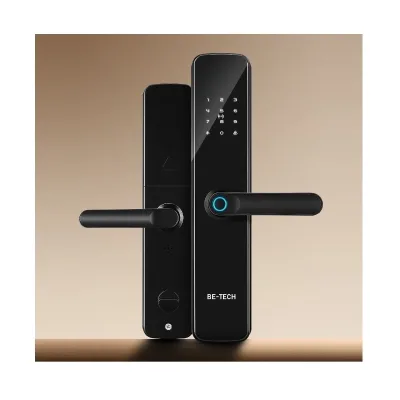


Smart Door Lock Without Handlesmart Main Door Locksmart Lock Door with Camera
$49.00 - $91.00
MOQ: 2 Square Meters


Smart Electronic Door Lock Smart Face Recognition Door Lock Electronic Door Lock
$232.00 - $242.00
MOQ: 2 Pieces

Comprehensive Sourcing Guide
Anti-Peep Code Smart Door Lock Sourcing Guide
Sourcing anti-peep code smart door locks requires a nuanced understanding of both electronic security mechanisms and user interface design. These locks are engineered to prevent shoulder-surfing attacks, where unauthorized individuals observe the entry sequence. The core functionality relies on generating random or dynamic passcodes that differ from the actual authentication code, ensuring that even if a user’s input is watched, the observed digits do not grant access. This feature is particularly critical in high-traffic environments such as corporate campuses, supermarkets, and public passages, where privacy and security are paramount. Buyers must evaluate how the lock integrates this feature with other access methods, such as smart cards, remote controls, or traditional keys, to ensure a seamless user experience without compromising security protocols.
The procurement landscape for these devices is diverse, with manufacturers offering various models tailored to different installation requirements and aesthetic preferences. Observed product listings indicate a wide range of applications, from household and office use to industrial and commercial settings like warehouses and hotels. The market includes electromechanical solutions, electromagnetic locks, and smart card-based systems, each with distinct operational principles. For instance, some models operate on a fail-secure or fail-safe basis, which dictates how the lock behaves during power outages or system failures. Understanding these operational differences is essential for selecting the right product for specific security needs, whether the priority is physical durability, electronic reliability, or user convenience.
Product Scope and Observed Listing Signals
The current market for anti-peep code smart locks exhibits significant variation in form factors, materials, and customization options. Listings reveal products constructed from alloy materials with surface treatments ranging from black finishes to brushed nickel, catering to diverse architectural styles from modern to traditional. The physical dimensions of these locks vary considerably, with standard sizes noted in the range of 275x70mm to 375x76mm, and some models accommodating door thicknesses between 35-50mm. Buyers should carefully match these physical specifications to their existing door infrastructure to avoid costly modifications. Additionally, the availability of customization services, including OEM and ODM options, allows businesses to tailor locks to specific branding or functional requirements, such as integrating unique dial designs or specific remote control functionalities.
Pricing and minimum order quantities (MOQ) in the observed data suggest a flexible supply chain capable of supporting both small-scale residential projects and large-scale commercial deployments. The price range spans from approximately $10.26 to $242 USD, reflecting differences in technology complexity, material quality, and feature sets. MOQs vary from as low as one unit for sample testing or single-home installations to 500 units for bulk commercial procurement. This variability enables buyers to scale their orders according to project phases. However, the wide price disparity necessitates a thorough evaluation of value propositions, ensuring that lower-cost options do not compromise on critical security features like the anti-peep code mechanism or the reliability of the electronic control system.
Technical Specifications to Verify
When evaluating technical specifications, the working principle of the lock is a primary consideration. Most observed models utilize electronically controlled locking mechanisms powered by DC electricity, which ensures consistent performance and compatibility with standard access control systems. Buyers must verify the power type and battery life, as these factors directly impact maintenance frequency and system reliability. The inclusion of remote control capabilities in some models adds a layer of convenience, allowing for temporary access grants or emergency unlocking. However, the integration of such features should be assessed for potential security vulnerabilities, ensuring that the remote communication protocol is encrypted and resistant to interception or replay attacks.
Data storage and processing capabilities are equally critical for anti-peep code functionality. Some models support offline data storage, which is essential for maintaining security logs and user credentials in environments with intermittent internet connectivity. Buyers should confirm whether the lock stores transaction data locally or requires cloud synchronization, as this affects the speed of access verification and the ability to audit entry events. Furthermore, the type of authentication method, whether it involves smart cards, dial inputs, or electronic codes, must align with the intended user base. For instance, models designed for households may prioritize ease of use with simple dial designs, while those for enterprises might require integration with existing card-based access systems for centralized management.
Compliance and Safety Documentation
Certification and compliance are non-negotiable aspects of sourcing electronic security devices. The observed listings indicate that many products hold CE and FCC certifications, which are crucial for market access in Europe and North America, respectively. These certifications verify that the electronic components meet specific electromagnetic compatibility and safety standards, reducing the risk of interference with other devices and ensuring user safety. Buyers must request valid certification documents from suppliers to confirm that the specific models being purchased are covered under these approvals. Additionally, ISO certification is mentioned for some products, suggesting adherence to quality management systems, which can be an indicator of consistent manufacturing processes and product reliability.
Beyond electronic certifications, buyers should verify compliance with local building and fire safety codes, particularly regarding the lock’s fail-secure or fail-safe operation. In emergency situations, the ability to exit a building quickly is critical, and the lock’s behavior during power failures must align with local regulations. For example, fail-safe locks automatically unlock when power is lost, facilitating egress, while fail-secure locks remain locked, prioritizing security over immediate exit. Understanding these distinctions is vital for applications in public passages, hospitals, and campuses, where life safety codes are strictly enforced. Buyers should also inquire about the product’s standard specifications, such as the 275x70mm or 361x75mm dimensions, to ensure they meet any architectural or regulatory constraints specific to the installation site.
Cost Drivers and Commercial Terms
Several factors influence the total cost of ownership for anti-peep code smart locks, including material quality, electronic complexity, and packaging standards. Products made from durable alloys with specialized surface treatments like brushed nickel or black finishes typically command higher prices due to enhanced aesthetics and corrosion resistance. The inclusion of advanced features, such as remote control integration or offline data storage, also adds to the cost. Buyers should analyze the cost structure to determine whether the additional expense for premium features justifies the long-term benefits in terms of security and user satisfaction. Additionally, the packaging method, whether in outer carton boxes with inner foam or white/color boxes, can impact shipping costs and product protection during transit, especially for international orders.
Commercial terms, including delivery times and payment conditions, play a significant role in procurement planning. The observed lead time of 25-35 days for production suggests that buyers should plan their inventory and installation schedules accordingly to avoid delays. For large-scale projects, negotiating bulk pricing and extended payment terms can improve cash flow and reduce financial risk. Buyers should also consider the supplier’s location, with origins noted in Guangzhou and Jiangmen, Guangdong, China, which are major manufacturing hubs. Proximity to shipping ports can reduce logistics costs and lead times, but buyers must also evaluate the supplier’s reputation for on-time delivery and after-sales support. Clear communication regarding customization requirements and quality expectations is essential to avoid misunderstandings and ensure that the final product meets the buyer’s specifications.
Supplier Qualification and Quality Control
Selecting a reliable supplier is critical for ensuring the quality and consistency of anti-peep code smart locks. Buyers should prioritize suppliers who offer OEM and ODM services, as this indicates a level of manufacturing flexibility and technical capability. It is essential to verify the supplier’s production capacity and quality control processes, including in-line inspections and final product testing. Suppliers with ISO certification may have more robust quality management systems, but buyers should still conduct their own due diligence by requesting sample units for rigorous testing. These samples should be evaluated for the accuracy of the anti-peep code feature, the durability of the mechanical components, and the reliability of the electronic interface under various conditions.
Quality control should also extend to the packaging and labeling of the products. The observed packing methods, such as inner foam and outer carton boxes, are designed to protect the locks during shipping, but buyers should ensure that the packaging is sufficient for the specific logistics chain involved. Clear labeling with model numbers, such as F610, F538, or DDFL035, is essential for inventory management and installation. Buyers should also establish clear communication channels with the supplier for addressing any defects or issues that arise post-delivery. A supplier’s willingness to provide technical support and warranty services is a strong indicator of their commitment to customer satisfaction and long-term partnership.
Long-Term Procurement Checks
Long-term procurement success depends on the ability to monitor supplier performance and adapt to evolving security technologies. Buyers should establish key performance indicators (KPIs) for delivery times, product quality, and customer support to regularly assess supplier reliability. Regular audits of the supplier’s manufacturing facilities, if feasible, can provide insights into their production processes and quality control measures. Additionally, staying informed about advancements in smart lock technology, such as improved encryption methods or new authentication options, is crucial for maintaining a competitive security posture. Buyers should engage with suppliers who demonstrate a commitment to innovation and continuous improvement, ensuring that their products remain relevant and effective over time.
Finally, buyers should consider the lifecycle management of the smart locks, including software updates, battery replacement, and potential hardware upgrades. Suppliers who offer ongoing technical support and firmware updates can extend the useful life of the locks and enhance their security features. Buyers should also plan for scalability, ensuring that the chosen locks can be integrated into expanding access control systems as the organization grows. By maintaining a proactive approach to procurement and supplier management, buyers can mitigate risks and ensure that their anti-peep code smart door locks continue to provide robust security and user convenience in the long term.
FAQs
How does an Anti-Peep Code Smart Door Lock prevent code theft?
An Anti-Peep Code Smart Door Lock lets users enter random digits before and after the real code, so observers or cameras cannot identify the correct sequence. The lock reads only the valid code within the entered string. Combined with a smart card or app option, this greatly reduces the risk of code theft in shared spaces.
What door thickness can this electronic lock fit?
Listed electronic lock models are specified to fit door thicknesses of 35 to 50 millimeters. Measure your door before ordering, since doors outside this range may need spacers or a different lock body. Many suppliers offer customization, so unusual door setups can often be accommodated on request.
Which certifications do these smart door locks carry?
Products on this page list CE, FCC, and ISO certifications. Certification requirements vary by model and destination market, so confirm the exact certificates for the specific model before ordering. Always request certificate copies from the supplier when evaluating compliance for your region.
Can the lock work offline without network connectivity?
Yes, listed models support offline data storage, so access records and codes are kept on the lock itself without a network connection. This suits sites with unstable connectivity or privacy requirements. If you need remote management, confirm with the supplier whether a networking module or gateway is available for the model.
What is the typical delivery time for a bulk order?
Listed delivery times range from 25 to 35 days depending on order size and customization level. Customized finishes, logos, or packaging can extend the schedule, so confirm the timeline in writing before placing a bulk order. Sample orders are usually faster than full production runs.
Can I customize the lock model, color, or packaging?
Yes, customization is available, and suppliers list ODM and OEM services. Listed options include black and brushed nickel surface treatments, and packing can be a white box, color box, or carton with inner foam. Share your branding and packaging requirements early so the supplier can quote accurately.
What applications are these smart locks suitable for?
Listed applications include hotels, offices, companies, communities, campuses, supermarkets, parking areas, garages, hospitals, warehouses, and public passages. Fail-secure and fail-safe function options let you match the lock behavior to safety requirements of each site. Confirm the appropriate function type for your fire and security plan.
How are the locks packed for export shipping?
Packing options include inner foam with an outer carton box, which protects units during transit, and white box or color box packaging for retail-oriented orders. Export-standard packing is available. Request packing photos and carton dimensions from the supplier to plan freight costs and avoid damage in transit.