Source Anti-Slip Circular Paper Cutter for Packaging, Crafts, and Printing
Compare 30 listings for the Anti-Slip Circular Paper Cutter suitable for packaging, crafts, and printing applications. Buyers can evaluate specifications like blade material, cutting thickness, and accuracy grades from verified Chinese manufacturers.
Key considerations
Products List


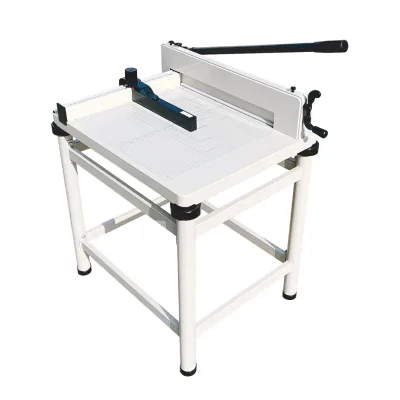


$1.00 - $100.00
MOQ: 1 Pieces


Simple to Operate Round Corner Cutting Machine Curved Corner Paper Cutter
$5800.00 - $6000.00
MOQ: 1 Pieces


Comprehensive Sourcing Guide
Strategic Sourcing Guide for Anti-Slip Circular Paper Cutters
Understanding Product Definitions and Core Technical Attributes
When sourcing an anti-slip circular paper cutter, buyers must first distinguish between the mechanical cutting apparatus and the consumable materials it processes. The term "anti-slip" in this context often refers to the stability of the workpiece during the cutting process or the grip of the cutting tool itself, ensuring precision without material slippage. Based on available product data, the market offers a variety of configurations, ranging from fully manual units to those with specific mechanical load requirements.
A critical observation in the current supply landscape is the diversity in power sources. While some units are explicitly defined as "Manual" with a "Manual Control" accuracy grade, others in the broader category may utilize dynamic loading mechanisms. For a buyer specifically seeking a circular cutter, the distinction between a simple hand-held tool and a stationary benchtop unit is paramount. The data indicates that specific models, such as the "Manually Paper Cutter," operate without electrical power, relying on the operator's force. Conversely, other entries in the dataset reference "Dynamic Load" and "Mechanical Load" attributes, suggesting that automated or semi-automated circular cutting systems exist where the blade or the workpiece is subjected to controlled mechanical forces.
The physical dimensions of the workpiece are a primary constraint. Available specifications highlight a maximum diameter of workpieces under 500mm for certain industrial-grade units. For circular cutters, this dimension is often the limiting factor for the size of the roll or sheet that can be processed in a single pass. Furthermore, the thickness of the material to be cut is a vital specification. The observed data lists sample thickness capabilities ranging from 0.1mm to 1.0mm for paper and up to 3.0mm for cardboard. Buyers must verify that their specific anti-slip circular cutter can handle the thickness of their target material, as a blade designed for thin paper may struggle with thicker cardstock, leading to jagged edges or blade damage.
Compliance, Certification, and Standard Verification
In the B2B procurement of cutting equipment, adherence to international and regional standards is non-negotiable for safety and quality assurance. The supply chain for these tools often references specific standards such as GB/T 451.2, ISO 536, and Qb/T1671. These standards typically govern the testing methods for paper and board, ensuring that the cutting results meet industry expectations for smoothness and dimensional accuracy. When evaluating a supplier, buyers should request documentation proving that their circular cutters are tested against these specific benchmarks.
Certification status is another layer of verification. The dataset includes references to CE certification, which is a mandatory conformity mark for products sold within the European Economic Area. This certification indicates that the product meets EU safety, health, and environmental protection requirements. However, buyers must exercise caution; the presence of a CE mark on a product listing does not automatically guarantee that every variant of the product possesses this status. It is essential to verify the specific model number against the certification documentation. Additionally, while ISO9001 and ISO14001 are mentioned in background contexts, they should not be assumed as standard features unless explicitly confirmed by the supplier for the specific unit being purchased.
The concept of "Non-Standard" is also prevalent in the product data. This suggests that many circular cutters are manufactured to custom specifications rather than rigid industry templates. For a buyer requiring an anti-slip feature, this offers flexibility but increases the need for detailed technical drawings. If a supplier claims a product is "Non-Standard," the buyer must ensure that the custom design includes specific anti-slip mechanisms, such as textured surfaces or specialized clamping systems, to prevent material movement during the cutting cycle. The absence of a standard model number in some entries, such as "customer drawing" or "any kinds," reinforces the need for a clear, written specification agreement before production begins.
Cost Drivers and Pricing Variables
The pricing for anti-slip circular paper cutters exhibits a massive variance, with observed ranges spanning from $0.10 to $56,300. This wide spectrum indicates that the cost is heavily dependent on the complexity of the machine, the materials used, and the level of automation. The lower end of the price range likely corresponds to simple, manual hand tools or basic blades, while the higher end reflects industrial-grade, automated systems with advanced loading mechanisms and precision controls.
Material composition is a significant driver of cost. The data highlights the use of High Speed Steel (HSS) with a Rockwell Hardness (HRC) ranging from 50 to 62, as well as Carbon Steel with an HRC of 40 to 70. HSS blades are generally more expensive due to their superior wear resistance and ability to maintain a sharp edge under high-speed cutting conditions. Carbon steel blades, while more affordable, may require more frequent sharpening or replacement. Buyers must balance the initial purchase price against the long-term cost of blade maintenance and replacement.
Packaging and logistics also influence the final landed cost. Some products are shipped in cartons, while others, particularly larger or heavier industrial units, require wooden cases for protection. The weight of the workpiece is another factor; specifications indicate a mass scope of less than 900kg for certain units. Heavier machines require more robust packaging and potentially higher shipping costs, which can impact the total procurement budget. Additionally, the "Anti-slip" feature itself may add to the cost if it involves specialized surface treatments or additional mechanical components designed to secure the material during operation.
Typical Applications and Operational Context
The versatility of circular paper cutters allows them to serve a wide array of industries. The data lists applications ranging from hot and cold cups to tea cups, drinking cups, jelly cups, and various packaging types including pharmaceutical and gift packaging. This suggests that the primary use case for these cutters is in the manufacturing of disposable containers and packaging materials where circular cuts are required for lids, bases, or decorative elements.
For the specific "anti-slip" variant, the operational context is crucial. In high-speed production lines, material slippage can lead to misaligned cuts, resulting in waste and product rejection. An anti-slip circular cutter is particularly valuable in environments where thin materials, such as paper or thin cardboard, are being processed. The ability to hold the material firmly in place ensures that the cut is precise, adhering to the observed accuracy specifications of ±0.2mm for general dimensions and ±0.35 cm² for sampling area errors.
The folding state of the product is another consideration. Some units are listed as "Unfolded," implying they are ready for immediate use, while others may require assembly. For facilities with limited floor space, the ability to fold or compact the cutter is a significant advantage. The "Sample Size" of 100cm² mentioned in the data suggests that these machines are often used for testing small batches or prototypes before full-scale production. This makes them ideal for quality control departments that need to verify cut quality and material behavior before committing to large orders.
Supplier Evaluation and Geographic Considerations
When selecting a supplier for anti-slip circular paper cutters, geographic origin plays a role in understanding lead times and logistical capabilities. The data points to suppliers located in various regions of China, including Nantong, Jiangsu, and Anhui, as well as Zhejiang. Each region may have different specializations; for instance, Jiangsu is known for its manufacturing base, while Zhejiang is a hub for packaging machinery. Buyers should verify the specific location of the supplier to assess their proximity to shipping ports and their experience with international logistics.
Supplier reliability is often indicated by the clarity of their product specifications. Entries that provide detailed model numbers, such as "XD-A22," "13202," "YFSB-01," and "YF-01," suggest a more established manufacturing process. In contrast, listings with generic descriptions like "Different Size" or "Any kinds" may indicate a trading company or a less specialized manufacturer. Buyers should prioritize suppliers who provide specific model numbers and detailed technical drawings, as this reduces the risk of receiving a product that does not meet the required anti-slip specifications.
The "Brand" and "Brand Name" fields in the data show a mix of specific brands like "Pro Skit" and "hollan," alongside generic listings. While brand recognition can be a proxy for quality, it is not a guarantee. Buyers should focus on the technical attributes provided by the supplier, such as the blade material, the accuracy grade, and the loading method, rather than relying solely on brand reputation. The condition of the product, listed as "New" in the data, is a standard expectation, but buyers should confirm the warranty terms and after-sales support policies to ensure long-term operational stability.
Quality Control and Long-Term Procurement Strategy
Effective quality control for anti-slip circular paper cutters begins with the verification of the blade material and hardness. The observed HRC ranges of 50-62 for High Speed Steel and 40-70 for Carbon Steel provide a baseline for expected performance. Buyers should request hardness test reports to ensure the blades meet these specifications, as a blade that is too soft will dull quickly, while one that is too hard may be brittle and prone to chipping. The "Coating" attribute, listed as "Uncoated" in some instances, suggests that surface treatments are not universal, and buyers should inquire about any specific coatings that might enhance the anti-slip properties or blade longevity.
Long-term procurement considerations include the availability of replacement parts and the standardization of the product. The "Specificatio" field mentions "OEM" and "Custom" options, indicating that many suppliers are willing to tailor products to specific needs. However, this customization can complicate future maintenance if the supplier changes or discontinues the product. Buyers should ensure that the custom specifications are documented clearly and that the supplier commits to providing spare parts for a defined period.
The "Loading Method" of "Dynamic Load" or "Mechanical Load" also impacts long-term maintenance. Machines with dynamic loading systems may require more specialized maintenance and calibration compared to purely mechanical systems. Buyers should assess their internal maintenance capabilities before committing to a complex system. Additionally, the "Accuracy" of ±0.2mm and the "Sampling Area Error" of ±0.35 cm² should be verified through regular testing to ensure the machine continues to perform within these tolerances over time.
Finally, the "Product Packing" of "Carton" or "Wooden Case" affects the initial setup and potential for damage during transit. A robust packing method is essential for preserving the precision of the cutting mechanism. Buyers should inspect the packaging upon receipt to ensure that the anti-slip features and cutting blades have not been compromised during shipping. By focusing on these detailed quality control measures, buyers can secure a reliable supply of anti-slip circular paper cutters that meet their production needs and maintain high standards of quality over the long term.
FAQs
How is the accuracy grade defined for manual anti slip circular paper cutters?
The accuracy grade is defined as Manual Control for specific models in the supply chain. Buyers should verify the specific model number, such as XD-A22, to confirm the control method and ensure it matches the required precision for their production line.
What is the maximum diameter of workpiece supported by these cutters?
The maximum diameter of the workpiece is less than 500mm for certain industrial-grade units. This dimension limits the size of rolls or sheets that can be processed in a single pass, so buyers must check this specification against their material requirements.
Which certifications are commonly available for Anti-Slip Circular Paper Cutter suppliers?
CE certification is a documented standard for products sold within the European Economic Area. Buyers must verify the specific model number against certification documentation, as the presence of a CE mark does not automatically guarantee status for every variant of the product.
Can the product be customized to specific dimensions and requirements?
Customization is available for many models, allowing for non-standard specifications and customer drawings. Buyers should provide detailed technical drawings to ensure the custom design includes specific anti-slip mechanisms to prevent material movement during the cutting cycle.
How does the blade material affect the cutter's performance and cost?
Blades are typically made from High Speed Steel with an HRC of 50-62 or Carbon Steel with an HRC of 40-70. High Speed Steel offers superior wear resistance but costs more, while Carbon Steel is more affordable but may require frequent sharpening.
What is the typical packaging method for shipping these machines?
Packaging varies between cartons for smaller units and wooden cases for larger industrial machines. The choice depends on the weight of the workpiece, which can be up to 900kg, requiring robust packaging to protect the equipment during transit.
Where are the primary manufacturing locations for these cutters in China?
Manufacturers are located in regions such as Nantong, Jiangsu, Anhui, and Zhejiang. Each region has different specializations, so buyers should verify the specific location to assess proximity to shipping ports and the supplier's experience with international logistics.