Source anti-slip cushion kids drift tricycle for Play, Exercise, and Learning
Find 30 listings for the anti-slip cushion kids drift tricycle to compare features like load limits, materials, and age ranges. Buyers can evaluate options from Hebei, China, with prices ranging from 8.75 to 65.98 USD and MOQs from 10 to 330 units.
Key considerations
Products List
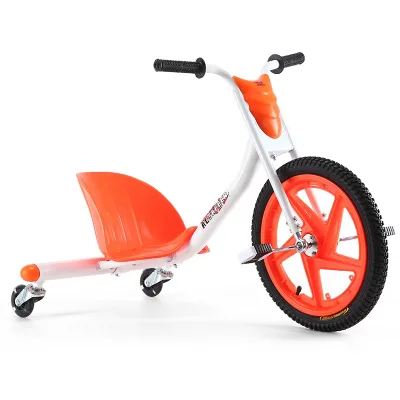
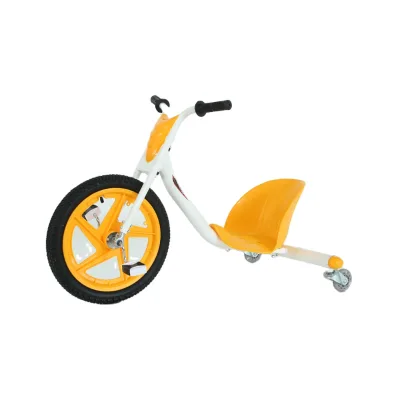
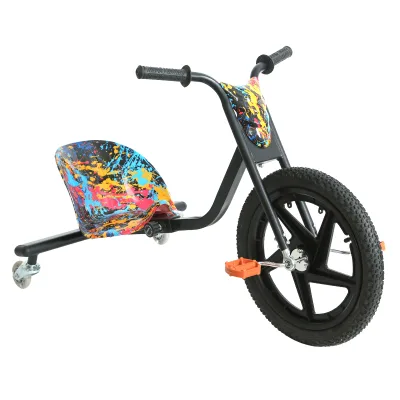
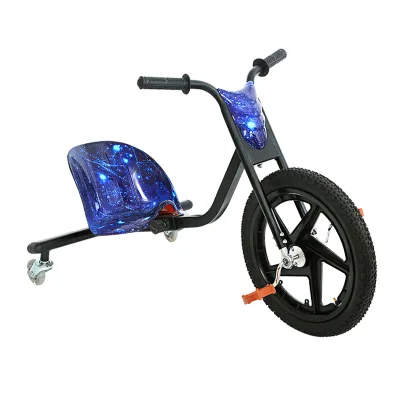
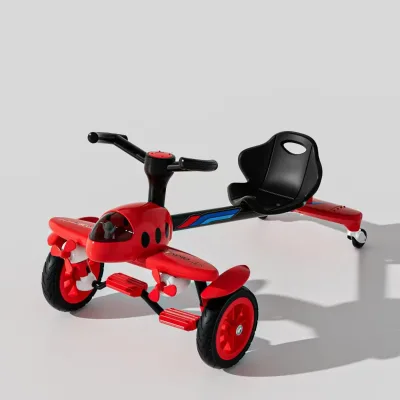


Imported Kids Tricycle Hot Selling New Model Foldable Tricycle for Children
$16.78 - $43.22
MOQ: 100 pcs


$36.50 - $38.00
MOQ: 330 Pieces


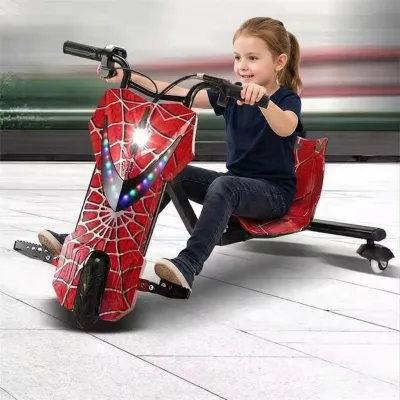
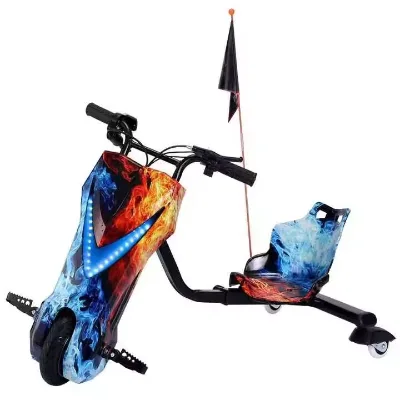


Comprehensive Sourcing Guide
Strategic Sourcing Guide for Anti-Slip Cushion Kids Drift Tricycles
The global market for children's ride-on toys has seen a significant shift toward specialized variants that combine safety with dynamic play features. Among these, the anti-slip cushion kids drift tricycle represents a niche segment where engineering precision meets developmental play. For B2B procurement professionals, sourcing these units requires a disciplined approach that separates marketing assertions from verifiable product attributes. This guide synthesizes observed market data and technical specifications to provide a framework for evaluating suppliers, ensuring compliance, and managing supply chain risks for this specific product category.
Technical Specifications and Functional Architecture
When evaluating a drift tricycle, the primary focus must be on the mechanical architecture that enables the drifting motion while maintaining stability. The core functional attribute observed in the current market is the "drifting" capability, which distinguishes these units from standard pedal tricycles. This function is often integrated with a "non-slip handle" design, a critical safety feature that ensures the child maintains grip during lateral movements. The structural integrity of these vehicles relies heavily on the frame material. Observed data indicates a preference for steel frames, which provide the necessary rigidity to withstand the torque generated during drifting maneuvers without compromising the lightweight nature required for young users.
The material composition extends beyond the frame to the wheels and seating. While the primary frame is steel, the product body is frequently constructed from high-density plastic to reduce overall weight and prevent injury during minor impacts. The wheel configuration is another critical specification. Suppliers typically offer wheel sizes ranging from 8 inches to 12 inches, with rim materials often specified as steel to ensure durability. The "anti-slip cushion" aspect mentioned in the core keyword implies specific tread patterns or rubberized seating areas designed to prevent the child from sliding off during active play.
Weight limits are a paramount specification for procurement. The observed load limit for these units is approximately 60kg, though some variants in the baby tricycle category may have lower thresholds, such as a 20-50kg range. This variance suggests that buyers must strictly match the product specification to the target demographic. The power source is consistently listed as "foot," indicating a pedal-driven mechanism rather than electric propulsion. This mechanical simplicity reduces maintenance costs and eliminates battery-related safety hazards, making it a preferred choice for younger age groups ranging from under 3 years up to 14 years and older.
Compliance, Certification, and Safety Standards
In the realm of children's products, compliance is not merely a regulatory hurdle but a fundamental requirement for market access. The most frequently observed certification in the current supply data is the CE mark. This certification indicates conformity with health, safety, and environmental protection standards for products sold within the European Economic Area. Procurement teams must verify that the CE certification is valid and specific to the product model, rather than a generic claim applied to the entire factory output.
Beyond certification, the physical safety features must be scrutinized. The presence of a brake system is a non-negotiable attribute for drift tricycles, as the ability to stop quickly is essential when the vehicle is in motion. The braking mechanism should be robust and easily accessible to the child or a supervising adult. Additionally, the "anti-slip" nature of the product extends to the contact points between the child and the vehicle. The cushioning on the seat and the grip on the handlebars must be tested for friction coefficients to ensure they do not become slippery when wet or during intense use.
The packaging details also play a role in compliance. Products are typically shipped in cartons with specific dimensions, such as 60x30x49 cm or 64x27x42 cm, depending on the model. These packaging standards must be verified to ensure they meet international shipping regulations and do not exceed weight limits for standard freight handling. The gross weight of the units, observed between 7.8 kg and 10.83 kg, must be accurately declared to avoid customs delays or additional freight charges.
Cost Drivers and Pricing Dynamics
Understanding the cost structure of anti-slip cushion kids drift tricycles is essential for budgeting and margin analysis. The observed price range in the market spans from $8.75 to $65.98 USD. This wide variance is driven by several factors, including the complexity of the drifting mechanism, the quality of the steel frame, and the extent of customization options. Lower-priced units typically feature basic plastic bodies and standard steel rims, while higher-priced models may include enhanced braking systems, superior cushioning materials, or more complex folding mechanisms.
The Minimum Order Quantity (MOQ) is another significant cost driver. The observed MOQ range is between 10 and 330 units, with a specific high-confidence data point indicating an MOQ of 100 pieces for certain models. Buyers must balance the economies of scale against their inventory holding costs. Ordering at the lower end of the MOQ spectrum may result in a higher unit price, whereas larger orders can significantly reduce the per-unit cost but increase the total capital outlay.
Customization is a key variable in pricing. The market data confirms that customization is available, which can include branding, color variations, and specific packaging requirements. While customization adds value, it often incurs additional setup fees and may increase the lead time. The supply ability of the manufacturer, observed at 1000 sets per month, suggests that volume discounts are likely available for orders that fit within the production capacity without disrupting the manufacturer's schedule for other clients.
Typical Applications and Target Demographics
The versatility of the drift tricycle allows it to serve multiple applications across different age groups. The observed age range for these products is extensive, covering children from under 3 years up to 14 years and older. This broad spectrum necessitates careful segmentation by buyers. For the "Baby" demographic (under 3 years), the focus is on stability and simple mechanics, often featuring a "Type: Baby Tricycle" classification with a load bearing capacity of 20-50kg. These units are designed for early motor skill development and are often marketed with attributes like "Improving Intelligence" and "Strengthen The Physical Exercise."
For the older demographic, ranging from 5 to 13 years, the drifting function becomes more prominent. These units are designed to handle higher speeds and more aggressive maneuvers, requiring a load limit of up to 60kg. The "Style: Ride on toy" classification applies broadly, but the specific function of drifting appeals to children seeking more dynamic play. The product is suitable for both boys and girls, with color options including orange, yellow, blue, pink, green, and red. This variety allows retailers to stock a diverse inventory that appeals to different gender preferences and aesthetic tastes.
The usage context also extends beyond simple recreation. The "Foldable" attribute found in certain models makes these tricycles ideal for storage in homes with limited space or for transport in vehicles. This feature is particularly valuable for parents who need to store the toy when not in use or for retailers who need to maximize display space in their showrooms. The "Non-Slip Handle" and "Brake" features further enhance the usability of these products in various environments, from indoor playrooms to outdoor parks.
Supplier Evaluation and Quality Control Protocols
Selecting the right supplier is critical for ensuring product consistency and reliability. The supply data indicates that the place of origin for these products is primarily Hebei, China, a region known for its manufacturing capabilities in the toy and bicycle sectors. Buyers should verify the supplier's production capacity against their order volume requirements. A supply ability of 1000 sets per month is a strong indicator of a manufacturer capable of handling medium to large orders without significant delays.
Quality control should be a central component of the supplier evaluation process. Buyers must request detailed specifications for the frame material, ensuring it is indeed steel and not a lower-grade alloy that could fail under stress. The "Single gross weight" of 10.000 kg and "N.W." of 7.8 kg to 9.5 kg should be consistent across batches. Inconsistencies in weight can indicate variations in material thickness or manufacturing defects. Additionally, the "Warranty" period of 5 years is a significant differentiator; suppliers offering such extended warranties demonstrate confidence in their product durability and after-sales support.
The "Customization" capability should be assessed based on the supplier's flexibility and lead time. While customization is available, the impact on the production schedule must be understood. Buyers should also verify the "prod_packing" details, which indicate an 85% SKD (Semi-Knocked Down) packing method for baby tricycles. This packing style reduces shipping volume and costs but requires the buyer to have the capacity for final assembly or to ensure the supplier handles the assembly before shipping.
Long-Term Procurement and Supply Chain Considerations
Sourcing anti-slip cushion kids drift tricycles requires a long-term perspective that accounts for market trends and supply chain resilience. The "Model Number" variations, such as SL-103, Bc014, Bc019, Bc010, and Bc017, suggest a diverse product portfolio. Buyers should aim to establish relationships with suppliers who can offer a range of models to mitigate the risk of obsolescence. If a specific model becomes less popular, the ability to switch to another model within the same supplier's catalog can maintain inventory flow.
The "Packaging Details" and "Single package size" are critical for logistics planning. With dimensions ranging from 60x30x49 cm to 64x27x42 cm, buyers must calculate the number of units that can fit in a standard shipping container to optimize freight costs. The "Selling Units" being listed as "Single item" indicates that the product is sold individually, which simplifies inventory management but requires careful forecasting to avoid stockouts.
Finally, the "Lead time" and "MOQ" must be aligned with the buyer's sales cycle. While specific lead times are not provided in the data, the MOQ of 100 pieces suggests that buyers should plan for quarterly or bi-annual ordering cycles to maintain optimal inventory levels. The "Warranty" of 5 years also implies a long-term commitment to customer satisfaction, which can be leveraged in marketing to build trust with end consumers. By focusing on these long-term factors, buyers can build a resilient supply chain that supports sustained growth in the children's toy market.
Comparative Analysis of Key Product Attributes
To facilitate decision-making, the following table summarizes the key attributes observed across the different models and variations in the market. This comparison highlights the diversity in specifications that buyers must navigate.
| Attribute | Model A (SL-103) | Model B (Bc014) | Model C (Bc019) | Model D (Bc010) |
|---|---|---|---|---|
| Primary Function | Drifting | Foldable | Non-Slip Handle | Standard Ride |
| Frame Material | Steel | Steel | Steel | Steel |
| Load Limit | 60kg | 20-50kg | 20-50kg | 20-50kg |
| Wheel Size | 8" 10" 12" | 8" 10" 12" | 8" 10" 12" | 8" 10" 12" |
| Age Range | 6-15 Years | < 3 Years | < 3 Years | < 3 Years |
| Certification | CE | CE | CE | CE |
| Warranty | 5 Years | 5 Years | 5 Years | 5 Years |
| Packaging | Carton | 85% SKD | Carton | Carton |
| Gross Weight | 10.000 kg | 10.83 Kg | 10.83 Kg | 8.5 Kg |
This table illustrates that while the core materials and certifications remain consistent, the functional attributes and weight capacities vary significantly. Buyers must align these specifications with their specific market needs to ensure product-market fit. The consistency in the "Steel" frame and "CE" certification provides a baseline of quality, while the variations in load limits and age ranges allow for targeted marketing strategies. By carefully analyzing these attributes, procurement professionals can make informed decisions that balance cost, quality, and functionality.
FAQs
What is the load limit for these drift tricycles?
The observed load limit is 60kg for standard models. Some baby tricycle variants may have a lower capacity ranging from 20 to 50kg, so buyers must verify the specific model specification before ordering.
Can I customize the color and branding of the tricycle?
Customization is available for these products. Buyers can request specific color options like orange, yellow, blue, pink, or green, along with branding adjustments, though this may affect lead times and setup costs.
Which certification does the product hold for safety?
The product holds CE certification, indicating conformity with European safety standards. Buyers should verify that this certification applies specifically to the model being purchased rather than assuming it covers the entire factory output.
How long is the warranty period for the tricycle?
The warranty period is 5 years for the product. This extended coverage demonstrates the manufacturer's confidence in the durability of the steel frame and plastic components used in the construction.
What is the minimum order quantity for these units?
The minimum order quantity is 100 pieces for certain models. However, the observed market range varies from 10 to 330 units, so buyers should confirm the specific MOQ with the supplier before placing an order.
Where are these tricycles manufactured and shipped from?
The place of origin is Hebei, China. This region is known for manufacturing capabilities in the toy sector, and buyers should account for shipping logistics based on the single package size and weight.