Source Anti-Slip Chef Shoes for Kitchens, Hospitals, and Cafes
Compare 30 anti-slip chef shoes from verified suppliers in China. Buyers can evaluate features like puncture resistance, waterproofing, and customization options for professional kitchen and medical environments.
Key considerations
Products List

Wear-Resistant Soft Slip Resistant Chef Shoes for Barbecue Restaurants
$12.00 - $20.00
MOQ: 1000 Pairs

Crack-Resistant Soft Slip Resistant Chef Shoes for Fast Food Restaurants
$12.00 - $20.00
MOQ: 1000 Pairs

High Quality Antibacterial Non Slip Chef Shoes for Chinese Restaurants
$12.00 - $20.00
MOQ: 1000 Pairs

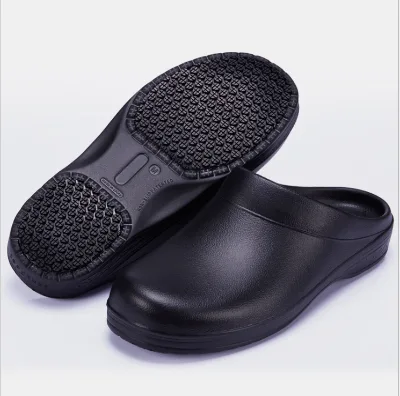


Professional Slip Resistant Lightweight Chef Kitchen Safety Shoes for Men Work
$4.70 - $5.00
MOQ: 1000 Pairs


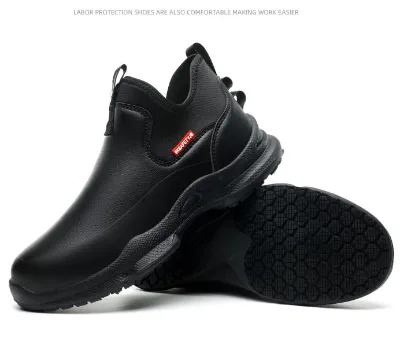
Light Industry Anti-Oil Non-Slip Comfortable Unisex Waterproof Safety Shoes for Chef
$4.70 - $5.00
MOQ: 1000 Pairs




Comprehensive Sourcing Guide
Strategic Sourcing Guide for Anti-Slip Chef Shoes
The commercial kitchen environment presents unique hazards that demand footwear with specialized performance characteristics. Sourcing anti-slip chef shoes requires a rigorous approach that balances safety compliance, material durability, and operational comfort. Buyers must navigate a complex landscape where product attributes vary significantly between manufacturers, even within the same category. This guide outlines the critical factors for evaluating functional chef footwear, focusing on verified specifications, certification requirements, and supply chain considerations derived from current market data.
Technical Specifications and Performance Attributes
The primary function of anti-slip chef shoes is to prevent accidents caused by grease, water, and food debris on kitchen floors. When evaluating potential products, buyers must scrutinize the outsole material and tread design. The most reliable data indicates that rubber outsoles are the standard for this category, offering superior grip on wet surfaces compared to other polymers. Specific design features such as "Anti-slip Blades" are noted in certain models, suggesting a tread pattern engineered to channel liquids away from the contact patch.
Beyond the sole, the upper construction and lining materials dictate the shoe's longevity and comfort. Market observations reveal a divergence in manufacturing methods. Some products are listed as "Hand Made," implying a level of artisanal craftsmanship that may affect consistency and cost, while others are explicitly "Not Handmade," indicating mass-production techniques that prioritize volume and uniformity. The lining material is another critical variable; while some listings specify "Cotton Fabric" for breathability, others list "other" materials. For kitchen environments, breathability is essential to manage heat, yet the material must also resist liquid absorption.
The insole composition significantly impacts long-term wear. Evidence points to the use of EVA (Ethylene-Vinyl Acetate) and PVC (Polyvinyl Chloride) as common insole materials. EVA typically offers better cushioning and shock absorption, which is vital for chefs standing for extended periods, whereas PVC provides a harder, more durable surface. Buyers should verify the specific insole material for each order to ensure it aligns with the comfort requirements of their staff. Additionally, the heel height is consistently observed as "Flat," which is a non-negotiable safety feature to maintain stability and prevent ankle injuries in a fast-paced kitchen.
Compliance, Certification, and Safety Standards
In the B2B procurement of safety footwear, certification serves as the primary indicator of compliance with international safety standards. The presence of CE certification is a documented fact for specific models in this category. This certification indicates that the product meets the essential health and safety requirements of the European Economic Area. However, the absence of a specific certification claim on a product listing does not automatically imply non-compliance; it may simply reflect a lack of marketing emphasis. Buyers must explicitly request proof of certification from the supplier before finalizing an order.
The feature set of chef shoes often includes a combination of protective attributes. Verified listings highlight features such as "Puncture-Resistant," "Anti-Static," and "Steel Toe." These attributes address specific workplace hazards: puncture resistance protects against dropped sharp objects like knives or bones; anti-static properties prevent the buildup of static electricity, which can be a fire hazard in certain environments; and steel toe caps protect the toes from heavy falling items. It is crucial to note that not every product in the market possesses all these features simultaneously. A product may be labeled as "Waterproof" in one instance while another listing for a similar model states "Not Waterproof." This inconsistency underscores the necessity of verifying the specific feature set for each SKU.
When evaluating compliance, buyers should also consider the "Standard Specifications" mentioned in product data. These standards can be either "Standard Specifications or Customized." This flexibility allows suppliers to tailor the product to specific regional safety regulations. For example, a buyer in the United States might require ASTM standards, while a buyer in Europe requires EN standards. The supplier's ability to accept "OEM & ODM Custom" orders suggests they can adapt the product to meet these varying regulatory landscapes, but the buyer must provide clear, written specifications to ensure the final product adheres to the required local laws.
Cost Drivers and Pricing Dynamics
The pricing of anti-slip chef shoes is influenced by a complex interplay of material costs, manufacturing methods, and order volume. Observed price ranges in the market span from approximately $2.30 to $30.00 USD. This wide variance is not merely a reflection of brand prestige but is driven by tangible differences in construction and features. Products at the lower end of the spectrum may utilize simpler rubber compounds, basic cotton linings, and mass-production techniques. Conversely, products at the higher end likely incorporate advanced anti-slip technologies, premium materials like specialized EVA insoles, and potentially hand-made construction elements that increase labor costs.
Minimum Order Quantity (MOQ) is another significant cost driver. Data indicates an observed MOQ range from 1 to 2000 pairs, with a specific high-confidence fact noting an MOQ of 100 pairs for certain models. Suppliers with lower MOQs often cater to smaller businesses or trial orders, potentially charging a higher unit price to cover setup costs. Suppliers requiring higher MOQs, such as 2000 pairs, may offer more competitive per-unit pricing but require a larger capital outlay. Buyers must calculate the total cost of ownership, including the MOQ requirement, to determine the most economical strategy.
Customization is a major factor in pricing. The availability of "Customized Logo" and "Customized Packaging" options adds value but also increases the unit cost. Suppliers that accept "OEM & ODM Custom" can produce shoes with specific branding and design modifications, but these services typically come with a premium. Additionally, the "Supply Ability" of the manufacturer, observed at 10,000 pairs per month for some suppliers, influences pricing stability. A supplier with high capacity can often absorb volume fluctuations better than a smaller operation, potentially offering more stable pricing over time.
Typical Applications and Operational Fit
Anti-slip chef shoes are designed primarily for the hospitality and food service industries. The "Functional Shoes (Non-Slip Chef Shoes)" designation aligns with the needs of professional kitchens, where the floor is frequently wet and greasy. The "Unisex" gender classification allows for a versatile inventory strategy, reducing the need for separate SKUs for male and female staff. This is particularly beneficial for small to medium-sized establishments that may not have a large, diverse workforce.
The specific application extends beyond the kitchen floor. Features like "Insulative" properties suggest that these shoes may be suitable for environments with temperature extremes, such as walk-in freezers or areas near ovens. The "Trendy" style attribute indicates that modern designs are moving away from purely utilitarian looks, allowing establishments to maintain a professional aesthetic while ensuring safety. The "Summer" season specification highlights that some models are optimized for warmer conditions, likely due to breathable linings, while others may be designed for year-round use.
The "Type" of shoe is consistently identified as "Chef shoes," but the "Feature" list also includes "casual shoes." This duality suggests that some models are versatile enough for both professional kitchen use and casual wear, which can be advantageous for staff who transition between work and personal settings. However, buyers should be cautious not to assume that a "casual" feature implies a lack of safety performance. The core safety features, such as the rubber outsole and anti-slip design, must remain the priority regardless of the aesthetic classification.
Supplier Evaluation and Supply Chain Considerations
Evaluating suppliers for chef shoes requires a focus on origin, logistics, and production capacity. The "Place of Origin" is a critical data point, with "Shandong, China" and "Fujian, China" being prominent locations in the supply chain. These regions are known for their manufacturing capabilities in footwear, but buyers should verify the specific factory location to ensure it aligns with their quality expectations. The "Port of dispatch" is another logistical factor; "Xiamen" is a specific port mentioned, which can influence shipping times and costs depending on the buyer's location.
Production capacity and lead times are essential for maintaining inventory levels. The "Supply Ability" of 10,000 pairs per month indicates a robust manufacturing capability, but buyers must confirm if this capacity is available for their specific order size and timeline. The "Single gross weight" of 0.687 kg and "Single package size" of 35x23x15 cm are vital for calculating shipping costs and warehouse space requirements. These dimensions suggest a standard shoebox packaging, which is efficient for logistics but may need to be customized for bulk shipping.
The "Quality" attribute is listed as "Top Level" in some contexts, but this is a subjective claim. Buyers should rely on objective metrics such as certifications and material specifications rather than marketing language. The "Brand Name" Diacomfort is observed in the data, but buyers should not limit their search to this brand. Instead, they should evaluate the supplier's ability to meet the "Standard Specifications or Customized" requirements. The "Packaging Details" of "box" and "Shoebox" are standard, but the option for "Standard Packaging or Customized" allows for branding opportunities that can enhance the product's marketability.
Quality Control and Long-Term Procurement Strategy
Implementing a robust quality control (QC) process is essential for ensuring that the sourced chef shoes meet safety and performance standards. Buyers should establish clear acceptance criteria based on the verified attributes: rubber outsoles, flat heels, and specific insole materials. Regular inspections should focus on the integrity of the anti-slip blades and the durability of the stitching, especially for products that are not hand-made. The "Hand Made" attribute, when present, requires a different QC approach, focusing on the consistency of the artisanal workmanship.
Long-term procurement considerations involve building a relationship with suppliers who can adapt to changing needs. The "OEM & ODM Custom" capability is a significant advantage for buyers looking to differentiate their brand. However, this requires clear communication and detailed specifications to avoid discrepancies. The "Customization" availability for logos and packaging should be leveraged to create a cohesive brand identity for the footwear.
Buyers must also plan for the lifecycle of the product. The "Waterproof" feature, while present in some models, is not universal. For operations in wet environments, buyers should prioritize models with confirmed waterproof capabilities. The "Anti-Static" and "Puncture-Resistant" features should be verified annually to ensure they have not degraded over time. Finally, the "Selling Units" of "Single item" suggests that the market supports both bulk and individual purchases, allowing for flexible procurement strategies that can adapt to seasonal demand fluctuations. By adhering to these guidelines, buyers can secure a reliable supply of high-quality anti-slip chef shoes that protect their workforce and maintain operational efficiency.
FAQs
What certifications do anti-slip chef shoes typically have?
Some models in this category carry CE certification, indicating compliance with European safety standards. Buyers must verify specific certification documents for each SKU, as not all listings explicitly state compliance even if the product meets requirements.
Which outsole material provides the best grip for chefs?
Rubber outsoles are the standard for superior grip on wet kitchen surfaces. Specific designs may include anti-slip blades to channel liquids, offering better traction than other polymer compounds in greasy environments.
Can I order custom logos on these functional shoes?
Yes, suppliers accept customized logo requests for branding purposes. This customization option is available alongside OEM and ODM services, though it may affect the unit price and minimum order quantity requirements.
How does the MOQ vary for these chef shoes?
Minimum order quantities range from 1 to 2000 pairs depending on the supplier and model. Some specific models list an MOQ of 100 pairs, while others may require higher volumes for competitive pricing.
What insole materials are used in these shoes?
Common insole materials include EVA and PVC for cushioning and durability. EVA offers better shock absorption for long shifts, while PVC provides a harder surface, so buyers should verify the specific material for each order.
Are these shoes available in different sizes?
Yes, sizes typically range from US 6 to 12 or 37 to 46. The product is classified as unisex, allowing for versatile inventory management across different staff sizes without needing separate gender-specific SKUs.