Source Anti-Slip Eco-Friendly Yoga Socks for Pilates, Stretching, and Home Workouts
Find 30 verified listings for anti-slip eco-friendly yoga socks designed for Pilates, stretching, and home workouts. Buyers can compare materials like cotton and spandex, sizes, and customization options from multiple manufacturers in China.
Key considerations
Products List


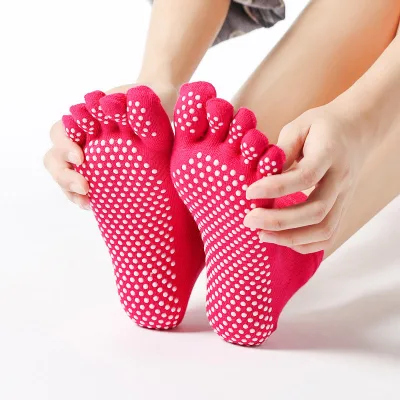

Women's Long Sports Pressure Calf Socks Gradient Color Anti-Slip Yoga Socks
$1.50 - $3.50
MOQ: 15 Pieces
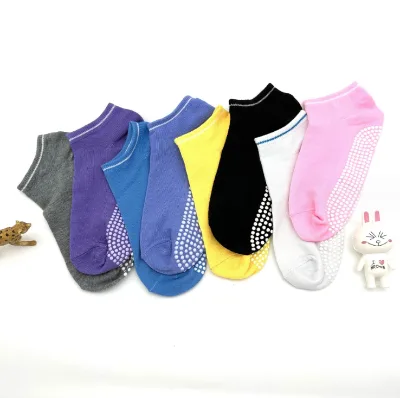


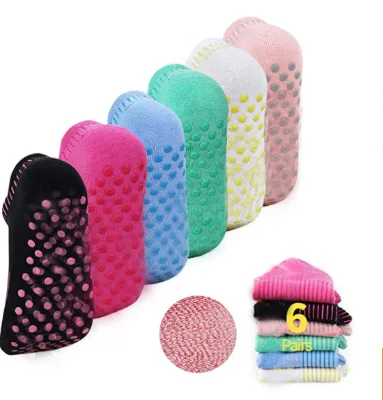


Comprehensive Sourcing Guide
Strategic Sourcing Guide for Anti-Slip Eco-Friendly Yoga Socks
Understanding Product Attributes and Material Composition
When sourcing anti-slip eco-friendly yoga socks, buyers must first distinguish between the specific material compositions that define performance and sustainability. The market presents a diverse range of options, from synthetic blends to natural fibers, each offering distinct benefits for yoga practitioners. Based on observed product data, a primary material category includes blends of Spandex and Polyester. These synthetic combinations are often selected for their high elasticity and durability, ensuring the sock maintains its shape during repetitive stretching and movement. The presence of Spandex is critical for the "High Elasticity" attribute observed in several listings, which allows the sock to conform tightly to the foot without restricting circulation.
Conversely, another significant segment of the market focuses on natural fiber solutions, specifically 100% Cotton. This material is frequently highlighted in the context of "Eco-Friendly" claims, as cotton is a renewable resource that offers superior breathability compared to many synthetics. The data indicates specific product models, such as those labeled as "100%Cotton Yoga Socks," which are tailored for women and designed with a focus on comfort and moisture management. The "Breathable" feature is a recurring attribute across both material types, suggesting that whether the base is cotton or a polyester blend, the knitting technique plays a vital role in air circulation.
The "Anti-slip" functionality is a non-negotiable technical requirement for yoga socks. This feature is achieved through specific design elements, such as silicone grips on the sole or specialized knitting patterns that increase friction against the mat. The observed product attributes list "Anti-slip" alongside "Anti-Bacterial" and "Eco-Friendly," indicating that modern sourcing requests often demand a convergence of performance, hygiene, and sustainability. Buyers should verify that the anti-slip mechanism is integrated into the fabric structure or applied as a durable coating that does not degrade after repeated washing. The "Weight" of the product, observed at approximately 35g per pair, serves as a useful benchmark for assessing the density of the material; lighter weights may indicate a thinner knit suitable for summer or hot yoga, while heavier weights might be preferred for thermal support in cooler environments.
Technical Specifications and Sizing Standards
Precision in sizing and specification is paramount when ordering yoga socks, as a poor fit can compromise the anti-slip functionality and overall user experience. The data reveals a variety of sizing approaches, ranging from specific numerical ranges to general categories. One observed specification lists a size range of 39-42, which typically corresponds to adult footwear sizes. This specific range suggests that some manufacturers produce socks tailored to a narrower demographic or specific regional sizing standards. In contrast, other listings utilize an "Average Size" designation, which implies a one-size-fits-most approach. This is common for products made with high-spandex content, where the elasticity accommodates a wide range of foot dimensions.
The physical dimensions of the sock are equally important. The "Height" attribute is consistently identified as "Ankle Sock" or "Short Sock" in the provided data, indicating that the primary market segment for yoga socks favors low-cut designs that allow for freedom of movement and do not interfere with ankle mobility. However, the data also references "Knee Socks" and "Long Socks" in a categorical list, suggesting that while ankle socks are the standard for yoga, suppliers may offer extended lengths for other athletic or fashion applications. Buyers must clarify the exact height requirement, as a "Crew Sock" length might be preferred for added warmth or support in certain yoga styles, even if the core product is marketed as an ankle sock.
Thickness is another critical specification. The observed data notes a "Normal" thickness, which generally implies a standard gauge knitting suitable for everyday practice. This is distinct from "Thermal" socks, which are thicker and designed for colder conditions. The "Foot Length (cm)" specification of 24-26 cm provides a concrete metric for verifying fit, particularly when dealing with international suppliers who may use different sizing conventions. Buyers should cross-reference this measurement with their target market's average foot size to ensure the "Average Size" or specific numerical ranges provided by the supplier will be appropriate. Additionally, the "Pattern" attribute, such as "Polka dot," indicates that aesthetic customization is available, which can be a differentiator in the competitive yoga apparel market.
Compliance, Certification, and Environmental Claims
The "Eco-Friendly" claim is a significant driver in the current yoga sock market, but it requires rigorous verification to ensure authenticity. While the supplied data mentions "Eco-Friendly" as a core attribute, it does not provide specific certification details for every product. However, the data does reference "SGS" as a standard for certain yoga sock models, which is a globally recognized testing and certification organization. This suggests that buyers should prioritize suppliers who can provide third-party verification for their environmental claims. The presence of "Anti-Bacterial" and "Anti-Foul" features further complicates the compliance landscape, as these claims often rely on chemical treatments or specific fiber properties that must be proven safe and effective.
Buyers must be cautious of unverified sustainability claims. While the data lists "BSCI," "Oeko-Tex," and "GOTS" in the background context, these are not explicitly confirmed as active standards for the specific product models listed. Therefore, a prudent sourcing strategy involves requesting current certification documents directly from the supplier. For instance, if a supplier claims their cotton is organic, they should provide GOTS certification. If they claim the dyeing process is safe, Oeko-Tex certification would be the relevant standard. The "Standard" attribute in the data varies widely, from "Crew Socks" and "Short Socks" (which are product type descriptors) to specific codes like "22X8CM" (likely packaging dimensions) and "39-42" (sizing). This inconsistency highlights the need for buyers to define their own compliance matrix rather than relying on the supplier's generic standard labels.
Furthermore, the "Business Type" is identified as "Yoga Socks Manufacturer," which implies that the supplier has direct control over the production process. This is advantageous for compliance, as manufacturers can more easily trace the origin of materials and verify the environmental impact of their production methods compared to trading companies. Buyers should inquire about the specific manufacturing standards used, such as whether the factory adheres to specific environmental management systems. The "Workmanship" is described as "Great Knitted Yoga Socks," which is a qualitative assessment. To make this quantitative, buyers should request sample testing reports that verify the durability of the anti-slip grips and the integrity of the eco-friendly claims under wash conditions.
Cost Drivers and Pricing Dynamics
The pricing landscape for anti-slip eco-friendly yoga socks is influenced by a complex interplay of material costs, customization requirements, and order volume. The observed price range in the market spans from $0.24 to $3.80 USD, a significant variance that reflects differences in material quality, production complexity, and branding. The lower end of this spectrum likely corresponds to basic cotton or synthetic blends with minimal customization and standard packaging. In contrast, the higher end of the price range may reflect products with advanced eco-friendly certifications, complex jacquard logo patterns, or specialized anti-slip technologies that require more expensive machinery or materials.
Customization is a major cost driver. The data confirms that "Customization" is available, including options for "Any Colour," "Jacquard" logos, and "Custom Package Available." Implementing these customizations requires setup costs for dyeing, knitting patterns, and packaging design, which can increase the unit price. The "Sample Time" of 7-10 days is also a factor; suppliers offering rapid turnaround for custom samples may charge a premium for this service. Additionally, the "MOQ" (Minimum Order Quantity) ranges from 1 to 2000 units. Suppliers with lower MOQs often charge higher per-unit prices to cover the fixed costs of production setup, while larger orders benefit from economies of scale, bringing the cost closer to the lower end of the observed range.
Packaging also impacts the final cost. The data lists various packing methods, including "1pair with Brand Paper Card and Put Into Polybag," "OPP Bag," and "Carton." More elaborate packaging, such as branded paper cards or custom cartons, adds material and labor costs. Buyers should evaluate whether the packaging adds value to their brand or if a simpler, more sustainable option like a recycled polybag or OPP bag would be more cost-effective. The "Elasticity" and "Feature" set (e.g., Thermal, Sporty, Anti-slip) also influence pricing; socks with multiple high-performance features will naturally command a higher price point than basic ankle socks.
Supplier Evaluation and Manufacturing Capabilities
Evaluating a supplier for yoga socks requires a deep dive into their manufacturing capabilities and business model. The data identifies the supplier type as a "Yoga Socks Manufacturer," which is a positive indicator of direct production control. However, the location data shows origins in both "China" and specifically "Zhejiang, China." Zhejiang is a major hub for textile manufacturing, known for its extensive supply chains and expertise in knitwear. Buyers should verify the specific factory location to assess logistics costs and the supplier's proximity to raw material sources.
The "Service" capabilities listed include "OEM" (Original Equipment Manufacturing) and "ODM" (Original Design Manufacturing). This indicates that the supplier can produce products based on the buyer's designs or offer their own designs for the buyer to brand. For buyers seeking unique anti-slip designs or specific eco-friendly material blends, an ODM partner with strong R&D capabilities might be preferable. The "Workmanship" description of "Great Knitted Yoga Socks" suggests a focus on quality, but buyers should request physical samples to verify the stitch density, seam strength, and the adhesion of anti-slip grips.
Supplier reliability is also gauged by their response to customization requests. The ability to produce "Any Colour" and "Jacquard" logos demonstrates flexibility. However, buyers should assess the supplier's capacity to handle large orders, given the observed MOQ of up to 2000 units. A supplier that can scale from small sample orders to bulk production without compromising quality is essential for long-term partnerships. The "Sample Time" of 7-10 days is a standard benchmark, but buyers should confirm if this timeline is consistent for custom orders or if it extends for complex designs.
Quality Control and Long-Term Procurement Strategy
Ensuring consistent quality in anti-slip eco-friendly yoga socks requires a robust quality control (QC) strategy. The "Feature" set includes "Anti-slip," "Anti-Bacterial," and "Eco-Friendly," all of which must be validated through testing. Buyers should establish clear acceptance criteria for these features. For example, the anti-slip performance should be tested for durability after multiple wash cycles, as the grip can degrade over time. The "Anti-Bacterial" claim should be supported by lab test results showing the reduction of bacterial growth.
Long-term procurement considerations involve building a relationship with a supplier who can maintain consistency in material sourcing and production standards. The "Standard" attribute varies, so buyers should define their own technical specifications rather than relying on the supplier's generic labels. This includes defining the exact "Foot Length," "Thickness," and "Elasticity" requirements. The "prod_packing" details, such as "Carton" or "OPP Bag," should be standardized to ensure efficient logistics and brand presentation.
Buyers should also consider the environmental impact of the entire supply chain. While the product itself may be "Eco-Friendly," the packaging and shipping methods also contribute to the overall carbon footprint. Opting for suppliers who use sustainable packaging materials, such as recycled polybags or biodegradable cartons, can enhance the brand's sustainability profile. The "Service" of OEM and ODM allows for continuous product improvement; buyers can work with suppliers to iterate on designs, incorporating feedback from end-users to enhance comfort and performance.
In conclusion, sourcing anti-slip eco-friendly yoga socks requires a balanced approach that considers material composition, technical specifications, compliance, cost, and supplier capabilities. By leveraging the observed data and maintaining a rigorous verification process, buyers can identify suppliers that deliver high-quality, sustainable products that meet the demands of the modern yoga market. The key is to move beyond generic claims and demand concrete evidence of performance and sustainability, ensuring that the final product aligns with both brand values and customer expectations.
FAQs
What materials are used for anti-slip eco-friendly yoga socks?
These socks are primarily made from Spandex, Polyester, or 100% Cotton blends. The Spandex and Polyester combinations offer high elasticity, while the cotton options provide superior breathability and an eco-friendly profile suitable for yoga practice.
Can buyers request custom colors and logos for these socks?
Yes, customization is available for any color and includes Jacquard logo options. Buyers can also specify custom packaging requirements, allowing for unique branding while maintaining the core anti-slip and eco-friendly features of the product.
What are the standard size ranges for adult yoga socks?
Standard sizes typically range from 39 to 42 or are labeled as Average Size. Some specifications also define foot length between 24 and 26 cm to ensure a proper fit for the intended adult demographic using these ankle or short socks.
How long does it take to receive samples for these socks?
Sample time is generally 7 to 10 days for custom requests. This lead time applies to manufacturers offering OEM and ODM services who need to produce prototypes with specific features like anti-slip grips or custom patterns before full production.
Which certifications verify the eco-friendly and safety claims?
Some products list SGS as a standard for verification, though specific certifications like GOTS or Oeko-Tex require direct supplier confirmation. Buyers should request third-party test reports to validate anti-bacterial and anti-foul claims alongside the eco-friendly material composition.
What is the typical price range for ordering these socks?
The observed price range spans from 0.24 to 3.8 USD per pair. This variance depends on material quality, customization levels like Jacquard logos, and order volume, with lower MOQs often commanding higher unit prices compared to bulk orders.