Source Anti Slip Jacquard Athletic Socks for Football, Soccer, Training
Compare 30 listings of Anti Slip Jacquard Athletic Socks featuring breathable, eco-friendly, and non-slip properties. Buyers can evaluate customization options, material types like cotton, and varying MOQs for sports and training applications.
Key considerations
Products List


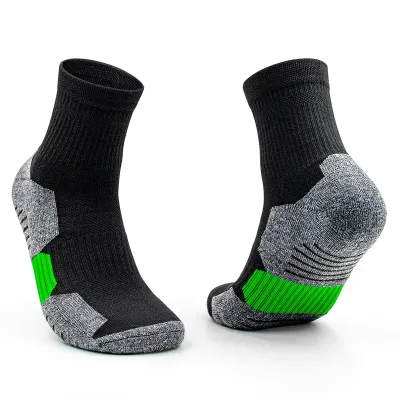
High Quality Anti-Slip Compression Knitted Athletic Crew Sports Socks Men
$0.50 - $2.20
MOQ: 100 Pairs




Comprehensive Sourcing Guide
Strategic Sourcing Guide for Anti-Slip Jacquard Athletic Socks
Understanding Product Specifications and Technical Attributes
Sourcing anti-slip jacquard athletic socks requires a precise understanding of the technical attributes that define performance and fit. The core product category encompasses a range of athletic hosiery designed for high-movement activities, with a primary focus on stability and comfort. Based on available market data, these socks are characterized by a high elasticity profile, ensuring they conform to various foot shapes while maintaining structural integrity during intense physical activity. The material composition is a critical differentiator; while standard options often utilize cotton, advanced variants may incorporate organic cotton to meet specific sustainability requirements. The fabric features frequently include moisture-wicking capabilities and breathability, which are essential for managing perspiration during sports like football, soccer, and training sessions.
The construction of these socks varies significantly in terms of length and thickness, directly influencing their application. Buyers will encounter specifications ranging from crew socks to knee-high styles, with the latter often featuring a non-slip cuff design to prevent slippage during movement. Thickness profiles are generally categorized as medium, thin, or normal, allowing procurement teams to select products based on the specific climate and activity intensity. For instance, thin variants are often preferred for warmer seasons like spring and autumn, while medium or normal thicknesses provide additional thermal insulation for cooler conditions. The jacquard knitting process, indicated by needle counts such as 144n, 168n, or 200n, plays a vital role in creating the intricate patterns and structural reinforcements necessary for the anti-slip function. These needle counts suggest a high level of manufacturing precision, which is crucial for embedding the grip elements without compromising the fabric's breathability.
Design Features and Functional Performance
The functional design of anti-slip athletic socks is centered on providing a secure fit and enhanced traction. A defining characteristic of these products is the non-slip bottom, often achieved through specialized rubberized dots or silicone grips integrated into the sole. This feature is particularly critical for activities involving sudden stops, turns, or lateral movements, such as soccer and football training. The fit is typically described as stretchy, ensuring the sock stays in place without constricting blood flow. Additionally, many models feature a non-slip cuff, which prevents the sock from sliding down the leg, a common issue in high-intensity sports.
Pattern and aesthetic customization are also significant aspects of the product line. While standard designs may include simple stripes, the market offers a wide array of options, including animal patterns and custom designs. The ability to customize the pattern is often linked to the jacquard knitting capability, which allows for complex, multi-colored designs to be woven directly into the fabric rather than printed on top. This method ensures that the design does not fade or peel over time. Furthermore, the color options are highly flexible, with many suppliers offering custom color matching to align with team branding or corporate identity. The eco-friendly nature of some products is highlighted by features such as anti-foul and anti-bacterial properties, which help maintain hygiene and reduce odor during extended wear.
Compliance, Standards, and Certification Verification
When evaluating suppliers for anti-slip jacquard athletic socks, verifying compliance with safety and quality standards is paramount. While specific certification claims must be validated on a case-by-case basis, buyers should be aware of common industry benchmarks. Standards such as OEKO-TEX are frequently referenced in the textile industry to ensure that fabrics are free from harmful substances, making them safe for skin contact. Similarly, standards like ASTM E96 and ISO 9001 are often associated with quality management systems and material testing, though their specific application to socks must be confirmed with the supplier.
Buyers must exercise caution regarding certification claims. The presence of a standard in a general product description does not guarantee that a specific batch of socks meets that standard. Instead, procurement teams should request valid test reports and certificates of conformity for each order. It is essential to verify that the anti-slip components, often made from silicone or rubber, do not contain hazardous materials that could cause skin irritation. Additionally, for products claiming to be eco-friendly or made from organic cotton, buyers should demand documentation proving the organic status of the raw materials. The production origin, often cited as China or specifically Zhejiang, should be cross-referenced with the supplier's ability to meet international compliance requirements. Ensuring that the supplier adheres to relevant labor and environmental regulations is also a key part of the compliance checklist.
Cost Drivers and Pricing Dynamics
The pricing of anti-slip jacquard athletic socks is influenced by a complex interplay of factors, including material costs, manufacturing complexity, and order volume. The observed price range in the market spans from approximately $0.30 to $20.00 per unit, reflecting the vast diversity in product quality and customization levels. Several key drivers contribute to this variance. The choice of material is a primary factor; organic cotton commands a higher price point than standard cotton due to the cost of sustainable farming and processing. Similarly, the complexity of the jacquard pattern and the number of needles used in the knitting process can increase production costs.
Order volume is another critical determinant of price. The minimum order quantity (MOQ) typically ranges from 50 to 3000 pairs, with a common baseline of 100 pairs for many suppliers. Larger orders generally benefit from economies of scale, resulting in a lower unit cost. Customization also plays a significant role in pricing. Requests for custom packaging, specific color matching, or unique patterns often incur additional setup fees and higher per-unit costs. The lead time required for production, which typically ranges from 15 to 25 days, can also impact pricing, as expedited shipping or rush orders may carry a premium. Buyers should note that sample times usually take between 5 to 7 days, and the cost of these samples should be factored into the overall procurement budget.
Supplier Evaluation and Manufacturing Capabilities
Selecting the right supplier involves a thorough assessment of their manufacturing capabilities and operational flexibility. A key indicator of a supplier's capability is their production equipment, specifically the needle count of their knitting machines. Suppliers offering models with 144n, 168n, or 200n needles demonstrate a capacity for high-precision manufacturing, which is essential for producing durable and well-fitted athletic socks. The ability to produce various models, such as those designated by codes like 63, 78, 61, or 250804-108, suggests a versatile production line capable of handling different specifications.
Flexibility in customization is another crucial criterion. Buyers should verify that the supplier can accommodate custom sizes, lengths, and packaging requirements. The availability of custom packaging options, including the ability to accept custom package designs, is a significant advantage for brands looking to differentiate their products. Additionally, the supplier's ability to handle different thicknesses and heights, from low to middle and knee-high styles, indicates a robust production process. It is also important to assess the supplier's responsiveness and communication efficiency, as these factors can impact the overall procurement experience. Suppliers located in regions like Zhejiang, China, often have established supply chains and logistics networks, but buyers should still verify their specific capabilities and reliability through reference checks and site visits.
Quality Control and Long-Term Procurement Strategy
Implementing a rigorous quality control (QC) process is essential for ensuring the consistency and reliability of anti-slip athletic socks. Buyers should establish clear acceptance criteria for key attributes such as elasticity, fit, and the effectiveness of the anti-slip bottom. Regular inspections during the production process can help identify and rectify issues before the final shipment. Key quality checks should include verifying the integrity of the jacquard patterns, the durability of the non-slip grips, and the overall stitching quality. For products claiming to be eco-friendly or anti-bacterial, third-party testing may be necessary to validate these claims.
Long-term procurement strategies should focus on building strong relationships with reliable suppliers who can consistently meet quality and delivery standards. Buyers should consider the total cost of ownership, including potential costs associated with returns, rework, or delays. Establishing clear communication channels and agreeing on standardized quality protocols can help mitigate risks. Additionally, buyers should plan for scalability, ensuring that the supplier can handle increased order volumes as the business grows. The ability to customize products and adapt to changing market trends, such as the demand for eco-friendly materials, is also a valuable asset for long-term success. By maintaining a proactive approach to supplier management and quality assurance, buyers can secure a steady supply of high-quality anti-slip jacquard athletic socks that meet their specific needs.
Application Scenarios and Market Fit
The versatility of anti-slip jacquard athletic socks makes them suitable for a wide range of applications, from professional sports to casual wear. The primary market segment includes athletes participating in football, soccer, and training sessions, where the non-slip feature is critical for performance and safety. The stretchy fit and moisture-wicking properties make these socks ideal for high-intensity activities that require sustained physical effort. Additionally, the eco-friendly and anti-bacterial features appeal to health-conscious consumers and organizations looking to promote sustainability.
Beyond sports, these socks can be used in various other contexts, such as corporate events, team-building activities, and promotional campaigns. The ability to customize patterns, colors, and packaging allows brands to create unique products that align with their identity. The range of sizes, from free size to custom dimensions, ensures that the socks can fit a diverse audience. The seasonal adaptability, with options suitable for spring and autumn, further expands their market potential. By understanding the specific needs of different application scenarios, buyers can make informed decisions that maximize the value and utility of their procurement.
Comparative Analysis of Product Variants
To assist buyers in making informed decisions, the following table compares key attributes of common product variants found in the market. This comparison highlights the differences in specifications, features, and potential applications.
| Feature | Variant A (Crew) | Variant B (Knee High) | Variant C (Custom) |
|---|---|---|---|
| Length | Crew Socks | Knee Socks | Custom Length |
| Thickness | Medium | Thin | Normal/Custom |
| Material | Cotton | Organic Cotton | Custom Material |
| Fit | Stretchy | Stretchy, Non-Slip Cuff | Custom Fit |
| Pattern | Standard | Striped | Animal/Custom |
| MOQ | 100 Pairs | 50 Pairs | 100-3000 Pairs |
| Lead Time | 15-25 Days | 15-25 Days | 15-25 Days |
| Sample Time | 5-7 Days | 5-7 Days | 5-7 Days |
This table illustrates the diversity available in the market, allowing buyers to select the variant that best aligns with their specific requirements. Whether prioritizing material sustainability, specific fit, or custom branding, the market offers solutions to meet a wide array of needs.
FAQs
Can I customize the color and packaging for these socks?
Yes, you can customize both the color and packaging. The product attributes confirm that color is available as custom and the package accepts custom designs, allowing you to align the socks with your brand identity.
What are the minimum order quantities for these athletic socks?
The minimum order quantity ranges from 50 to 3000 pairs depending on the specific model. Some listings specify an MOQ of 50 pairs while others require 100 pairs, so you should verify the requirement for your selected model.
How long does it take to receive samples and the final order?
Samples typically take 5 to 7 days to prepare, while the full delivery date is 15 to 25 days. This timeline applies to the production and shipping process from the manufacturing location in China.
Which needle counts are used for the jacquard knitting process?
The socks are manufactured using needle counts of 144n, 168n, or 200n. These specific needle configurations ensure high precision for the intricate patterns and structural reinforcements required for the anti-slip function.
What materials are used to make these breathable athletic socks?
The primary materials include cotton and organic cotton options. These materials are selected to provide breathability and moisture-wicking properties, making them suitable for sports like football and soccer training.
Which thickness and length options are available for these socks?
Available specifications include crew socks and knee socks with thicknesses ranging from thin to medium or normal. You can choose between low, middle, or knee-high heights based on your specific activity requirements.