Source anti-slip inflatable air seat cushion for Wheelchair, Car, and Massage
Compare 30 listings for the anti-slip inflatable air seat cushion designed for wheelchair, car, and massage applications. Buyers can review specifications including TPU materials, CE/FDA certifications, and customization options from verified Chinese manufacturers.
Key considerations
Products List


Inflatable Cushions Elderly Cushion Anti-Bedsore Breathable and Comfort Cushion
$12.00 - $18.00
MOQ: 1000 Pieces


More Maximum Stability Comfort Pressure Relief Inflatable Seat Cushion for Tailbone Pain
$8.90 - $14.90
MOQ: 1000 Pieces


Wholesales Seat Pillow Memory Foam Seat Cushion Medical Supply Seat Cushion
$1.43 - $1.58
MOQ: 100 Pieces

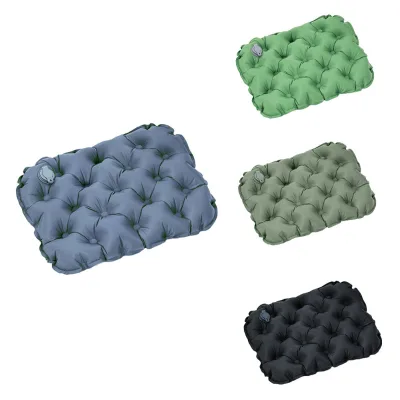


Outdoor Portable Inflatable Seat Cushion with Carrying Bag for Camping
$10.00 - $30.00
MOQ: 500 Pieces


Self-Inflatable Mat Cushion with Different Sizes for Camping and Sitting
$10.00 - $30.00
MOQ: 500 Pieces


Comprehensive Sourcing Guide
Strategic Sourcing Guide for Anti-Slip Inflatable Air Seat Cushions
The global demand for ergonomic seating solutions has driven significant innovation in the inflatable air seat cushion sector, particularly for applications requiring pressure redistribution and anti-slip stability. For B2B procurement professionals, sourcing these items requires a nuanced understanding of the intersection between medical-grade pressure relief and automotive comfort. The market offers a diverse array of products ranging from simple therapeutic pads to complex, heated, and massaging units. This guide provides a structured approach to evaluating suppliers, verifying technical specifications, and ensuring compliance without relying on unverified market claims.
Technical Specifications and Functional Attributes
When evaluating anti-slip inflatable air seat cushions, buyers must first distinguish between the core inflation mechanism and the secondary functional features. The fundamental product attribute is the material composition, which dictates durability and safety. In the current supply landscape, Thermoplastic Polyurethane (TPU) with a thickness of 1mm is a frequently observed specification. This material choice is critical for balancing flexibility with puncture resistance, a necessary trait for products intended for long-term use in wheelchairs or vehicle seats.
The structural design of the cushion is equally vital. While some units are designed with a square profile to maximize surface area for pressure relief, others adopt a rectangular or "ladder" shape to fit specific seat contours. A key technical differentiator is the internal air cell configuration. Products with a high density of air bubbles, such as those featuring 30 distinct air chambers, offer superior pressure distribution compared to single-chamber designs. This multi-cell architecture prevents the "bottoming out" effect, where the user sinks too deeply, causing discomfort or skin breakdown.
Furthermore, the control mechanism defines the user experience. Mechanical control systems are prevalent in basic models, offering simple manual inflation and deflation. However, advanced variants utilize micro-control systems, often paired with AC power supplies, to automate pressure cycles. These automated systems are essential for medical applications where constant pressure adjustment is required to prevent decubitus ulcers. The presence of accessories such as hand pumps, hoses, glue, and repair patches is a standard expectation for a complete unit. Buyers should verify that the included pump matches the valve type of the cushion, as mismatches can lead to operational failures.
Compliance and Certification Verification
In the medical and automotive sectors, certification is not merely a marketing claim but a prerequisite for market entry. Procurement teams must rigorously verify that suppliers possess valid documentation for the specific product model being sourced. The most common certification triad observed in this category includes CE (Conformité Européenne), FDA (Food and Drug Administration), and ISO (International Organization for Standardization) standards. These certifications indicate that the product meets specific safety, quality, and performance benchmarks.
For products marketed as medical devices, such as those intended for wheelchair users to prevent bedsores, the FDA clearance is particularly significant. It suggests that the device has undergone scrutiny regarding its safety and efficacy in a clinical setting. Similarly, the CE mark confirms compliance with European health, safety, and environmental protection standards. In the context of electronic components, such as heated or massaging air cushions, RoHS (Restriction of Hazardous Substances) certification is essential to ensure the absence of lead, mercury, and other hazardous materials.
Buyers should not assume that a supplier's general certification covers all their product lines. It is imperative to request the specific certificate number and validity date for the exact model number, such as HF-3002 or CP-930. Additionally, the origin of the product plays a role in compliance; products manufactured in regions like Fujian, Ningde, or general China manufacturing hubs must adhere to the export regulations of the destination country. The presence of a "12 Months Warranty" is a strong indicator of a supplier's confidence in their product's durability, but it should be backed by clear terms and conditions regarding what constitutes a manufacturing defect versus normal wear and tear.
Cost Drivers and Pricing Dynamics
The pricing structure for anti-slip inflatable air seat cushions is influenced by a complex interplay of material costs, feature complexity, and order volume. The observed price range in the market spans from approximately $0.48 to $289.40 USD. This vast disparity is not arbitrary but reflects the functional differences between the products. A basic, non-powered inflatable cushion made of 1mm TPU will sit at the lower end of this spectrum. In contrast, a unit featuring integrated heating elements, massage functions, micro-control systems, and premium packaging will command a price near the upper limit.
Material thickness and the number of air cells are primary cost drivers. A cushion with 30 air bubbles requires more raw material and a more complex molding process than a single-chamber version. Similarly, the inclusion of accessories like a high-quality hand pump or a specialized repair kit adds to the unit cost. Packaging also influences the final price; products shipped in color boxes with dimensions like 480x240x119mm incur higher packaging and logistics costs compared to bulk-packed items.
Volume is the most significant lever for cost reduction. The Minimum Order Quantity (MOQ) typically ranges from 1 to 1000 pieces. Suppliers often offer tiered pricing structures where the unit cost decreases significantly as the order volume increases. For instance, an order of 1000 pieces may qualify for OEM customization, allowing the buyer to brand the product. Conversely, smaller orders may require the buyer to accept the supplier's standard branding or face higher per-unit costs. Buyers must calculate the total landed cost, including shipping, which is affected by the packing density. A standard 20-foot container can hold approximately 4000 pieces of certain cushion models, making large-scale shipments economically viable for international buyers.
Typical Applications and Usage Scenarios
The versatility of anti-slip inflatable air seat cushions allows them to serve diverse applications across medical, automotive, and general comfort sectors. In the medical field, these products are primarily utilized for pressure ulcer prevention. The "Anti-Decubitus" feature is a critical specification for patients with limited mobility who use wheelchairs or hospital beds. The ability to adjust air pressure helps redistribute weight away from bony prominences, reducing the risk of skin breakdown. These units are often designed with a "Strech PU Cover" to ensure durability and ease of cleaning in clinical environments.
In the automotive industry, the application shifts towards comfort and support. Products labeled as "Heated Seat Cushions" or "Massage Cushions" are designed to alleviate driver fatigue during long journeys. These units often feature "Multi Function" capabilities, combining heating, massage, and inflation. The "360 Degree Swivel" feature is particularly valuable in vehicle settings, allowing the cushion to adapt to different seating positions. Additionally, the "Anti-Slip" characteristic ensures that the cushion remains secure during vehicle movement, a safety requirement that distinguishes high-quality automotive products from generic inflatables.
Other applications include general office ergonomics and travel comfort. The "Memory" feature in some foam-based or hybrid cushions provides long-term shape retention, while the "Plain" style and "Woven" technics cater to aesthetic preferences in corporate environments. The "Foldable" nature of certain models makes them ideal for travelers who need portable seating solutions. Buyers should match the specific product attributes, such as the "Square" or "Rectangular Laddwe" shape, to the intended use case to ensure optimal performance.
Supplier Evaluation and Quality Control
Selecting the right supplier requires a multi-faceted evaluation process that goes beyond price comparison. Buyers should prioritize suppliers who demonstrate transparency in their manufacturing processes and quality control measures. The "Customization" availability is a key indicator of a supplier's flexibility. Whether it is customizing the logo, the color, or the dimensions, a supplier capable of OEM services (with an MOQ of 1000 PCS) is better positioned to meet specific brand requirements.
Quality control should be integrated into the procurement lifecycle. Buyers must verify that the supplier conducts rigorous testing on the air retention capabilities of the TPU material. The presence of a "12 Months Warranty" suggests that the supplier has confidence in their product's ability to withstand daily use without leakage or structural failure. However, buyers should also request sample testing results to verify claims regarding the "Weight Capacity" of the cushion, which is observed to be up to 120kgs in some models.
The packing specifications are another area for scrutiny. Standard packing often involves 20 pieces per carton, but variations exist. Buyers should ensure that the packaging dimensions, such as 53x35x21mm or 78.5x27x45mm, align with their logistics requirements. Efficient packing reduces shipping costs and minimizes the risk of damage during transit. Furthermore, the inclusion of a complete accessory kit, including glue, patches, and hoses, is a sign of a comprehensive product offering that reduces the burden on the buyer to source replacement parts separately.
Long-Term Procurement Considerations
Sourcing inflatable air seat cushions is not a one-time transaction but a long-term partnership that requires strategic planning. Buyers should consider the scalability of their orders and the supplier's ability to maintain consistent quality over time. The "Qty / 20 Feet Container" metric is a crucial factor for large-scale distributors. A capacity of 4000 pieces per container indicates a high-volume production capability, which is essential for maintaining a steady supply chain.
Lead times and production capacity are also critical. While specific lead times are not provided in the general data, buyers should negotiate clear timelines based on order volume and customization requirements. The ability to produce customized models, such as those with specific "prod_standard" dimensions like 44x44x7cm, ensures that the product fits the buyer's specific market needs.
Finally, buyers must plan for the lifecycle of the product. The "12 Months Warranty" covers the initial period, but what happens after? A reliable supplier should offer a steady supply of replacement parts, such as pumps and repair kits, to extend the usability of the cushion. The "Customized" logo option allows buyers to build brand loyalty, turning a generic product into a branded asset. By focusing on these long-term factors, procurement professionals can secure a supply chain that is resilient, cost-effective, and aligned with their strategic goals.
Comparative Analysis of Product Models
To assist in the decision-making process, the following table compares key attributes of common product models found in the market. This comparison highlights the differences in specifications, certifications, and intended applications.
| Product Model | Primary Feature | Material | Certification | Typical Application |
|---|---|---|---|---|
| HF-3002 | Massage, Waterproof | TPU 1mm | CE/FDA/ISO | Wheelchair / Seat |
| CP-930 | Heated, Micro Control | TPU 1mm | Ce, RoHS | Car Seat |
| C-1100 | Memory, Anti-Slip | Woven | N/A | Office / General |
| HF2008 | Multi Function | TPU 1mm | CE/FDA/ISO | Medical / Travel |
| FO2007 | Foldable | TPU 1mm | CE/FDA/ISO | Travel / Portable |
This table serves as a reference point for buyers to quickly identify which model aligns with their specific requirements. It is important to note that while these models represent common specifications, buyers should always verify the exact details with the supplier before placing an order. The diversity in features, from "Thai Open Back Massage" to "360 Degree Swivel," underscores the need for a tailored sourcing strategy. By carefully analyzing these attributes, procurement professionals can make informed decisions that balance cost, quality, and functionality.
FAQs
What material is used for anti-slip inflatable air seat cushions?
The primary material observed is 1mm TPU, which balances flexibility with puncture resistance. This specification supports durability for long-term use in wheelchairs or vehicle seats while maintaining the necessary anti-slip stability.
Which certifications are required for medical-grade seat cushions?
Common certifications include CE, FDA, and ISO standards for medical applications. For electronic models, RoHS certification is also essential to ensure the absence of hazardous substances like lead or mercury in the components.
Can these cushions be customized with a specific logo?
Yes, customization is available for logos and dimensions on many models. However, OEM customization typically requires a Minimum Order Quantity of 1000 pieces to qualify for branded production services from the supplier.
What is the typical weight capacity for these air cushions?
The observed weight capacity for these units is up to 120kgs. This limit ensures safety and structural integrity for users in wheelchairs or automotive seats while preventing bottoming out during inflation.
How many air bubbles do high-performance cushions contain?
High-performance models often feature 30 distinct air bubbles for superior pressure distribution. This multi-cell architecture helps prevent skin breakdown by redistributing weight away from bony prominences more effectively than single-chamber designs.
What accessories are included with the inflatable seat cushion?
Standard accessories typically include a hand pump, hose, glue, and repair patches. These items ensure the user can inflate the cushion and perform basic maintenance without needing to source additional parts separately.
Which control methods are available for automated pressure adjustment?
Control methods range from mechanical systems to micro-control systems powered by AC. Advanced micro-control units automate pressure cycles, which is essential for medical applications requiring constant adjustment to prevent decubitus ulcers.