Source Anti-Slip Yoga Balance Ball for Fitness, Pilates, and Balance Training
Compare 30 listings for the anti-slip yoga balance ball from verified Chinese suppliers. Buyers can evaluate options for body building, balance training, and fitness coordination with MOQs ranging from 10 to 1000 pieces.
Key considerations
Products List
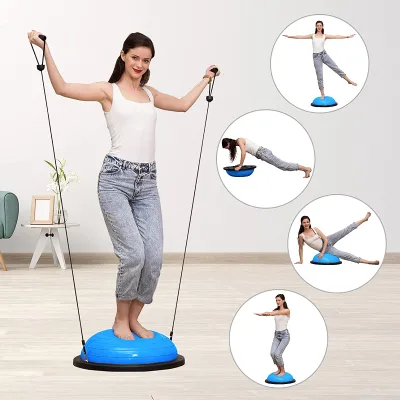


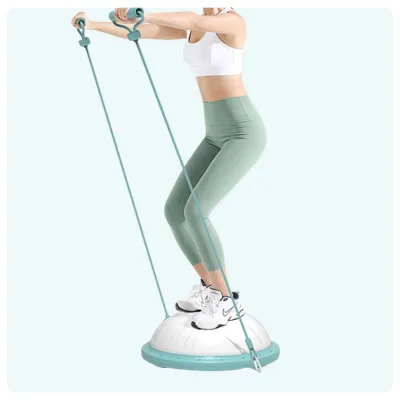
Fitness Half Bosuing Balance Ball/ Exercises Balance Trainer/ Half Massage Yoga Ball
$12.50 - $13.50
MOQ: 10 Pieces


Gym Balance Ball Yoga Pilates Exercise Yoga Half Balance Training Ball
$15.44 - $16.94
MOQ: 200 Pieces


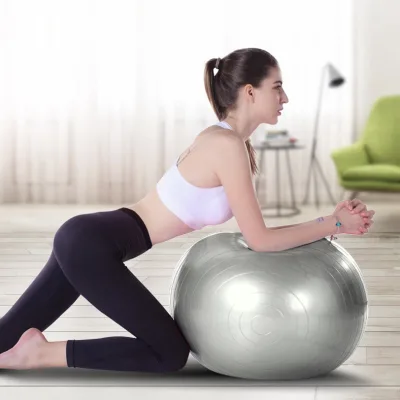
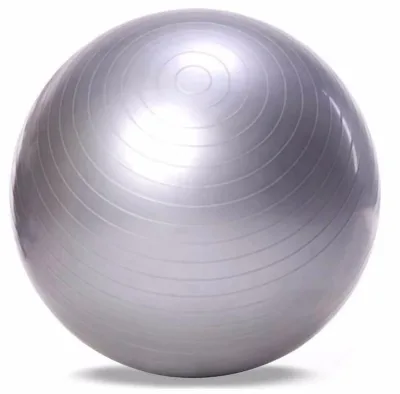
Custom Sized Anti Burst Balance Exercise Ball with Hand Pump PVC GYM Yoga Ball
$2.00 - $3.60
MOQ: 10 pieces


Custom 58cm Half Yoga Balance Ball for Exercise Toning Fitness Equipment
$15.50 - $18.00
MOQ: 100 pieces
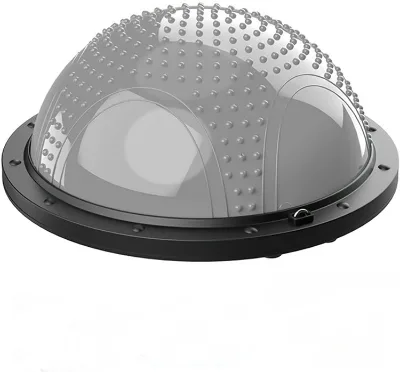

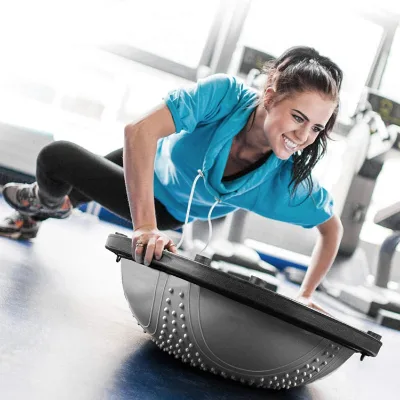


Hot Sale Yoga Exercise Ball Chair Stability Yoga Balance Ball with Ring Base
$8.70 - $9.00
MOQ: 500 Pieces

Custom High Quality Toning Ball for Effective Core and Balance Exercises
$1.99 - $2.39
MOQ: 100 Pieces

Comprehensive Sourcing Guide
Strategic Sourcing Guide for Anti-Slip Yoga Balance Balls
Understanding Product Specifications and Functional Attributes
When sourcing anti-slip yoga balance balls, buyers must first distinguish between the specific functional categories available in the market, as the terminology often overlaps. The core product category includes items explicitly labeled as "Yoga Ball" or "Bosu Ball," each serving distinct but related purposes in fitness and rehabilitation. The functional attributes observed in current listings indicate a primary use case centered on "Body Building" and "Fitness Balance Coordination." These products are designed to enhance stability, strength, and proprioception, making them essential for both commercial gyms and home workout environments.
A critical specification to verify is the physical dimension and structural integrity of the ball. Data indicates that standard dimensions vary significantly based on the intended application. For instance, specific models are listed with a standard size of "606020cm," while others are defined by diameter alone, such as "Dia. 58cm" or "Dia. 60cm /Height 20cm." The "Bosu Ball" variant is specifically noted with a standard of "30CM * Dia. 11CM," suggesting a different structural profile compared to the traditional spherical yoga ball. Buyers must ensure that the "Single package size" aligns with their logistical requirements, as observed listings show dimensions like "30X20X20 cm" for individual units.
Material composition is another non-negotiable specification. The supplied facts confirm that "PVC" is a verified material used in these products. While some listings categorize the material broadly as "Other," the explicit mention of PVC provides a baseline for durability and texture. The surface finish is critical for the "anti-slip" requirement; however, specific friction coefficients are not provided in the source data. Therefore, procurement teams must request physical samples to verify the texture and grip under various conditions, such as sweat or humidity, rather than relying solely on marketing descriptions. The "Color" options observed include "Purple" and "Black," which may influence aesthetic matching for specific gym branding, though the functional performance remains the primary driver.
Compliance, Certification, and Safety Standards
In the realm of fitness equipment, compliance and certification are paramount for liability protection and market access. The available data explicitly lists "CE," "RoHS," and "ISO" as certifications associated with specific product models, such as those with model numbers BP-GB035 and BP-GB052. These certifications suggest that the products meet certain European safety and environmental standards. However, buyers must exercise caution and verify the specific scope of these certifications for each batch. The presence of "CE" and "RoHS" indicates compliance with electrical and hazardous substance regulations, which is particularly relevant if the balance balls include any electronic components, though the primary focus here is mechanical safety.
It is important to note that while "ISO" is mentioned, the specific standard number (e.g., ISO 9001 for quality management or ISO 20345 for safety footwear) is not explicitly detailed in the provided facts. Similarly, "OEKO-TEX" is listed in the background context but is not a primary certification for the product attributes observed. Buyers should not assume that a generic "ISO" label covers all aspects of the product's safety or quality. Instead, the procurement strategy should involve requesting the actual certification documents for the specific model being purchased. This verification process ensures that the manufacturer holds valid, current certificates that cover the specific manufacturing facility and product line.
Furthermore, the "Condition" of the product is listed as "New," which is a standard expectation for B2B transactions. However, the "Folded" attribute is noted as "Unfolded," indicating that these items are not collapsible in the traditional sense of a folded yoga mat. This distinction affects storage and shipping logistics. The "Single gross weight" is observed at "2.000 kg," which is a critical figure for calculating freight costs. Buyers must ensure that the weight specifications provided by the supplier match the actual product weight to avoid discrepancies in shipping quotes and customs declarations. The "Port of dispatch" is listed as "Shanghai" or "Nantong Port," which are major Chinese shipping hubs, facilitating global distribution but requiring specific logistics planning for importers.
Cost Drivers and Pricing Structure Analysis
The pricing structure for anti-slip yoga balance balls is influenced by several variables, including material quality, customization options, and order volume. The observed price range in the market spans from $0.58 to $35 USD, a significant variance that reflects differences in product complexity, branding, and order quantities. This wide range suggests that the $0.58 price point likely corresponds to basic, non-branded, or bulk-order items with minimal packaging, while the $35 figure may represent premium models with advanced features, custom branding, or specialized packaging.
Minimum Order Quantity (MOQ) is a primary cost driver. The data reveals a wide range of MOQs, from as low as "10PCS" to as high as "1000" or "200 PCS." This variability allows buyers to tailor their initial investment based on their risk tolerance and market demand. A lower MOQ, such as "10PCS," is ideal for testing the market or for small boutique fitness studios, whereas higher MOQs are necessary to achieve economies of scale and reduce the per-unit cost. The "Supply Ability" is noted as "500 pieces per Day," which indicates that suppliers can handle moderate to large orders without significant delays, provided the order volume aligns with their daily capacity.
Customization is another significant factor affecting cost. The availability of "Customized Logo" and "Customization" options implies that buyers can brand the products with their own logos. However, such customization often incurs additional setup fees or higher unit costs, especially for smaller order volumes. The "Packaging Details" also play a role; options range from simple "Polybag" to more elaborate "Color box or carrybag or polybag" or even "Wooden Case." Premium packaging increases the unit cost but adds value for retail presentation. Buyers should calculate the total landed cost, including packaging, customization, and shipping, rather than focusing solely on the base unit price.
Typical Applications and Usage Scenarios
The functional versatility of anti-slip yoga balance balls makes them suitable for a diverse range of applications. The primary usage categories identified include "Body Building," "Balance Training," and "Yoga Pilates Balance Exercise." These applications span from professional rehabilitation centers to commercial fitness gyms and home workout setups. The "Age" demographic is specified as "Adult," indicating that these products are designed for mature users and may not be suitable for children without specific safety adjustments.
In a commercial setting, the "Balance Training" function is critical for athletes looking to improve core stability and coordination. The "Fitness Balance Coordination" attribute highlights the product's role in enhancing proprioception, which is essential for injury prevention and performance enhancement. For yoga and pilates studios, the "Anti-slip" feature is vital to ensure safety during dynamic movements. The "Bosu Ball" variant, with its specific dimensions, is particularly suited for stability training and balance exercises, offering a different challenge compared to the spherical yoga ball.
The "Application" field explicitly mentions "Yoga Pilates Balance Exercise," confirming the product's suitability for structured fitness programs. The "Single package size" and "Weight" of 2.000 kg suggest that these units are robust enough for heavy use but manageable for individual handling. This balance of durability and portability makes them ideal for studios that may need to move equipment between rooms or for home users who require a compact yet effective fitness tool. The "Color" options, such as "Purple" and "Black," allow for aesthetic customization to match the interior design of fitness facilities.
Supplier Evaluation and Verification Protocols
Evaluating suppliers for anti-slip yoga balance balls requires a rigorous approach to verify their capabilities and reliability. The "Place of Origin" is consistently listed as "Jiangsu, China" or generally "China," indicating a concentration of manufacturing in this region. Buyers should verify the specific factory location to ensure it aligns with their logistical preferences and to assess the local supply chain stability. The "Port of dispatch" being "Shanghai" or "Nantong Port" is standard for this region, but buyers should confirm if the supplier can offer alternative ports if needed.
The "Sample" availability is a crucial indicator of supplier transparency. The data confirms that samples are "Aviailable" (Available) with a "Sample Time" of "7-10 Working Days." This lead time for samples is a key metric for buyers to plan their evaluation process. Requesting samples allows for physical inspection of the "PVC" material, the "Anti-slip" texture, and the overall build quality. Buyers should test the sample for durability, checking for any signs of weak seams or material degradation.
The "Delivery Time" is listed as "7-15 days," which is a standard range for production and shipping. However, this should be treated as an estimate rather than a guarantee. Buyers must confirm the current production schedule and any potential bottlenecks. The "Customization" capability, including "Customized Logo," should be verified through a detailed discussion with the supplier to understand the setup costs and minimum requirements for branded orders. Additionally, the "Condition" being "New" should be confirmed in the contract to ensure that no refurbished or used items are supplied.
Quality Control and Long-Term Procurement Considerations
Implementing a robust quality control (QC) strategy is essential for maintaining product integrity over time. Given the "PVC" material and the "Anti-slip" requirement, buyers should establish clear acceptance criteria for surface texture, material thickness, and structural integrity. The "Single gross weight" of 2.000 kg serves as a baseline for checking if the product meets the specified weight, which can indicate material density and quality. Any significant deviation from this weight could signal the use of inferior materials or manufacturing defects.
Long-term procurement considerations involve building a sustainable relationship with the supplier. The "Supply Ability" of "500 pieces per Day" suggests that the supplier has the capacity to scale, but buyers should discuss contingency plans for peak demand periods. The "Packaging" options, such as "Poly Bag+Carton" or "Polybag+Carton+Wooden Case," should be evaluated for their ability to protect the product during long-distance shipping. Damaged goods can lead to returns and reputational damage, so robust packaging is a critical quality control measure.
Buyers should also consider the "Lead Time" variability. While the standard "Delivery Time" is "7-15 days," external factors such as raw material shortages or logistics disruptions can impact this timeline. Establishing a clear communication channel with the supplier and setting realistic expectations for lead times can mitigate these risks. Finally, the "Certification" status should be re-verified periodically to ensure continued compliance with evolving regulations. By focusing on these quality control and long-term factors, buyers can secure a reliable supply of high-quality anti-slip yoga balance balls that meet their specific market needs.
Comparative Analysis of Product Models
To facilitate informed decision-making, the following table compares key attributes of the observed product models based on the supplied data. This comparison highlights the differences in specifications, certifications, and packaging that may influence the procurement choice.
| Attribute | Model BP-GB039B | Model BP-GB035 | Model BP-GB052 | Model BP-GB040 |
|---|---|---|---|---|
| Product Name | Yoga Ball | Yoga Ball | Bosu Ball | Yoga Ball |
| Standard Size | Other | 594215cm | 30CM * Dia. 11CM | Dia. 58cm / 60cm |
| Material | Other | PVC | PVC | Other |
| Certification | Not Listed | CE, RoHS, ISO | Not Listed | Not Listed |
| MOQ | 100 pcs | 200 PCS | Not Listed | Not Listed |
| Packing | Poly Bag+Carton | OPP Bag/ Carton /Wooden Case | Polybag+Carton+Wooden Case | Not Listed |
| Weight | 2.000 kg | 550g | Not Listed | Not Listed |
| Usage | Body Building | Balance Training | Yoga Pilates Balance Exercise | Not Listed |
This table illustrates that while the core function remains consistent, the specific attributes vary significantly. For instance, Model BP-GB035 offers comprehensive certifications (CE, RoHS, ISO) and a lower weight (550g), which might be preferable for specific applications requiring portability. In contrast, Model BP-GB039B has a higher weight (2.000 kg) and a standard MOQ of 100 pcs, suggesting a more robust construction suitable for heavy-duty use. Buyers should align their selection with their specific operational requirements, balancing factors like weight, certification, and packaging against their budget and logistical constraints.
FAQs
What certifications are available for anti-slip yoga balance balls?
Some models carry CE, RoHS, and ISO certifications to ensure safety compliance. Buyers should verify specific certificate documents for each batch rather than assuming generic coverage for all units.
How long does it take to receive samples of these products?
Sample delivery typically requires 7 to 10 working days for preparation. This timeline allows buyers to inspect material quality and anti-slip texture before committing to larger orders.
Which minimum order quantities are accepted for custom logo orders?
Minimum order quantities vary from 10 pieces up to 200 pieces depending on the supplier. Custom logo options are available, but specific MOQs must be confirmed for branded production runs.
Can buyers customize the packaging for anti-slip yoga balance balls?
Yes, packaging can be customized using color boxes, carrybags, or polybags with cartons. Some suppliers also offer wooden cases for premium protection, though this may affect unit costs.
What is the standard delivery time for bulk orders of these items?
Standard delivery time ranges from 7 to 15 days after order confirmation. This period covers production and preparation for dispatch from ports like Shanghai or Nantong in China.
Which materials are used to manufacture these balance balls?
PVC is a verified material used in these products to ensure durability and grip. While some listings mention generic materials, PVC provides a baseline for texture and structural integrity.
How much does a single unit of anti-slip yoga balance ball weigh?
The single gross weight is observed at 2.000 kg for standard units. This weight is critical for calculating freight costs and ensuring the product meets density specifications.