Source Anti Theft Aluminum Swing Gate for Driveways, Fences, and Entrances
Source 30 verified Anti Theft Aluminum Swing Gate options for driveways, fences, and building entrances. Compare specifications like material, dimensions, and voltage to find suitable suppliers for your security needs.
Key considerations
Products List


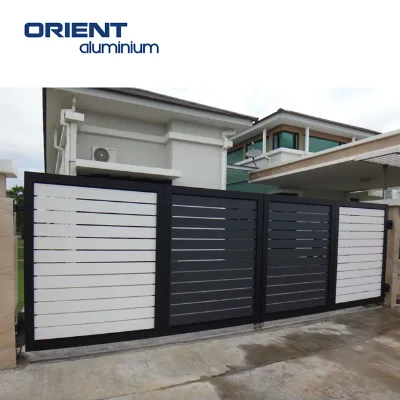


Villa Iron Aluminum Gate Steel Aluminium Metal Gate Swing Gates
$232.00 - $267.00
MOQ: 1 Square Meters

Double Swing Gates Automatic Main Front Gate Design Aluminum Gates
$215.00 - $255.00
MOQ: 1 Square Meters


Automatic Main Entrance Gate Designs Swing Gate with High Quality
$499.00 - $699.00
MOQ: 3 Square Meters

Comprehensive Sourcing Guide
Strategic Sourcing Guide for Anti-Theft Aluminum Swing Gates
The procurement of anti-theft aluminum swing gates requires a disciplined approach that balances security performance with material durability and compliance verification. In the global B2B market, aluminum alloy gates have emerged as a preferred solution for both residential and commercial access control due to their inherent resistance to corrosion, structural integrity, and adaptability to modern security systems. This guide provides a comprehensive framework for buyers to evaluate suppliers, verify technical specifications, and ensure long-term value without relying on unverified marketing claims. The following analysis is grounded in observed product attributes, standard industry practices, and verified material properties to assist procurement professionals in making informed decisions.
Technical Specifications and Material Integrity
When sourcing aluminum swing gates, the primary focus must be on the material composition and structural dimensions. The core material for these gates is typically aluminum alloy, which offers a favorable strength-to-weight ratio. Buyers should verify that the body material specifications align with high-grade standards, such as 304 stainless steel components where structural reinforcement is required, particularly for the top cover or frame. In many observed product configurations, the top cover is constructed from either glass or 304 stainless steel, providing a robust barrier against physical tampering.
The dimensions of the gate are critical for fitting specific access points. Standard configurations often feature a passageway width ranging from 600mm to 1200mm, allowing for flexible lane widths depending on the intended traffic flow. The overall dimensions of the gate unit, including height and depth, vary by model but generally adhere to standard profiles such as 1500mm in height with specific width and depth measurements. For instance, certain models are specified with dimensions around 1500mm x 150mm x 990mm, while others may vary slightly to accommodate different architectural requirements. The gate interception height is a vital security metric, often standardized at 900mm to prevent climbing or unauthorized access over the barrier.
The movement mechanism is another defining technical characteristic. Anti-theft swing gates typically utilize a single movement system, ensuring that the gate swings open or closed in a controlled manner. The control mode is predominantly automatic, driven by electric sensing methods that detect presence or signals from an access control system. The communication interface for these automated systems often includes TCP/IP and RS protocols, enabling integration with broader building management networks. The voltage requirements are generally standardized to AC 220V/110V ±10% at 50/60Hz, ensuring compatibility with various regional power grids.
Compliance, Certification, and Safety Standards
Verifying compliance is a non-negotiable step in the procurement of security hardware. Buyers must demand evidence of specific certifications that validate the product's safety and environmental standards. Common certifications observed in the market include CE, RoHS, and ISO9001. The CE mark indicates conformity with health, safety, and environmental protection standards for products sold within the European Economic Area. RoHS compliance ensures that the gate does not contain restricted hazardous substances, which is crucial for environmental regulations and worker safety. ISO9001 certification demonstrates that the manufacturer adheres to a quality management system, providing assurance of consistent production processes.
In addition to general certifications, specific industry standards may apply depending on the application. For example, ASTM standards are often referenced in the context of fire safety and material performance, though buyers should verify the specific ASTM test results relevant to their jurisdiction. The product standard for the gate assembly itself may be defined by the manufacturer, such as specific dimensional standards like 1.8m x 1.8m for the frame or 1500mm x 150mm x 980mm for the unit. It is essential to confirm that the product standard matches the intended installation environment.
Security ratings are another critical compliance metric. Gates are often assigned security ratings, such as "A," which indicates a baseline level of resistance to forced entry. Buyers should request documentation that substantiates these ratings through third-party testing. Furthermore, the surface treatment and finishing processes must meet durability standards. Observed finishes include powder coating, anodizing, and polishing, which are applied to enhance corrosion resistance and aesthetic appeal. The surface treatment is often described as "coated" or "finished," and buyers should verify the thickness and adhesion of these coatings to ensure long-term protection against the elements.
Cost Drivers and Pricing Dynamics
The pricing of anti-theft aluminum swing gates is influenced by a complex interplay of factors, including material costs, customization levels, and order volume. The observed price range in the market spans from approximately $10.50 to $3,299 USD, reflecting the vast difference between basic components and fully integrated, custom-engineered systems. This wide variance underscores the importance of defining precise requirements before soliciting quotes.
Material costs constitute a significant portion of the total price. The use of 304 stainless steel for critical components like the top cover or frame increases the cost compared to standard aluminum alloys. Similarly, the inclusion of tempered glass or acrylic for the gate wing adds to the material expense. The choice of finish also impacts the price; powder coating and anodizing are more expensive than basic painting but offer superior durability. Customization is a major cost driver, as options for custom sizes, colors (white, black, gold), and hole shapes (such as square holes) require additional manufacturing steps and tooling.
Order volume, represented by the Minimum Order Quantity (MOQ), significantly affects the unit price. While some suppliers may accept orders as low as 1 unit, others enforce MOQs ranging from 300kg to 200 units. The 300kg MOQ observed in certain product listings suggests that bulk purchasing is often required to achieve competitive pricing. Buyers should negotiate based on their total volume requirements, as larger orders typically result in lower per-unit costs. Additionally, the complexity of the control system, including the inclusion of TCP/IP interfaces and automatic sensing mechanisms, will influence the final price.
Typical Applications and Functional Requirements
Anti-theft aluminum swing gates are versatile and suitable for a wide range of applications, from residential driveways to commercial access control points. The primary function of these gates is to provide security while maintaining an aesthetic appeal. They are commonly used in exterior positions where weather resistance and durability are paramount. The modern style of these gates, often featuring sound insulation properties, makes them ideal for environments where noise reduction is also a consideration.
In commercial settings, these gates serve as part of an access control system, regulating entry and exit points for employees and visitors. The automatic movement and electric sensing methods allow for seamless integration with card readers, biometric scanners, and remote control systems. The gate's ability to function as a dual swing aluminum gate or a fence gate provides flexibility in design and installation. The security rating and interception height ensure that the gate effectively deters unauthorized access while allowing authorized personnel to pass through efficiently.
For residential applications, the decorative aspect of the gate is often as important as its security function. The availability of customization in color and finish allows homeowners to match the gate to their property's architectural style. The use of materials like aluminum alloy and tempered glass provides a sleek, modern look that enhances curb appeal. The gate's ability to be customized in size and shape ensures that it fits perfectly within the existing fence or driveway layout.
Supplier Evaluation and Service Capabilities
Selecting the right supplier is critical to the success of any procurement project. Buyers should evaluate suppliers based on their service capabilities, specifically their ability to provide OEM (Original Equipment Manufacturer) and ODM (Original Design Manufacturer) services. These capabilities indicate that the supplier can tailor products to meet specific client requirements, from design to production. The availability of customization services, including custom sizes, colors, and finishes, is a strong indicator of a supplier's flexibility and technical expertise.
The origin of the product is another factor to consider. Many aluminum swing gates are manufactured in Guangdong, China, a region known for its robust manufacturing infrastructure and supply chain. Buyers should verify the production location to ensure that the supplier has the necessary capacity and quality control measures in place. The packaging method, whether carton or wooden box, is also important for protecting the product during transit. Customized packaging options may be available for larger orders or fragile components.
Communication and support are essential aspects of supplier evaluation. Suppliers should be able to provide clear documentation regarding product specifications, certifications, and installation guidelines. The ability to communicate effectively in the buyer's language and provide timely responses to inquiries is crucial for a smooth procurement process. Buyers should also assess the supplier's track record in delivering projects on time and within budget.
Quality Control and Long-Term Procurement Considerations
Quality control is paramount when sourcing security hardware. Buyers should implement a rigorous quality assurance process that includes pre-shipment inspections and post-delivery testing. Key quality metrics to monitor include the consistency of the powder coating, the structural integrity of the aluminum frame, and the functionality of the automatic movement system. The surface finishing should be uniform, with no visible defects such as scratches, bubbles, or peeling.
Long-term procurement considerations involve evaluating the durability and maintenance requirements of the gate. Aluminum alloy is inherently resistant to corrosion, but the quality of the surface treatment can significantly impact its lifespan. Buyers should inquire about the expected service life of the gate and the availability of replacement parts. The warranty terms provided by the supplier are also an important indicator of the product's quality and the supplier's confidence in their manufacturing process.
Sustainability is increasingly becoming a factor in procurement decisions. Buyers should verify that the supplier adheres to environmental standards, such as RoHS compliance, and that the manufacturing process minimizes waste and energy consumption. The use of recyclable materials, such as aluminum, supports sustainable procurement practices. Additionally, the supplier's ability to provide energy-efficient solutions, such as low-voltage operation or solar-powered options, can contribute to long-term cost savings and environmental responsibility.
Comparison of Key Product Attributes
To facilitate decision-making, the following table summarizes the key attributes observed in the market for anti-theft aluminum swing gates. This comparison highlights the variations in specifications, materials, and certifications that buyers should consider.
| Attribute | Standard Specification | Customization Options | Notes |
|---|---|---|---|
| Material | Aluminum Alloy, 304 Stainless Steel | Glass, Acrylic, Sabelli Veneer | Top cover often glass or steel; body is aluminum. |
| Dimensions | 1500mm x 150mm x 990mm | Customizable Length (0.1-8m) | Lane width typically 600-1200mm. |
| Finish | Powder Coated, Anodized, Polished | White, Black, Gold | Surface treatment is critical for durability. |
| Certification | CE, RoHS, ISO9001 | ASTM (Verify specific test) | Essential for compliance and safety. |
| Movement | Single Movement, Automatic | Sliding, Dual Swing | Control via TCP/IP or RS. |
| Voltage | AC 220V/110V ±10% | N/A | Standard for most regions. |
| MOQ | 300kg or 1-200 units | Negotiable | Higher volume often reduces unit cost. |
This table serves as a reference point for buyers to compare different product offerings and ensure that the selected gate meets all necessary technical and compliance requirements. By carefully evaluating these attributes, buyers can make informed decisions that align with their specific security needs and budget constraints.
FAQs
What certifications do anti theft aluminum swing gates typically have?
These gates commonly carry CE, RoHS, and ISO9001 certifications to ensure safety and quality. Some models also include ASTM compliance documentation. Buyers should verify specific certificate validity before purchase to meet local regulatory requirements.
Can the gate dimensions be customized for specific access points?
Yes, the size and dimensions can be customized to fit various lane widths. Standard passageway widths range from 600mm to 1200mm, while overall unit dimensions vary by model. Customization allows adaptation to unique architectural layouts.
Which materials are used for the body and top cover of these gates?
The body is typically constructed from 304 stainless steel or aluminum alloy for durability. The top cover often features glass or 304 stainless steel, while gate wings may use tempered glass or acrylic. These materials ensure structural integrity and corrosion resistance.
How is the gate movement controlled and what voltage is required?
The gate operates with automatic single movement driven by electric sensing methods. It requires an input voltage of AC 220V or 110V at 50/60Hz. Communication interfaces like TCP/IP enable integration with broader access control systems.
What is the minimum order quantity for purchasing these aluminum gates?
The minimum order quantity varies by supplier, with some requiring 300kg or up to 200 units. Certain listings indicate an MOQ of 1 unit, while others enforce bulk thresholds. Buyers should confirm specific MOQs based on their order volume.
Where are these anti theft aluminum swing gates manufactured?
Most products originate from Guangdong, China, a hub for manufacturing these security gates. The location ensures access to established supply chains and production capabilities. Buyers should verify the specific origin listed for each supplier to confirm manufacturing details.
What surface finishing options are available for these gates?
Available finishes include powder coating, anodizing, and polishing to enhance durability and appearance. The surface treatment is often described as coated or finished to protect against weather. Custom colors like white, black, and gold are also available upon request.