Source Anti-Vibration Lab Workbench for Hospital School Company
Compare 28 anti-vibration lab workbench options from verified suppliers. These units feature stainless steel or PP construction with customizable dimensions and strong bearing capacity for hospital, school, and company environments.
Key considerations
Products List


Factory Direct Sales Laboratory Dedicated Workbench Adjustable Workbench
$120.00 - $200.00
MOQ: 2 Pieces


Low Maintenance Cost Chemical-Resistant PP Lab Anti-Vibration Workbench
$130.00 - $230.00
MOQ: 1 Pieces

Versatile PP Lab Workbench with Chemical Resistance and Anti-Vibration
$130.00 - $230.00
MOQ: 1 Pieces

Chemical-Resistant PP Modular Mobile Lab Workbench with Anti-Vibration
$130.00 - $230.00
MOQ: 1 Pieces


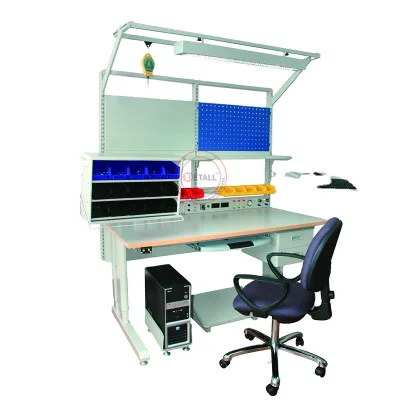
$160.00 - $6600.00
MOQ: 1 Pieces


Comprehensive Sourcing Guide
Strategic Sourcing Guide for Anti-Vibration Lab Workbenches
Procuring anti-vibration lab workbenches requires a nuanced understanding of structural integrity, material science, and the specific environmental constraints of laboratory settings. These specialized units are engineered to isolate sensitive instrumentation from external mechanical disturbances, ensuring data accuracy and equipment longevity. The following guide synthesizes available market data and technical requirements to assist procurement professionals in navigating the complex landscape of laboratory furniture acquisition.
Technical Specifications and Structural Design
The foundation of an effective anti-vibration workbench lies in its material composition and dimensional stability. Market observations indicate a divergence in material selection, with suppliers offering both stainless steel and polypropylene (PP) constructions. Stainless steel variants are frequently cited for their robust bearing capacity and suitability for environments requiring high hygiene standards, such as hospitals and research institutes. Conversely, PP-based benches are often highlighted for their chemical resistance, making them ideal for laboratories handling corrosive reagents.
When evaluating technical specifications, buyers must scrutinize the table dimensions and thickness. Standardized configurations often include table sizes ranging from 1200mm to 2100mm in length, with a consistent width of 750mm. The tabletop thickness is a critical variable; while some heavy-duty models feature a 50mm thickness for maximum rigidity, others offer a range of countertop thicknesses from 12.7mm to 25mm. The latter is common in PP lab workbenches, where the thickness is selected based on the specific load requirements and chemical exposure levels.
The structural design also encompasses the cabinet and support systems. Cabinet heights typically vary between 775mm and 825mm, with depths standardized around 520mm. The choice between a central bench and a side bench configuration depends on the laboratory layout and workflow. Central benches often serve as the primary workspace, while side benches provide auxiliary storage or specialized testing areas. The desktop height is another critical parameter, with some specifications noting a standard desktop height of 800mm, which must be verified against ergonomic standards for the intended users.
Compliance, Certification, and Standard Verification
In the realm of laboratory furniture, compliance is not merely a regulatory formality but a prerequisite for operational safety and data integrity. While specific certification bodies are not universally mandated for all workbench types, buyers must verify that the products adhere to relevant industry standards. The supply chain data indicates that product standards can be customized, suggesting that the baseline specifications may need to be tailored to specific national or institutional requirements.
Buyers should prioritize verifying the origin of the products, as this often correlates with the manufacturing standards applied. The majority of observed listings originate from China, with specific manufacturing hubs identified in Dongguan City and the broader Guangdong province. While the location itself does not dictate quality, it is essential to confirm that the supplier adheres to international quality management systems. The absence of explicit certification claims in general product descriptions necessitates a proactive approach where the buyer requests proof of compliance with standards such as ISO 9001 or specific laboratory furniture safety protocols.
Furthermore, the "standard" attribute in product listings often refers to dimensional configurations rather than safety certifications. For instance, a standard might be listed as "L1500/750850 mm," which defines the footprint rather than the safety rating. Procurement teams must distinguish between dimensional standards and safety certifications. It is advisable to request third-party test reports that validate the anti-vibration performance, particularly if the workbench is intended for use with high-precision analytical instruments like electron microscopes or mass spectrometers.
Cost Drivers and Pricing Dynamics
The pricing of anti-vibration lab workbenches is influenced by a complex interplay of materials, customization levels, and structural complexity. The observed market price range spans from 70 USD to 6600 USD, a variance that reflects the significant difference between basic utility benches and high-end, fully customized anti-vibration systems. Several key factors drive these costs.
First, the material choice is a primary cost determinant. Stainless steel units, particularly those with heavy-duty bearing capacities, generally command higher prices due to the raw material costs and the complexity of fabrication. PP workbenches, while often more affordable, can increase in cost if they require specialized chemical-resistant coatings or thicker countertops. Second, the level of customization plays a pivotal role. Products marked as "customized" or "complete" often involve bespoke engineering, which increases the unit price compared to standard off-the-shelf models.
The packaging and shipping logistics also contribute to the final cost. Options range from simple carton and wrapping film to more robust solutions involving plywood, bubble film, and wooden packages. The latter is essential for heavy-duty units to prevent damage during transit, particularly for international shipments. Additionally, the minimum order quantity (MOQ) affects the per-unit cost. The observed MOQ range of 1 to 10 units suggests that buyers can procure single units for small-scale projects, but bulk orders may yield better pricing structures. Buyers should also consider the lead time, which is typically within 15 workdays after deposit receipt, as expedited shipping or rush production can incur additional premiums.
Typical Applications and Usage Environments
Anti-vibration lab workbenches are deployed across a diverse spectrum of industries, each with unique requirements for stability and durability. The observed usage categories include hospitals, schools, companies, and research institutes. In hospital settings, these benches are often utilized for diagnostic equipment and pharmaceutical preparation, where vibration isolation is crucial for accurate readings. The requirement for easy cleaning and chemical resistance makes stainless steel and PP materials particularly suitable for these environments.
Educational institutions and research institutes frequently utilize these workbenches for teaching and experimental purposes. The "Dual purpose" standard observed in some listings suggests versatility, allowing the benches to serve both as general workspaces and specialized testing stations. In commercial and industrial contexts, such as warehouses and workshops, the focus shifts to durability and load-bearing capacity. The "Heavy-Duty Workbench" designation aligns with these applications, where the furniture must withstand heavy equipment and frequent use.
The design style, often described as "Modern," caters to contemporary laboratory aesthetics while maintaining functional efficiency. The application of these benches extends beyond the laboratory itself, finding utility in commercial furniture settings where a professional appearance and high functionality are required. Buyers should match the specific application requirements with the product attributes, ensuring that the chosen workbench can withstand the specific environmental stresses of the intended location.
Supplier Evaluation and Quality Assurance
Evaluating suppliers for anti-vibration lab workbenches requires a rigorous assessment of their capabilities and track record. With a product count of 28 observed in the market, buyers have a range of options, but not all suppliers offer the same level of quality or service. Key evaluation criteria include the supplier's ability to provide customized solutions, their adherence to delivery timelines, and their quality control processes.
The condition of the product is another critical factor. While the majority of listings specify "New" products, some entries indicate "Used" conditions. Buyers must exercise caution when considering used equipment, as the anti-vibration properties may have degraded over time. It is generally advisable to prioritize new units to ensure that the structural integrity and isolation capabilities meet current standards.
Quality assurance should be embedded in the procurement process. Buyers should verify the packaging methods, as inadequate packaging can lead to damage during transit. Options such as "Bubble Film+Hard Cotton+Wooden Package" offer superior protection compared to standard cartons. Additionally, the brand reputation, such as "Anlaitech," can serve as a proxy for reliability, though it should not be the sole determinant of quality. Buyers should request detailed product specifications, including model numbers like "AML-P3-LD" or "PWQG-107G," to ensure that the specific unit meets the required technical parameters.
Long-Term Procurement and Maintenance Considerations
Sourcing anti-vibration lab workbenches is not a one-time transaction but a long-term investment that requires careful planning for maintenance and lifecycle management. The durability of the materials, whether stainless steel or PP, dictates the maintenance schedule and the potential for replacement. Stainless steel units generally require less maintenance regarding chemical degradation but may need regular polishing to maintain their aesthetic and hygienic properties. PP units, while resistant to chemicals, may require inspection for cracks or stress points, especially in high-traffic areas.
The customization aspect of these workbenches also impacts long-term procurement. Customized units may have specific replacement parts or require specialized maintenance procedures. Buyers should ensure that the supplier provides adequate documentation and support for the lifespan of the product. The lead time of 15 workdays for delivery should be factored into the procurement timeline, especially for projects with tight deadlines.
Furthermore, the scalability of the procurement strategy is essential. As laboratories expand or reconfigure, the ability to add modular components or integrate new workbenches into existing setups is crucial. The "complete" model designation suggests that some units are designed for immediate, full-scale deployment, while others may require assembly or customization. Buyers should plan for future expansion by selecting suppliers who offer modular solutions and consistent product lines.
Comparative Analysis of Workbench Configurations
To facilitate informed decision-making, the following table compares key attributes of the observed workbench configurations. This comparison highlights the trade-offs between material, customization, and application suitability.
| Attribute | Stainless Steel Heavy-Duty | PP Lab Workbench | General Commercial |
|---|---|---|---|
| Primary Material | Stainless Steel | Polypropylene (PP) | Mixed / Custom |
| Table Thickness | 50mm | 12.7mm - 25mm | Variable |
| Table Size | 1200-2100mm x 750mm | Variable | Variable |
| Cabinet Height | Not Specified | 775/825mm | Not Specified |
| Color Options | Black | Not Specified | Grey, Black |
| Usage | Hospital, School, Company | School, Company, Research | Hospital, Warehouse |
| Packaging | Carton and Wrapping Film | Plywood, Carton, Bubble | Wood Box, Bubble Film |
| Customization | Available | Available | Available |
| Condition | New | New | New / Used |
This table underscores the importance of aligning specific project needs with the available product attributes. For instance, a laboratory requiring high chemical resistance and a specific countertop thickness range might prefer the PP configuration, while a facility needing maximum load-bearing capacity would opt for the stainless steel heavy-duty model.
Final Procurement Recommendations
In conclusion, sourcing anti-vibration lab workbenches demands a comprehensive approach that balances technical specifications, cost considerations, and long-term operational needs. Buyers must rigorously verify material properties, dimensional standards, and customization options to ensure the selected units meet the rigorous demands of modern laboratory environments. By focusing on the specific attributes observed in the market, such as the 50mm thickness for heavy-duty units or the 12.7-25mm range for PP countertops, procurement teams can make data-driven decisions that enhance laboratory efficiency and safety.
The diversity of the market, with options ranging from basic commercial furniture to specialized research-grade benches, offers flexibility but also requires careful evaluation. Prioritizing new condition units, verifying supplier capabilities, and understanding the specific application requirements will lead to successful procurement outcomes. As laboratories continue to evolve, the ability to source high-quality, adaptable workbenches will remain a critical component of operational excellence.
FAQs
What materials are available for anti-vibration lab workbenches?
Stainless steel and polypropylene (PP) are the primary materials used. Stainless steel offers strong bearing capacity for hospitals, while PP provides chemical resistance for research institutes.
Can I customize the dimensions of the workbench?
Yes, customization is available for table sizes and standards. Options include lengths from 1200mm to 2100mm with a width of 750mm, and tabletop thicknesses ranging from 12.7mm to 50mm.
How long does delivery take after placing an order?
Delivery occurs within 15 workdays after receiving the deposit. This timeline applies to new units sourced from manufacturers in China, including those in Dongguan City.
Which usage environments are suitable for these workbenches?
These units are designed for hospitals, schools, companies, and research institutes. They also serve warehouses and workshops requiring heavy-duty commercial furniture with modern design styles.
What is the minimum order quantity for purchasing?
The minimum order quantity ranges from 1 to 10 units. This flexibility allows buyers to procure single units for small projects or bulk orders for larger institutional needs.
How are the workbenches packaged for shipping?
Packaging varies from carton and wrapping film to wooden packages. Heavy-duty units often use bubble film, hard cotton, and wooden boxes to ensure safety during transit.