Source Arch Support Massaging Gel Insoles for Running, Walking, Standing
Compare 30 listings of Arch Support Massaging Gel Insoles from verified suppliers. These products offer foot care, correction, and support for adults in various sizes and materials like silicone and gel.
Key considerations
Products List


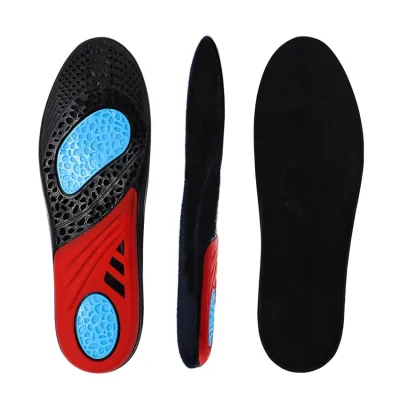
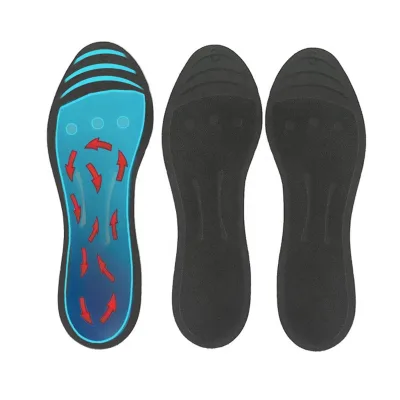


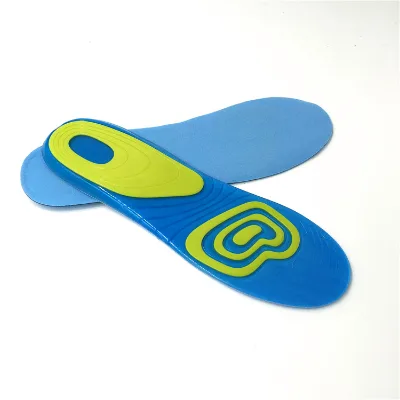
Comprehensive Sourcing Guide
Strategic Sourcing Guide for Arch Support Massaging Gel Insoles
Understanding Product Variability and Core Specifications
When sourcing Arch Support Massaging Gel Insoles, buyers must first recognize that the market is not monolithic. The supplied data reveals a diverse product landscape where specific attributes vary significantly between listings. The core material composition is a primary differentiator, with observations indicating the use of both Gel and Silicone. While Gel is often associated with superior shock absorption and a "massaging" sensation due to its viscoelastic properties, Silicone offers distinct durability and structural integrity. A buyer cannot assume all products labeled as "gel insoles" utilize the same polymer formulation; some listings explicitly cite Silicone as the primary material, while others specify Gel.
The functional scope of these products is equally varied. The data points to specific applications ranging from general "Foot Care" and "Foot Support" to more specialized "Foot Correction." This distinction is critical for procurement. A product designed for general comfort may not possess the structural rigidity required for medical-grade foot correction. Furthermore, the target demographic is consistently identified as "Adults" or "Adults," with no specific data suggesting pediatric formulations. The product type is uniformly categorized as "Heel Cushion" or insoles, yet the specific model numbers (such as 517340, 517918, 517692, and FT-T002) indicate that each SKU likely carries unique dimensional and functional specifications.
Color options are another variable that affects inventory planning. The observed color palette includes Brown, Blue, Black, and Multi. This suggests that suppliers may offer customization options, which is confirmed by the "Customization: Available" attribute. However, buyers must verify if color changes impact the internal structure or material density of the insole. The "Body Part" is consistently listed as "Foot," and the "Age Group" is confirmed for adults, ensuring that the product is not intended for children or infants.
Technical Standards and Dimensional Requirements
Technical compliance in the insole market relies heavily on dimensional accuracy and material standards. The supplied facts provide specific examples of how sizing is communicated, which buyers must adapt to their own requirements. Some products adhere to a standard "S, M, L" sizing system, while others utilize a "one size fits all" approach, which may rely on the material's inherent elasticity. More precise listings provide specific size charts, such as "22.0-22.5, 23.0-23.5, 24.0-24.5," indicating a focus on foot length in centimeters. Other specifications offer detailed physical dimensions, such as "L: 31cmx9.6cm; S: 26.8cmx8.5cm," which is essential for ensuring the insole fits within the specific shoe mold of the end-user.
The "prod_standard" attribute varies from generic size labels to specific measurement ranges. One listing notes a "Chart size (trim to fit)" standard, which implies the product is sold as a blank template requiring the buyer or end-user to cut it to size. This is a significant logistical consideration, as it shifts the responsibility of sizing accuracy to the final user. In contrast, other models are pre-cut to specific standards. When evaluating suppliers, buyers should request a physical sample to verify if the "trim to fit" claim holds true or if the insole is pre-sized to a specific shoe size range.
Material standards are also a point of verification. While the data lists "Gel" and "Silicone," it does not provide specific hardness ratings (Shore A) or density values. Buyers should not assume that a "Gel" insole will have the same massaging effect as another unless the specific density is verified. The "Technology" attribute mentions "Mould," indicating that the insoles are likely injection-molded or compression-molded. This manufacturing process affects the consistency of the arch support and the durability of the massaging nodes. Buyers must verify that the molding process ensures uniform thickness and that the gel or silicone does not separate from the base layer over time.
Cost Drivers and Minimum Order Quantities
The economic landscape for sourcing these insoles is defined by a wide range of Minimum Order Quantities (MOQs) and pricing structures. The observed MOQ range spans from 1 unit to 5,000 units. This disparity suggests that the market includes both small-batch customizers and large-scale manufacturers. One specific listing notes an MOQ of 2,000 units, which is a common threshold for custom branding or specific material formulations. Buyers seeking smaller quantities must be prepared to pay a premium per unit or accept a higher base price, as the observed price range is 0.1 to 5.85 USD.
Several factors drive these costs. The primary driver is the material composition; Silicone and Gel are generally more expensive than standard EVA foam, but the specific grade and purity affect the price. Customization is a significant cost factor; the "Customization: Available" attribute implies that adding a buyer's logo, specific color, or unique arch profile will increase the unit cost and potentially raise the MOQ. Packaging also influences the final price. The data shows a variety of packaging types, including "OPP" bags, "Box," "Carton," and "Poly Bag." A "Box" or "Carton" packaging option typically incurs higher material and labor costs compared to a simple "Poly Bag" or "OPP" bag, but it may be necessary for retail-ready products.
Lead times and shipping costs are not explicitly detailed in the provided facts, but the origin is consistently listed as "Cn" or "China Mainland." Buyers should anticipate that shipping costs will be a function of the total weight and volume of the order. The "Weight" attribute is described as "Light," which is favorable for reducing freight costs, but the exact weight per unit is not provided. Buyers must calculate the total landed cost by factoring in the unit price, packaging costs, and international shipping fees, especially when dealing with high-volume orders where the MOQ is 2,000 or higher.
Compliance, Certification, and Safety Verification
Navigating compliance and certification requires a cautious approach, as the provided data does not confirm specific certification status for the listed products. While background information mentions "BSCI," "CE," and "ROHS," these are not explicitly linked to the specific product listings in the high-confidence facts. Therefore, buyers must treat these certifications as potential attributes that need verification rather than guaranteed standards.
The "prod_standard" and "prod_packing" attributes do not inherently guarantee safety compliance. For instance, a product labeled as "Applied on All Skin" suggests a hypoallergenic nature, but this is an observation, not a certified claim. Buyers should request specific test reports to verify that the materials used (Gel or Silicone) meet international safety standards for skin contact. The "Shelf Life" is listed as "3 Years," which is a useful metric for inventory planning, but it does not replace the need for stability testing data.
When evaluating suppliers, buyers should ask for documentation regarding the "Mould" technology and the chemical composition of the materials. If the product is intended for export to the European Union, verifying CE certification is crucial, even if it is not currently listed in the product facts. Similarly, for markets concerned with environmental impact, ROHS compliance regarding the absence of hazardous substances should be confirmed. The "Waterproof" attribute varies, with some products listed as "Waterproof" and others as "Non-Waterproof." This distinction is critical for hygiene and durability; waterproof insoles are generally easier to clean and maintain, which is a key selling point for massaging insoles that may accumulate sweat.
Supplier Evaluation and Quality Control Protocols
Selecting a reliable supplier for Arch Support Massaging Gel Insoles requires a rigorous evaluation process. The "Packaging" attribute indicates that suppliers offer "OEM&ODM" services, meaning they can manufacture products under the buyer's brand or design. However, the presence of OEM/ODM capabilities does not guarantee quality. Buyers should prioritize suppliers who can provide detailed specifications for their "Mould" technology and demonstrate consistency in their production runs.
Quality control should focus on the integrity of the gel or silicone material. Since the "Massaging" function relies on the physical structure of the insole, buyers must test for durability under compression. A common failure point in gel insoles is the separation of the gel layer from the base or the cracking of the gel over time. Buyers should request samples to perform a "foot support" test, ensuring that the arch support maintains its shape after repeated use. The "Function" attributes, such as "Foot Correction" and "Foot Support," should be validated through physical testing rather than relying solely on marketing descriptions.
The "prod_packing" method also serves as a quality indicator. Products packed in "Box" or "Carton" are often handled with more care during shipping, reducing the risk of deformation. In contrast, "Poly Bag" or "OPP" packaging may leave the insoles vulnerable to crushing if not properly palletized. Buyers should verify that the supplier uses appropriate protective measures during transit, especially for products with specific dimensions like "L: 31cmx9.6cm."
Long-Term Procurement and Application Strategy
Long-term procurement success depends on aligning the product specifications with the intended application. The "Age Group" is consistently "Adults," and the "Body Part" is "Foot," making these insoles suitable for a wide range of adult footwear, from athletic shoes to casual wear. However, the "Waterproof" status varies, which may limit the application for certain environments. For example, a "Non-Waterproof" insole may not be suitable for outdoor or high-sweat activities, whereas a "Waterproof" model offers greater versatility.
Buyers should also consider the "Customization" aspect as a long-term strategy. The ability to customize colors (Brown, Blue, Black, Multi) and packaging allows for brand differentiation. However, customization often comes with higher MOQs, such as the observed 2,000-unit threshold. Buyers planning for long-term growth should negotiate tiered pricing structures that allow for smaller initial orders with the option to scale up.
The "Shelf Life" of 3 years provides a buffer for inventory management, but buyers should still implement a first-in, first-out (FIFO) system to ensure product freshness. The "Function" of "Foot Care" and "Foot Support" suggests that these products are consumable items with a finite lifespan, even if the shelf life is long. Buyers should educate their end-users on the expected usage life of the insoles to manage expectations and reduce returns.
Comparative Analysis of Product Attributes
To facilitate decision-making, the following table summarizes the key attributes observed in the product data. This comparison highlights the variability buyers must navigate when selecting a supplier.
| Attribute | Observed Variations | Procurement Implication |
|---|---|---|
| Material | Gel, Silicone | Verify material grade; Gel for cushioning, Silicone for durability. |
| Color | Brown, Blue, Black, Multi | Customization available; verify color fastness and material impact. |
| Size Standard | S/M/L, One Size, Chart Size, Specific cm | Request physical samples to verify fit; "Trim to fit" requires user action. |
| Packaging | OPP, Box, Carton, Poly Bag | Box/Carton for retail; Poly/OPP for bulk; affects shipping cost. |
| Function | Foot Care, Foot Support, Foot Correction | Match function to target market; correction requires higher structural integrity. |
| Waterproof | Waterproof, Non-Waterproof | Critical for hygiene; waterproof preferred for active use. |
| MOQ | 1 to 5000 (Specific: 2000) | Negotiate tiered pricing; high MOQs often linked to customization. |
| Origin | Cn, China Mainland | Standard manufacturing hub; verify logistics and lead times. |
In conclusion, sourcing Arch Support Massaging Gel Insoles requires a meticulous approach to verifying specifications, materials, and supplier capabilities. Buyers must move beyond the surface-level attributes and conduct thorough due diligence to ensure the products meet their specific quality and functional requirements. By focusing on the technical details provided in the product data and maintaining a rigorous quality control process, buyers can secure a reliable supply chain for these essential foot care products.
FAQs
What materials are used for Arch Support Massaging Gel Insoles?
These insoles are primarily made from Gel or Silicone. The specific material varies by product model, with some listings specifying Gel for shock absorption while others use Silicone for structural integrity.
Which sizes are available for these foot care insoles?
Available sizes include S, M, L, one size fits all, and specific length ranges like 22.0-22.5 cm. Some models require trimming to fit based on a provided chart size.
Can I customize the color and packaging of these insoles?
Yes, customization is available for colors such as Brown, Blue, Black, and Multi. Packaging options include OPP bags, boxes, cartons, or poly bags depending on the supplier.
What is the minimum order quantity for these products?
The minimum order quantity ranges from 1 to 5,000 units depending on the supplier and customization needs. One specific listing notes an MOQ of 2,000 units for custom orders.
How long is the shelf life of these gel insoles?
The shelf life is typically 3 years. This duration applies to the product before use, allowing for standard inventory management practices like first-in, first-out.
Are these insoles waterproof for daily use?
Waterproof status varies by product model, with some listed as waterproof and others as non-waterproof. Buyers should verify the specific waterproof attribute for their intended use case.
What functions do these insoles provide for adults?
Functions include foot support, foot care, and foot correction. They are designed for adults and target the foot body part to provide comfort and structural alignment.