Source ASTM Certified Pretend Play Food for Schools, Daycares, and Retail
Compare 30 listings of ASTM Certified Pretend Play Food from global suppliers. Buyers can evaluate plastic kitchen toys, stacking burger games, and simulation food sets for ages 3 and up with varying MOQs and packing options.
Key considerations
Products List


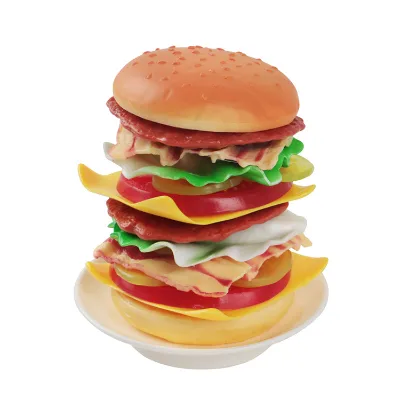
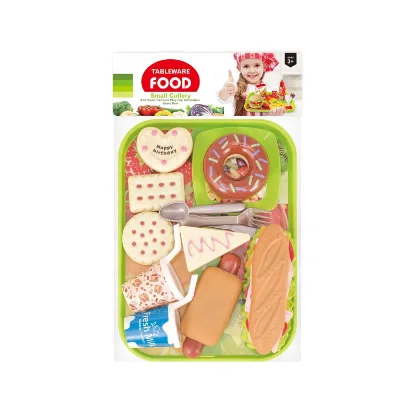
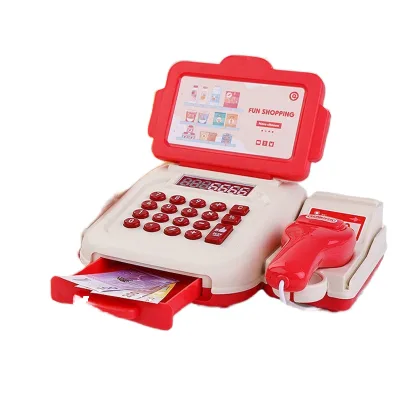


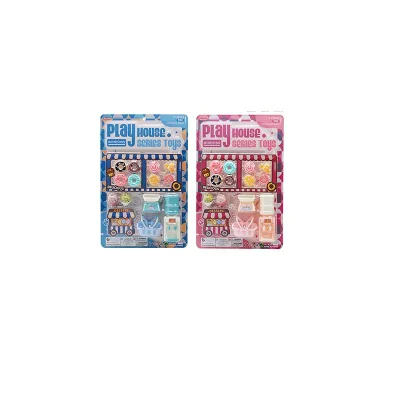
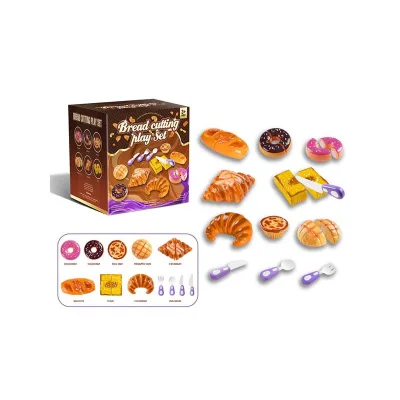


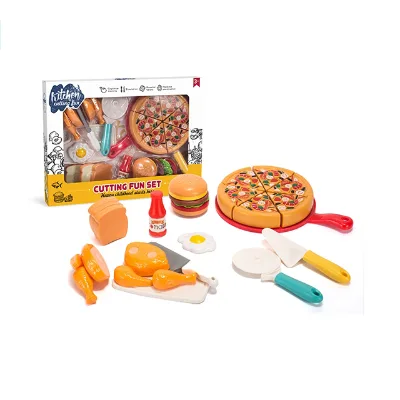
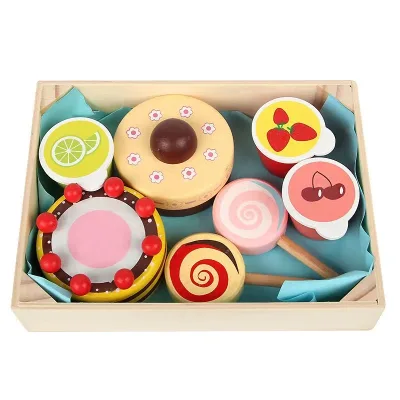
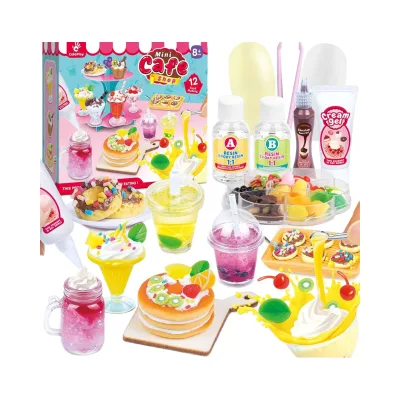


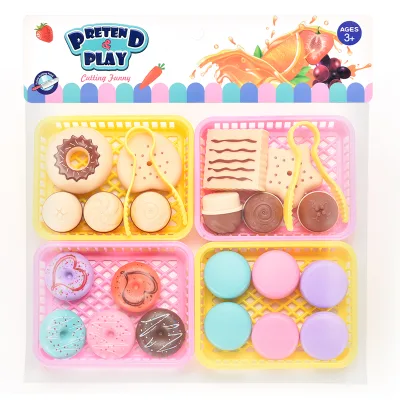
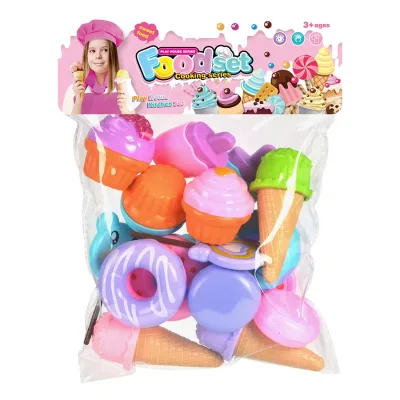
Play Food Toys for Kid Kitchen Cutting Fruit Toys for Toddlers Pretend Food Kit
$0.99 - $2.21
MOQ: 576 Pieces


Comprehensive Sourcing Guide
Strategic Sourcing Guide for ASTM Certified Pretend Play Food
Procuring pretend play food for the global market requires a nuanced understanding of the intersection between creative design, material safety, and rigorous compliance standards. For buyers targeting the "ASTM Certified Pretend Play Food" keyword, the primary objective is to secure products that not only stimulate imaginative role-play but also adhere to the stringent safety protocols mandated by the United States Consumer Product Safety Commission (CPSC). The following guide details the technical specifications, compliance verification processes, and procurement strategies necessary to navigate this competitive sector effectively.
Technical Specifications and Material Composition
The foundation of any successful pretend play food line lies in its material composition and physical design. Based on current market observations, the dominant material for these products is plastic, specifically selected for its durability, ease of cleaning, and ability to be molded into realistic food shapes. The product attributes indicate a strong preference for "Eco-friendly Material" in many listings, suggesting a market shift toward safer, non-toxic polymers that reduce environmental impact while maintaining the structural integrity required for stacking and handling.
Visual and functional specifications are equally critical. The observed product range includes items described as "Stacking burger balance game" and "Simulation Food Toys," which implies a need for specific dimensional tolerances. For instance, a typical single package size for a play food set might measure approximately 34x10x32 cm or 37x24x7 cm, depending on the complexity of the set. The color profiles are consistently described as "Bright Color" or "Multi," designed to capture the attention of children aged 3 and up.
The packaging specifications vary significantly based on the target volume and shipping efficiency. Some suppliers utilize "Paper Box" or "Window box" packaging to enhance retail visibility, while others opt for "Carton" or "PP bag with header" for bulk distribution. A critical technical detail for logistics is the unit count; a single carton may contain anywhere from 1 to 96 pieces, with a gross weight ranging from 1.5 kg to 17.5 kg per unit or batch. Buyers must verify these dimensions against their own logistics constraints, as the "CBM" (Cubic Meter) of a single package can significantly impact shipping costs. For example, a standard play food set might have a CBM of 0.264, which is a key figure for calculating container load efficiency.
Compliance and Certification Verification
The core keyword "ASTM certified" necessitates a rigorous approach to compliance. While the supplied context lists "ASTM F963" as a standard, it is categorized as a low-confidence background fact. This distinction is vital: buyers should not assume that every listed product automatically possesses this certification. Instead, the procurement strategy must focus on active verification. ASTM F963 is the Standard Consumer Safety Specification for Toy Safety, and compliance is non-negotiable for selling in the United States.
Buyers must request specific test reports from the supplier that explicitly reference ASTM F963, rather than relying on general claims of "Eco-friendly" or "Safe." The verification process should include checking for third-party laboratory results that cover mechanical and physical hazards, such as small parts, sharp edges, and flammability. Additionally, while "EN71" is mentioned in the background data, it is a European standard. A product compliant with EN71 is not automatically compliant with ASTM F963. Therefore, the procurement team must ensure that the supplier provides documentation specifically for the target market's regulations.
The "Product Standard" field in supplier data often lists dimensions (e.g., 9.5 x 7 x 6 in) rather than safety certifications. This highlights a common confusion in product listings where physical specs are conflated with regulatory standards. Buyers must explicitly ask for the "Test Report" or "Certificate of Compliance" to confirm that the specific model number, such as "KidsMind-K625" or "Model Number: 140422-808," has been tested against the relevant ASTM standards. Without this documentation, the risk of customs seizure or product recalls is substantial.
Cost Drivers and Pricing Dynamics
Understanding the cost structure of pretend play food is essential for maintaining healthy profit margins. The observed price range in the market spans from $0.85 to $700 USD, a variance that reflects differences in complexity, material quality, and order volume. The lower end of the spectrum typically represents simple, single-item plastic toys, such as individual "Stacking hamburger toy" units, while the higher end includes large, multi-piece kitchen play sets with extensive accessories.
Several factors drive these costs. First, the material type plays a significant role; "Eco-friendly Material" often commands a premium over standard virgin or recycled plastics due to the sourcing and processing costs involved. Second, the packaging complexity influences the final price. A "Window box" that allows for retail display is more expensive to produce than a simple "PP bag with header." Third, the unit count per carton affects the per-unit cost. Bulk orders with a high "QTY/CTN" (e.g., 96 PCS) generally benefit from economies of scale, reducing the cost per piece compared to smaller orders.
The Minimum Order Quantity (MOQ) is another critical cost driver. The observed MOQ range is 1 to 1200 units, with some suppliers requiring a minimum of "3 Cartons." For new entrants or those testing the market, suppliers with lower MOQs are preferable, even if the per-unit cost is slightly higher. Conversely, established buyers can negotiate better pricing by committing to larger volumes. It is also important to note that the "Selling point" of "Cheap price" often correlates with lower MOQs and simpler packaging, but buyers must balance this against the potential need for higher quality control and certification costs.
Typical Applications and Target Demographics
Pretend play food serves multiple applications beyond simple entertainment. The primary use case is "Role Play Toy," allowing children to engage in "Kitchen pretend play" scenarios. This activity is crucial for cognitive development, social interaction, and fine motor skill enhancement. The product attributes indicate a broad target demographic, with age groups ranging from "2 to 4 Years" to "14 Years & up." However, the most active segment appears to be children aged "3+" and those in the "5 to 7 years" and "8 to 13 Years" brackets.
The thematic elements of the products are diverse, with "Kitchen" being the dominant scene. Specific character themes, such as "Strawberry Souffle," add a layer of narrative engagement that appeals to specific interests. The "Usage" of these products extends beyond play; they are marketed as "Stress Relief" tools and "Kids Gift" items suitable for "Any Festival." This versatility makes them a staple in gift shops, toy stores, and educational supply catalogs.
The "Market" classification as "Fast food toy" suggests a trend toward mimicking real-world dining experiences, which resonates with children exposed to modern food culture. Whether used in a home setting or in educational environments like preschools, the "Function" of these toys remains consistent: to facilitate imaginative storytelling and social learning. Buyers should consider the specific age group when selecting products, as toys for "2 to 4 Years" must have larger components to prevent choking hazards, whereas items for "14 Years & up" can feature more intricate designs and smaller parts.
Supplier Evaluation and Quality Control
Evaluating suppliers for pretend play food requires a multi-faceted approach that goes beyond price comparison. The "Place of Origin" is predominantly "China," with specific regions like "Guangdong, China" noted as production hubs. While this region is known for its manufacturing capabilities, buyers must conduct thorough due diligence to ensure quality consistency.
Key evaluation criteria include the supplier's ability to provide detailed product descriptions, accurate model numbers, and transparent packaging specifications. For instance, a supplier listing "Model Number: 857325" should be able to provide a clear breakdown of the contents, including the "Brand Name" (e.g., GIVELONG, A.S.) and the specific "Advantage" of the product, such as "Stacking burger balance game." The "G.W/N.W" (Gross Weight/Net Weight) data provided in listings is a strong indicator of a supplier's attention to detail; discrepancies here can signal poor inventory management or quality control issues.
Quality control should be integrated into the procurement process at every stage. Buyers should request pre-shipment inspections to verify that the physical attributes match the description, including color accuracy, material integrity, and packaging stability. The "Feature" of "Eco-friendly Material" must be verified through material safety data sheets (MSDS) to ensure the claims are genuine. Furthermore, the "Single gross weight" of individual items should be consistent across the batch to prevent shipping errors and customer complaints.
Long-Term Procurement Considerations
Sourcing pretend play food is not a one-time transaction but a long-term strategic partnership. Buyers must consider the scalability of their supply chain and the adaptability of the products to market trends. The "Selling Units" being listed as "Single item" suggests that many suppliers are willing to accommodate small orders, which is beneficial for testing new designs. However, for long-term growth, buyers should aim to consolidate orders to reduce shipping costs and improve lead time reliability.
The "Lead time" and "MOQ" are critical factors in long-term planning. While the observed MOQ can be as low as 1, sustainable business models often require higher volumes to justify the investment in tooling and quality assurance. Buyers should negotiate flexible MOQ terms that allow for incremental growth. Additionally, the "Packing" method should be optimized for both retail presentation and shipping efficiency. A "Carton" that is too large or heavy can increase logistics costs, while a "Paper Box" that lacks durability may result in damaged goods.
Finally, buyers must stay vigilant regarding regulatory changes. As safety standards evolve, the requirement for "ASTM certified" products may become even more stringent. Maintaining a relationship with suppliers who are proactive about compliance and willing to update their test reports will ensure that the product line remains viable in the long term. By focusing on these strategic elements, buyers can build a robust and profitable pretend play food business that meets the highest standards of safety and quality.
FAQs
What materials are used for ASTM Certified Pretend Play Food?
Most products use plastic, with many listings specifying eco-friendly material. Buyers must verify that the specific model has been tested against ASTM F963 standards rather than assuming all plastic toys meet this requirement.
Which age groups are suitable for pretend play food sets?
Products are available for ages 3 and up, including groups from 2 to 4 years and 14 years and up. Selection depends on part size, as younger children require larger components to prevent choking hazards.
How can I verify ASTM certification for a specific model?
Buyers must request specific test reports referencing ASTM F963 for the exact model number. Do not rely on general claims of eco-friendly material or EN71 compliance, as these do not automatically satisfy US safety protocols.
What packaging options are available for pretend play food?
Options include paper boxes, window boxes, cartons, and PP bags with headers. The choice affects retail visibility and shipping efficiency, with unit counts per carton ranging from 1 to 96 pieces.
Can I find suppliers with low minimum order quantities?
Yes, observed MOQs range from 1 unit to 1200 units, with some requiring 3 cartons. Lower MOQs are available for testing new designs, though per-unit costs may be higher compared to bulk orders.
Where are these toys typically manufactured?
The primary place of origin is China, with specific hubs noted in Guangdong. Buyers should verify the supplier's location and request quality control inspections to ensure consistency with product descriptions.
What is the typical price range for these toys?
Prices observed in the market span from 0.85 to 700 USD depending on complexity. Simple single items cost less, while large multi-piece kitchen sets with extensive accessories command higher prices.