Source ASTM CE Certified Inflatable Bouncy Castle with Blower for Park, Market, Amusement Park
Source 30 listings of ASTM CE Certified Inflatable Bouncy Castle with Blower for commercial parks, markets, and amusement venues. Buyers can compare custom sizes, PVC materials, and warranty periods from verified Chinese manufacturers.
Key considerations
Products List


Amusement Park Bouncy Jumping Castle Inflatable Playground with Shelter
$999.00 - $1299.00
MOQ: 1 Pieces

Commercial Party Wedding Bouncy Castle with Slide Inflatable Bouncer White
$399.00 - $899.00
MOQ: 1 Pieces

Halloween Theme Festival Monster Commercial Inflatable Bouncer Bouncy Jumping Castle
$459.00 - $899.00
MOQ: 1 Pieces


Outdoor Events Inflatable Bouncer with Slide Jumper White Bouncy Castle for Wedding
$399.00 - $899.00
MOQ: 1 Pieces
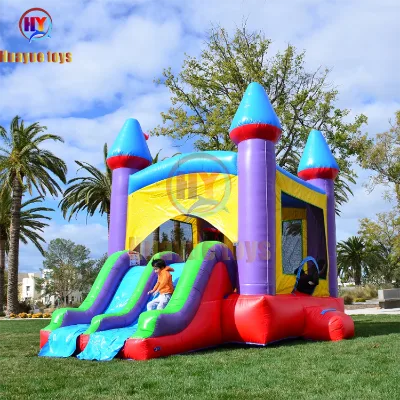

Outdoor Giant Bouncy Castle Inflatable China Inflatable Bouncy Castle for Sale
$90.00 - $180.00
MOQ: 10 Square Meters

Outdoor Small Bounce House Bouncer Jumper Inflatable Bouncy Castle with Blower
$239.00 - $419.00
MOQ: 1 Pieces


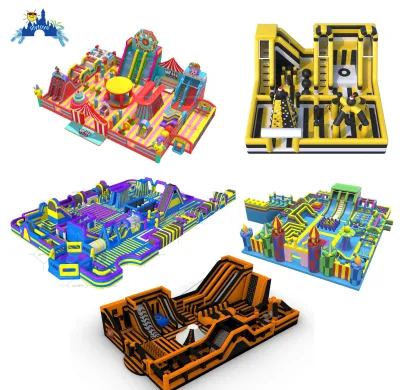
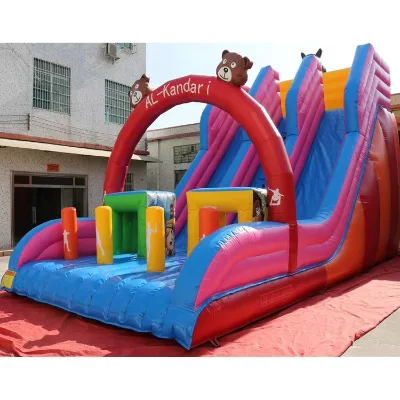

Air Filled Inflatable Bouncy Castle Rental Inflatable Castle with Obstacles for Kids
$700.00 - $2000.00
MOQ: 1 Pieces


Factory Supply Inflatable Castle High Quality Bouncy Castle Jumping Castle
$500.00 - $650.00
MOQ: 1 Pieces


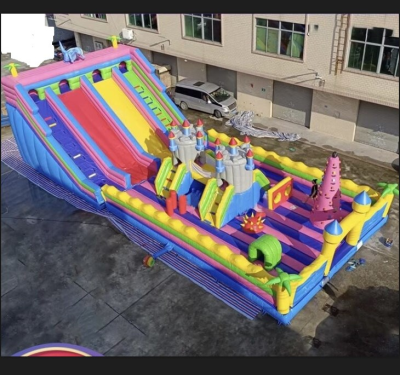

Giant Inflatable Bounce House Outdoor Bouncy Castle for Kids Amusement Park
$1520.00 - $2150.00
MOQ: 1 Pieces

Comprehensive Sourcing Guide
Strategic Sourcing Guide for ASTM and CE Certified Inflatable Bouncy Castles with Blowers
Procuring commercial-grade inflatable bouncy castles requires a rigorous approach to safety, compliance, and technical verification. The core keyword "ASTM CE Certified Inflatable Bouncy Castle with Blower" represents a specific intersection of regulatory adherence and functional requirements. Buyers must navigate a market where product attributes vary significantly between listings. While some suppliers offer products with CE and EN certifications, the presence of ASTM standards in the immediate product data requires careful verification, as the supplied context highlights EN71, EN14960, and CE as the primary observed standards. This guide provides a disciplined framework for evaluating suppliers, understanding technical specifications, and ensuring that the final procurement meets the highest safety and operational standards for commercial and private use.
Technical Specifications and Material Composition
The foundation of any reliable inflatable structure lies in its material composition and manufacturing technique. Based on observed product data, the primary material utilized for these units is PVC (Polyvinyl Chloride) or Tarpaulin, with a specific fabric thickness noted at 0.55mm. This thickness is a critical observation for durability; thinner materials may be suitable for light residential use but often fail under the high-traffic conditions of amusement parks or commercial markets. The manufacturing technique is predominantly sewing, which creates strong seams capable of withstanding the internal pressure required for inflation. However, some listings indicate rotational moulding as a productive technology, suggesting a divergence in product types between fully inflatable structures and rigid or semi-rigid components.
The inclusion of a blower is a mandatory specification for these units. The observed product attributes confirm that the blower is included as a standard accessory, alongside repair kits and suitable plugs. This integration simplifies the procurement process, ensuring that the buyer receives a complete operational system rather than a bare structure requiring separate component sourcing. The weight of the units varies significantly, with observed ranges falling between 5099Kg and 100149Kg. This variance suggests that the "ASTM CE certified" label may apply to different models within a supplier's catalog, ranging from smaller, portable units to large-scale playground structures.
| Attribute | Observed Range/Value | Procurement Implication |
|---|---|---|
| Material | PVC, Tarpaulin | Verify thickness (0.55mm) for commercial durability. |
| Technique | Sewing, Rotational Moulding | Ensure seam integrity for high-pressure environments. |
| Blower | Included | Confirm voltage compatibility with local power grids. |
| Weight | 50 ~ 149 Kg | Plan logistics and handling equipment accordingly. |
| Thickness | 0.55mm | Minimum threshold for commercial-grade usage. |
Compliance and Certification Verification
The requirement for "ASTM CE certified" products necessitates a nuanced understanding of international standards. The supplied data explicitly lists CE, EN71, EN14960, and GS as observed certifications. While ASTM (American Society for Testing and Materials) is a dominant standard in the North American market, the provided product facts do not explicitly confirm ASTM F2374 compliance for every listed item. Instead, the data highlights EN standards, which are European equivalents. Buyers must recognize that a product claiming "ASTM CE certified" status may be utilizing CE as a baseline and requiring specific testing to meet ASTM F2374, which governs the safety of consumer products.
The observed standard "En71, En14960, CE" indicates a strong alignment with European safety protocols. EN71 covers general safety requirements for toys, while EN14960 specifically addresses inflatable play equipment. When a supplier claims compliance with both ASTM and CE, the buyer must request the specific test reports that validate the ASTM F2374 standard, as this is not universally present in the provided product attributes. The presence of "ISOTUV" in the allowable passenger certification section further suggests a multi-layered compliance approach, though the exact scope of this certification requires direct verification with the supplier.
It is crucial to distinguish between "custom made" standards and fixed certifications. The product data indicates that the standard is often "custom made," meaning that compliance is tailored to the specific order or region. Buyers should not assume that a generic listing automatically satisfies local regulatory requirements. The verification process must involve requesting current, valid certificates from the manufacturer, specifically checking the date of issuance and the scope of the testing laboratory.
Cost Drivers and Pricing Dynamics
The pricing for inflatable bouncy castles with blowers exhibits a wide range, observed between 40 USD and 39,800 USD. This massive disparity is driven by several key factors, including size, customization, and the complexity of the design. Smaller units, such as those with dimensions of 3x3m, likely fall at the lower end of the price spectrum, while large-scale playgrounds measuring 9x5x5m or custom configurations command premium prices. The inclusion of high-quality blowers, repair kits, and specialized plugs also contributes to the cost.
Customization is a significant cost driver. The product attributes confirm that customization is available for logos, printing, and colors. A standard, off-the-shelf unit will be less expensive than a fully branded, custom-colored inflatable designed for a specific commercial event. Furthermore, the lead time of 7-15 working days suggests that production is not immediate, and rush orders may incur additional costs. The warranty period, observed as either 1 year or 3 years, also influences the price; longer warranties typically indicate higher confidence in material quality and manufacturing processes, justifying a higher initial investment.
Typical Applications and Usage Scenarios
The versatility of these inflatable structures is evident in their listed usage scenarios. The observed applications include parks, markets, amusement parks, squares, kindergartens, and community centers. This broad range indicates that the products are designed for both permanent installations and temporary events. The "Commercial / Sports Park / Home Backyard / Party" classification further highlights the dual nature of these products, serving both professional operators and private consumers.
The age suitability is another critical factor in application. The data specifies age ranges of 3-12 years and 12-15 years, suggesting that manufacturers produce different models tailored to specific developmental stages. For commercial operators, selecting the correct age-appropriate unit is essential for liability management and user safety. The "Indoor" and "Outdoor" classifications (with "Indoor" explicitly mentioned) mean that buyers must consider the environment where the inflatable will be deployed. Indoor units may require different fire-retardant properties or ventilation considerations compared to outdoor models.
Supplier Evaluation and Operational Logistics
When evaluating suppliers, buyers should focus on the operational details provided in the product attributes. The origin of the products is consistently listed as China, with specific mentions of Guangzhou as a production hub. This geographic concentration suggests a mature supply chain, but it also necessitates careful logistics planning. The packing method, described as "PVC Bags for Inflatables, Carton for Blower/Pump" or "Cotton, PVC, Wood," indicates that the shipping method will vary based on the product type. Heavy units or those with wooden components may require different freight arrangements than lightweight, bag-packed items.
The lead time of 7-15 working days is a standard metric for production, but buyers must account for shipping time, customs clearance, and potential delays. The MOQ (Minimum Order Quantity) is observed as low as 1 PCS, which is favorable for small businesses or trial orders. However, for larger commercial deployments, negotiating volume discounts may be necessary. The warranty terms, ranging from 1 to 3 years, serve as a key indicator of supplier confidence. A supplier offering a 3-year warranty on a product with a 0.55mm thickness is likely using higher-grade materials and more rigorous quality control processes.
Quality Control and Long-Term Procurement Considerations
Quality control in the inflatable industry extends beyond the initial purchase. The presence of repair kits as standard accessories is a positive indicator, allowing for minor maintenance without returning the unit to the manufacturer. However, buyers must establish a proactive maintenance schedule. The "Environmental" function noted in the product attributes suggests that the materials are designed to withstand outdoor elements, but UV exposure and temperature fluctuations can degrade PVC and tarpaulin over time.
Long-term procurement considerations include the availability of spare parts and the supplier's responsiveness to warranty claims. The "Customized" nature of the product means that replacement parts may not be off-the-shelf items. Buyers should verify the supplier's ability to provide custom replacement panels or blower components years after the initial purchase. Additionally, the "New" condition of the products implies that buyers are receiving brand-new inventory, but they should verify the storage conditions of the manufacturer to ensure the materials have not degraded during storage.
Final Procurement Strategy
To successfully source an ASTM and CE certified inflatable bouncy castle with a blower, buyers must adopt a verification-first mindset. The wide range of observed specifications, from 3x3m to 9x5x5m, and the varying certification claims require a detailed due diligence process. Buyers should prioritize suppliers who can provide clear, up-to-date documentation for both EN and ASTM standards, rather than relying on general marketing claims. The inclusion of the blower and repair kits simplifies the initial setup, but the long-term success of the investment depends on the durability of the 0.55mm PVC material and the integrity of the sewing technique.
By focusing on the specific attributes of material thickness, certification validity, and warranty terms, buyers can mitigate the risks associated with the broad price range and varying product qualities. The goal is to secure a unit that not only meets the immediate functional requirements for parks, markets, or amusement centers but also adheres to the strict safety protocols required for commercial operation. The low MOQ of 1 PCS allows for initial testing, but for large-scale deployments, the focus should shift to long-term reliability and the supplier's capacity to support the product throughout its lifecycle.
FAQs
What certifications do these inflatable bouncy castles have?
The products hold CE, EN71, EN14960, and GS certifications. While some listings mention ASTM, the primary verified standards are European, so buyers must request specific ASTM test reports for North American compliance.
How thick is the PVC material used for these units?
The fabric thickness is observed at 0.55mm. This specification is critical for commercial durability in parks and amusement centers, though thinner materials may be used for lighter residential applications.
Which accessories are included with the inflatable bouncer?
Each unit includes a blower, repair kits, and a suitable plug. The blower is mandatory for operation, and the repair kit ensures minor maintenance can be performed on-site without returning the product.
Can I customize the size and logo of the castle?
Yes, customization is available for size, logo, printing, and color. The standard sizes range from 3x3m to 9x5x5m, but buyers can request custom dimensions tailored to specific venue requirements.
What is the lead time for production and delivery?
The lead time is typically 7 to 15 working days. This duration covers the manufacturing process, which uses sewing techniques, before the product is packed in PVC bags or cartons for shipping.
How much does the inflatable playground weigh?
The weight ranges from 50 to 149 kilograms depending on the model. Smaller units weigh around 50 to 99kg, while larger playground structures can reach 100 to 149kg, affecting logistics planning.
What warranty period is offered for these products?
Warranty periods vary between 1 year and 3 years. A longer warranty often indicates higher confidence in the material quality and manufacturing process, justifying a potentially higher initial investment.