Source Auto Body Parts for Cars, Buses, and Trucks
Find a wide selection of Auto Body Parts including windscreen wipers, brake lights, control arms, and ball joints. Buyers can compare specifications, materials, and origins for over 30 available items to suit various vehicle applications.
Key considerations
Products List


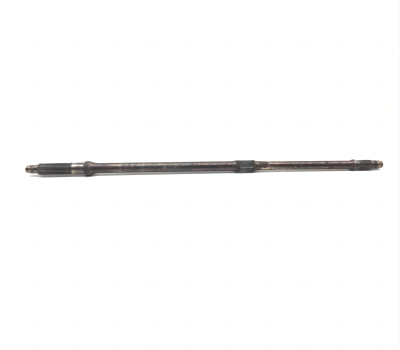


Vehicle Auto Engine Brake Chassis Body Other Auto Spare Parts Exterior Accessories
$0.19 - $199.00
MOQ: 10000 Pieces


Comprehensive Sourcing Guide
Strategic Sourcing Framework for Auto Body Parts
The global market for Auto Body Parts and automotive components presents a complex landscape for B2B procurement professionals. Sourcing these critical elements requires a disciplined approach that balances technical compatibility, supply chain reliability, and cost efficiency. The current inventory data indicates a diverse range of products, from traditional mechanical components like control arms and ball joints to specialized electrical systems and body accessories. Buyers must navigate a market where product attributes vary significantly, including material compositions ranging from full rubber to stainless steel, and packaging standards that differ from naked shipments to wooden packages. This guide outlines a structured methodology for evaluating suppliers and products within this sector, ensuring that procurement decisions are grounded in verified facts rather than speculative claims.
Technical Specification Analysis and Compatibility Verification
The first step in sourcing Auto Body Parts is a rigorous analysis of technical specifications. The provided data reveals a high degree of variation in product models and functional attributes. For instance, the market includes items identified as "car parts-6.1" and "T525," alongside specific models like "MY5596" and "NJF258." These identifiers are crucial for matching parts to specific vehicle requirements. A critical observation in the current inventory is the claim that certain products cover over 98% of car makes, yet the specific application data also lists distinct categories such as "Car," "City Bus," "Coach," "Trucks," and "Engineering Vehicle."
Buyers must verify that the "Driving Type" and "Application" fields align with their fleet requirements. The data notes an "Electrical" driving type for some items, while others are described as "Traditional Batch Type." This distinction is vital for understanding the operational mechanism of the part. Furthermore, material composition is a primary determinant of durability. The inventory lists "Full Rubber" for wiper components and "Stainless Steel" for control arms. When sourcing LED brake lights, the material is noted as "LED Brake Light," which requires verification of the actual semiconductor and housing materials to ensure longevity.
Compatibility is further complicated by the "Original Parts" attribute, which is marked as "Yes" for some items. However, the "Customization" attribute is also marked as "Available" across the board. This suggests a market where OEM-equivalent parts and custom-manufactured components coexist. Buyers should not assume that a part labeled as suitable for "Most Car Models" fits every vehicle without cross-referencing the specific model number and the "Position" attribute, such as "Front" placement for certain control arms. The "Sweep Angle" of 135° for windscreen wipers is a specific technical parameter that must be matched to the vehicle's windshield geometry to ensure effective operation.
Compliance, Certification, and Standardization Protocols
In the realm of automotive procurement, compliance with international standards is non-negotiable. The supplied data references specific packaging standards, such as "303030cm" and "303060," which likely relate to shipping dimensions rather than product manufacturing standards. However, the "Standard" attribute is listed as "Standard" for some items and "Customized" for others. This ambiguity necessitates a proactive verification process where buyers must request the specific manufacturing standards (e.g., ISO, IATF 16949) from the supplier.
The "Quality" attribute is described as "High Level" in the inventory, but this is a qualitative observation rather than a certified metric. Buyers should not rely on this descriptor alone. Instead, they must demand third-party test results and certification documents that validate the "High Level" claim. For components like ball joints and control arms, which are safety-critical, the absence of bone structures or specific sweep angles must be verified against the vehicle manufacturer's engineering drawings.
Additionally, the "OEM" attribute is marked as "Yes" for certain items, implying adherence to original equipment manufacturer specifications. However, the "Standard" field also allows for "Customized" options. This duality requires buyers to clearly define whether they require strict OEM compliance or if a custom specification is acceptable. The "Original Parts" status being "Yes" for some items suggests a direct lineage to the original manufacturer, which can simplify compliance checks. Conversely, parts with "Customization: Available" may require additional validation to ensure they meet the safety and performance benchmarks of the original design.
Cost Drivers and Pricing Structure Evaluation
Understanding the cost drivers for Auto Body Parts is essential for maintaining a healthy procurement budget. The observed price range in the market spans from 0.01 to 999 USD, indicating a vast disparity in product value. This range likely reflects the difference between low-cost consumables, such as rubber wiper blades, and high-value components like stainless steel control arms or complex electrical assemblies. The "Price" attribute is listed as "Lowest" for certain items, but this is a relative term that does not provide a concrete baseline for budgeting.
Several factors influence the final cost. Material composition is a primary driver; stainless steel and LED components generally command higher prices than rubber or plastic parts. The "Packing" method also impacts cost, with "Wooden Package" and "Paper Box" options suggesting different levels of protection and shipping expenses. The "Naked" packing option, observed in the inventory, typically reduces packaging costs but may increase the risk of damage during transit, potentially leading to higher total landed costs.
Lead time is another significant cost driver. The data shows a "Delivery Time" of "One Week" for some items and a "Lead Time" of "30 Days" for others. Longer lead times often correlate with higher production costs or complex customization requirements. Buyers must factor in the cost of inventory holding when dealing with 30-day lead times versus the potential rush fees associated with one-week deliveries. The "MOQ" (Minimum Order Quantity) ranges from 1 to 10,000, which directly affects the unit price. Higher volumes typically reduce the per-unit cost, but they also increase capital expenditure and storage requirements.
Typical Applications and Operational Context
The application scope of Auto Body Parts is broad, covering passenger vehicles, commercial transport, and heavy machinery. The inventory explicitly lists applications for "Car," "City Bus," "Coach," "Trucks," and "Engineering Vehicle." This diversity means that a single supplier may offer parts for vastly different operational environments. For example, a windscreen wiper with a 135° sweep angle and a "Without Bone" design is suitable for various vehicle types, but the durability requirements for a city bus will differ significantly from those for a passenger car.
The "Position" attribute, such as "Front" for control arms, helps buyers identify the specific location of the part within the vehicle assembly. This is crucial for ensuring that the part fits the intended chassis configuration. The "Placement" attribute for brake lights, noted as "Automobile Tail Light," further clarifies the functional context. Buyers must ensure that the "Driving Type" (e.g., Electrical) matches the vehicle's electrical system architecture.
Furthermore, the "Type" of part, such as "Traditional Batch Type" or "Automatic," dictates the operational workflow. Automatic components may require integration with vehicle control systems, while traditional batch types might be purely mechanical. Understanding these operational contexts is vital for selecting parts that integrate seamlessly with existing vehicle systems. The "Range" attribute, listed as "Overall," suggests a comprehensive coverage of vehicle types, but buyers should verify the specific range against their fleet composition to avoid compatibility issues.
Supplier Evaluation and Geographic Considerations
Evaluating suppliers requires a focus on their geographic origins and logistical capabilities. The inventory data indicates origins in "Shanxi," "Hebei Province, China," and a general "China" designation. These regions are known for their manufacturing capabilities, but buyers should verify the specific factory locations to assess logistical efficiency. The "Shipment" method is listed as "by Sea/ Air /Express," offering flexibility in delivery options. However, the choice of shipment method will impact both cost and lead time.
Supplier reliability is often indicated by their "Payment" terms, which include "Tt/LC" (Telegraphic Transfer/Letter of Credit). These terms suggest a level of financial maturity and willingness to engage in standard international trade practices. Buyers should evaluate the supplier's ability to meet the "MOQ" requirements, which can be "Negotiated" for certain items. This flexibility is a positive indicator for buyers with fluctuating demand or those testing new product lines.
The "Customization" availability is a key differentiator for suppliers. Suppliers offering customization can tailor products to specific client needs, but this requires a robust communication channel and clear specification management. Buyers should assess the supplier's capacity to handle custom requests without compromising quality or lead times. The "Quality" attribute being "High Level" should be corroborated with customer references and past performance data, as this is a subjective claim in the absence of third-party validation.
Quality Control and Long-Term Procurement Strategy
Implementing a robust quality control (QC) strategy is paramount for long-term procurement success. The "Quality" attribute is listed as "High Level," but this must be validated through a structured QC process. Buyers should establish clear acceptance criteria based on the "Standard" and "Material" attributes. For example, stainless steel components should be tested for corrosion resistance, while rubber parts should be evaluated for elasticity and wear resistance.
The "Packing" standards, such as "Wooden Packing" or "Paper Box," play a critical role in maintaining product integrity during transit. A QC process should include a pre-shipment inspection to verify that the packaging meets the specified standards and protects the goods from damage. The "Condition" of the products is listed as "New," which is a standard requirement, but buyers should ensure that this is verified upon receipt to prevent the acceptance of refurbished or damaged goods.
Long-term procurement considerations involve building a sustainable supply chain. The "Lead Time" variability, ranging from one week to 30 days, suggests that buyers should maintain a buffer stock for critical components to mitigate supply chain disruptions. The "MOQ" flexibility allows for phased ordering, which can help manage cash flow and inventory levels. Additionally, the "Customization" option provides an opportunity to develop proprietary parts that offer a competitive advantage, provided the supplier has the technical capacity to deliver consistent quality.
Comparative Analysis of Product Attributes
To facilitate decision-making, buyers can utilize a comparative analysis of the key attributes observed in the market. The following table summarizes the variations in product specifications, origins, and logistics, highlighting the diversity of the available inventory.
| Attribute Category | Observed Values | Implications for Procurement |
|---|---|---|
| Product Model | car parts-6.1, T525, MY5596, NJF258, 090505 | Requires precise matching to vehicle specifications; no universal fit. |
| Material | Full Rubber, Stainless Steel, LED Brake Light | Material choice dictates durability, cost, and application suitability. |
| Origin | Shanxi, Hebei Province, China | Geographic concentration suggests potential for regional logistics optimization. |
| Packing | Naked, Paper Box, Wooden Package, as Customer's Request | Packaging affects shipping cost, protection level, and customs clearance. |
| Lead Time | One Week, 30 Days | Significant variance requires flexible inventory planning and demand forecasting. |
| MOQ | 1 to 10,000 (Negotiable) | High flexibility allows for both trial orders and bulk purchasing strategies. |
| Application | Car, City Bus, Coach, Trucks, Engineering Vehicle | Broad scope requires careful selection based on specific fleet needs. |
| Customization | Available | Enables tailored solutions but requires clear technical communication. |
This comparative view underscores the need for a meticulous approach to sourcing. The diversity in models, materials, and logistics parameters means that a one-size-fits-all strategy is ineffective. Buyers must align their specific operational requirements with the detailed attributes of each product to ensure optimal performance and cost efficiency. By adhering to a disciplined evaluation process that prioritizes verified data over marketing claims, procurement professionals can navigate the complexities of the Auto Body Parts market with confidence and precision.
FAQs
What is the lead time for Auto Body Parts?
Lead times vary from one week to 30 days depending on the specific component. Some items like windscreen wipers ship within a week, while others such as LED brake lights require a 30-day production period before delivery.
Can I customize Auto Body Parts for my fleet?
Yes, customization is available for many Auto Body Parts in the current inventory. Buyers can request specific packaging, materials, or specifications, though this may affect the lead time and minimum order quantity requirements.
Which materials are used for Auto Body Parts?
Materials vary by part type, including full rubber for wipers and stainless steel for control arms. LED brake lights are also listed, requiring verification of semiconductor and housing materials to ensure durability and safety compliance.
How are Auto Body Parts packaged for shipment?
Packaging options range from naked shipments to paper boxes and wooden packages. The specific method depends on the product, with some items using standard dimensions like 30x30x30cm while others use custom requests.
What is the minimum order quantity for Auto Body Parts?
The minimum order quantity ranges from 1 to 10,000 units depending on the supplier and product. Some items allow for negotiable MOQs, providing flexibility for buyers with fluctuating demand or those testing new product lines.
Which locations supply these Auto Body Parts?
Products originate from regions in China, specifically Shanxi and Hebei Province. Buyers should verify specific factory locations to assess logistical efficiency and ensure the shipping methods align with their delivery timelines.
What is the price range for Auto Body Parts?
Prices observed in the market span from 0.01 to 999 USD per unit. This wide range reflects differences between low-cost consumables like rubber wipers and high-value components such as stainless steel control arms or electrical assemblies.