Source Auto Maintenance Tire Sealant for Leaks, Punctures, and Repairs
Compare 30 Auto Maintenance Tire Sealant options from verified manufacturers in Guangdong, China. Buyers can evaluate volumes, certifications like RoHS and ISO9001, and customization services for tubeless and tube-type tires.
Key considerations
Products List




Comprehensive Sourcing Guide
Strategic Sourcing Guide for Auto Maintenance Tire Sealant
Understanding Product Specifications and Variants
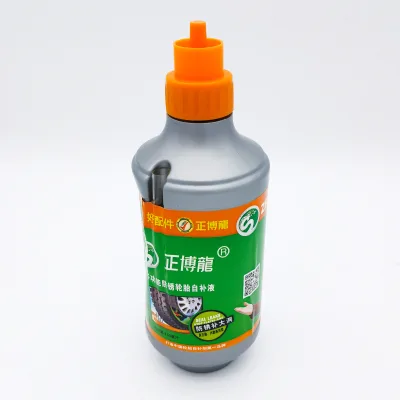
When sourcing Auto Maintenance Tire Sealant, buyers must first navigate the diverse technical specifications that define product performance and application suitability. The market offers a range of volumes and packaging formats designed to meet different operational needs. Observed product attributes indicate that sealants are available in volumes such as 350ml, 500ml, and 1000ml, with some listings also referencing sizes like 125ml, 300ml, 450ml, and 650ml. This variation suggests that procurement strategies should align with the specific tire types and vehicle fleets being serviced. For instance, smaller volumes may be optimized for passenger cars or emergency kits, while larger 1000ml containers might be intended for commercial truck fleets or bulk industrial applications.
The physical form of the sealant is equally critical. Products are frequently described as being suitable for both tubeless and tube-type tires, indicating a versatile formulation capable of handling various tire constructions. The material composition often involves rubber-based compounds, which are essential for effective sealing and patching capabilities. Buyers should verify the exact viscosity and flow characteristics, as these determine how quickly the sealant can migrate to a puncture site. Additionally, the packaging material is a key specification; some units are housed in plastic cans, while others utilize box packaging. The carton dimensions also vary, with observed specifications including 540x363x245mm and 415x275x200mm, which directly impacts logistics planning and container utilization.
Compliance and Certification Verification
In the automotive maintenance sector, regulatory compliance is non-negotiable. Buyers must rigorously verify that all tire sealant products meet international safety and environmental standards. The supplied data highlights several recurring certifications, including RoHS (Restriction of Hazardous Substances), REACH (Registration, Evaluation, Authorization, and Restriction of Chemicals), and ISO9001 for quality management systems. Some listings also reference SGS testing standards and MSDS (Material Safety Data Sheet) availability. These documents are not merely administrative; they confirm that the product does not contain prohibited heavy metals or hazardous chemicals that could damage vehicle rims or harm human health.
A critical compliance aspect is the non-toxic and non-flammable nature of the sealant. Products are explicitly described as "Non-Toxic" and "Non-Flammable," which is a vital safety feature for storage and application in confined spaces or near heat sources. Furthermore, the attribute "No Rust to Rim" indicates that the chemical composition is designed to be compatible with wheel alloys, preventing corrosion that could compromise wheel integrity over time. Buyers should request current certificates for every batch, as certifications like ISO9001 and REACH are subject to renewal and audit. It is essential to confirm that the supplier's facility holds valid ISO9001 certification and that the specific product batch has undergone the necessary REACH and RoHS testing. Without these verifications, the risk of importing non-compliant goods that could lead to liability issues or product recalls is significant.
Cost Drivers and Pricing Dynamics
The pricing of Auto Maintenance Tire Sealant is influenced by a complex interplay of factors, including volume, packaging, and customization requirements. The observed price range in the market spans from $0.35 to $12.00 USD. This wide disparity is not arbitrary but reflects differences in product concentration, volume per unit, and the level of service provided. Lower-priced items typically correspond to smaller volumes or standard packaging, while higher-priced units may offer larger capacities, specialized formulations, or premium branding.
Volume is a primary cost driver. Products are available in 350ml, 500ml, and 1000ml configurations, and the unit price often decreases as the volume increases due to economies of scale in production and packaging. However, the Minimum Order Quantity (MOQ) also plays a decisive role in the final landed cost. The observed MOQ range is extensive, stretching from 1 unit to 7,500 units. Buyers seeking to minimize upfront capital expenditure may find suppliers with low MOQs, though the per-unit cost will likely be higher. Conversely, large-scale procurement with high MOQs can secure significant volume discounts but requires substantial inventory management capabilities.
Packaging and logistics costs further influence the total price. Standard packing configurations, such as 24 pieces per carton or 48 pieces per carton, affect how efficiently products fit into shipping containers. For example, a configuration of 500ml * 24 PCS per carton allows for approximately 1,340 cartons in a 20-foot container, whereas other configurations might yield different densities. Buyers should calculate the cost per liter or per unit of sealant rather than focusing solely on the unit price to ensure accurate budgeting. Additionally, customization services, such as private labeling or custom colors (Green, White, Yellow, Blue, or Clear), may incur additional fees. The availability of free samples is a common industry practice that allows buyers to assess quality before committing to a large order, which can mitigate the financial risk of sourcing.
Typical Applications and Functional Requirements
The functional versatility of tire sealant determines its suitability for various automotive maintenance scenarios. The core function of these products is to provide a rapid seal to punctures, ensuring that vehicles can continue operating without immediate tire replacement. The attribute "Fast Seal to Puncture" is a key performance indicator, suggesting that the product is designed to act quickly upon contact with air escaping through a hole. This functionality is particularly valuable for emergency roadside assistance, fleet maintenance, and off-road applications where immediate repair is necessary.
Beyond puncture sealing, some products are marketed with dual functions, such as "Tyre Care" and "Tyre Repair." This implies that the sealant may also possess properties that condition the tire or prevent future leaks, extending the service life of the tire. The product is explicitly noted as suitable for both tubeless and tube-type tires, making it a universal solution for a wide range of vehicle types, from passenger cars to heavy-duty trucks. The validity period of the product is another critical factor for application planning. Most observed products have a shelf life of 3 years, which allows for long-term storage and inventory management without degradation of performance. However, buyers must ensure that the sealant is stored in conditions that maintain its integrity, as exposure to extreme temperatures or direct sunlight could potentially affect the chemical stability.
Supplier Evaluation and Service Capabilities
Selecting the right supplier is as important as selecting the product itself. The supply chain for tire sealants often involves manufacturers located in industrial hubs, with Guangdong, China, being a prominent origin point for these goods. When evaluating potential suppliers, buyers should look for evidence of manufacturing capabilities, such as the "Factory: Yes" attribute, which indicates that the supplier is a direct manufacturer rather than a trading company. Direct manufacturers often provide better control over quality, pricing, and lead times.
Service capabilities are another critical evaluation metric. Many suppliers offer ODM (Original Design Manufacturing) and OEM (Original Equipment Manufacturing) services, allowing buyers to customize the product with their own branding, colors, and packaging. This flexibility is essential for companies looking to build a private label or integrate the sealant into their existing product lines. The availability of free samples is a strong indicator of a supplier's confidence in their product quality and their willingness to engage in a transparent evaluation process. Buyers should also verify the supplier's ability to handle large-scale orders, as indicated by the high-volume container capacities observed in the market, such as 2,500 cartons or 1,200 cartons per 20-foot container.
Quality Control and Inspection Protocols
Maintaining consistent quality is paramount in the tire sealant industry, where failure can lead to safety hazards and vehicle damage. Buyers must implement robust quality control measures throughout the procurement process. This includes verifying that the product meets the stated standards, such as the "Standard" or specific model numbers like ID-502, ID 309, and Apk-8508. These model numbers often correspond to specific formulations and testing protocols that the supplier must adhere to.
Inspection should focus on the physical attributes of the product, such as the color (Clear, Green, White, Yellow, Blue) and the packaging integrity. The net weight and gross weight of the product, observed as 280g and 395g respectively for certain units, must be consistent with the specifications to ensure that customers receive the correct amount of sealant. Additionally, the "New" condition of the product must be confirmed upon receipt to avoid receiving expired or damaged goods. Buyers should request third-party inspection reports, particularly those related to the REACH, RoHS, and SGS certifications mentioned in the product data. These reports provide objective evidence that the product has been tested for safety and compliance. Regular audits of the supplier's production line and quality assurance processes can further ensure that the high standards observed in the initial samples are maintained in mass production.
Long-Term Procurement Considerations
Sourcing Auto Maintenance Tire Sealant is not a one-time transaction but a long-term strategic partnership. Buyers must consider the scalability of the supply chain to accommodate future growth and fluctuating demand. The wide range of MOQs, from 1 to 7,500 units, offers flexibility, but buyers should aim to establish a consistent ordering pattern that balances inventory costs with supply reliability. The 3-year validity period of the product allows for strategic stockpiling, but buyers must manage inventory rotation to prevent any product from nearing expiration.
Sustainability and environmental compliance are increasingly important in long-term procurement. The presence of certifications like RoHS and REACH indicates that the products are designed with environmental regulations in mind. Buyers should prioritize suppliers who demonstrate a commitment to continuous improvement in their manufacturing processes and who can provide updated compliance documentation as regulations evolve. Furthermore, the ability of the supplier to offer customization, such as specific colors or packaging, can enhance the buyer's brand identity and market competitiveness. By focusing on suppliers with strong quality control, valid certifications, and flexible service options, buyers can build a resilient supply chain that supports their automotive maintenance operations effectively.
FAQs
What certifications do Auto Maintenance Tire Sealant products hold?
Products typically hold RoHS, REACH, and ISO9001 certifications. Some listings also reference SGS testing standards and MSDS availability to ensure compliance with international safety and environmental regulations for automotive maintenance.
Which volumes are available for Auto Maintenance Tire Sealant?
Available volumes include 350ml, 500ml, and 1000ml, with some options offering 125ml, 300ml, 450ml, or 650ml. These variations allow buyers to select sizes optimized for passenger cars or commercial truck fleets.
How long is the validity period for Auto Maintenance Tire Sealant?
The standard validity period is 3 years for most observed products. This shelf life allows for long-term storage and inventory management, provided the sealant is kept in conditions that maintain its chemical integrity.
Can Auto Maintenance Tire Sealant be customized for branding?
Yes, customization is available for colors, packaging, and private labeling. Suppliers offer ODM and OEM services, allowing buyers to select specific colors like green, white, or clear, and customize carton dimensions for their needs.
What is the minimum order quantity for Auto Maintenance Tire Sealant?
The minimum order quantity ranges from 1 unit up to 7,500 units depending on the supplier. Lower MOQs suit smaller budgets, while higher volumes often secure better pricing and container utilization efficiency.
Where are Auto Maintenance Tire Sealant manufacturers located?
Most manufacturers are located in Guangdong, China. This region is a prominent industrial hub for producing automotive maintenance products, offering direct factory access for quality control and competitive pricing structures.
What packaging formats are used for Auto Maintenance Tire Sealant?
Packaging formats include plastic cans and boxes, often packed 24 or 48 pieces per carton. Carton dimensions vary, such as 540x363x245mm or 415x275x200mm, impacting how efficiently products fit into shipping containers.