Find Auto Reset Overload Protector for Cars, Homes, and Machines
Source 30 verified Auto Reset Overload Protector units from Chinese manufacturers. Buyers can compare specifications like voltage ratings, current capacity, and certifications including CE, UL, and VDE for automotive, residential, and industrial applications.
Key considerations
Products List




Comprehensive Sourcing Guide
Strategic Sourcing Guide for Auto Reset Overload Protectors
Understanding Technical Specifications and Operational Parameters
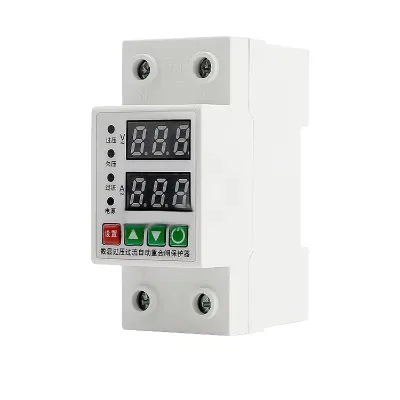
When sourcing auto reset overload protectors, buyers must first establish a clear understanding of the technical specifications that define the component's performance envelope. The core function of these devices is overcurrent protection, designed to interrupt electrical flow when a circuit exceeds safe limits and automatically restore power once the fault condition clears. The supplied product data indicates a diverse range of operational voltages, which is a critical factor in component selection. For automotive applications, the observed voltage ratings include 12V, 24V, and 48V systems, reflecting the specific needs of modern vehicle electrical architectures. In contrast, industrial and machine applications often require ratings of 125V or 250V, while general home and commercial installations frequently operate at 220V or 230VAC.
The rated current is another pivotal specification that dictates the protector's capacity. Market observations list rated currents ranging from 32A to 63A, with specific models supporting 40A and 63A configurations. It is essential to verify that the selected unit matches the load requirements of the specific application to prevent nuisance tripping or failure to trip during a fault. Frequency compatibility is also a standard requirement, with the observed data confirming support for both 50Hz and 60Hz power systems, ensuring global applicability. Furthermore, the physical installation method is a key consideration; the available data points to "Insert" installation types, alongside various mounting options such as blade, stud, and panel mount configurations. The enclosure rating is typically specified as IP20 (Standard), which indicates protection against solid objects larger than 12.5mm but does not offer water resistance, necessitating careful consideration of the installation environment.
Compliance, Certification, and Regulatory Standards
Navigating the compliance landscape is a non-negotiable aspect of sourcing auto reset overload protectors, particularly for international trade. The product data highlights a robust array of certifications that buyers should verify against their target market requirements. Commonly observed certifications include VDE, CE, UL, and CCC, which are critical for entry into European, North American, and Chinese markets respectively. Additionally, ISO9001 certification is frequently cited, serving as a baseline indicator of a manufacturer's quality management system rather than a direct product safety mark. Some listings also reference ISO9001-CE combinations, suggesting integrated quality and safety compliance.
Buyers must be vigilant regarding the specific standards applicable to their region. For instance, the UL certification is often required for North American markets, while CE is mandatory for the European Economic Area. The CCC mark is essential for products sold within China. It is important to note that while these certifications are listed as observed attributes, they are not guaranteed for every unit in a batch. Procurement teams should request valid, up-to-date certification documents from the supplier for the specific model being ordered. The data also mentions "One Pole" and "36mm" as standard specifications, which may relate to physical dimensions or circuit configurations that must align with local wiring standards. Verifying that the product meets the specific electrical safety standards of the destination country is the primary responsibility of the buyer, as the supplier's general claims do not replace local regulatory mandates.
Cost Drivers and Pricing Dynamics
The pricing structure for auto reset overload protectors is influenced by several variables, including technical specifications, certification levels, and order volume. The observed listed price range spans from $0.25 to $13.50 USD, a significant variance that reflects differences in current ratings, voltage capabilities, and build quality. Lower-priced units typically correspond to basic models with standard current ratings (e.g., 32A) and simpler mounting configurations, while higher-priced units may feature advanced voltage protection, higher current capacities, or specialized automotive-grade construction.
Minimum Order Quantity (MOQ) is another critical cost driver, with observed ranges extending from 1 unit to 1,000 units. Buyers with lower volume needs may face higher per-unit costs due to the inability to leverage economies of scale, whereas bulk purchasers can negotiate more favorable pricing tiers. The packaging method, observed as either "Carton" or "Box," can also impact logistics costs, particularly for international shipments where packaging efficiency affects freight charges. Additionally, customization availability is a factor that can influence the final cost. While the data confirms that customization is available, this service often incurs additional tooling or setup fees, which should be factored into the total cost of ownership. Buyers should request detailed quotes that break down unit costs, tooling fees, and shipping expenses to ensure a transparent comparison between potential suppliers.
Typical Applications and Industry Use Cases
Auto reset overload protectors serve a wide array of industries, each with distinct operational requirements. The data explicitly identifies applications in the home sector, where these devices protect residential appliances and lighting circuits from overcurrent conditions. In the automotive industry, the specific voltage ratings of 12V, 24V, and 48V indicate their use in vehicle electrical systems, protecting components such as motors, lighting, and control units. The mention of "Refrigerator Qd/PTC Protector Current" at 12.0A suggests specialized applications in the refrigeration and HVAC sectors, where PTC (Positive Temperature Coefficient) protectors are used to safeguard compressor motors.
Industrial machinery also represents a significant application area, with voltage ratings of 125V and 250V supporting various machine control circuits. The presence of "High-Speed Circuit Breaker" attributes in the data points to applications requiring rapid response times to prevent damage in sensitive electronic equipment. Furthermore, the "Arc-extinguishing Medium" listed as "Air" is typical for general-purpose circuit breakers used in low-voltage distribution systems. The versatility of these devices is further evidenced by the variety of pole configurations, including 2-pole and 4-pole options, which allow for use in single-phase and three-phase systems respectively. Buyers should match the specific application requirements, such as the need for over-voltage protection (230-300VAC) or under-voltage protection (160-210VAC), to the specific model features to ensure optimal system reliability.
Supplier Evaluation and Origin Verification
Evaluating suppliers requires a thorough assessment of their geographic origin and manufacturing capabilities. The supplied data indicates that products originate from China, with specific mentions of Zhejiang and Wenzhou as production hubs. These regions are known for their concentration of electrical component manufacturers, offering a competitive landscape for buyers. However, the presence of multiple origin locations suggests a fragmented supply chain, making it essential to verify the specific factory location for each order. Buyers should confirm whether the supplier is the original manufacturer or a trading company, as this distinction impacts quality control and communication efficiency.
When evaluating potential partners, buyers should prioritize suppliers who demonstrate transparency regarding their production processes and quality assurance measures. The availability of certifications like ISO9001 is a positive indicator, but it should be complemented by requests for factory audit reports or third-party inspection results. The "Customized" standard attribute suggests that some suppliers offer tailored solutions, which requires a deeper level of collaboration and technical exchange. Buyers should assess the supplier's ability to provide technical support, including assistance with model selection and troubleshooting. Additionally, the observed MOQ flexibility (1-1000 units) indicates that suppliers cater to both small-scale prototyping and large-scale production, but buyers must clarify lead times and production capacity for their specific order volume to avoid supply chain disruptions.
Quality Control and Long-Term Procurement Considerations
Implementing a robust quality control (QC) strategy is vital for mitigating risks associated with auto reset overload protectors. Given the critical role these devices play in safety, buyers should establish clear acceptance criteria based on the observed specifications, such as rated current, voltage ratings, and temperature operating ranges. The data specifies an operating temperature range of -25°C to +60°C and a storage temperature range of -40°C to +85°C, which must be verified through testing to ensure the components can withstand the environmental conditions of their intended application.
Long-term procurement considerations extend beyond the initial purchase to include supply chain stability and product lifecycle management. Buyers should evaluate the supplier's ability to maintain consistent quality over time, especially when dealing with customized models. The "One Pole" and "36mm" standard specifications suggest that some products are standardized, which can simplify long-term sourcing, while others may require ongoing technical coordination. It is also important to monitor the supply chain for potential disruptions, particularly given the global nature of the electrical component market. Establishing a relationship with a supplier that offers reliable after-sales support and warranty terms can provide additional security. Finally, buyers should plan for regular re-qualification of suppliers and periodic testing of incoming goods to ensure continued compliance with safety standards and performance expectations.
Comparative Analysis of Key Product Attributes
To facilitate informed decision-making, the following table summarizes the key technical and commercial attributes observed in the market for auto reset overload protectors. This comparison highlights the diversity of options available and underscores the need for precise specification matching.
| Attribute Category | Observed Specifications & Ranges | Application Context |
|---|---|---|
| Voltage Ratings | 12V, 24V, 48V (Auto); 125V, 250V (Machine); 220V, 230VAC (Home/General) | Determines compatibility with vehicle, industrial, or residential systems. |
| Rated Current | 32A, 40A, 63A (General); 12.0A (Refrigerator PTC) | Must match the load current to prevent nuisance tripping or failure. |
| Pole Configuration | 1 Pole, 2 Pole, 4 Pole; 1p+N | Defines circuit complexity and phase requirements. |
| Certifications | VDE, CE, UL, CCC, ISO9001 | Essential for regulatory compliance in target markets. |
| Installation Type | Insert, Blade, Stud, Panel Mount | Influences physical integration and mounting hardware needs. |
| Temperature Range | Op: -25°C to +60°C; Storage: -40°C to +85°C | Critical for environmental durability and reliability. |
| Price Range | $0.25 - $13.50 USD | Reflects complexity, current rating, and certification levels. |
| MOQ Range | 1 - 1,000 Units | Affects unit economics and inventory planning. |
This structured overview serves as a reference for buyers to align their specific project requirements with available market offerings. By carefully cross-referencing these attributes with project specifications, procurement teams can select the most suitable auto reset overload protectors that ensure safety, compliance, and operational efficiency.
FAQs
What certifications are available for auto reset overload protectors?
Available certifications include VDE, CE, UL, CCC, and ISO9001. These marks indicate compliance with regional safety standards and quality management systems, but buyers must verify specific documents for the ordered model.
Which voltage ratings support automotive applications?
Automotive applications utilize 12V, 24V, and 48V ratings. These specific voltages match modern vehicle electrical architectures, distinguishing them from the 125V or 250V ratings used for general machinery.
How are these protectors installed in equipment?
Installation methods include Insert, Blade, Stud, and Panel Mount configurations. The choice depends on the equipment design, with Insert being a common method for direct circuit integration.
Can buyers request customization for these devices?
Customization is available for specifications and standards. This service allows tailored solutions but may involve additional setup fees and requires technical coordination with the manufacturer.
What is the typical operating temperature range?
The standard operating temperature range is -25°C to +60°C. Storage conditions can extend to -40°C to +85°C, ensuring durability in varied environmental conditions.
Which rated currents are commonly observed?
Common rated currents include 32A, 40A, and 63A. Specific models like refrigerator protectors may feature a 12.0A rating, requiring selection based on the exact load requirements.