Source Glass French Press for brewing, serving, and gifting
Compare 30 Glass French Press options from verified Chinese manufacturers. Buyers can evaluate capacities from 350ml to 1500ml, material grades, and customization features for kitchen use.
Key considerations
Products List




Comprehensive Sourcing Guide
Strategic Sourcing Guide for Glass French Press Equipment
The global market for Glass French Press equipment has evolved into a sophisticated segment of the kitchenware industry, driven by consumer demand for sustainable brewing solutions and high-temperature durability. For B2B procurement professionals, sourcing this category requires a nuanced understanding of material science, regulatory compliance, and supply chain logistics. The following guide synthesizes available product data and industry standards to provide a structured approach for evaluating suppliers and selecting the optimal product specifications for wholesale distribution.
Material Composition and Thermal Performance
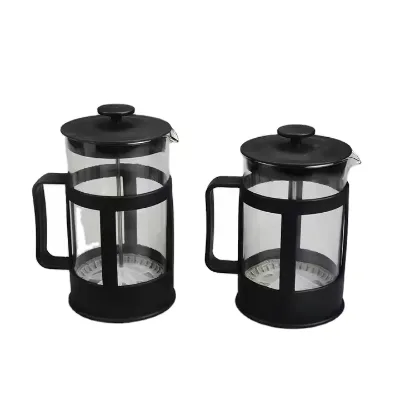
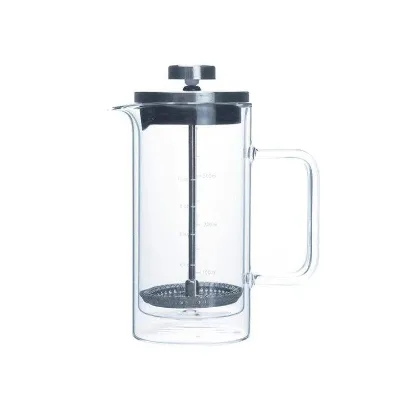
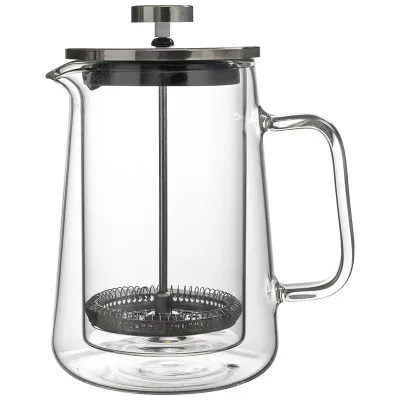
The foundational element of any Glass French Press is the vessel material, which directly dictates thermal shock resistance and longevity. In the current supply landscape, high borosilicate glass is the predominant standard for premium units. This material offers superior resistance to thermal expansion compared to standard soda-lime glass, allowing the vessel to withstand direct contact with boiling water without cracking. Specific product observations confirm the use of "High Borosilicate Heat-Resistant Glass" as a primary attribute, ensuring that the core body can handle temperatures associated with brewing coffee or tea safely.
However, the glass body is rarely the sole component. A complete unit integrates multiple materials, each serving a specific functional role. The metal components, typically forming the plunger rod and mesh filter, are frequently specified as Food-Grade Stainless Steel 304. This grade is critical for food contact applications due to its corrosion resistance and non-reactive nature. In some configurations, the lid components may utilize Stainless Steel 201, which presents a different alloy composition that buyers must verify against their specific corrosion resistance requirements. Furthermore, plastic components, such as the handle or seal rings, are often identified as PP (Polypropylene). This material is selected for its heat resistance and chemical stability, ensuring that the plastic parts do not degrade or leach substances when exposed to hot liquids.
Technical Specifications and Capacity Standards
Procurement decisions must be grounded in precise technical specifications, particularly regarding capacity and physical dimensions. The market exhibits a wide range of standard volumes, with observed specifications including 350ml, 600ml, 800ml, 1000ml, and 1500ml options. These variations allow buyers to target different market segments, from single-serve users to families or commercial settings. The "Large Capacity" attribute is a distinct feature for certain models, catering to bulk brewing needs.
Physical dimensions and packaging are equally critical for logistics planning. Single package sizes have been observed at approximately 14.5 x 9.5 x 21.5 cm, a metric that influences palletization efficiency and shipping costs. The product models identified in the supply chain, such as FP14, FP43, FP47, FP33, FP28, FP37, QL-70, QL-908, QL-M906, QL-907G, QL-603LH, QL-929, and SW0955-PRESS, represent distinct design iterations. Each model may correspond to specific capacity standards or design styles, ranging from "Modern Minimalist" to "Classic" and "Colored" finishes. Buyers must cross-reference these model numbers with their specific capacity requirements to ensure inventory alignment.
Regulatory Compliance and Certification Verification
In the B2B sector, regulatory compliance is non-negotiable. The supply data indicates that reputable manufacturers often provide products with LFGB and FDA certifications. These certifications are essential for markets in Europe and North America, respectively, confirming that the materials used are safe for food contact. Additionally, some product listings reference CE / EU certification, which is mandatory for selling within the European Economic Area.
When evaluating potential suppliers, procurement teams must request valid documentation for these certifications rather than relying on marketing claims. The presence of "Eco-Friendly" features in product attributes suggests a focus on sustainability, which aligns with broader regulatory trends toward reducing single-use plastics. However, the term "Eco-Friendly" is a general attribute and should be substantiated by specific lifecycle assessments or material recycling claims if required by the buyer's corporate sustainability goals. Buyers should verify that the stainless steel grades (304 or 201) and the PP plastic components meet the specific migration limits defined by the relevant food safety authorities.
Cost Drivers and Pricing Dynamics
The pricing structure for glass french presses is influenced by several variable factors, including material quality, customization levels, and packaging complexity. The observed price range in the market spans from $0.75 to $9.97 USD, a wide disparity that reflects differences in build quality and feature sets. Lower-priced units may utilize standard glass or simpler packaging, while higher-priced models likely incorporate premium borosilicate glass, advanced stainless steel alloys, and more elaborate gift-box packaging.
Customization is a significant cost driver. The data shows that customization is available for certain models, allowing buyers to request specific branding, colors, or capacity adjustments. However, other models are listed as "Non-Customized," which typically offers lower unit costs but less flexibility. The Minimum Order Quantity (MOQ) also varies significantly, ranging from 1 to 3600 units. High MOQs often correlate with lower per-unit costs, making them suitable for large-scale distribution, whereas low MOQs provide flexibility for testing new markets or fulfilling smaller orders. Buyers must balance the desire for lower unit prices against the capital required to meet higher MOQ thresholds.
Packaging and Logistics Considerations
Packaging plays a dual role in protecting the product and enhancing its marketability. The standard packaging configuration observed includes a "Color Box with Bubble Bag" or a "Color Box and Bubble Bag" setup. This combination provides a protective layer against impact during transit while offering a retail-ready presentation. For higher-end models, the packaging may be upgraded to a "Gift Box" format, often accompanied by a carton containing 24 or 36 pieces.
The origin of the products is a critical logistical factor. The supply data identifies two primary manufacturing hubs: Hebei, China, and Guangdong, China. These regions have distinct logistics profiles and shipping costs. Hebei is often associated with heavy industrial manufacturing, while Guangdong is a major hub for consumer electronics and high-end consumer goods. Understanding the specific origin of a model helps in estimating lead times and freight costs. The "Suit" attribute for certain items suggests that some products may be sold as part of a set, which requires careful inventory management to ensure all components are shipped together.
Supplier Evaluation and Quality Control
Selecting a supplier requires a rigorous evaluation process that goes beyond price comparisons. Buyers should prioritize suppliers who demonstrate transparency in their material sourcing and manufacturing processes. The presence of specific model numbers and detailed material breakdowns (e.g., Borosilicate Glass, Stainless Steel 304) indicates a level of technical maturity in the supplier's operations.
Quality control measures should be verified through third-party testing reports. While specific test results are not provided in the general data, buyers should insist on proof of thermal shock testing, drop testing, and chemical migration testing. The "Anti-Corrosion" feature listed for some models is a key quality indicator, but it must be validated through actual performance data. Additionally, the "Applicable people: All" attribute suggests universal usability, but buyers should ensure that the design does not compromise safety for specific demographics, such as children or the elderly.
Long-Term Procurement and Market Trends
The long-term viability of a Glass French Press product line depends on its adaptability to market trends. The "Modern Minimalist" and "Classic" design styles indicate a demand for aesthetic versatility. As sustainability becomes a more dominant purchasing factor, the "Eco-Friendly" attribute will likely gain importance. Buyers should consider the lifecycle of the product, including the recyclability of the glass and metal components.
Furthermore, the availability of customization allows suppliers to adapt to changing consumer preferences, such as the demand for colored glass or specific branding. However, buyers must weigh the benefits of customization against the potential for increased lead times and complexity in the supply chain. The "french press" production attribute confirms the core function of these items, but the integration of "boiling water" applicability ensures they remain relevant for various hot beverage applications.
In conclusion, sourcing Glass French Press equipment requires a balanced approach that considers material integrity, regulatory compliance, cost efficiency, and logistical feasibility. By leveraging the detailed specifications and certifications available in the market, procurement professionals can build a resilient supply chain that meets the demands of modern consumers while maintaining high standards of quality and safety. The wide range of models and capacities ensures that there are viable options for diverse market needs, provided that the selection process is grounded in rigorous verification and strategic planning.
FAQs
What certifications do Glass French Press products typically hold?
Products typically hold LFGB and FDA certifications for food safety. Some listings also include CE / EU certification for European markets. These certifications confirm materials are safe for contact with boiling water and hot beverages.
Which materials are used for the body and components?
The body is made of high borosilicate heat-resistant glass. Metal components use food-grade stainless steel 304 or 201, while plastic parts are often PP polypropylene. This combination ensures durability and resistance to thermal shock.
What capacity standards are available for these units?
Standard capacities include 350ml, 600ml, 800ml, 1000ml, and 1500ml options. Some models are specifically designed as large capacity units. Buyers should select the volume that matches their intended single-serve or family brewing needs.
Can buyers request customization for these glass french presses?
Customization is available for certain models but not all. Some units are listed as non-customized with fixed specifications. Buyers must verify if specific branding or capacity adjustments are possible before placing an order.
How are these products packaged for shipping?
Items are packed in color boxes with bubble bags for protection. Higher-end models may use gift boxes with 24 or 36 pieces per carton. This packaging ensures the glass vessel remains intact during transit.
Which supplier locations are common for these products?
Products originate primarily from Hebei and Guangdong in China. These regions serve as major manufacturing hubs for glass kitchenware. The specific origin affects logistics and shipping costs for international buyers.