Source Automatic CE Meat Stuffing Mixer for Sausage Production
Find and compare 30 Automatic CE Meat Stuffing Mixer options for sausage production, vegetable mixing, and bulk processing. Evaluate specifications like 60L to 700L capacity, 304 stainless steel construction, and electric power sources to select the right equipment for your facility.
Key considerations
Products List


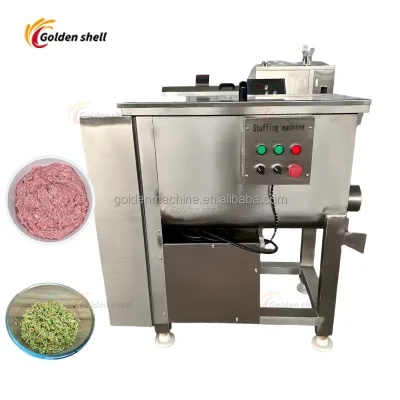
Food Stuffing Mixer/ Meat Vegetable Stuffing Mixer High Quality with Low Noise
$1150.00 - $3000.00
MOQ: 1 Sets


Stuffing Mixer Meat Processing Mixer Vegetable Mixer with Ce Certificate
$1000.00 - $9000.00
MOQ: 1 Pieces


Sausage Making Machine Stuffing Mixer Machine Meat Processing Equipment Automatic Meat Mixer
$2999.00 - $4999.00
MOQ: 1 Pieces


Meat Mixer Supplier Automatic Electric 200L-500L Stuffing/Meat/Minced Meat/Sausage Mixing
$2999.00 - $4999.00
MOQ: 1 Pieces


Meat Stuffing Blender Mixer Machine / Auto Discharge Food Stuffing Mixer
$6000.00 - $30000.00
MOQ: 1 SET


Automatic Meat Mixer for Stuffing Sausage and Meatball Production Meat Cutter Meat Processing
$3500.00 - $14000.00
MOQ: 1 Pieces


Premium Automatic Meat Mixer for Sausage and Meatball Production Mixer
$3500.00 - $14000.00
MOQ: 1 Pieces

Easy Operation Vacuum Meat Mixing Machine / Meat Mixer / Sausage Meat Mixer
$3500.00 - $14000.00
MOQ: 1 Pieces


Comprehensive Sourcing Guide
Automatic CE Meat Stuffing Mixer Sourcing Guide
Selecting the right automatic meat stuffing mixer is a critical decision for any food processing operation aiming to balance efficiency with product quality. These machines are designed to marinate, tenderize, and mix meat products with precision, ensuring consistent flavor distribution and improved texture. For procurement specialists, the challenge lies in navigating a market flooded with varying specifications, from small-scale batch mixers to high-capacity industrial units. Understanding the core technical requirements and commercial terms is essential to avoid costly mismatches between machine capabilities and production needs. This guide provides a structured approach to evaluating these machines, focusing on verified attributes and practical procurement strategies.
The market for automatic meat stuffing mixers is diverse, with suppliers offering a wide range of models tailored to different production volumes. Buyers must distinguish between basic mixing functions and advanced features like vacuum tumbling or temperature control systems. The presence of CE certification is a significant indicator of compliance with European safety and quality standards, which is often a prerequisite for exporting to or operating within regulated markets. However, certification alone does not guarantee performance; it must be paired with robust mechanical design and reliable after-sales support. This guide aims to equip buyers with the knowledge to verify these aspects thoroughly before committing to a purchase.
Product Scope and Observed Listing Signals
The observed product landscape reveals a significant variation in capacity and power, ranging from compact 60-liter units to large-scale 700-liter industrial mixers. Listings indicate that prices can vary widely, from approximately $45 to $60,000, reflecting differences in material quality, automation level, and brand reputation. The minimum order quantity (MOQ) typically ranges from 1 to 50 units, suggesting that most suppliers are willing to accommodate single-unit purchases for pilot testing or small-scale operations. Buyers should note that while some listings offer customization, the standard configurations often serve as a baseline for more complex requirements.
Key attributes observed in the market include automatic operation, electric power sources, and construction from 304 stainless steel or similar food-grade materials. These materials are crucial for hygiene and durability, resisting corrosion and facilitating easy cleaning. The observed power ratings generally fall between 1.5kw and 6kw, with motor specifications like the Yl90s-4(1.1kw) indicating specific component choices that affect performance. Additionally, dimensions and weights vary significantly, with some units weighing up to 750kg, which impacts installation requirements and floor space planning. Buyers must carefully match these physical and operational specs to their facility’s constraints.
Technical Specifications to Verify
When evaluating technical specifications, the capacity and processing method are primary considerations. Observed capacities range from 60L/time to 100-500L, with some high-end models reaching 700L per batch. The process type, whether thermal processing or mild processing, dictates the machine’s suitability for different meat products. For instance, vacuum tumblers are often preferred for enhancing meat texture and water retention, while standard mixers may suffice for simple seasoning distribution. Buyers should verify the agitator speed, with observed values like 78r/Min, to ensure it aligns with the desired mixing intensity and product consistency.
Power and motor specifications are equally critical for ensuring consistent performance under load. The observed power range of 1.5-2.2kw for standard units and up to 6kw for larger models indicates the energy requirements for different scales of operation. The dynamical system, such as a 15kw gear motor, suggests heavy-duty applications requiring robust torque. Buyers must also consider the door opening method, with top-opening types being common for easier loading and unloading. Verifying these details ensures that the selected machine can handle the specific throughput and mechanical demands of the production line without frequent breakdowns or inefficiencies.
Compliance and Safety Documentation
Compliance with safety and quality standards is non-negotiable in food processing equipment procurement. The presence of CE certification is a key indicator that the machine meets European health, safety, and environmental protection standards. Buyers should request valid CE certificates and verify their authenticity through the manufacturer or notified bodies. Additionally, other standards like ISO may be relevant for quality management systems, though specific certifications should be confirmed with the supplier. Documentation should clearly state the scope of certification and any limitations or exclusions.
Safety features and operational controls are also part of the compliance framework. Machines should be equipped with emergency stop buttons, protective guards, and clear operational manuals. The observed "New" condition of most listings suggests that buyers are primarily dealing with new equipment, but it is essential to verify that all safety interlocks are functional. Buyers should also inquire about the availability of spare parts and technical support, as these are crucial for maintaining compliance and operational continuity. Ensuring that the supplier provides comprehensive documentation reduces the risk of regulatory issues and enhances workplace safety.
Cost Drivers and Commercial Terms
Several factors influence the total cost of ownership for automatic meat stuffing mixers. The primary cost drivers include the machine’s capacity, material quality, and level of automation. Higher capacity units and those with advanced features like temperature control systems or vacuum tumbling capabilities command higher prices. The use of 304 stainless steel, while more expensive than lower-grade alternatives, offers better durability and hygiene, justifying the investment for long-term use. Buyers should also consider the power consumption and maintenance requirements, as these operational costs can accumulate over time.
Commercial terms such as MOQ, lead time, and payment conditions significantly impact procurement planning. Observed lead times of around 20 days suggest that buyers should plan their orders well in advance to avoid production delays. Warranty periods, such as the observed 12-month guarantee, provide some protection against defects but should be clearly defined in the contract. Buyers should negotiate favorable payment terms, such as partial upfront payment and balance upon delivery, to mitigate financial risk. Understanding these commercial aspects helps in budgeting and managing cash flow effectively.
Supplier Qualification and Quality Control
Supplier qualification is a critical step in ensuring the reliability and quality of the purchased equipment. Buyers should assess the supplier’s manufacturing capacity, with observed figures like 100 sets per month indicating the scale of production. A higher capacity often correlates with better quality control processes and more consistent product delivery. It is also important to verify the supplier’s experience in the food processing machinery industry, as this expertise translates to better design and support. Requesting references or case studies from existing clients can provide valuable insights into the supplier’s performance and reliability.
Quality control measures should be integrated into the procurement process to minimize the risk of receiving defective equipment. Buyers should request detailed inspection reports and test results for the specific models they are considering. Factory audits, either physical or virtual, can provide a deeper understanding of the supplier’s production capabilities and quality management systems. Additionally, buyers should establish clear acceptance criteria and inspection protocols for the delivered machines. This proactive approach ensures that the equipment meets the specified standards and performs as expected in the production environment.
Long-Term Procurement Checks
Long-term procurement success depends on establishing a sustainable relationship with the supplier and ensuring ongoing support. Buyers should prioritize suppliers who offer comprehensive after-sales service, including technical support, spare parts availability, and maintenance training. The observed warranty period of 12 months is a baseline, but buyers should negotiate extended support options for critical equipment. Regular communication with the supplier can help address any issues promptly and foster a collaborative partnership. This long-term perspective helps in maximizing the return on investment and minimizing downtime.
Continuous monitoring of market trends and technological advancements is also essential for staying competitive. Buyers should stay informed about new features and improvements in meat stuffing mixer technology, such as enhanced energy efficiency or advanced automation controls. Participating in industry events and networking with other procurement professionals can provide valuable insights and benchmarking opportunities. By maintaining a proactive approach to supplier management and market intelligence, buyers can ensure that their equipment investments remain relevant and effective in the evolving food processing landscape.
FAQs
What is the typical voltage for automatic meat stuffing mixers?
Most automatic meat stuffing mixers operate on 220V or 380V power sources. The specific voltage depends on the model and motor configuration, such as the 1.5kw or 6kw options available. Buyers should verify the electrical requirements against their facility's power supply to ensure compatibility and safe operation during continuous thermal or mild processing tasks.
Can these mixers be customized for specific production needs?
Yes, customization is available for many automatic meat stuffing mixers. Manufacturers offer tailored solutions including specific capacities ranging from 60L to 1200L and various motor speeds. Buyers can request adjustments to the agitator speed, door opening methods, or material specifications to align with their unique processing workflows and volume requirements.
What materials are used in constructing these mixing machines?
These machines are primarily constructed from 304 stainless steel or general stainless steel materials. This ensures durability, corrosion resistance, and compliance with food safety standards. The use of high-grade metal allows for easy cleaning and maintenance, which is critical for hygiene in meat processing environments involving thermal or mild processing techniques.
What is the standard delivery time for these machines?
The standard delivery time is typically around 20 days after order confirmation. This lead time allows for manufacturing, quality checks, and preparation for export. Buyers should account for this duration when planning production schedules, as it ensures the machine is ready for shipment in wooden packing or wood boxes as per export standards.
What certifications are commonly associated with these mixers?
Many automatic meat stuffing mixers come with CE certificates, indicating compliance with European safety and quality standards. This certification is crucial for international trade and ensures the equipment meets specific regulatory requirements. Buyers should verify the presence of such documentation to ensure smooth customs clearance and operational legality in their target markets.
What is the typical capacity range for these mixers?
The capacity range varies significantly, from small 60L per time units to large 700L or 1200L models. This flexibility allows businesses to select equipment that matches their daily production volume. Whether for small-scale sausage stuffing or large industrial mixing, choosing the right capacity ensures efficient processing and optimal resource utilization.