Source Automatic CE Noodle Maker for Restaurants, Hotels, and Catering
Find and compare 30 Automatic CE Noodle Maker options from verified Chinese suppliers. Evaluate specifications like 6000W power, stainless steel construction, and CE certification to select the right equipment for your production needs; compare the available evidence and request quotations based on your requirements.
Key considerations
Products List
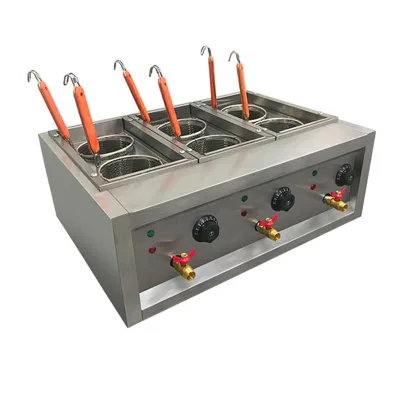

Automatic Noodle Press Machine Maker/Professional Noodle Instant Noodle Maker
$100000.00 - $1000000.00
MOQ: 1 Sets

Noodle Maker of CE ISO Commerical Instant Noodle Maker/Noodle Production Equipment Line
$50000.00 - $500000.00
MOQ: 1 Sets


Professional High Efficient Flour Noodle Maker Noodle Machine of Automatic
$50000.00 - $500000.00
MOQ: 1 Sets


Industrial Noodle Maker Making Equipment Maker/Factory Instant Noodles Maker Equipment
$100000.00 - $1000000.00
MOQ: 1 Sets


1900*750*1500mm Automatic Noodle Maker Noodle Equipment Noodle Making Machine
$4000.00 - $8000.00
MOQ: 1 Sets


Advanced Automatic Instant Noodle Maker for Fried and Non-Fried Options
$10000.00 - $2000000.00
MOQ: 1 Sets


Comprehensive Sourcing Guide
Automatic CE Noodle Maker Sourcing Guide
Sourcing an Automatic CE Noodle Maker requires a disciplined approach because the category spans everything from compact countertop units to fully automated instant noodle production lines. Listings observed in this category show price ranges from under one hundred dollars for small electric machines to several million dollars for complete industrial installations, which means the same keyword can describe fundamentally different purchases. Buyers who skip the classification step frequently compare incompatible quotations and end up renegotiating specifications after contracts are signed.
Before contacting suppliers, define your production scenario: are you equipping a restaurant or retail kitchen with a single unit, or building a noodle manufacturing operation with a continuous line? Observed listings include benchtop models around 650482267mm weighing roughly 15.85kg, as well as large-format lines with stated footprints such as 80m7m5m or 70m7m5m and capacities around 11,000 pieces per eight-hour shift. Matching your required output volume, floor space, and staffing model to the correct equipment class is the single most important early decision in this category.
Product Scope and Observed Listing Signals
The observed product scope covers automatic noodle making machines marketed for instant noodle production, with raw material listed as wheat flour and application fields centered on noodle processing. Brand names appearing in listings include JOY and Himax, with model identifiers such as EH-688-1, BFP510, HM-110, and Hm-E/Hm-S. Power ratings observed range from 6000W electric units to large production systems, and most listings indicate 220V electric power sources, which matters for facility electrical planning. Customization is explicitly noted as available on multiple listings.
Listing signals also reveal packaging and origin patterns worth noting. Common origins cited include Zhejiang, Zhengzhou, and Guangzhou in China, and packing is described variously as wooden cases, wooden boxes, export cartons, or container shipping depending on machine size. Automatic grade is consistently described as fully automatic across most listings, and delivery times as short as 30 days appear. Treat these attributes as observations from individual listings rather than guarantees — always confirm the specific model you are quoted actually carries the attributes shown, since aggregated listings can mix specifications across product variants.
Technical Specifications to Verify
Request a complete specification sheet before committing to any quotation, and verify each figure against your own production requirements. Core items to confirm include voltage compatibility with your facility (observed listings show 220V electric machines, but larger lines may require three-phase supply), total power draw, physical dimensions against your floor plan, and machine weight for foundation and handling planning. For instant noodle lines, ask for the stated production capacity — observed figures include 11,000 pieces per 8 hours and model designations like 300-1000 or 1000 — and clarify whether capacity refers to raw noodle output or finished packaged product.
Component-level dimensions also deserve scrutiny. Observed listings mention basket sizes such as 137*130mm, which directly affects portion sizing for instant noodle blocks, so confirm these measurements match your product format. For double-speed mixing machines and other auxiliary equipment that may accompany a line, ask how speed settings integrate with downstream processing. Finally, verify the level of automation claimed: "fully automatic" should be explained in terms of which stages — mixing, pressing, cutting, steaming, frying or drying, and packaging — are actually integrated versus handled manually, because listings use the term inconsistently across the price spectrum.
Compliance and Safety Documentation
CE marking is the most frequently cited certification concern for this category, and observed listings reference CE and ISO-related certifications such as ISOCE. Do not accept a certification claim at face value: request the actual Declaration of Conformity, identify the applicable directives for food machinery, and confirm the notified body or self-declaration basis. Because these machines combine electrical systems, heating elements, and moving mechanical parts in a food-contact environment, ask specifically about electrical safety testing, emergency stop provisions, guarding on cutting and pressing mechanisms, and food-contact material compliance for all stainless steel surfaces.
Documentation quality is itself a proxy for supplier maturity. A qualified manufacturer should provide operating manuals in your required language, wiring diagrams, maintenance schedules, and a spare parts list with part numbers. Ask whether the CE documentation covers the exact model number you are purchasing — observed model numbers vary widely within single brands, and certifications sometimes attach to a family rather than each variant. If your market requires additional approvals beyond CE, such as local electrical or food-safety registrations, clarify early who is responsible for obtaining them, since suppliers in this category typically certify to their home-market baseline.
Cost Drivers and Commercial Terms
The observed price range — from roughly 95 dollars for compact electric units to 2,000,000 dollars for complete industrial lines — reflects genuine differences in scope, not merely supplier margin. Major cost drivers include automation depth, production capacity, material grade of food-contact parts, heating method, and whether auxiliary equipment such as mixers, dryers, or packaging machines is included. Customization, which multiple listings advertise, typically adds engineering cost and extends delivery. When comparing quotes, normalize them to a common scope: price per unit of finished output, including installation and commissioning, is more meaningful than headline machine price.
Commercial terms deserve equal attention to price. Observed listings show minimum order quantities of one to five units and delivery times as short as 30 days for some models, but large customized lines will reasonably require longer lead times — confirm the schedule in writing with milestone payments tied to design approval, factory testing, and shipment. Packing choices observed (wooden case, wooden box, export carton, container) affect both cost and protection; for ocean freight of heavy machinery, insist on seaworthy wooden case packing with internal moisture protection. Clarify Incoterms, warranty duration, and what happens if factory acceptance testing reveals defects before dispatch.
Supplier Qualification and Quality Control
Qualify suppliers through a structured review rather than relying on listing claims. Verify the company's manufacturing capability by asking for factory photographs or a video walkthrough, production area details, and evidence of in-house machining and assembly — suppliers of full noodle lines with footprints exceeding 70 meters in length must demonstrate genuine integration capability, not trading-company intermediation. Cross-check the stated place of origin (observed origins include Zhejiang, Zhengzhou, Guangzhou, and broader China locations) against business registration records, and confirm the entity signing your contract is the entity manufacturing the equipment.
Quality control should be verified at two points: during production and before shipment. Request a pre-shipment inspection protocol covering material verification for stainless steel components, dimensional checks against the agreed specification, electrical safety testing, and a trial run using your flour formulation to confirm noodle quality, weight per piece, and output rate. For customized equipment, insist on a design review and written approval of drawings before fabrication begins. Asking which inspection steps the supplier performs internally, and which third-party inspection you may commission, reveals how confident the manufacturer is in its own process discipline.
Long-Term Procurement Checks
Plan for the operational lifecycle before purchase, because noodle equipment runs daily under heat, moisture, and flour dust. Confirm the availability and pricing of wear parts — cutting blades, molds, baskets, belts, and heating elements — and whether the supplier commits to supplying spares for a defined period after purchase. Ask about remote diagnostics or engineer dispatch for installation and breakdown support, and clarify response-time expectations. A machine purchased at a lower price but with unavailable spare parts quickly becomes more expensive than a better-supported alternative, so weigh serviceability alongside acquisition cost.
Finally, build continuity into your supply relationship. Document all agreed specifications, customization details, test results, and training provided, so future reorders or line expansions reference a consistent baseline rather than repeating negotiations. If you start with a single unit before scaling to a full production line, record which configuration performed well and share that feedback with the supplier — suppliers offering customization generally value a proven reference configuration. Review warranty claims experience, consumable costs, and actual versus stated output after the first production quarter, and use those findings to shape both your next equipment purchase and any renegotiation of service terms.
FAQs
What is the power consumption of the Automatic CE Noodle Maker?
The Automatic CE Noodle Maker typically operates at 6000W power consumption. This electric model requires a 220V power source for stable performance. The high wattage ensures efficient processing of wheat flour into instant noodles. Buyers should verify their facility's electrical capacity before installation to avoid power fluctuations during continuous production cycles.
Can the Automatic CE Noodle Maker be customized for specific needs?
Yes, the Automatic CE Noodle Maker offers available customization options. Manufacturers provide customized solutions to meet specific production requirements. The machine supports various model numbers and standard adjustments. Buyers can request tailored specifications to align with their factory layout or output goals, ensuring the equipment integrates seamlessly into existing production lines.
What is the lead time for ordering an Automatic CE Noodle Maker?
The standard lead time for ordering an Automatic CE Noodle Maker is approximately 30 days. This delivery period allows for manufacturing and quality checks. Buyers should plan their procurement schedule accordingly to ensure timely installation. Expedited options may be available depending on the supplier's current production capacity and order volume.
What certifications does the Automatic CE Noodle Maker hold?
The Automatic CE Noodle Maker holds CE certification for safety compliance. Some models also display ISOCE certification marks. These certifications indicate adherence to European safety and quality standards. Buyers should request valid certification documents from suppliers to ensure the equipment meets regulatory requirements for their target markets.
What is the typical weight and size of the Automatic CE Noodle Maker?
The Automatic CE Noodle Maker typically weighs around 15.85kg and measures 650*482*267mm. These dimensions facilitate placement in various factory environments. The compact design allows for efficient use of floor space. Buyers should verify specific model dimensions with suppliers, as larger industrial variants may have different weight and size specifications.
What is the production capacity of the Automatic CE Noodle Maker?
The Automatic CE Noodle Maker can achieve a capacity of 11000 pieces per 8 hours. This output rate supports high-volume instant noodle production. The fully automatic operation minimizes manual intervention and maximizes efficiency. Buyers should consider their daily production targets when selecting the appropriate model to ensure the machine meets their operational demands.