Source Automatic Clay Soil Screw Extruder for Brick Making
Find 16 Automatic Clay Soil Screw Extruder models from Chinese manufacturers. Compare specifications like 560mm auger diameter, 92% vacuum degree, and 3.5 MPa extrusion pressure to select the right machine for clay brick production lines; compare the available evidence and request quotations based on your requirements.
Key considerations
Products List

Soil Clay Clay Brick Extruder Making Machine Brick Vacuum Extruder
$110000.00 - $116186.00
MOQ: 1 Pieces

Automatic Experimental Purpose Extruder Soil Clay Brick Extruder Brick Making Machinery
$13600.00 - $13984.00
MOQ: 1 Pieces


Soil Clay Brick Vacuum Extruder Machine Tile Making Line Automatic Cement Brick Extruder
$13600.00 - $13984.00
MOQ: 1 Pieces

Clay Brick Machine Vacuum Extruder Brick Making Automatic Double Stage Clay Extruder
$13600.00 - $13984.00
MOQ: 1 Pieces

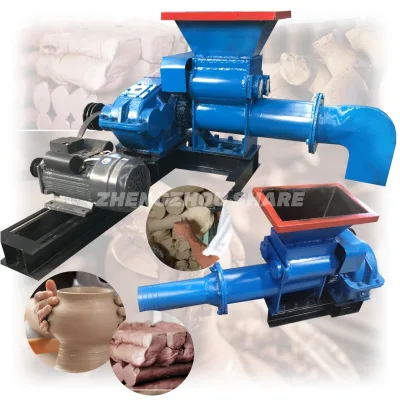


Fully Automatic Vacuum Extruder for China Earth Mud Soil Clay Brick Making Machine
$50000.00 - $60000.00
MOQ: 1 Sets


High Quality Clay Brick Extruder Automatic Block Making Machine Soil Block Machine
$55000.00 - $58500.00
MOQ: 1 Sets


Comprehensive Sourcing Guide
Automatic Clay Soil Screw Extruder Sourcing Guide
The Automatic Clay Soil Screw Extruder serves as the critical heart of modern brick production lines, transforming raw mud and clay into uniform extruded shapes for hollow blocks or solid bricks. Buyers must recognize that these machines operate on a vacuum extrusion principle, utilizing high-pressure screws to remove air and compact the material before it passes through a die. The observed market data indicates a wide variance in machine scale, ranging from compact mobile units to heavy-duty industrial systems weighing up to 20,000 kilograms, each designed for specific production capacities and brick dimensions.
Procurement decisions should prioritize the specific raw material compatibility and the desired output format, as the machine's internal screw design and vacuum degree directly influence the final brick density and structural integrity. While some listings highlight a vacuum degree of 92% and extrusion pressures up to 3.5 MPa, other configurations may offer different pressure ratings or screw speeds. Buyers must verify that the selected model matches their specific clay composition and the required brick sizes, such as the 400x200x200 mm or 240x115x90 mm formats, to ensure the equipment delivers the intended production efficiency without excessive wear on the auger components.
Product Scope and Observed Listing Signals
The current market for automatic clay soil screw extruders presents a diverse range of configurations, with observed listing prices spanning from approximately 1,099 to over 116,000 USD, reflecting significant differences in capacity, automation levels, and component quality. Minimum order quantities are consistently listed as one unit, allowing for single-item purchases, yet the physical footprint varies drastically from compact mobile units to massive installations with dimensions exceeding seven meters in length. This price and size disparity necessitates a careful review of the product model, such as the KLJ56/50-s or SR-LNJ, to understand the specific power requirements and physical space needed for installation.
Buyers should scrutinize the listed attributes regarding customization, as some suppliers offer fully customized solutions while others provide standard non-customized models with fixed specifications. The presence of key selling points like "Easy to Operate" and "High Efficiency" suggests a focus on user-friendly interfaces and throughput optimization, but these claims must be validated against the actual power ratings, which can range from 3,000 watts for smaller units to 250 kilowatts for large dual-stage systems. Understanding the distinction between the upper stage mixing power and the bottom stage extrusion power is essential for matching the machine to the available electrical infrastructure and production goals.
Technical Specifications to Verify
Technical verification must begin with the core mechanical components, specifically the auger wear material and the screw rotation speed, which are critical for maintaining consistent output and minimizing downtime. The observed data points to a chromium alloy auger wear material and a bottom extrusion screw speed of 20 RPM, parameters that directly impact the machine's ability to handle abrasive clay mixtures without rapid degradation. Buyers should also confirm the maximum extrusion pressure capabilities, noting that while some specifications list 3.5 MPa, others may indicate a maximum of 2.5 MPa, a difference that affects the density and strength of the final brick product.
Dimensional and power specifications require precise alignment with the factory layout and electrical supply capabilities, as the total weight can reach 20,000 kg and dimensions may extend to 7000x5500x2600 mm for larger models. The voltage requirement is typically 380V at 50Hz, but the power consumption for the mixing and extrusion stages can vary significantly, with some units requiring 90 kW for mixing and 160 kW for extrusion. It is imperative to verify the maximum extrusion width and height limits, which are often capped at 120 mm and 60 mm respectively, to ensure the machine can produce the specific brick profiles required for the project.
Compliance and Safety Documentation
Compliance verification is a non-negotiable step in the procurement process, with CE certification being a standard requirement for machines originating from major manufacturing hubs like Jiangsu and Henan in China. This certification indicates that the equipment meets essential health, safety, and environmental protection requirements for the European market, but buyers must request the specific test reports and documentation to confirm that the machine has undergone rigorous safety assessments. The presence of a machinery test report provided by the supplier serves as a tangible proof of performance, yet it should be cross-referenced with the specific model number to ensure the data corresponds to the exact unit being purchased.
Safety documentation must also cover the warranty terms for core components, which are typically offered for a period of one year, covering critical parts like the engine and motor. Buyers should ensure that the supplier provides clear instructions on the safe operation of the vacuum extruder, including protocols for handling high-pressure systems and rotating machinery. The absence of specific safety standards in the listing does not imply non-compliance, but it requires the buyer to explicitly request the relevant safety manuals and compliance certificates before finalizing the order to mitigate operational risks.
Cost Drivers and Commercial Terms
The total cost of ownership for an Automatic Clay Soil Screw Extruder is driven by several factors beyond the initial purchase price, including the complexity of the customization, the quality of the core components, and the specific power requirements of the model. While the observed price range is broad, the inclusion of high-efficiency features and advanced automation often commands a premium, whereas basic mobile units with standard specifications may be more affordable. Buyers must evaluate whether the higher upfront cost of a larger, more powerful machine justifies the long-term gains in production volume and reduced labor costs associated with automatic operation.
Commercial terms should be carefully negotiated to include clear definitions of the delivery scope, particularly regarding the shipping of heavy machinery that can weigh up to 20,000 kg. The production capacity, often measured in pieces per eight hours, is a key metric for calculating the return on investment, yet suppliers may list this as "Other" or variable depending on the raw material properties. It is essential to clarify the lead time and the specific conditions under which the warranty applies, ensuring that the supplier provides adequate support for the engine and motor components to prevent costly interruptions in the brick production line.
Supplier Qualification and Quality Control
Supplier qualification requires a thorough assessment of the manufacturer's location and production history, with significant clusters of suppliers found in Jiangsu and Henan provinces, China. Buyers should verify the brand name and the specific model number, such as SHARE or SR-LNJ, to ensure the supplier has a track record of producing reliable vacuum extruders for clay brick making. The availability of a machinery test report and the provision of core component warranties are strong indicators of a supplier's commitment to quality, but these documents must be reviewed to confirm they cover the specific machine configuration being ordered.
Quality control processes should be validated through the supplier's ability to provide detailed specifications for the raw material handling and the final product dimensions. The machine's ability to produce various brick sizes, from 400x100x200 mm to 230x220x115 mm, demonstrates its versatility, but the buyer must ensure the supplier has the technical expertise to adjust the machine for different clay types and moisture contents. Engaging with the supplier to discuss the customization options and the specific requirements of the production line can help identify potential risks and ensure that the delivered equipment meets the operational standards of the facility.
Long-Term Procurement Checks
Long-term procurement success depends on establishing a robust relationship with the supplier for ongoing maintenance, spare parts availability, and technical support. The warranty of one year for core components like the engine and motor is a baseline, but buyers should negotiate extended support agreements to cover the high-wear areas such as the auger and the vacuum system. Regular maintenance schedules should be developed in consultation with the supplier to ensure the machine continues to operate at peak efficiency, maintaining the 92% vacuum degree and the specified extrusion pressure over time.
Buyers must also plan for the eventual replacement of wear parts, such as the chromium alloy auger, which will degrade with continuous use in abrasive clay environments. Establishing a clear protocol for ordering spare parts and receiving technical guidance on troubleshooting common issues will minimize downtime and extend the lifespan of the equipment. Regular performance audits should be conducted to verify that the machine continues to meet the specified brick dimensions and production capacity, ensuring that the investment in the Automatic Clay Soil Screw Extruder delivers consistent value throughout its operational life.
FAQs
What is the maximum extrusion pressure for this machine?
The maximum extrusion pressure reaches 3.5 MPa for the upper stage mixing process. This high pressure ensures dense brick formation from clay raw materials. The bottom extrusion stage operates at 2.5 MPa to maintain consistent output quality during continuous production cycles.
Can the machine produce different brick sizes?
Yes, the machine supports multiple brick dimensions including 400x100x200 mm and 240x115x90 mm. It also handles other custom sizes up to 120 mm width and 60 mm height. This flexibility allows manufacturers to meet diverse construction requirements efficiently.
Which certifications does the automatic extruder hold?
The equipment carries CE certification to ensure compliance with European safety standards. It also meets ISO 9001:2000 quality management requirements. These certifications verify the machine's reliability and adherence to international manufacturing protocols for industrial buyers.
How much power does the mixing stage consume?
The upper stage mixing motor consumes 90 Kw of electrical power. The bottom extrusion stage requires 160 Kw to drive the screw rotation. This total power setup operates on 380v voltage at 50Hz frequency for stable industrial performance.
What is the total weight of the vacuum extruder?
The complete machine weighs 20,000 Kg, indicating a robust industrial build. Some smaller models weigh around 200 Kg depending on capacity. The heavy weight ensures stability during high-pressure extrusion of mud and clay materials for brick production lines.
Where is the automatic clay extruder manufactured?
The machine originates from Jiangsu, China, with some models from Henan, China. These locations are known for specialized machinery manufacturing. Buyers can expect direct sourcing from established industrial hubs with verified production capabilities for export.
Is customization available for the screw extruder?
Customization is available for specific production needs and capacity requirements. Some models offer non-customized standard configurations. Buyers can request tailored solutions for auger wear materials or dimensions to match their specific clay brick making processes.