Source Automatic Chocolate Depositor Making Line for Candy, Biscuit, and Ice Cream
Find 30 Automatic Chocolate Depositor Making Line options for candy, biscuit, and ice cream production. Compare specifications like capacity, power source, and customization to select the right equipment for your manufacturing needs.
Key considerations
Products List

Automatic Chocolate Depositor Machine Chocolate Bar Making Depositing Pouring Production Line
$14000.00 - $20000.00
MOQ: 1 Sets


Cheap Price Rotary Chocolate Chips Depositor Avaliable Chocolate Making Line
$14000.00 - $14500.00
MOQ: 1 set


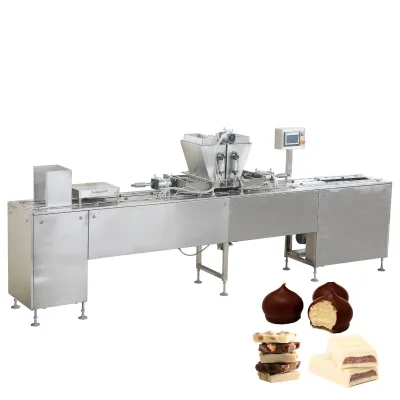

CD200 Multi-Functional Chocolate Depositing Line Chocolate Making Machines
$23000.00 - $60000.00
MOQ: 1 Pieces


Automatic Chocolate Despositor Moulding Line Chocolate Production Line
$30000.00 - $40000.00
MOQ: 1 Sets


Gusu Full Automatic Chocolate Production Line Depositing Machine for Making Chocolate
$39800.00 - $48000.00
MOQ: 1 Pieces


Automatic Chocolate Process Machines Chocolate Moulding Line Chocolate Depositing Machine
$100000.00 - $105000.00
MOQ: 1 Pieces

High Capacity Chocolate Depositor Machine for Efficient Production Lines
$12000.00 - $45000.00
MOQ: 1 Pieces

Semi-Automatic Chocolate Moulding Line Chocolate Depositing Machine
$12500.00 - $15500.00
MOQ: 1 Pieces


Comprehensive Sourcing Guide
Automatic Chocolate Depositor Making Line Sourcing Guide
Navigating the market for an Automatic Chocolate Depositor Making Line requires a clear understanding of the specific machinery capabilities and the diverse configurations available to manufacturers. The observed product landscape includes units designed for high-volume production of chocolate bars, center-filled chocolates, and various confectionery shapes like hawthorn balls and chocolate blocks. Buyers must distinguish between machines tailored for specific depositing tasks, such as chocolate chips or drops, and those offering multifunctional capabilities to handle a broader range of products including gummy candies, biscuits, and ice cream.
The procurement process involves evaluating machines that operate with electric power sources and utilize PLC control methods to ensure precision in the thermal processing of chocolate. These systems often feature automatic grades with varying piston configurations, such as 2*8 piston setups, to manage different production speeds ranging from 4 to 18 strokes per minute. Understanding the distinction between customized and non-customized models is critical, as some units offer extensive shape choices exceeding 100 varieties while others are fixed to specific standard dimensions and functions.
Product Scope and Observed Listing Signals
The product scope for automatic chocolate depositor lines spans a wide spectrum of operational capacities and physical dimensions, reflecting the diverse needs of confectionery manufacturers. Listings indicate that machines can be configured with specific mould sizes, such as 275*175mm, or larger standard dimensions like 16700x1210x2500mm, depending on the intended output volume. Buyers should note that the observed price range for these units varies significantly, from approximately 7,500 to 290,000 USD, which often correlates with the complexity of the control systems, the number of hoppers, and the overall throughput capacity of the equipment.
Listing signals reveal that many units are designed with food-grade materials, specifically utilizing 304 stainless steel for contact parts and food-grade PU for conveyor materials to ensure hygiene and durability. The observed specifications include varying piston diameters, such as 18mm, and power requirements for pouring and piston operations that must align with the facility's electrical infrastructure, with some units requiring 308V power supplies. It is essential to verify whether the listed model, such as the MOS-8 or YLQ, matches the specific production requirements, as some listings describe batch depositors while others focus on continuous automatic lines.
Technical Specifications to Verify
When evaluating technical specifications, buyers must prioritize the control architecture and mechanical precision of the depositor to ensure consistent product quality. The majority of advanced units in the market utilize PLC control methods for forming and packing, which allows for precise management of the depositing process and minimizes human error. Verification should include confirming the number of hoppers, typically ranging from two, and the specific piston configuration, such as the 2*8 setup, to ensure the machine can handle the required viscosity and volume of chocolate without clogging or inconsistent filling.
Physical dimensions and power consumption are equally critical factors that influence installation and operational efficiency. Buyers should cross-reference the listed standard dimensions, such as 11406401440mm or 1200mm variants, against their factory floor plans to ensure adequate space for operation and maintenance. Additionally, the power ratings for the piston and pouring mechanisms, often cited as 0.4kw and 0.75kw respectively, must be compatible with the plant's electrical capacity to prevent overloads and ensure stable performance during high-speed operations.
Compliance and Safety Documentation
Compliance and safety documentation are non-negotiable elements when sourcing industrial food processing equipment, particularly for chocolate manufacturing lines. The observed listings frequently mention certifications such as ISOCE and CE, which indicate adherence to specific international safety and quality standards. Buyers must request and verify these certification documents directly from the supplier to ensure that the machinery meets the regulatory requirements of their target market, as the presence of a certification claim does not guarantee that every listed unit has undergone the necessary third-party testing.
Safety features and operational protocols are often integrated into the machine design through PLC controlling systems that manage the forming and packing processes. It is vital to confirm that the machinery test report is provided for each unit, as this document offers empirical evidence of the machine's performance and safety under load. Without these reports, buyers risk acquiring equipment that may not perform reliably or safely, potentially leading to production delays or safety incidents in the manufacturing environment.
Cost Drivers and Commercial Terms
The cost of an Automatic Chocolate Depositor Making Line is driven by several key factors, including the level of customization, the complexity of the control system, and the materials used in construction. Units offering extensive customization options, such as the ability to produce over 100 different chocolate shapes, typically command higher prices due to the engineering required to support such versatility. Conversely, non-customized models with fixed specifications may offer a more cost-effective solution for manufacturers with standardized production needs, though they lack the flexibility to adapt to new product lines.
Commercial terms regarding packaging and shipping are also significant considerations in the total cost of ownership. Most observed listings indicate that machines are packed in wooden cases, which provides robust protection during transit but adds to the overall shipping weight and cost. Buyers should clarify the origin of the equipment, as many units are sourced from China, specifically Ningbo City, and verify the lead times and shipping terms associated with these locations to accurately budget for the procurement timeline and logistics expenses.
Supplier Qualification and Quality Control
Supplier qualification is a critical step in the procurement process, requiring a thorough assessment of the manufacturer's ability to deliver reliable and high-quality machinery. Buyers should verify the supplier's track record by reviewing provided machinery test reports and ensuring that the claimed certifications, such as CE and ISOCE, are valid and applicable to the specific model being purchased. It is important to treat product attributes as observations rather than universal claims, meaning that not every listed product may satisfy every certification or performance standard mentioned in the general listing.
Quality control measures should be established through clear communication regarding the customization options and the specific technical requirements of the production line. Since some listings indicate that customization is available while others specify non-customized models, buyers must explicitly confirm the scope of customization before finalizing the order to avoid discrepancies between expectations and delivery. Engaging with suppliers who provide detailed specifications and are transparent about their manufacturing processes helps mitigate the risk of receiving equipment that does not meet the necessary operational standards.
Long-Term Procurement Checks
Long-term procurement checks involve establishing a framework for ongoing maintenance, spare parts availability, and performance monitoring of the Automatic Chocolate Depositor Making Line. Buyers should verify the availability of replacement parts, such as pistons and conveyor belts, to ensure minimal downtime during the machine's operational life. The use of durable materials like 304 stainless steel and food-grade PU suggests a focus on longevity, but regular maintenance schedules must be implemented to preserve the machine's efficiency and hygiene standards over time.
Performance monitoring should include regular checks of the PLC control systems and the mechanical components to ensure they continue to operate within the specified parameters, such as the 10-18 strokes per minute speed range. Buyers must also stay informed about any updates to industry standards or safety regulations that may affect the operation of their equipment. By maintaining a proactive approach to procurement and maintenance, manufacturers can ensure that their chocolate depositor lines remain a reliable asset in their production facilities for years to come.
FAQs
What materials are used in automatic chocolate depositor making lines?
These machines primarily utilize 304 stainless steel for structural components to ensure hygiene and durability. Conveyor materials are typically food-grade PU to maintain product safety. This combination meets ISOCE and CE certification standards for food processing equipment.
Can the Automatic Chocolate Depositor Making Line be customized?
Customization is available for many models to suit specific production needs. Buyers can choose from more than 100 chocolate shapes. The system supports PLC control for forming and packing, allowing adjustments to meet unique operational requirements.
What is the production capacity of these depositor machines?
Production capacity varies by model, with some units operating at 4-6 pieces per minute. Other configurations achieve a maximum speed of 10-18 strokes per minute. The exact output depends on the specific machine type and selected operational parameters.
Which applications are supported by automatic chocolate depositor making lines?
These lines support a wide range of applications including candy, chocolate, chips, biscuits, popcorn, ice cream, and donuts. Specific models are suitable for chocolate gummy candy depositing. They can produce chocolate bars, hawthorn balls, blocks, and center-filled chocolates.
How is the Automatic Chocolate Depositor Making Line controlled?
The system is controlled via PLC technology for precise forming and packing operations. Power sources are electric, with specific components like pistons and pouring mechanisms having defined power ratings. This ensures consistent performance and reliable automation throughout the manufacturing process.
What certifications do automatic chocolate depositor making lines have?
These machines typically hold ISOCE and CE certifications, ensuring compliance with international safety and quality standards. Machinery test reports are provided to verify performance. These credentials are essential for buyers requiring validated equipment for commercial food production environments.