Source automatic co2 laser printer for food, apparel, and packaging
Find 30 Automatic CO2 Laser Printer for Food and Apparel options with varying power and marking speeds. Compare specifications like wavelength, cooling systems, and customization availability to select the right machine for your production needs.
Key considerations
Products List

CO2 Laser Marking Machine / Laser Printer for Beverage, Food & Pharmaceutical Packaging
$1600.00 - $3000.00
MOQ: 1 Pieces


CO2 Flying Printing Machine & Laser Printer for Wood/Food/Water Bottles
$6000.00 - $8860.00
MOQ: 1 Pieces


100W CO2 Laser Printer for High-Speed Expiry Date Marking on Food and Beverage
$2200.00 - $3400.00
MOQ: 1 Pieces

60W CO2 Laser Printer for Expiry Date and Manufacturing Date Marking on Food
$2200.00 - $3400.00
MOQ: 1 Pieces

OEM ODM 30W CO2 Laser Printing Machine for Beverage Food Production Line
$2704.00 - $3380.00
MOQ: 5 Sets


$3500.00 - $4500.00
MOQ: 1 Pieces

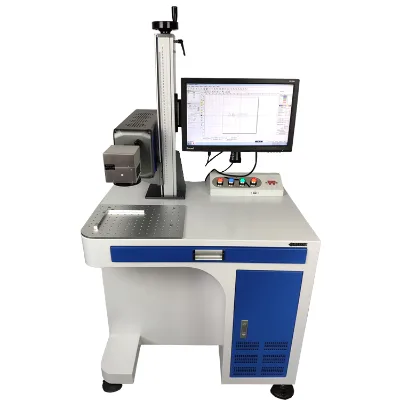


Laser Coding Machine CO2 Printer for Industrial Use with FDA Certification
$2690.00 - $2890.00
MOQ: 1 Pieces


Comprehensive Sourcing Guide
Automatic CO2 Laser Printer for Food and Apparel Sourcing Guide
Sourcing an Automatic CO2 Laser Printer for Food and Apparel requires a careful distinction between true CO2 technology and other laser types that may appear in broad search results. The core keyword suggests a need for non-contact marking on sensitive substrates, where the thermal energy of a CO2 beam interacts with organic materials to create permanent, high-contrast marks. In the context of food packaging and textile apparel, this technology is primarily valued for its ability to mark without inks, solvents, or ribbons, ensuring compliance with hygiene standards and reducing operational consumable costs. Buyers must recognize that while "CO2" is the specified technology, market listings often mix in fiber or UV lasers, which operate on different physical principles and are unsuitable for the specific absorption characteristics of plastics, paper, and natural fibers.
The procurement process for these machines involves navigating a fragmented supplier landscape, particularly within manufacturing hubs in China. Observed data indicates a significant volume of listings, with approximately 30 products currently available, suggesting a competitive but potentially noisy market. Prices for these units range widely from $1,600 to $9,000 USD, reflecting variations in power output, automation level, and brand reputation. The minimum order quantity (MOQ) is typically low, ranging from 1 to 5 units, which facilitates trial purchases for small-to-medium enterprises. However, the diversity in specifications means that a direct price-to-feature comparison is difficult without rigorous technical verification, making the initial screening phase critical for avoiding mismatched equipment.
Product Scope and Observed Listing Signals
The product scope for automatic CO2 laser printers in this sector is defined by their interaction with non-metallic materials. The supplied facts confirm that the applicable materials for these machines are strictly non-metallic, which aligns perfectly with the requirements for food packaging (cardboard, plastic films) and apparel (cotton, polyester, leather). The marking methods observed include scanning marking and mask pattern marking, indicating that the machines are capable of both dynamic vector engraving and static stencil-based high-speed production. This dual capability is essential for facilities that need to switch between custom variable data, such as expiry dates and barcodes, and fixed branding elements like logos or care labels.
Listing signals reveal a mix of technical classifications that buyers must interpret with caution. While the core keyword specifies CO2, some observed listings classify the laser as a "Fluid Laser" or "Gaseous Laser," which are technically accurate descriptions of the CO2 medium but may confuse buyers unfamiliar with laser physics. Other listings mention "Pulse Laser" or "Continuous Wave Laser" classifications, which refer to the emission mode rather than the gas medium. A critical observation is the discrepancy in wavelength specifications; while true CO2 lasers operate at 10.6 micrometers, some listed models cite wavelengths of 1064nm, 10.2um, or 9.3um. The 1064nm figure is characteristic of fiber or Nd:YAG lasers, not CO2, indicating that some listings may be mislabeled or represent hybrid systems. Buyers must verify the actual wavelength to ensure compatibility with their specific substrate materials.
Technical Specifications to Verify
When evaluating technical specifications, the laser output power is a primary determinant of marking speed and depth. Observed models range from 30W to 50W, with some listings specifying a power consumption of 500W-600W for the entire system. For food and apparel applications, a 30W to 50W CO2 laser is generally sufficient for surface marking on paper, wood, and fabrics. However, buyers should verify the actual laser output power versus the electrical input power, as efficiency varies by manufacturer. The marking range is another critical specification, with common desktop models offering an 110mm x 110mm area, which is customizable. For high-speed production lines, larger working areas or integrated conveyor systems may be required, so the physical footprint and automation interface must be confirmed.
Precision and speed metrics are equally important for maintaining production efficiency. The minimum character size and line width are key indicators of resolution; observed specifications list minimum font sizes of 0.3mm to 0.5mm and minimum line widths of 0.2mm. These figures are adequate for standard barcodes and text on packaging but may be insufficient for extremely fine micro-marking. The marking line speed is typically listed as less than 8m/s, with some models achieving 2m-3m/s. Buyers should also check the repeatability precision, which is observed to be around +0.001mm to -0.001mm, ensuring consistent mark placement across thousands of units. Additionally, the cooling system is predominantly air-cooled, which simplifies installation but requires adequate ventilation in the production environment to manage heat dissipation.
Compliance and Safety Documentation
Compliance with international safety standards is non-negotiable for industrial laser equipment. The most frequently observed standard in the listings is CE certification, which indicates conformity with health, safety, and environmental protection standards for products sold within the European Economic Area. Buyers must verify that the CE marking is accompanied by a valid Declaration of Conformity and that the machine meets the relevant Laser Safety Class requirements. Although some listings mention "SW-30W" as a standard, this appears to be a model-specific designation rather than a universal safety standard. It is crucial to ensure that the laser enclosure provides adequate interlocks and shielding to prevent exposure to Class 4 laser radiation, which is hazardous to eyes and skin.
Food safety and material compatibility are additional compliance considerations, particularly for food packaging applications. While the laser itself does not introduce chemicals, the marking process can generate fumes and particulates. Buyers should verify that the machine includes appropriate fume extraction systems or interfaces for external ventilation to maintain air quality in the workplace. For apparel, the laser marking should not compromise the structural integrity or flammability ratings of the fabric. Although specific test results are not provided in the general listings, buyers should request material-specific test reports from suppliers to confirm that the marking process does not cause excessive charring, melting, or degradation of sensitive textiles.
Cost Drivers and Commercial Terms
The cost of an automatic CO2 laser printer is influenced by several factors, including power output, automation features, and brand origin. The observed price range of $1,600 to $9,000 USD reflects this variability. Lower-priced units are likely basic desktop models with manual loading, while higher-priced units may include automated feeders, rotary attachments for cylindrical objects, or advanced software interfaces. The origin of the machine, primarily China, contributes to competitive pricing, but buyers should also consider the total cost of ownership, including maintenance, spare parts, and software updates. Models from specific regions like Wenzhou, Zhejiang, or Shanghai, China, may have different supply chain efficiencies that affect pricing and support availability.
Commercial terms such as packaging and shipping logistics are also significant cost drivers. Observed packing methods include wooden packages, cardboard boxes, and cartons, with dimensions like 81cm x 98cm x 140cm noted for some units. Wooden packaging is often required for international shipping to protect the delicate optical components, but it adds weight and potential customs duties. Buyers should clarify whether the quoted price includes freight, insurance, and import duties, as these can significantly impact the final landed cost. The MOQ of 1-5 units suggests that suppliers are flexible, but bulk purchases may negotiate better pricing or extended warranty terms. It is advisable to request a detailed breakdown of costs to avoid hidden fees related to customization or software licensing.
Supplier Qualification and Quality Control
Supplier qualification is critical to ensuring the reliability and longevity of the laser equipment. Buyers should prioritize suppliers who provide comprehensive technical documentation, including user manuals in multiple languages such as English, Persian, Russian, Japanese, and Korean. The availability of customized solutions is a positive indicator of supplier flexibility, allowing for tailored configurations to meet specific production needs. However, buyers must verify the supplier's manufacturing capabilities and quality control processes. Requesting factory audit reports or third-party verification can help assess the supplier's ability to maintain consistent quality standards.
Quality control should extend to the pre-shipment inspection of the machine. Buyers should verify that the laser source, galvanometer scanners, and control cards are from reputable brands and have been tested for performance. The observed specifications, such as pulse frequency ranges of 0-25kHz and marking depths of 0.01-0.05mm, should be validated through live demonstrations or video evidence. Additionally, buyers should inquire about the supplier's after-sales support structure, including the availability of remote technical assistance, spare parts inventory, and warranty terms. A supplier with a robust support network can minimize downtime and ensure that any technical issues are resolved promptly, protecting the buyer's investment.
Long-Term Procurement Checks
Long-term procurement success depends on the supplier's ability to provide ongoing support and updates. Buyers should establish a clear communication channel for technical support and ensure that the supplier offers firmware updates to enhance functionality and security. The customization options available, such as specific marking patterns or software integrations, should be documented in the contract to prevent scope creep or additional charges later. Regular maintenance schedules should be agreed upon, including cleaning of optical components and calibration of the laser system, to maintain marking quality over time.
Furthermore, buyers should monitor the evolving regulatory landscape for laser equipment and food safety standards. As regulations change, the supplier should be able to provide guidance on compliance updates or necessary modifications to the machine. Building a long-term relationship with a reliable supplier can also facilitate access to new product releases and technological advancements. By maintaining a proactive approach to supplier management and quality assurance, buyers can ensure that their automatic CO2 laser printers continue to meet production demands and regulatory requirements for years to come.
FAQs
What laser classification is used in these marking machines?
The machines utilize fluid laser and gaseous laser classifications. Specific models operate as continuous wave or pulse lasers with visible wavelengths suitable for nonmetal materials like food packaging and apparel.
Can these machines handle custom packaging requirements?
Yes, customization is available for various product needs. Buyers can request specific packing types such as wooden packages, cartons, or cardboard boxes depending on the supplier and model selected.
Which marking methods are supported by these devices?
The devices support scanning marking and mask pattern marking methods. They are designed for functions like expiry date and barcode coding with minimum line widths as small as 0.2mm.
How is the cooling system managed in these units?
The units employ air cooling systems for thermal management. This design ensures stable operation without requiring external water cooling infrastructure, making them suitable for desktop or industrial setups.
What is the typical power consumption for these lasers?
Power consumption ranges between 500W and 650W for most models. Specific units like the Vc-30W series consume around 500W to 600W while delivering 30W laser output power.
Which certifications are available for these laser machines?
Some models carry CE certification standards. Buyers should verify specific product standards like SW-30W or CE compliance when sourcing from manufacturers in Wenzhou, Shanghai, or Guangzhou.
Can the marking range be customized for specific needs?
Yes, the marking range is customizable to fit different production lines. Standard ranges include 110mm by 110mm, but suppliers can adjust dimensions based on the specific application requirements.