Source Automatic Food Shop Sealing Machine for Tea Shops, Milk Tea Stores, and Coffee Shops
Browse 30 listings for an Automatic Food Shop Sealing Machine covering cup, tray, and bag sealing applications. Buyers can compare sealing materials, model sizes, customization options, and packaging formats, then evaluate electric-driven sealing machines suited to milk tea shops, coffee shops, and beverage or snack retailers.
Key considerations
Products List


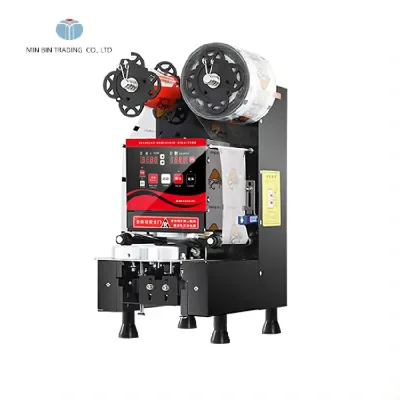


Automated packaging sealer for intelligent sealing and fast delivery options
$230.00 - $245.00
MOQ: 1 Sets

Ready Meal Instant Food Tray Sealer Packing Machine for Supermarket Food Retailer
$18000.00 - $25000.00
MOQ: 1 Pieces

Ready Meal Instant Food Tray Sealer Packaging Machine for Supermarket Retailer
$47000.00 - $75000.00
MOQ: 1 Pieces
Comprehensive Sourcing Guide
Automatic Food Shop Sealing Machine Sourcing Guide
Sourcing an Automatic Food Shop Sealing Machine requires a careful balance between operational efficiency, material compatibility, and long-term reliability. These machines are essential for maintaining product freshness, preventing leakage, and ensuring a professional presentation for a wide variety of consumables. Buyers must navigate a market where specifications vary significantly based on the specific type of packaging material and the nature of the product being sealed. Understanding the technical nuances of sealing mechanisms, from heat sealing to induction sealing, is critical for selecting equipment that aligns with daily throughput requirements and budget constraints.
The procurement process involves evaluating not just the machine’s core functionality but also its integration into existing workflows. Factors such as ease of operation, maintenance accessibility, and after-sales support play pivotal roles in determining the total cost of ownership. Buyers should prioritize machines that offer clear operational interfaces and robust construction, as these features directly impact staff training time and downtime frequency. By focusing on verified technical specifications and supplier credibility, purchasers can mitigate risks associated with equipment failure and ensure consistent sealing quality across diverse product lines.
Product Scope and Observed Listing Signals
The observed market for automatic sealing machines encompasses a broad spectrum of applications, ranging from food and beverage to personal care and cleaning products. Listings indicate suitability for sealing items such as tea, rice, flour, snacks, fish, meat, vegetables, fruits, dairy products, hair care items, skin care products, cosmetics, oil, and various cleaning detergents. This versatility suggests that many modern sealing units are designed with adaptable mechanisms capable of handling different container shapes and sizes. Buyers should verify that the specific model selected is compatible with their primary product categories, as some machines may be optimized for rigid containers while others excel with flexible pouches or bottles.
Material compatibility is a key signal in product listings, with observed sealing materials including PP, PE, PET, and PS. These polymers are common in food packaging, and the machine’s heating element must be calibrated to melt these specific plastics without burning or failing to create a hermetic seal. Additionally, some listings highlight suitability for milk tea shops and coffee shops, indicating a focus on cup sealing applications which often require specific lid attachment mechanisms. Buyers must cross-reference the machine’s specified sealing length and forming function with their actual packaging dimensions to avoid mismatches that could lead to seal failures or excessive material waste.
Technical Specifications to Verify
Dimensional accuracy and physical footprint are critical considerations for shop floor planning. Observed standard dimensions for certain models include lengths ranging from 710mm to 2100mm, widths from 600mm to 900mm, and heights from 870mm to 2000mm. These variations reflect differences in automation levels, such as whether the machine includes automatic forming, filling, and sealing capabilities or is limited to sealing only. Buyers must measure their available workspace carefully to ensure the machine fits without obstructing workflow. It is also important to verify the driven type, with electric motors being the standard, to ensure compatibility with local power infrastructure and voltage requirements.
The functional capabilities of the machine, such as forming, filling, and sealing, determine its role in the production line. Some models are designed for box molding or specific forming species, while others focus solely on sealing existing containers. The sealing length, observed in some listings as 90mm or 95mm, must match the width of the packaging material being used. Buyers should also consider the machine’s forming function; if the goal is to create custom packaging from raw materials, a machine with forming capabilities is necessary. Conversely, for pre-made containers, a simpler sealing unit may suffice, offering cost savings and reduced complexity.
Compliance and Safety Documentation
Safety and regulatory compliance are non-negotiable aspects of industrial equipment procurement. While specific certification statuses may vary by supplier and region, buyers should insist on documentation that confirms adherence to relevant electrical and mechanical safety standards. In many markets, CE certification is a common benchmark for machinery safety, indicating that the equipment meets EU health, safety, and environmental protection requirements. Buyers must verify that the supplier can provide valid certificates and that the machine’s design includes necessary safety features, such as emergency stop buttons and protective guards, to prevent operator injury.
Documentation should also cover the machine’s operational guidelines and maintenance schedules. Clear instructions in English or the buyer’s local language are essential for ensuring that staff can operate the equipment safely and effectively. Buyers should request detailed manuals that outline troubleshooting procedures, recommended cleaning agents, and spare parts lists. This documentation is crucial for minimizing downtime and extending the machine’s service life. Additionally, verifying the origin of the machine, with many units originating from regions like Shanghai or Hangzhou in China, can help buyers assess the supplier’s manufacturing capabilities and quality control processes.
Cost Drivers and Commercial Terms
The price range for automatic sealing machines is extensive, observed from approximately $80 to $700,000, reflecting the vast difference between simple manual-assist units and fully automated, high-speed production lines. Several factors drive this cost variation, including the machine’s automation level, material construction, and additional features such as intelligent control systems or integrated filling mechanisms. Buyers must align their budget with their actual production needs, avoiding over-investment in features that will not be utilized or under-investing in capacity that will bottleneck operations. Understanding the total cost of ownership, including energy consumption and maintenance costs, is essential for accurate financial planning.
Commercial terms, such as minimum order quantity (MOQ) and packaging, also influence the procurement decision. Observed MOQs are often low, starting at just one piece, which allows for pilot testing and small-scale adoption. However, buyers should negotiate terms carefully, especially regarding shipping and installation. Packaging methods, such as wooden cases or free fumigation packaging, can affect shipping costs and customs clearance times. Buyers should clarify who is responsible for installation and training, as these services can add significant value and reduce the risk of operational errors during the initial deployment phase.
Supplier Qualification and Quality Control
Supplier qualification is a critical step in ensuring the reliability of the purchased equipment. Buyers should assess the supplier’s reputation, manufacturing capabilities, and after-sales service provisions. Many suppliers offer online support, which can be valuable for troubleshooting and remote diagnostics. However, buyers should also inquire about the availability of local technicians or spare parts networks to minimize downtime in case of hardware failures. Verifying the supplier’s history and customer reviews can provide insights into their responsiveness and the long-term performance of their machines.
Quality control measures implemented by the supplier directly impact the machine’s durability and performance. Buyers should request information about the materials used in construction, such as stainless steel or other corrosion-resistant alloys, which are essential for hygiene and longevity in food and beverage applications. Additionally, understanding the supplier’s testing procedures before shipment can provide assurance that the machine meets specified performance standards. Buyers may also consider third-party inspections or factory audits to verify the supplier’s quality management systems and production processes, ensuring that the machine delivered matches the agreed-upon specifications.
Long-Term Procurement Checks
Long-term procurement success depends on establishing a sustainable relationship with the supplier and ensuring ongoing support for the equipment. Buyers should prioritize suppliers that offer comprehensive after-sales services, including warranty coverage, technical support, and availability of spare parts. A clear warranty policy can protect against defects and premature failures, while accessible spare parts ensure that maintenance can be performed quickly without long delays. Buyers should also consider the machine’s energy efficiency and ease of maintenance, as these factors will impact operational costs over time.
Regular maintenance and periodic performance checks are essential for extending the machine’s lifespan and maintaining sealing quality. Buyers should develop a preventive maintenance schedule that includes cleaning, lubrication, and inspection of critical components such as heating elements and sensors. Training staff on proper operation and maintenance procedures can prevent misuse and reduce the risk of accidental damage. By investing in proper training and maintenance, buyers can maximize the return on their investment and ensure that the automatic sealing machine continues to meet production demands efficiently and reliably.
FAQs
How does an Automatic Food Shop Sealing Machine work?
The machine automatically seals cups, boxes, or bags after the container is placed on the sealing platform. Once a container is positioned, the machine cuts the film and applies heat to bond the sealing material to the rim. Models driven by electric systems can handle plastic, paper, bamboo, and wood packaging materials, with sealing actions controlled by simple operation settings.
What sealing materials are compatible with these machines?
Common sealing materials include PP, PE, PET, and PS films, depending on the model. Machines designed for shops such as milk tea or coffee outlets typically seal cups with these plastic films. Some listed models also support flexible container sealing for bags made of plastic or paper, so you should confirm the sealing material with each supplier before ordering.
Which applications suit an Automatic Food Shop Sealing Machine?
These machines suit shops handling drinks, dairy products, tea, coffee, snacks, and baked or prepared foods. Listed applications also extend to rice, flour, seasoning, oil, cosmetics, and detergent packaging. For a food shop, cup sealing for milk tea, coffee, and beverages is the most common use, while box molding models suit pre-packed food containers.
Can I order a single unit for a small shop?
Yes, the listed minimum order quantity is 1 piece, so small shops can buy a single machine. Selling units are single items, which keeps ordering simple for trial purchases. Even at low quantities, customization is available, and suppliers provide online support after purchase, so confirm customization options and support terms before placing the order.
What should I check about machine dimensions before buying?
Check the footprint and height against your counter or floor space. Listed machines vary significantly, for example 850 x 850 x 1000mm and 710 x 600 x 870mm for smaller units, up to 2100 x 850 x 2000mm for larger lines. Measure the installation area, allow space for loading and unloading, and confirm shipping dimensions with the supplier.
How are the machines packed for shipping?
Machines are packed in wooden cases or wooden packing, with some listings specifying free fumigation treatment. Wooden packing protects the machine during international freight and satisfies common export handling practice. Because units can be heavy, confirm the packed weight, freight responsibility, and whether fumigation is included when requesting a quotation.
Can the machine be customized for my packaging?
Yes, customization is available on listed models. You can discuss your container type, such as bottles, boxes, cartons, or bags, along with sealing diameter or length, and packaging material. Provide samples or drawings of your cup or container so the supplier can confirm matching sealing dimensions, since sealing lengths like 90mm or 95mm are model-specific.
What after-sales support can I expect?
Listed suppliers provide online support after the sale, covering setup questions and troubleshooting remotely. Features such as easy operation and long service life are highlighted for shop environments. Before ordering, ask the supplier what online support covers, how spare parts are supplied, and whether remote guidance is available for installation and daily maintenance.