Source Automatic Food Vacuum Sealing Machine for Farms, Restaurants, and Home Use
Compare 30 automatic food vacuum sealing machines designed for food, beverage, and medical applications. These units feature rotary structures, pneumatic lifting, and multi-head filling valves to handle solid, liquid, and paste materials efficiently; compare the available evidence and request quotations based on your requirements.
Key considerations
Products List


Food Automatic Machinery for Packing S Sealing Vacuum Packaging Machine Price
$52000.00 - $68000.00
MOQ: 1 Sets


Food Chicken Packing Machines Automatic Filling Vacuum Sealing Machine with Good Service
$52000.00 - $68000.00
MOQ: 1 Sets

Factory Price Automatic Bag Vacuum Packing Sealer Sealing Food Packaging Filling Machine
$52000.00 - $68000.00
MOQ: 1 Sets


Vacuum Packaging Machines Sealer Vacuum Machine for Food Packaging
$58000.00 - $95000.00
MOQ: 1 Pieces


Automatic Sealer Machine/Servo Controlled vacuum Sealer/Vacuum Food Sealer
$10000.00 - $100000.00
MOQ: 1 Sets


Industrial Vacuum Packaging Machine Food Vacuum Sealing Machine Vacuum Sealer
$260.00 - $1500.00
MOQ: 1 Sets


Stable Vacuum Packing Machine Vacuum Packaging Sealer for Grain and Food Packing
$3789.84 - $4123.34
MOQ: 1 Pieces

High-Efficiency Packaging Machinery & Vacuum Sealer for Food Packaging Solutions
$3789.84 - $4123.34
MOQ: 1 Pieces


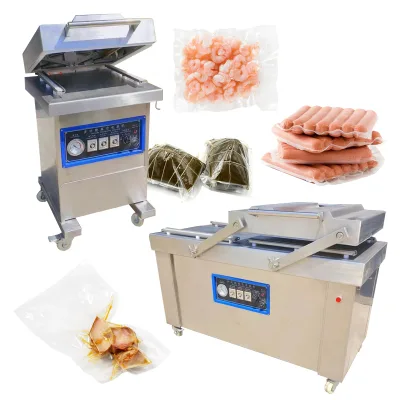
Comprehensive Sourcing Guide
Automatic Food Vacuum Sealing Machine Sourcing Guide
Buyers must first distinguish between rotary bag-forming units and dedicated vacuum packing machines, as the supplied data indicates distinct operational principles. The observed listings include automatic bag forming filling sealing machines that utilize pressure filling principles alongside specific models designed for vacuum packing with inflatable devices. Understanding this distinction is critical because the former often handles solid, liquid, and paste states in a continuous flow, while the latter focuses on removing air from pre-formed or formed bags to extend shelf life.
Procurement teams should verify whether the machine's driven type aligns with their facility's power infrastructure, as the market offers both electric and pneumatic options. The observed product range includes units driven by electric motors as well as those relying on pneumatic systems for specific forming functions. Selecting the correct drive mechanism ensures compatibility with existing plant utilities and influences the long-term maintenance requirements and operational noise levels within the production environment.
Product Scope and Observed Listing Signals
The observed product scope reveals a wide variance in capacity and structural design, ranging from compact units suitable for small industries to larger rotary systems with multi-room feeding capabilities. Listings indicate specific models like the DZD series and ZK series, which feature multi-head filling valves and pneumatic lifting structures for packaging containers. Buyers should note that while some units are designed for general food and beverage applications, others are specialized for dairy products and cosmetics, requiring different material handling approaches.
Market signals suggest that customization is available for many of these automatic machines, allowing buyers to tailor the equipment to specific packaging materials such as plastic film, foil, or pouches. The observed data highlights that machines can handle various object states including solids, liquids, and pastes, but the specific configuration depends on the chosen model and its forming species. Procurement teams must carefully match the machine's bag type capabilities, such as seal bags or blister forming, to their actual product requirements to avoid operational bottlenecks.
Technical Specifications to Verify
Technical verification must begin with the machine's physical dimensions and weight, as observed listings show significant variations in standard sizes and heavy weights up to 3000 kilograms. Buyers should confirm the exact footprint, such as the 260020001650mm or 280020001800mm configurations, to ensure the equipment fits within their allocated factory floor space. The weight of the unit is also a critical factor for foundation requirements and logistics planning, as heavier machines often imply more robust construction but require specialized handling during installation.
Operational speed and cycle times are equally vital, with observed data indicating speeds ranging from 6 to 8 cycles per minute for specific forming and sealing models. Buyers need to validate whether the machine's speed meets their production targets without compromising the quality of the vacuum seal or the integrity of the packaging material. Additionally, the presence of an inflatable device and the specific filling principle, such as pressure-based systems, must be confirmed to ensure the machine can handle the viscosity and volume of the intended food or chemical products effectively.
Compliance and Safety Documentation
Safety documentation is paramount when sourcing automatic machinery that handles food, medical, and chemical applications, requiring verification of material safety certifications. The observed listings mention stainless steel construction, which is a standard requirement for food-grade equipment to prevent contamination and ensure hygiene compliance. Buyers must request proof that all contact parts meet relevant food safety standards and that the machine's electrical components adhere to local safety regulations for industrial equipment.
Documentation should also cover the machine's condition and origin, as observed data points to new units manufactured in regions like Henan and Wenzhou. Procurement teams must ensure that the supplier provides comprehensive manuals detailing the operating procedures for the automatic grade and the specific functions like wrapping, sealing, and slitting. It is essential to verify that the machine comes with clear safety warnings and emergency stop protocols, especially given the high-speed rotary and pneumatic operations involved in the filling and sealing processes.
Cost Drivers and Commercial Terms
Cost drivers for these machines are heavily influenced by the level of automation, the complexity of the forming function, and the materials used in construction. The observed price range spans from 35 to 100,000 USD, reflecting the difference between basic sealing units and complex rotary systems with multi-head filling valves and advanced pneumatic lifting structures. Buyers should analyze whether the higher price points correlate with specific features like easy operation, multi-room feeding, or the ability to handle diverse object states like liquids and pastes.
Commercial terms must address the packaging of the machine itself, as observed listings indicate wooden packing or wood crates for shipping. This packaging requirement impacts the total landed cost and logistics planning, as heavy wooden crates require specialized handling and may incur additional freight charges. Buyers should also clarify the minimum order quantity, which appears to be one unit in the observed data, and negotiate terms regarding the delivery of the machine in its new condition to ensure it arrives without damage.
Supplier Qualification and Quality Control
Supplier qualification requires a thorough review of the manufacturer's origin and their track record in producing automatic bag forming and sealing machines. The observed data identifies suppliers from Henan and Wenzhou, regions known for manufacturing industrial machinery, but buyers must verify the specific factory capabilities and quality control processes for each model. It is crucial to confirm that the supplier can consistently deliver machines that meet the specified standards and that they have a history of supporting the specific applications like food, beverage, and medical sectors.
Quality control protocols should include pre-shipment inspections to verify the machine's condition and the accuracy of its technical specifications. Buyers should request detailed test results or performance data for the machine's speed, sealing integrity, and the functionality of its inflatable devices. Ensuring that the machine is delivered in new condition with all necessary components, such as the multi-head filling valves and pneumatic systems, is essential to prevent delays and ensure immediate operational readiness upon installation.
Long-Term Procurement Checks
Long-term procurement success depends on the availability of spare parts and the supplier's ability to provide ongoing technical support for the automatic machinery. Buyers should verify the lead times for critical components like sealing bars, pneumatic valves, and electric motors to minimize downtime during maintenance. The complexity of the machine, with its rotary structure and multi-function capabilities, necessitates a robust supply chain for parts to ensure continuous operation in food and beverage factories or farms.
Buyers must also establish a clear maintenance schedule and training program for their operators to maximize the machine's lifespan and efficiency. The observed features, such as easy operation and automatic grading, suggest that user training is a key factor in achieving optimal performance. Regular checks on the machine's condition, including the integrity of the stainless steel surfaces and the functionality of the sealing mechanisms, will help maintain high standards of food safety and production quality over the long term.
FAQs
What models are available for automatic food vacuum sealing machines?
Several models are available, including DZD-400/500/600-2SB, ZK12-161, ZK12-162, ZK10-241, MRZK10-200P, and DZL-420Y. These units support automatic bag forming, filling, and sealing. They handle solid, liquid, and paste materials. Customization is available to meet specific production needs. Buyers can select models based on required capacity and operational speed for their facility.
Can these machines handle different material states like liquids or pastes?
Yes, the machines are designed to process solid, liquid, and paste materials. They utilize pressure filling principles and multi-head valves for precision. The automatic grade ensures consistent operation across various product viscosities. This versatility makes them suitable for food, beverage, medical, and chemical applications. Operators can adjust settings to accommodate different material properties effectively.
What is the typical weight and dimension of these automatic machines?
Machine weights and dimensions vary by model. One common configuration weighs 3000kgs with dimensions of 1080*540*1780mm. Another model measures 2600*2000*1650mm, while a third is 2800*2000*1800mm. These units are packed in wood or wooden packing for safe transport. Buyers should verify specific dimensions based on the selected model and factory location.
Which industries can benefit from using automatic bag vacuum packing machines?
These machines serve the food and beverage, medical, chemical, and dairy product industries. They are also applicable in farms, restaurants, and home use. The equipment supports blister forming and sealing for cosmetics. Automatic operation reduces labor costs and increases throughput. Industries requiring hygienic, sealed packaging for various product types find these solutions highly effective.
How fast can an Automatic Food Vacuum Sealing Machine operate?
Operating speed depends on the specific model and configuration. One identified unit achieves 6-8 cycles per minute. The rotary structure and pneumatic lifting contribute to this efficiency. Electric and pneumatic driven types offer reliable performance. Buyers should consult specific model datasheets to confirm cycle rates for their intended production volume and packaging requirements.
What packaging materials are compatible with these automatic sealing machines?
The machines are compatible with plastic, plastic film, foil, and pouch materials. They support bag types such as seal bags and film packaging. The automatic bag forming function creates packages from roll stock. This flexibility allows users to choose materials based on product preservation needs. Compatible materials ensure secure sealing for food, beverages, and other sensitive goods.