Source Automatic Halal Chicken Slaughter Machine for Poultry Plants
Find 30 verified listings for the Automatic Halal Chicken Slaughter Machine designed for poultry processing lines. Buyers can compare automation levels, capacity ranges, and stainless steel specifications to select the right equipment for their facility.
Key considerations
Products List

Halal-Compliant Automatic Chicken Slaughtering Machine
$32500.00 - $68700.00
MOQ: 1 Pieces
Henger Manufacturing (Shandong) Machinery Technology Co., Ltd.

Halal-Compliant Automatic Sheep Slaughtering Machine
$3200.00 - $3500.00
MOQ: 1 Sets
Henger Manufacturing (Shandong) Machinery Technology Co., Ltd.

Halal Certified Cattle Slaughter Machine for Cow Processing
$2300.00 - $23000.00
MOQ: 1 Sets
Henger Manufacturing (Shandong) Machinery Technology Co., Ltd.

Automatic Slaughtering Machine for Cattle and Sheep
$2300.00 - $23000.00
MOQ: 1 Sets
Henger Manufacturing (Shandong) Machinery Technology Co., Ltd.


Automatical Chicken Slaughter Processing Line / Chicken Slaughter Machine
$10000.00 - $90000.00
MOQ: 1 Sets

300bph to 10000bph Halal Poultry Automatic Chicken Slaughtering Machine
$10000.00 - $90000.00
MOQ: 1 Sets

Small Chicken Slaughterhouse Equipped by The Automatic Chicken Slaughterhouse Machine
$20000.00 - $100000.00
MOQ: 1 Pieces
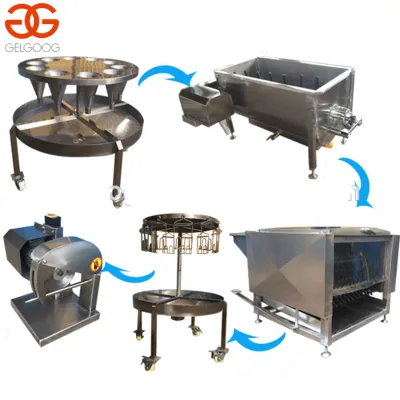

Halal Poultry Slaughter Automatic Chicken Slaughtering Machine for Sale
$11500.00 - $185000.00
MOQ: 1 Pieces

Halal Chicken Slaughter Machine Poultry Slaughtering Equipment Automatic Chicken Slaughterhouse
$5000.00 - $98000.00
MOQ: 1 Sets

Automatic Chicken Slaughter Line Poultry Equipment Halal Chicken Slaughter Machine for Sale
$5000.00 - $98000.00
MOQ: 1 Sets


Halal Poultry Slaughterhouse Equipment Chicken Slaughter Machine 500 Chickens Per Hour
$29000.00 - $30000.00
MOQ: 1 Pieces


Poultry Slaughter Line Chicken Slaughtering Machine with Scalding Machine
$2999.00 - $35000.00
MOQ: 1 Sets

High Quality Automatic Compact Poultry Halal Chicken Slaughter Line Chicken Machine
$12000.00 - $30000.00
MOQ: 1 Pieces

High Quality Automatic Compact Poultry Halal Chicken Slaughter Line Chicken Machine
$10000.00 - $50000.00
MOQ: 1 Pieces

High Quality Automatic Abattoir Chicken Slaughter and Meat Processing Equipment Machine
$10000.00 - $50000.00
MOQ: 1 Pieces


High-Efficiency and Fast-Moisture and Energy-Save Chicken Slaughter Machine
$12000.00 - $12600.00
MOQ: 1 Sets

Large-Capacity and Continuous-Operation and Efficient Chicken Slaughter Machine
$12000.00 - $12600.00
MOQ: 1 Sets

High Quality Automatic Chicken Slaughter Machine for Chicken Processing Plant
$12000.00 - $19000.00
MOQ: 1 Pieces
Comprehensive Sourcing Guide
Strategic Sourcing Guide for Automatic Halal Chicken Slaughter Machines
The global demand for processed poultry has driven a significant shift toward automated slaughter lines that ensure hygiene, efficiency, and adherence to religious dietary laws. For procurement professionals targeting the core keyword "Automatic Halal Chicken Slaughter Machine," the market presents a complex array of options ranging from semi-automatic units to fully integrated processing lines. Sourcing decisions in this sector require a rigorous understanding of technical specifications, material standards, and the specific operational capabilities of the machinery. This guide provides a disciplined framework for evaluating potential suppliers and equipment, ensuring that the final procurement aligns with both production capacity and regulatory compliance requirements.
Technical Specifications and Automation Levels
The foundation of any successful procurement in this sector lies in the precise definition of automation levels and mechanical specifications. The available market data indicates a clear distinction between semi-automatic and fully automatic configurations. Buyers must verify whether the machine operates as a semi-automatic unit or a fully automatic system, as this dictates the labor requirements and throughput consistency. For high-volume operations, automatic systems are often preferred to minimize human intervention and maintain a steady workflow.
Capacity is another critical technical parameter. The observed data suggests that machinery in this category can handle capacities ranging from 100 birds per hour (bph) up to 10,000 bph. This wide range implies that a single machine model may not fit all operational scales. Procurement teams must match the machine's stated capacity, such as the "as per slaughtering capacity" designation found in certain listings, with their actual production targets. Furthermore, the physical dimensions of the equipment vary significantly. Specific models have been observed with standard dimensions of approximately 380cm by 170cm by 160cm, while others measure around 250cm by 180cm by 150cm. These dimensions are vital for factory floor planning and logistics.
The power requirements for these machines are often flexible, described as "as per slaughtering capacity," which necessitates a detailed review of the electrical infrastructure at the destination site. The standard voltage observed in the market is 380V, a common industrial standard in many regions, but this must be confirmed against local grid capabilities. Additionally, the material composition is a non-negotiable aspect of food safety. The majority of high-quality units are constructed from Stainless Steel 304 or general Stainless Steel, ensuring resistance to corrosion and ease of cleaning. The presence of 304 Stainless Steel is particularly important for equipment that comes into direct contact with meat and water, as it meets food-grade safety standards.
Compliance, Certification, and Halal Standards
In the context of halal slaughter, compliance extends beyond mechanical efficiency to include strict adherence to religious and international food safety standards. While specific certification statuses can vary by supplier, the market frequently references certifications such as CE and ISO standards. Buyers should verify the presence of valid CE certification, which indicates compliance with European health, safety, and environmental protection standards. Similarly, ISO certifications, such as ISO 9001, are often cited as indicators of a manufacturer's commitment to quality management systems.
However, the term "halal" itself is a process and religious compliance issue rather than a mechanical certification. The machinery must be designed to facilitate the specific requirements of halal slaughter, such as precise stunning methods (where applicable and legally permitted) and clean cutting mechanisms that do not contaminate the meat. The keywords associated with these machines often include "Hala Chicken Slaughter Equipment," signaling their intended use. Buyers must ensure that the machine's design allows for the necessary hygiene protocols, including the ability to be thoroughly sanitized. The "Customized" nature of many slaughter lines allows for specific adjustments to meet local halal certification board requirements.
When evaluating compliance, buyers should look for explicit statements regarding the machine's suitability for "Slaughterhouse Plant" environments. The equipment must be capable of withstanding the rigorous cleaning cycles required in a certified facility. The presence of "Engineers Available to Service Machinery Overseas" is a strong indicator of a supplier's ability to support compliance issues, such as adjusting the machine for specific local regulations or providing training on halal-compliant operation.
Cost Drivers and Pricing Structures
Understanding the cost drivers for automatic halal chicken slaughter machines is essential for budgeting and financial planning. The price range in the market is extensive, spanning from $1 to $200,000 USD. This vast disparity is not indicative of a single product type but rather reflects the complexity of the system. A basic unit may fall at the lower end of the spectrum, while a fully automated, high-capacity line with advanced customization features will command a premium price.
Several factors influence the final cost. First, the level of automation is a primary driver; fully automatic lines require more sophisticated control systems and robotics than semi-automatic counterparts. Second, the material grade significantly impacts price. Machines constructed with 304 Stainless Steel are generally more expensive than those using standard stainless steel due to the superior corrosion resistance and longevity of the higher-grade material. Third, the capacity of the machine plays a crucial role. A line capable of processing 10,000 birds per hour requires more robust motors, larger frames, and more complex conveyor systems than a 100 bph unit.
Customization is another major cost factor. The market data highlights that "Customization" is available, and many models are described as "Customized." This means that buyers may incur additional costs for tailoring the machine to specific facility layouts, unique processing requirements, or specific brand integrations. The "Standard Package for Overseas Shipment" often includes essential components, but additional accessories or specialized packaging, such as "Packed in Film and Then Packed in Container," may add to the overall expense. Buyers should request detailed quotes that break down the cost of the base machine, customization fees, and shipping logistics to avoid hidden costs.
Typical Applications and Operational Scope
The operational scope of automatic halal chicken slaughter machines is broad, covering various stages of the meat processing industry. The primary application is clearly defined as "Meat Processing," specifically for poultry. The observed data lists applications for Chicken, Duck, and Goose, indicating that these machines are versatile and can handle multiple types of poultry. Some advanced models are also suitable for larger livestock, including Pig, Cattle, and Sheep, though the core focus for "halal chicken" equipment remains on poultry.
The process flow typically encompasses "Slaughter, Processing and Freezing." This suggests that the machine is not just a single unit but part of a larger system that may include scalding, plucking, evisceration, and chilling stages. The "High Efficiency" feature is a common attribute, designed to maximize throughput while minimizing waste. For buyers, this means selecting a machine that fits seamlessly into their existing workflow. Whether the operation is a small-scale local facility or a large "Slaughterhouse Plant," the machine must be adaptable.
The "Suit for" attributes in the market data often specify "Chicken Duck Goose Bird," reinforcing the poultry focus. However, the ability to process multiple species is a significant advantage for facilities that diversify their product lines. Buyers should verify that the machine's specific configuration, such as the model number (e.g., HE-CS05, HE-SS05, or LSX), aligns with the specific type of bird being processed. Different bird sizes and feather densities may require adjustments to the machine's settings, which underscores the importance of the "Customized" feature.
Supplier Evaluation and After-Sales Support
Evaluating suppliers for automatic slaughter machinery requires a focus on reliability, technical support, and global reach. The origin of the equipment is predominantly "China" or "China (Mainland)," which is a major hub for industrial machinery manufacturing. Buyers should assess the supplier's track record in exporting to their specific region. The availability of "Engineers Available to Service Machinery Overseas" is a critical differentiator. This service ensures that if technical issues arise, a qualified professional can travel to the site to resolve them, minimizing downtime.
The "After-Sales Service Provided" is another key metric. A supplier that offers comprehensive after-sales support demonstrates confidence in their product quality. This support should include installation guidance, operator training, and maintenance schedules. The "Standard Package for Overseas Shipment" often implies that the supplier handles the logistics of getting the machine to the buyer's location, but buyers must clarify what is included in this package versus what requires separate arrangement.
When comparing suppliers, buyers should look for consistency in their product descriptions and specifications. The presence of specific model numbers like "HE-CS05" or "PSL-08" suggests a structured product line. However, some listings use generic terms like "as per slaughtering capacity," which may indicate a more bespoke approach. Buyers should prefer suppliers who provide clear, detailed specifications for each model rather than vague descriptions. Additionally, the "Export Standard" packaging is a sign of a supplier experienced in international trade, ensuring that the machinery arrives in good condition.
Quality Control and Long-Term Procurement Considerations
Quality control is paramount in the meat processing industry, where equipment failure can lead to significant financial loss and food safety risks. Buyers should insist on a rigorous quality control process that includes material verification, particularly for the Stainless Steel 304 used in construction. The "Condition" of the equipment is listed as "New," which is the expected standard, but buyers should verify the manufacturing date and ensure that the machine has not been stored for extended periods without proper maintenance.
Long-term procurement considerations involve the total cost of ownership, not just the initial purchase price. This includes energy consumption, maintenance costs, and the availability of spare parts. The "Weight" of the machine is listed as "Undetermined" in some contexts, which is a red flag for logistics planning. Buyers should request exact weight specifications to calculate shipping costs and ensure the factory floor can support the load. The "MOQ" (Minimum Order Quantity) is observed as "1 Set," which offers flexibility for smaller buyers who may not need a full production line immediately.
Finally, buyers should consider the scalability of the equipment. As the business grows, the machine may need to be upgraded or replaced. The "Customized" nature of the line allows for future modifications, but the buyer must ensure that the supplier can support these changes. The "Feature" of "High Efficiency" should be maintained over the long term, which requires regular maintenance and potential upgrades to the control systems. By focusing on these long-term factors, buyers can ensure that their investment in automatic halal chicken slaughter machinery remains a productive asset for years to come.
Comparative Overview of Key Machine Attributes
To assist in the decision-making process, the following table summarizes the key attributes observed in the market for automatic halal chicken slaughter machines. This comparison highlights the variability in specifications and helps buyers identify the features most relevant to their specific needs.
| Attribute | Observation Range / Specifics | Relevance to Procurement |
|---|---|---|
| Automation Level | Semi-Automatic to Automatic | Determines labor needs and throughput consistency. |
| Material | Stainless Steel, Stainless Steel 304 | Critical for food safety, corrosion resistance, and hygiene. |
| Voltage | 380V | Must match local industrial power supply standards. |
| Capacity | 100 bph to 10,000 bph | Must align with current and future production targets. |
| Dimensions | ~380x170x160 cm or ~250x180x150 cm | Essential for factory floor layout and logistics. |
| Certification | CE, ISO (verified per supplier) | Indicates compliance with international safety and quality standards. |
| Customization | Available / Customized | Allows adaptation to specific facility layouts and bird types. |
| Origin | China / China (Mainland) | Affects shipping costs, lead times, and supply chain reliability. |
| After-Sales | Engineers Available Overseas | Vital for minimizing downtime and ensuring operational continuity. |
| Packing | Export Standard / Film & Container | Ensures safe transit and protection of sensitive components. |
This table serves as a quick reference for buyers to cross-check supplier claims against the typical market standards. By systematically evaluating these attributes, procurement teams can make informed decisions that balance cost, quality, and operational efficiency. The ultimate goal is to select a machine that not only meets the immediate needs of the slaughterhouse but also supports long-term growth and compliance with evolving industry standards.
FAQs
What automation levels are available for these machines?
Both semi-automatic and fully automatic configurations are available for purchase. Buyers can select based on labor requirements, with automatic systems preferred for high-volume operations to minimize human intervention and ensure steady workflow consistency.
Which materials are used to construct the slaughter equipment?
The equipment is primarily constructed from Stainless Steel 304 or general Stainless Steel. This material choice ensures resistance to corrosion and meets food-grade safety standards required for direct contact with meat and water in processing facilities.
Can the machine handle different types of poultry species?
Yes, the machinery is designed to process Chicken, Duck, and Goose. Some advanced models also support larger livestock including Pig, Cattle, and Sheep, allowing facilities to diversify their product lines with a single integrated system.
What is the typical production capacity range for these units?
Production capacity ranges from 100 birds per hour up to 10,000 birds per hour. Buyers must match the specific machine capacity with their actual production targets, as some models are customized specifically to meet defined slaughtering capacities.
How are these machines packaged for overseas shipment?
Units are packed using Export Standard methods, often wrapped in film and then placed in a container. This Standard Package for Overseas Shipment ensures the machinery arrives in good condition and includes essential components for international logistics.
Are engineers available to service machinery in overseas locations?
Yes, suppliers provide engineers available to service machinery overseas as part of their after-sales support. This service ensures that technical issues can be resolved on-site, minimizing downtime and assisting with local regulatory compliance adjustments.
What is the standard voltage requirement for operation?
The standard voltage observed in the market is 380V, which is a common industrial standard. Buyers must confirm this against their local grid capabilities, as power requirements are often described as per slaughtering capacity.