Source Automatic Lab Scale Bioreactor for Biology Vaccines Cell Culture
Compare 30 Automatic Lab Scale Bioreactor options from verified suppliers. These units support biology, antibodies, vaccines, and cell culture applications with customizable capacities and advanced control systems for efficient fermentation and reaction processes.
Key considerations
Products List

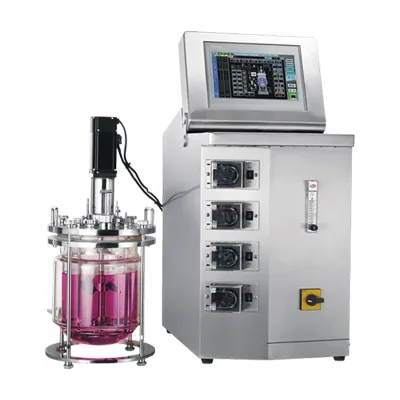
Lab Scale Bioreactor Bench Top Bioreactor Small Glass Bioreactor Fermenter
$9669.16 - $10686.96
MOQ: 1 Minimum


High-Performance Pharmaceutical Bioreactor/Advanced Bioprocessing Reactor
$50000.00 - $120000.00
MOQ: 1 Pieces


Automatic Fermenter Bioreactor Laboratory Fermenter Biological System Stirred Tank
$28000.00 - $50000.00
MOQ: 1 Pieces


Ollital Disposable Bioreactor Lab Fermentation Bioreactor for Bacteria
$9500.00 - $10500.00
MOQ: 1 Sets


Benchtop Stainless Steel Bioreactor System Fully Automated Bioreactor
$3000.00 - $8000.00
MOQ: 1 Pieces

Advanced Lab-Scale Bioreactor Solutions for Small-Scale and Laboratory Research
$25000.00 - $50000.00
MOQ: 1 Pieces


Durable Stainless Steel Bioreactor: High Efficiency for Industrial Use
$15000.00 - $20000.00
MOQ: 1 Pieces


Excellent Performance Small Scale Lab Autoclave High Pressure Reactor
$1500.00 - $2000.00
MOQ: 1 Pieces
Comprehensive Sourcing Guide
Strategic Sourcing Guide for Automatic Lab Scale Bioreactors
Understanding Technical Specifications and Operational Capabilities
When sourcing an Automatic Lab Scale Bioreactor, the primary objective is to identify equipment that aligns precisely with the intended biological processes while ensuring operational reliability. The market offers a diverse array of configurations, but the core technical architecture often centers on specific automation levels and material compositions. Buyers must scrutinize the "Automatic Grade" of the machinery, as this dictates the extent of process control. In the current supply landscape, automatic systems are prevalent, featuring integrated control systems that manage critical parameters such as temperature, RPM, pH, dissolved oxygen (DO), antifoam, feed rates, aeration, and pressure. This level of integration is essential for maintaining the sterile and consistent conditions required for sensitive applications like cell culture, antibody production, and vaccine development.
The physical construction of the bioreactor is equally critical. The vessel body is typically constructed from high-grade materials to ensure chemical resistance and durability. Common specifications include borosilicate glass for the viewing vessel, which allows for visual monitoring of the culture, paired with stainless steel components (304 or 316L) for structural integrity and sanitary connections. The choice between 304 and 316L stainless steel often depends on the specific corrosive nature of the media being used, with 316L offering superior resistance to chlorides and harsher cleaning agents. The sealing materials are another vital specification, with options ranging from silicone and EPDM to Viton, PTFE, and NBR. These materials must be compatible with the specific solvents and biological agents used in the process to prevent contamination or degradation.
Agitation and mixing mechanisms define the hydrodynamic environment within the reactor. The observed market includes various agitator models, such as paddle agitators and spiral stirring types. The driving mechanism can be either magnetic or mechanical, with some systems offering a combination of both to optimize shear stress on delicate cells. The capacity of these lab-scale units varies significantly, with observed ranges spanning from 1 liter to 50 liters, and in some industrial configurations extending up to 6000 liters. For a strict lab scale application, the 1L to 10L range is most common, allowing for high-throughput screening of fermentation conditions before scaling up. The internal surface finish is a key quality indicator, with specifications often citing a roughness average (Ra) of 0.5 microns for the inner surface to minimize microbial adhesion and facilitate cleaning.
Compliance, Certification, and Regulatory Standards
Navigating the regulatory landscape is a fundamental step in the procurement of bioreactors, particularly when the equipment is intended for pharmaceutical or medical-grade production. Buyers must verify that the supplier can provide documentation confirming compliance with international standards. The observed market includes suppliers offering certifications such as ISO, GOST, CE, and CCC. These certifications indicate that the manufacturing process and the final product meet specific safety, quality, and performance benchmarks. For instance, CE marking suggests conformity with health, safety, and environmental protection standards for products sold within the European Economic Area, while ISO certification typically relates to quality management systems.
Specific to the bioprocessing industry, the certification of sealing materials is paramount. A "Qualified Certificate for Seal" from the FDA (Food and Drug Administration) is a critical document to request, ensuring that the elastomers used in the system do not leach harmful substances into the biological culture. This is especially relevant for applications involving food, beverages, or injectable pharmaceuticals. Additionally, the machinery test report should be provided by the supplier. This document serves as empirical evidence that the equipment has undergone rigorous testing for performance, safety, and operational stability before leaving the factory.
Buyers should also verify the "prod_standard" and capacity specifications against their internal quality protocols. While some listings indicate standard capacities ranging from 5 to 6000 liters, the specific model number (e.g., CRT-GB-1L, CRT-GB-5L) must be cross-referenced with the actual technical drawing to ensure the physical dimensions and port configurations match the laboratory's infrastructure. The origin of the machinery, often cited as Wenzhou or Fujian in China, does not inherently dictate quality, but it does inform the logistics and potential supply chain dynamics. Buyers must ensure that the "prod_packing" details, often listed as "Tbd" or "Standard export," include adequate protection for sensitive glass components during transit to prevent breakage and contamination.
Cost Drivers and Pricing Structures
The pricing of automatic lab scale bioreactors is influenced by a complex matrix of factors, including capacity, material grade, automation level, and the complexity of the control system. The observed price range in the market is extremely broad, spanning from approximately $10 to $980,000. This variance is not indicative of a single product line but rather reflects the spectrum from simple manual or semi-automatic units to fully integrated, multi-parameter automated systems with advanced PLCs and pumps. For a typical lab scale application, the cost will be driven primarily by the vessel material (glass vs. stainless steel), the number of control parameters integrated (e.g., pH, DO, feed), and the inclusion of specialized features like multi-feed capabilities or specific exhaust gas analysis (O2).
The Minimum Order Quantity (MOQ) is another significant cost driver. In the current market, many suppliers offer an MOQ of 1 piece, which is highly favorable for research and development laboratories that require a single unit for validation or pilot studies. This flexibility allows buyers to procure a single system without the financial burden of bulk purchasing. However, the "Selling Units" are typically listed as "Single item," meaning the base price usually includes the core vessel and basic agitator, while additional components such as specialized sensors, extra feed pumps, or custom control panels may be priced separately.
Buyers must also consider the total cost of ownership, which includes installation, maintenance, and the cost of replacement parts. The "Warranty" period, often cited as 1 year, is a standard baseline, but the scope of this warranty (e.g., whether it covers labor, parts, or both) varies by supplier. The "Core components" such as the PLC and Pump are critical cost centers; high-quality, branded components will increase the initial purchase price but reduce long-term downtime. Furthermore, the "Heating Way" (Electric, Steam, Water, or Oil) impacts the operational cost, as electric heating elements may have different energy efficiency profiles compared to steam or oil jackets.
Typical Applications and Process Compatibility
The versatility of automatic lab scale bioreactors makes them suitable for a wide array of applications across multiple industries. The primary application areas identified in the market include Biology, Antibodies, Vaccines, and Cell Culture. These sectors require precise control over environmental conditions to ensure the viability and productivity of biological cultures. The bioreactor's ability to manage parameters like pH, dissolved oxygen, and temperature is essential for maintaining the optimal growth environment for mammalian cells, bacteria, and yeast.
Beyond biological research, the specifications indicate that these systems can also be utilized in the Metallurgy and Mineral sectors for processes involving liquid with suspended solids. In this context, the "Working" mode is described as a high-speed mixer, and the "Additional Capabilities" may include milling. This dual-use capability highlights the robustness of the design, which can handle both delicate biological fluids and more abrasive industrial slurries. The "Stirring Type," such as spiral or paddle, and the "Mixer Type," such as an agitator, are selected based on the viscosity and shear sensitivity of the material being processed.
The "Function" of the machine is broadly defined as fermentation and reaction processes. This encompasses a wide range of chemical and biological transformations. The "Operating Mode" can include storage, mixing, heating, and emulsifying, suggesting that the system is not limited to a single phase of production but can serve as a multi-functional unit within a laboratory workflow. The "Control system" allows for complex recipes involving level monitoring, weight feed, multi-feeds, and specific gas compositions like methanol and ethanol, which are common in specific fermentation protocols.
Supplier Evaluation and Vendor Selection Criteria
Selecting the right supplier requires a rigorous evaluation process that goes beyond the initial product listing. Buyers should prioritize suppliers who provide comprehensive documentation, including machinery test reports and detailed technical specifications. The presence of "Online Support" and "Video Instruction" for installation services is a strong indicator of a supplier's commitment to post-sales support, which is crucial for troubleshooting and ensuring the correct setup of the automated systems.
When evaluating suppliers, the "Brand Name" and "Place of Origin" should be considered, but they should not be the sole determinants of quality. A supplier based in Wenzhou or Fujian may offer competitive pricing and high-quality manufacturing, but the buyer must verify the specific capabilities of the factory. The "Customization" availability is a key differentiator; many suppliers offer the ability to customize the model number, capacity, and control parameters to fit specific laboratory needs. This flexibility is essential for researchers who have unique requirements that standard off-the-shelf units cannot meet.
Buyers should also assess the supplier's ability to provide "Packaging Details" that ensure the safe delivery of the equipment. Given the fragility of glass vessels and the precision of electronic components, "Standard export" packaging must be robust enough to withstand international shipping. The "Connection" types offered (Weld, Clamp, Male, Female, Union, Flange) should be compatible with the existing laboratory infrastructure to minimize the need for additional adapters or modifications.
Quality Control and Long-Term Procurement Considerations
Ensuring the long-term reliability of an Automatic Lab Scale Bioreactor involves a focus on quality control measures and maintenance planning. The "Inner Surface Finish" of Ra 0.5 and "External Surface Finish" of Ra 0.8 are critical specifications that facilitate cleaning and sterilization, reducing the risk of cross-contamination between batches. Buyers should verify that these finishes are achieved through validated processes and are maintained throughout the product's lifecycle.
The "Structure" of the bioreactor, which can be single, double jacket, insulation, or three layers, impacts its thermal efficiency and operational stability. A double jacket or three-layer structure is often preferred for processes requiring precise temperature control, as it allows for the circulation of heating or cooling media without direct contact with the vessel wall. The "Operating Type" being cycle operating suggests that the system is designed for batch processes, which is typical for most fermentation and reaction applications.
For long-term procurement, buyers should consider the availability of spare parts and the ease of maintenance. The "Core components" like the PLC and Pump should be from reputable manufacturers to ensure compatibility and availability of replacement parts. The "Warranty" period of 1 year is a standard starting point, but buyers should negotiate extended warranty options or service contracts if the equipment is critical to their operations. Additionally, the "Installation Service" provided by the supplier, whether online or on-site, should be clearly defined to ensure a smooth commissioning process.
Comparative Analysis of Key Features
To assist in the decision-making process, the following table summarizes the key technical and operational features observed in the market for automatic lab scale bioreactors. This comparison highlights the variability in specifications and helps buyers identify the features most relevant to their specific application.
| Feature Category | Common Specifications | Variations Observed | Critical Verification Points |
|---|---|---|---|
| Material | Borosilicate Glass, SS304/316L | SS304 only, SS316L only, Full Glass | Verify 316L grade for corrosive media; check glass thickness. |
| Control System | Temp, RPM, pH, DO, Feed, Pressure | Basic (Temp/RPM), Advanced (Multi-feed) | Confirm sensor accuracy and PLC programming flexibility. |
| Agitation | Paddle, Spiral, Magnetic, Mechanical | High Speed, Low Shear, Dual Drive | Match stirring type to cell shear sensitivity. |
| Capacity | 1L - 50L (Lab Scale) | 5L - 6000L (Industrial) | Ensure capacity matches scale-up strategy. |
| Sealing | Silicone, EPDM, Viton, PTFE, NBR | FDA Certified, Non-Certified | Verify FDA certification for food/pharma applications. |
| Surface Finish | Inner Ra 0.5, Outer Ra 0.8 | Varies by manufacturer | Request surface roughness certificates. |
| Certification | ISO, CE, GOST, CCC | Varies by region | Check specific regional compliance (e.g., CE for EU). |
| Heating | Electric, Steam, Water, Oil | Electric only, Multi-source | Verify heating source compatibility with lab utilities. |
Final Procurement Recommendations
In conclusion, sourcing an Automatic Lab Scale Bioreactor requires a meticulous approach that balances technical specifications, regulatory compliance, and cost considerations. Buyers must prioritize the verification of material grades, surface finishes, and control system capabilities to ensure the equipment meets the rigorous demands of biological and chemical processes. The availability of customization and the robustness of the supplier's support infrastructure are equally important factors in making a successful procurement decision. By adhering to the guidelines outlined in this guide and conducting thorough due diligence, buyers can secure high-quality bioreactors that will support their research and production goals effectively. The broad range of options available in the market, from 1L to 6000L capacities and various material configurations, ensures that there is a suitable solution for nearly any laboratory requirement, provided that the specific needs are clearly defined and communicated to potential suppliers.
FAQs
What materials are used for the bioreactor vessel?
The vessel is constructed from borosilicate glass and stainless steel grades 316L and 304. This combination ensures chemical resistance and structural integrity for sensitive biological processes.
Which certifications does the equipment hold?
The machinery holds ISO, GOST, CE, and CCC certifications. Additionally, sealing materials possess a Qualified Certificate for Seal from the FDA to ensure safety for pharmaceutical applications.
Can the system be customized for specific needs?
Yes, customization is available for model numbers and capacities. Buyers can select from standard models like CRT-GB-1L or request custom configurations to fit unique laboratory requirements.
What is the minimum order quantity for purchase?
The minimum order quantity is one piece for single item sales. This low MOQ allows research laboratories to procure a single unit for validation or pilot studies without bulk commitments.
How is the control system configured for automation?
The control system manages temperature, RPM, pH, dissolved oxygen, antifoam, feed, aeration, and pressure. It utilizes PLC and pump core components for fully automatic operation of fermentation processes.
What warranty is provided with the bioreactor?
A one-year warranty is provided for the equipment. This coverage typically includes support for core components, though specific terms regarding labor and parts should be verified with the supplier.