Source Automatic Pop Up Lawn Sprinkler for Golf Garden Lawn
Find 30 Automatic Pop Up Lawn Sprinkler options with varying spray radii, flux rates, and pressure requirements. Compare specifications for golf, garden, and lawn applications to select the right irrigation solution for your needs.
Key considerations
Products List


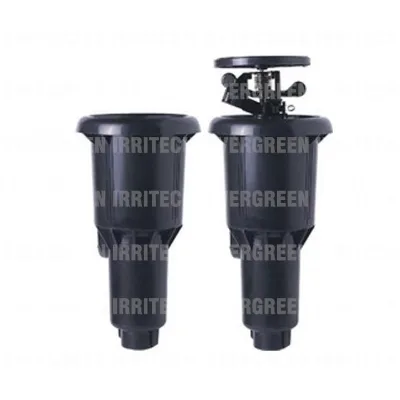
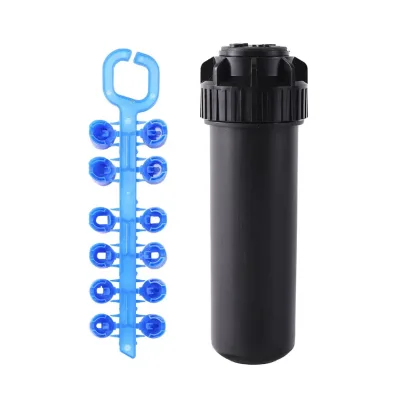
Full Circle Adjustable Lawn Pop up Sprinkler for Garden Watering Sprinkler System
$0.80 - $1.50
MOQ: 1000 Pieces




Comprehensive Sourcing Guide
Strategic Sourcing Guide for Automatic Pop-Up Lawn Sprinklers
Understanding Technical Specifications and Performance Metrics
When sourcing automatic pop-up lawn sprinklers, buyers must first distinguish between the specific performance profiles available in the market. The core keyword implies a mechanism that retracts into the ground when not in use, but the technical execution varies significantly based on the intended application. Based on current product data, the market offers distinct categories defined by spray radius, flow rate, and operating pressure.
One primary segment features high-capacity units designed for large-scale areas such as golf courses and extensive farms. These units typically operate with a pressure range of 2 to 4.5 bar and deliver a flux between 1000 and 3000 liters per hour. The spray radius for these high-output models extends from 7.5 to 15 meters, often utilizing a 360-degree rotating mechanism to ensure uniform coverage. The material composition for these heavy-duty units is predominantly plastic, with specific models like the 3127A, 3127, and 3127C being common identifiers. These models often utilize a 3/4-inch standard connection, which is critical for compatibility with existing irrigation infrastructure.
Conversely, a second segment targets residential gardens and smaller lawns. These units operate at a lower pressure, typically between 1.5 and 2.5 bar, with a flux range of 200 to 1000 liters per hour. The spray radius is more compact, ranging from 2 to 5 meters. While the material remains plastic, often specified as PP (Polypropylene), the physical dimensions differ. Buyers should note that pop-up heights vary significantly, with options ranging from 4 inches to 6 inches, or metric equivalents of 10cm, 15cm, and 30cm. Some specific model series, such as the JFSP-RL51 and JFSP-RL14, offer variable spray body heights, including 4.5cm, 10cm, 15cm, 22.5cm, and 41cm, allowing for customization based on turf height requirements.
The power source is another critical technical differentiator. While the majority of automatic pop-up sprinklers rely on water pressure to operate the retraction and rotation mechanisms, some specialized units may utilize electricity for solenoid control or advanced automation. The standard connection types observed include 3/4-inch internal threads and 1/2-inch female threads. Understanding these distinctions is vital before initiating a procurement process, as mixing high-pressure and low-pressure components can lead to system failure or inefficient water distribution.
Compliance, Standards, and Material Verification
In the B2B procurement of irrigation equipment, verifying compliance with industry standards and material integrity is non-negotiable. The supplied data indicates that products originate from China, a major manufacturing hub for irrigation components. However, origin alone does not guarantee quality. Buyers must verify that the plastic materials used, specifically PP (Polypropylene), meet the necessary durability standards for outdoor exposure. PP is chosen for its resistance to UV degradation and chemical corrosion, but the specific formulation and wall thickness must be confirmed to ensure longevity under varying weather conditions.
Standardization of connections is a primary area of compliance concern. The market data shows a mix of connection standards, including 3/4-inch and 1/2-inch specifications. Some products are listed with a standard of "1/2" or 3/4''", while others specify "1/2" female thread" or "3/4 Internal Thread." Procurement teams must ensure that the ordered models match the existing piping infrastructure of the project site. Mismatched threads can lead to leaks, pressure drops, and the need for costly adapters that compromise system integrity.
Furthermore, while specific certification bodies are not explicitly named in the product data, buyers should request evidence of compliance with relevant international standards for plastic piping and irrigation components. This includes verifying that the manufacturing process adheres to quality management systems. The presence of a "Standard Export Carton Box" for packing suggests adherence to shipping standards, but the internal packaging, such as "Brown Box" or specific "Box" configurations, should be evaluated to ensure the sprinklers are protected against damage during transit. For instance, the JFSP-RL51 model is packed with 20 pieces per box, with a box size of 500mm320mm300mm and a weight of 11.57kg. Such detailed packing specifications are essential for logistics planning and cost estimation.
Cost Drivers and Pricing Dynamics
The pricing of automatic pop-up lawn sprinklers is influenced by a complex interplay of factors, including material costs, manufacturing complexity, and order volume. The observed price range in the market spans from $0.02 to $33 USD. This wide disparity indicates that the unit price is highly dependent on the specific model, the complexity of the mechanism, and the quantity ordered. The lower end of the price spectrum likely corresponds to basic residential models with simple pop-up mechanisms and standard plastic construction. In contrast, the higher end reflects specialized units with advanced rotation capabilities, larger spray radii, and more robust construction suitable for commercial or agricultural use.
Minimum Order Quantity (MOQ) is a significant cost driver in this sector. The observed MOQ range is between 10 and 1000 units. Buyers with smaller project requirements may face higher per-unit costs if they are forced to meet a high MOQ, or they may need to negotiate with suppliers who can accommodate smaller batches. Conversely, large-scale projects involving golf courses or extensive agricultural farms can leverage economies of scale by ordering in bulk, potentially securing prices closer to the lower end of the observed range.
Customization availability is another factor that impacts cost. The product data confirms that customization is available. This could involve modifying the pop-up height, altering the spray radius, or changing the connection type. While customization adds value, it often incurs additional tooling or setup costs. Buyers must weigh the benefits of a tailored solution against the potential increase in unit price and lead time. Additionally, the packing specifications, such as the "Standard Export Carton Box" versus a "Brown Box," can influence the overall landed cost, particularly for international shipments where volume and weight are critical for freight calculations.
Typical Applications and Selection Criteria
The selection of an automatic pop-up lawn sprinkler must be driven by the specific application environment. The data highlights several key application areas: Golf, Garden, Lawn, Grass, and Farm. Each of these environments presents unique challenges regarding water distribution, soil type, and aesthetic requirements.
For golf courses and large farms, the high-capacity models with a 360-degree rotating spray and a radius of 7.5 to 15 meters are essential. These areas require uniform water distribution over vast distances, and the higher pressure and flux rates of models like the 3127 series are designed to meet these demands. The ability to operate at 2-4.5 bar ensures that the water can reach the necessary distances without losing pressure.
In residential garden and lawn settings, the focus shifts to precision and aesthetics. The lower pressure models with a 2-5 meter radius are more appropriate here. These units are less likely to cause water runoff or erosion on smaller plots. The variety of pop-up heights, ranging from 2 inches to 6 inches, allows for integration with different turf heights, ensuring the sprinkler head remains hidden when not in use. The "Automatic" working mode is a critical feature for these applications, as it allows for unattended irrigation schedules, which is a primary requirement for modern lawn care.
When selecting a model, buyers should also consider the color and finish. The observed data mentions a "Black" color option, which is often preferred for its ability to blend with soil and turf, minimizing visual disruption. The choice between different models, such as the 3126, 3139, or the JFSP series, should be based on a detailed site analysis that includes soil permeability, slope, and existing water pressure.
Supplier Evaluation and Quality Assurance
Evaluating suppliers for automatic pop-up lawn sprinklers requires a rigorous approach to ensure reliability and product consistency. Since the products originate from China, buyers should conduct thorough due diligence on the manufacturing capabilities of potential suppliers. This includes verifying their production capacity, quality control processes, and ability to meet customization requests. The availability of customization suggests that the supplier has flexible manufacturing lines, but this flexibility must not come at the expense of quality.
Quality assurance should focus on the mechanical integrity of the pop-up mechanism. The retraction and extension cycles must be smooth and reliable, with no signs of jamming or leakage. The material quality, specifically the PP plastic, should be tested for UV resistance and impact strength. Buyers should request samples to perform physical tests, such as checking the thread tolerance and the durability of the pop-up height adjustment.
The packaging details provided in the data, such as the specific box dimensions and weights, offer a window into the supplier's attention to detail. For example, the JFSP-RL16A-6A model has a box size of 50mm32.5mm30.5mm and a weight of 11.3kg, while the JFSP-RL51 has a box size of 500mm320mm300mm and a weight of 11.57kg. These discrepancies in packaging for different models suggest that the supplier manages a diverse product line. Buyers should ensure that the packaging is robust enough to protect the sprinklers during shipping, especially for international orders where handling can be rough.
Long-Term Procurement and Maintenance Considerations
Procuring automatic pop-up lawn sprinklers is not a one-time transaction but part of a long-term operational strategy. Buyers should consider the warranty and after-sales support offered by suppliers. The data indicates a "2 Year" warranty for certain models, which is a positive indicator of the manufacturer's confidence in their product. However, buyers must clarify the terms of this warranty, including what is covered (e.g., mechanical failure vs. wear and tear) and the process for claims.
Maintenance is another critical long-term consideration. The automatic nature of these sprinklers reduces the need for manual intervention, but regular maintenance is still required to ensure optimal performance. Buyers should inquire about the availability of spare parts, such as nozzles, springs, and seals. The standardization of connections (1/2" or 3/4") is beneficial for maintenance, as it allows for the replacement of individual components without replacing the entire unit.
The "Working: Automatic" feature implies a reliance on a control system, which may include timers or sensors. Buyers should verify the compatibility of the sprinklers with existing control systems and the ease of programming. Additionally, the "Irrigation" feature suggests that these units are part of a larger system, and integration with other components like valves and pumps must be seamless.
In conclusion, sourcing automatic pop-up lawn sprinklers requires a balanced approach that considers technical specifications, compliance, cost, application needs, and long-term maintenance. By carefully analyzing the available data and conducting thorough supplier evaluations, buyers can secure high-quality irrigation solutions that meet their specific project requirements. The wide range of models and specifications available allows for tailored solutions, but success depends on precise selection and rigorous quality control throughout the procurement process.
FAQs
What are the typical spray radius and flux for golf course sprinklers?
High-capacity models for golf courses offer a spray radius of 7.5 to 15 meters with a flux between 1000 and 3000 liters per hour. These units operate at 2 to 4.5 bar pressure and often feature a 360-degree rotating mechanism for uniform coverage.
Which connection standards are available for Automatic Pop Up Lawn Sprinkler units?
Available connection standards include 3/4-inch internal threads and 1/2-inch female threads. Some models support both 1/2-inch and 3/4-inch sizes, ensuring compatibility with various existing irrigation infrastructure systems.
How does the pop-up height vary across different sprinkler models?
Pop-up heights vary significantly, with options ranging from 4 inches to 6 inches or metric equivalents like 10cm, 15cm, and 30cm. Specific series offer spray body heights of 4.5cm up to 41cm to match different turf requirements.
Can buyers request customization for these Automatic Pop Up Lawn Sprinkler products?
Yes, customization is available for these products, allowing modifications to height, spray radius, or connection types. Buyers should note that tailored solutions may incur additional tooling costs and affect lead times.
What is the typical price range and minimum order quantity for these units?
The observed price range spans from 0.02 to 33 USD depending on the model and complexity. Minimum order quantities vary between 10 and 1000 units, with larger orders often securing better per-unit pricing.
What material is used to construct the bodies of these sprinklers?
The bodies are predominantly constructed from plastic, specifically Polypropylene (PP). This material is selected for its resistance to UV degradation and chemical corrosion, ensuring durability in outdoor environments.
How do residential garden sprinklers differ from farm models in performance?
Residential models operate at lower pressures of 1.5 to 2.5 bar with a flux of 200 to 1000 liters per hour. In contrast, farm models handle higher pressures and deliver greater flux to cover larger areas effectively.
What warranty coverage is typically provided for Automatic Pop Up Lawn Sprinkler systems?
Certain models come with a 2-year warranty, indicating manufacturer confidence in product longevity. Buyers should verify specific terms regarding mechanical failures versus normal wear and tear before finalizing procurement.