Source Automatic Reverse Osmosis System with UV Sterilizer for Household, Industry, Commercial
Explore 30 listings for the Automatic Reverse Osmosis System with UV Sterilizer designed for household, industrial, and commercial applications. Buyers can compare specifications such as flow rates, recovery rates, and stage configurations to find suitable suppliers.
Key considerations
Products List


Advanced Customized Reverse Osmosis System with UV Light Purification
$1000.00 - $100000.00
MOQ: 1 Sets

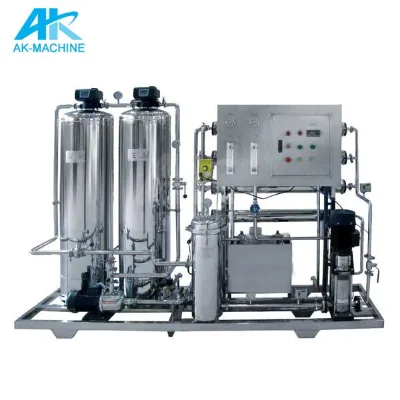
Full Automatic Reverse Osmosis Purifier System with Ozone Pretreatment
$3000.00 - $7000.00
MOQ: 1 Pieces




Comprehensive Sourcing Guide
Strategic Sourcing Guide for Automatic Reverse Osmosis Systems with UV Sterilization
Procuring an automatic reverse osmosis (RO) system equipped with ultraviolet (UV) sterilization requires a disciplined approach to technical verification and supplier evaluation. The core keyword "Automatic Reverse Osmosis System with UV Sterilizer" implies a complex integration of membrane filtration, automated control logic, and microbial inactivation. While the supplied product data confirms the availability of RO systems with specific configurations, buyers must distinguish between household under-sink units and large-scale industrial equipment. The following guide outlines the critical parameters for sourcing, ensuring that procurement decisions are grounded in observed specifications rather than unverified market assumptions.
Technical Architecture and Operational Principles
The foundation of any effective RO system is the operating principle, which in the supplied data is consistently identified as Reverse Osmosis (RO). These systems typically utilize a multi-stage filtration process to remove dissolved solids, heavy metals, and microorganisms. The observed product data indicates a common configuration involving 4 to 9 stages, with specific filter cartridges including PP (Polypropylene), CAG (Activated Carbon), CTO (Carbon Block), RO membranes, and T33 (Post-carbon) units. This multi-stage approach is essential for pre-treatment and post-treatment, ensuring the RO membrane is protected from fouling and the final water meets drinking standards.
A critical distinction in sourcing is the application context. The data reveals two distinct categories: "Household" units designed for under-sink installation and "Industry" units characterized by high capacity and automated operation. Household models often feature a 4-stage design with a 75-gallon capacity and a flow rate of 63 liters per hour. In contrast, industrial systems operate with power supplies of 380V/50Hz/3-phase, recovery rates ranging from 65% to 90%, and capacities customized to specific needs. The "automatic" aspect of the keyword suggests the presence of programmable logic controllers (PLC) or automated valves for self-cleaning cycles, a feature supported by the "Pipe Design Rate: Self-Cleaning" attribute observed in the data.
When evaluating the UV sterilization component, buyers must verify that the system integrates UV lamps capable of inactivating bacteria and viruses. While the supplied text explicitly lists "RO" and "Descaling Function," the integration of UV is a standard requirement for the "Straight Drink" efficacy mentioned. The system must ensure that the water conductivity meets strict thresholds, with observed data showing product water conductivity of ≤10 µS/cm for the first RO stage and ≤5 µS/cm for the secondary stage. For advanced industrial applications, EDI (Electrodeionization) modules may be included, achieving resistivity levels of 10-15 MΩ·cm.
Compliance, Certification, and Regulatory Standards
Navigating the regulatory landscape is vital for ensuring the safety and legality of the purchased equipment. The supplied data mentions "ISOSalt Rejection Rate" as a certification attribute, with observed values of 98.0% and 99.0%. This indicates a focus on salt rejection efficiency, a primary metric for RO membrane performance. However, buyers should not assume that all listed products possess global certifications like CE or NSF without explicit verification. The data includes a low-confidence note regarding CE, which suggests that while some suppliers may claim compliance, it is not a universal guarantee across the entire product range.
Standardization is another critical area. The observed product standards vary significantly by application. Household units are described with dimensions such as 160450410mm or 41X35X58 cm, while industrial units are defined by output capacity, such as 750LPH (Liters Per Hour). Buyers must verify that the physical dimensions and electrical standards match their facility requirements. For instance, industrial systems require a 380V/50Hz/3-phase power supply, whereas household units typically operate on standard single-phase electricity.
Furthermore, the "Working Temperature" range of 2-50°C and "Operating Pressure" of 1-7 MPa are critical operational limits. Systems operating outside these parameters may suffer from membrane damage or reduced efficiency. The "Reject Rate" of 99% observed in the data serves as a benchmark for high-performance units, but buyers must confirm that this rate applies to the specific contaminants relevant to their source water, which is often municipal water.
Cost Drivers and Pricing Dynamics
The pricing for automatic RO systems is highly variable, influenced by capacity, automation level, and material quality. The observed listed price range spans from $32 to $600,000 USD. This vast disparity reflects the difference between a basic under-sink unit and a fully automated industrial plant. The lower end of the spectrum likely corresponds to compact household units with standard packing (Cardboard Box), while the higher end encompasses large-scale systems with stainless steel skid frames (304ss), custom packaging (Plywood or Wooden Case), and advanced control systems.
Several factors drive these costs. First, the number of filtration stages and the quality of the RO membrane significantly impact the price. Systems with 5-9 stages and high salt rejection rates command a premium. Second, the degree of automation is a major cost driver. "Full Automatic" systems with self-cleaning capabilities and remote monitoring features are more expensive than semi-automatic or manual units. Third, the power supply requirements influence cost; 3-phase industrial systems require more robust electrical infrastructure and components than single-phase residential units.
Buyers should also consider the "Customization" factor. The data confirms that OEM/ODM/Obm services are available, which can increase costs due to engineering and tooling fees. However, customization allows for tailored solutions that may reduce long-term operational costs by optimizing the system for specific water quality issues. The "Free Sample" attribute is listed as "No," indicating that buyers may need to invest in prototype testing or purchase a pilot unit before committing to a full-scale order.
Typical Applications and Performance Expectations
The application scope for these systems is broad, ranging from residential kitchens to heavy industrial processes. Household applications utilize under-sink cabinets with a capacity of 400-800 gallons per day (gpd) or 75 gallons, suitable for direct drinking water. These units are designed for "Straight Drink" efficacy, ensuring the water is safe for immediate consumption without further treatment. The inclusion of a 3.2/4-gallon pressure tank ensures a steady flow of water during peak usage times.
In industrial settings, the requirements shift towards high-volume production and consistent water quality. The "Reverse Osmosis Pure Water Equipment" is designed for industries requiring high-purity water, such as pharmaceuticals, electronics, or food and beverage processing. The observed recovery rates of 65% to 90% are critical for industrial efficiency, minimizing water waste. The conductivity targets, such as ≤10 µS/cm for the first stage and ≤5 µS/cm for the second, ensure that the water meets stringent purity standards.
The "Descaling Function" is particularly relevant for applications with hard water sources. This feature helps prevent scale buildup on the RO membranes, extending their lifespan and maintaining performance. The "Self-Cleaning" pipe design further enhances reliability by automatically flushing the system to remove sediment and biofilm. For industries with variable water quality, the "Customized" capacity option allows for scalable solutions that can be expanded as production needs grow.
Supplier Evaluation and Verification Protocols
Selecting the right supplier requires rigorous due diligence. The data indicates that the product origin is primarily China, with specific locations like Yancheng mentioned. Buyers should verify the supplier's manufacturing capabilities and quality control processes. The availability of "Customization" and "OEM/ODM" services suggests that suppliers are willing to adapt products to specific client needs, but this requires clear communication of technical specifications.
When evaluating suppliers, buyers should request detailed documentation on the "Filter Cartridge" composition and the "Salt Rejection Rate." The observed rates of 98.0% and 99.0% should be validated through third-party testing reports. Additionally, the "Operating Mode" (Full Automatic, Semi-Automatic, or Manual) must be confirmed to ensure it aligns with the buyer's operational workflow. The "Skid Frame Materials" being 304 stainless steel is a positive indicator of durability for industrial units, but buyers should verify this for all units in their order.
Lead times and delivery terms are also critical. The observed delivery time is 15-30 days, but this can vary based on customization requirements and order volume. The "MOQ" (Minimum Order Quantity) ranges from 1 to 200 units, offering flexibility for both small and large buyers. However, buyers should clarify if the MOQ applies to the entire order or per model. The "Packing" methods, ranging from cardboard boxes to wooden cases, should be selected based on the shipping distance and handling requirements to prevent damage during transit.
Quality Control and Long-Term Procurement Considerations
Ensuring long-term reliability requires a focus on quality control and maintenance planning. The "Free Sample" policy is noted as "No," which means buyers should rely on reference projects or pilot testing to verify performance. The "Conductivity" and "Resistivity" metrics provided in the data serve as benchmarks for quality control. Buyers should establish acceptance criteria based on these values, ensuring that the delivered system meets the specified conductivity limits.
Maintenance is a key consideration for automatic RO systems. The "Self-Cleaning" feature reduces the frequency of manual cleaning, but regular replacement of filter cartridges (PP, CAG, CTO, RO, T33) is still necessary. The "Filter Stages" and "Tank" capacity should be evaluated to determine the replacement schedule and associated costs. For industrial systems, the "Recovery Rate" and "Operating Pressure" should be monitored to detect any degradation in performance.
Long-term procurement strategies should include a review of the supplier's after-sales support and spare parts availability. The "Customized" nature of many units means that proprietary parts may be required, making it essential to secure a supply chain for replacements. The "Working Temperature" and "Operating Pressure" ranges should be reviewed periodically to ensure the system continues to operate within safe limits. Finally, buyers should maintain a record of all certifications and test results to ensure ongoing compliance with local and international standards.
Summary of Key Specifications and Comparison
To facilitate quick decision-making, the following table summarizes the key specifications observed in the product data, highlighting the differences between household and industrial applications.
| Feature | Household Under-Sink Unit | Industrial RO System |
|---|---|---|
| Application | Household | Industry |
| Power Source | Electric (Standard) | 380V/50Hz/3-phase |
| Capacity | 400-800 gpd / 75 Gallon | Customized / 750 LPH |
| Filter Stages | 4 Stages | 5-9 Stages |
| Filter Cartridge | PP+Cag+CTO+RO+T33 | Customizable |
| Salt Rejection | 98.0% - 99.0% | 99% |
| Product Conductivity | Straight Drink | ≤10 µS/cm (1st), ≤5 µS/cm (2nd) |
| Operating Mode | Manual/Semi-Auto | Full Automatic / Semi-Auto / Manual |
| Packing | Cardboard Box | Plywood or Wooden Case |
| Delivery Time | 15-30 Days | 15-30 Days |
| Origin | China | Yancheng, China |
This comparison underscores the importance of matching the system specifications to the intended application. While both categories utilize RO technology, the industrial systems offer higher automation, greater capacity, and more rigorous performance metrics. Buyers must carefully assess their specific needs to select the appropriate configuration, ensuring that the final system delivers the desired water quality and operational efficiency.
FAQs
What filtration stages are included in these RO systems?
These systems typically include 4 to 9 filtration stages. The standard configuration uses PP, CAG, CTO, RO, and T33 cartridges to ensure high purity water suitable for straight drinking applications.
Can I customize the capacity for industrial use?
Yes, the product capacity is fully customizable for industrial applications. Buyers can specify requirements ranging from standard outputs to 750 liters per hour with recovery rates up to 90 percent.
What is the lead time for delivery of these units?
The standard delivery time ranges from 15 to 30 days. This timeline applies to both household under-sink models and larger industrial systems requiring plywood or wooden case packaging.
Which certifications verify the salt rejection rate?
Certifications confirm salt rejection rates of 98.0 percent and 99.0 percent. These metrics validate the membrane performance for removing dissolved solids from municipal water sources effectively.
How does the self-cleaning pipe design function?
The pipe design features an automatic self-cleaning function to maintain efficiency. This mechanism helps prevent scale buildup and sediment accumulation, extending the lifespan of the RO membrane components.
What power supply is required for industrial models?
Industrial models require a 380V, 50Hz, 3-phase power supply. This electrical standard supports the full automatic or semi-automatic operating modes needed for high-volume water production.
Are free samples available for testing before purchase?
Free samples are not available for these products. Buyers must rely on documented specifications and performance data regarding conductivity and recovery rates to verify quality before placing an order.