Source Automatic Rotary Bottle Unscrambler for Tea Drinks Cosmetics
Find 30 listings for the Automatic Rotary Bottle Unscrambler designed for tea, drinks, and cosmetics. Buyers can compare specifications like speed, material, and capacity to select the right equipment for their production line.
Key considerations
Products List


Automatic Bottle Unscrambler with Various Directions of Bottle Lifter
$1000.00 - $25000.00
MOQ: 1 Pieces


Hot Selling Manual Bottle Unscrambler with Easy Operation and High Quality
$1000.00 - $25000.00
MOQ: 1 Pieces


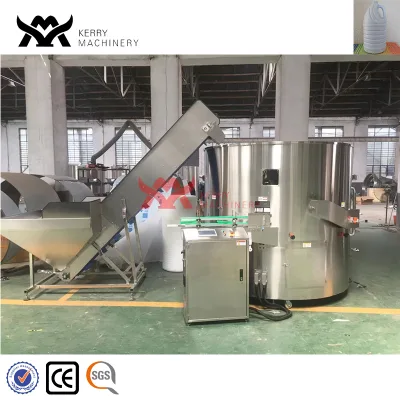

$10000.00 - $30000.00
MOQ: 1 Pieces


High Capacity Full Automatic Bottle Unscrambler for Plastic Bottle
$10000.00 - $30000.00
MOQ: 1 Pieces

Automatic High Speed Pet Round Bottle Sorting Unscrambler for Plastic Bottle
$10000.00 - $30000.00
MOQ: 1 Pieces


Comprehensive Sourcing Guide
Strategic Sourcing Guide for Automatic Rotary Bottle Unscramblers
Procuring an Automatic Rotary Bottle Unscrambler represents a critical investment in the efficiency and reliability of modern packaging lines. These machines are designed to orient bottles from a chaotic bulk feed into a single-file stream, ensuring a consistent flow for downstream filling, capping, and labeling operations. For buyers in the beverage, food, and cosmetic industries, understanding the nuanced technical specifications and supplier capabilities is essential to avoid production bottlenecks. This guide synthesizes available market data to provide a disciplined framework for evaluating potential suppliers and selecting equipment that aligns with specific operational requirements.
Technical Specifications and Operational Parameters
The core functionality of an Automatic Rotary Bottle Unscrambler relies on precise mechanical design and control systems. When evaluating potential units, buyers must scrutinize the physical dimensions and operational speeds to ensure compatibility with existing line infrastructure. Market observations indicate that these machines often feature a turntable diameter ranging from 450mm to 1200mm, which directly influences the footprint and throughput capacity of the unit. The physical envelope of the equipment is also a critical consideration; observed packaging dimensions for such machinery can reach approximately 1020mm by 1020mm by 1240mm, with a gross weight potentially up to 95kg.
Speed is a primary differentiator among models. While some configurations are rated for specific capacities such as 4000 bottles per hour (bph), other high-performance variants are designed to operate within a range of 6000 to 12000 bph. It is vital to verify the specific standard capacity of the model under consideration, as some listings cite fixed speeds like 6000 bph or 12000 bph, while others present a broader operational window. The machine's ability to handle various bottle geometries is equally important. Specifications suggest suitability for round jar bottles and cylinders with diameters typically between 20mm and 150mm, and volumes ranging from 200ml to 2000ml.
The construction material is another fundamental technical aspect. High-quality unscramblers are predominantly constructed from stainless steel, with specific grades such as SUS304 or 316 being common in food-grade applications to ensure corrosion resistance and hygiene. The drive system is typically electric, powered by a 220V/50Hz single-phase supply, with power consumption often observed around 120W for smaller units, though this varies by scale. Buyers should also note the presence of a touch screen interface, which may be sourced from brands originating in China or Taiwan, facilitating intuitive operation and parameter adjustment.
Compliance, Certification, and Safety Standards
In the realm of industrial machinery, compliance with safety and quality standards is non-negotiable. While specific certification statuses such as CE are often referenced in the broader market, buyers must treat these as verification points rather than guaranteed attributes of every listed product. The procurement process requires explicit confirmation that the supplier can provide valid certification documents for the specific model being purchased. This includes verifying that the electrical components meet local safety regulations and that the machine's design adheres to relevant industrial safety standards.
Standardization in manufacturing also extends to the materials used. The use of stainless steel (SS) is a standard requirement for food and beverage applications, but the specific grade must be confirmed. For instance, while some specifications list "SS" generally, others explicitly denote SUS304 or 316. Buyers should request material test reports to ensure the metal grade matches the hygienic requirements of the product being packaged, whether it is tea, dairy, cosmetics, or cleaning detergents. Furthermore, the "Automatic Grade" of the machine implies a level of automation that must be validated against the facility's safety protocols, particularly regarding emergency stops and interlocks.
Cost Drivers and Pricing Structures
The pricing of automatic rotary bottle unscramblers is influenced by a complex interplay of factors, including speed, material quality, and customization options. Market data indicates a wide price range, observed between $250 and $40,000 USD. This significant variance suggests that the cost is not merely a function of the machine's base model but is heavily dependent on the specific configuration and capabilities required. Lower-cost units may be basic models with standard features, while higher-priced units likely incorporate advanced automation, higher speed ratings, or specialized customization.
The Minimum Order Quantity (MOQ) is another critical cost driver. In the current market, many suppliers offer an MOQ of 1, which allows for flexible procurement without the need for bulk purchasing commitments. However, buyers should be aware that customization options, which are widely available, may impact the final price and potentially alter the MOQ structure. The packaging method, whether a standard wooden box, a wooden case, or film wrapping, also contributes to the overall cost, particularly regarding shipping and handling expenses.
Typical Applications and Product Compatibility
The versatility of automatic rotary bottle unscramblers makes them suitable for a diverse array of industries. The primary application is the preparation of bottles for filling, but the specific product being packaged dictates the necessary machine features. These machines are commonly utilized in the processing of tea, rice, flour, drinks, dairy products, hair care products, skin care products, cosmetics, cleaning agents, and detergents. The ability to handle plastic bottles is a standard feature, with the machine designed to accommodate the specific forming species and functions required for these materials.
The suitability of the machine for a specific bottle type is determined by the bottle's shape and size. The equipment is generally designed for round jar bottles and cylinders, with a functional range that supports the unscrambling process for various bottle dimensions. Buyers must ensure that the "Applicable Product Size" and "Turntable Diameter" of the selected machine align with their current or future bottle inventory. For example, a machine with a 900mm turntable diameter may be optimal for a specific range of bottle sizes, while a larger diameter might be required for high-volume operations with larger containers.
Supplier Evaluation and Verification
Evaluating a supplier for industrial machinery requires a rigorous approach to verifying their claims and capabilities. The origin of the product is a key factor, with the majority of these machines originating from China. Buyers should investigate the supplier's manufacturing history and their ability to provide consistent quality. The motor and touch screen components are often sourced from specific regions, such as China or Taiwan, and the brand quality of these components can significantly affect the machine's longevity and performance.
When assessing a supplier, buyers should request detailed documentation regarding the "Main Material" and "Material Type" to ensure the machine meets the specific hygiene and durability standards of their industry. The "Forming Function" and "Forming Species" should be clearly defined to ensure the machine can handle the specific bottle types required. Additionally, the "Driven Type" and "Voltage" specifications must be verified to ensure compatibility with the buyer's facility's power infrastructure.
Quality Control and Long-Term Procurement Considerations
Quality control is paramount when procuring industrial equipment. Buyers should insist on a comprehensive quality assurance process that includes factory inspections and pre-shipment testing. The "Guarantee" period, often cited as 1 year, is a standard offering, but the scope of this warranty should be clearly defined. This includes coverage for parts, labor, and the availability of technical support. The "Delivery Time" is another critical factor; while some suppliers may offer a lead time as short as 1 week, buyers should verify this against their specific production schedules and potential supply chain disruptions.
Long-term procurement considerations also involve the availability of spare parts and the ease of maintenance. The "Weight" of the machine, both net and gross, affects installation logistics and floor loading requirements. Buyers should ensure that the "Packaging" method, whether wooden case or film, provides adequate protection during transit to prevent damage. Finally, the "Customization" availability should be leveraged to tailor the machine to specific production needs, ensuring a seamless integration into the existing packaging line.
Comparative Analysis of Key Specifications
To assist in the decision-making process, the following table summarizes key specifications observed in the market for automatic rotary bottle unscramblers. This comparison highlights the variability in performance and design that buyers must navigate.
| Specification | Observed Range / Value | Notes for Verification |
|---|---|---|
| Speed (Capacity) | 4000 - 12000 bph | Verify specific model rating (e.g., 6000 vs 12000). |
| Material | Stainless Steel (SS), SUS304, 316 | Confirm grade for food/cosmetic compliance. |
| Bottle Type | Plastic, Round Jar, Cylinder | Check diameter range (20-150mm) and volume (200-2000ml). |
| Power Supply | 220V / 50Hz, 1 Phase | Ensure compatibility with local grid. |
| Turntable Diameter | 450 - 1200mm | Match to bottle size and line layout. |
| Touch Screen | China / Taiwan Brand | Verify interface usability and software support. |
| Motor | China Brand | Assess reliability and maintenance requirements. |
| Packing | Wooden Case, Film, Standard Box | Consider shipping protection and customs requirements. |
| Guarantee | 1 Year | Review terms for parts and labor coverage. |
| Delivery Time | 1 Week (observed) | Confirm actual lead time for custom orders. |
In conclusion, sourcing an Automatic Rotary Bottle Unscrambler requires a meticulous approach to evaluating technical specifications, compliance, and supplier reliability. By focusing on the specific needs of the production line and verifying all claims against the provided data, buyers can make informed decisions that ensure operational efficiency and long-term value. The wide range of available options allows for significant customization, but the buyer must remain vigilant in confirming that every attribute, from the motor brand to the stainless steel grade, aligns with their specific operational standards.
FAQs
What is the speed capacity of an Automatic Rotary Bottle Unscrambler?
Speed capacity ranges from 4000 to 12000 bottles per hour depending on the model. Specific units may be rated for 6000 bph or 12000 bph, while others operate within a variable range to suit different production line requirements.
Which materials are used to construct these unscrambling machines?
Machines are primarily constructed from stainless steel, with grades including SUS304 or 316 for food-grade applications. Some listings specify general stainless steel (SS) as the main material to ensure corrosion resistance and hygiene.
Can the machine handle plastic bottles of various sizes?
Yes, the equipment is designed to handle plastic bottles with volumes ranging from 200ml to 2000ml. It accommodates round jar bottles and cylinders with diameters typically between 20mm and 150mm.
What is the delivery time for these automatic unscramblers?
The observed delivery time is one week for standard orders. Buyers should verify this lead time as it may vary based on customization needs or specific supplier schedules.
How much does an Automatic Rotary Bottle Unscrambler cost?
Prices observed in the market range from 250 to 40000 USD. The cost varies significantly based on speed, material quality, customization options, and specific configuration requirements.
Is customization available for these unscrambling machines?
Customization is available to tailor the machine to specific production needs. Buyers can request modifications to fit unique bottle types or integrate with existing packaging line infrastructure.