Source Automatic Semi-Dry Limestone Grinding Mill for Mining, Stone, and Carbon Processing
Find and compare 30 automatic semi-dry limestone grinding mill options from Chinese manufacturers. These ball mills feature AC motors, ISO certifications, and customizable specifications for efficient material processing in mining and construction applications.
Key considerations
Products List


High Capacity Limestone Grinding Mill Cement Plant Ball Mill with 100 T/D
$10000.00 - $100000.00
MOQ: 1 Pieces
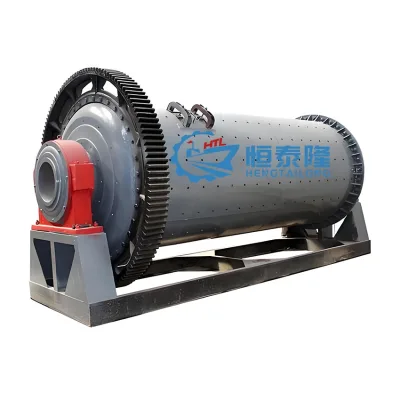


Industrial Horizontal Dry Wet Type Limestone Ball Mill Grinding Machine
$4600.00 - $15000.00
MOQ: 1 set


Mining Machine Grinding Machine High Efficiency Ultrafine Mill Grinding Mill
$35000.00 - $50000.00
MOQ: 1 Sets

Limestone Powder /Minning Equipment/Stone Processing Machine Grinding Mill
$29000.00 - $30000.00
MOQ: 1 Sets

Limestone Stone Processing Powder Making Machine/Minning Equipment Grinding Mill
$10000.00 - $12000.00
MOQ: 1 Pieces

Limestone Powder Making Machine/Minning Equipment/Stone Grinding Mill
$33000.00 - $38000.00
MOQ: 1 Pieces

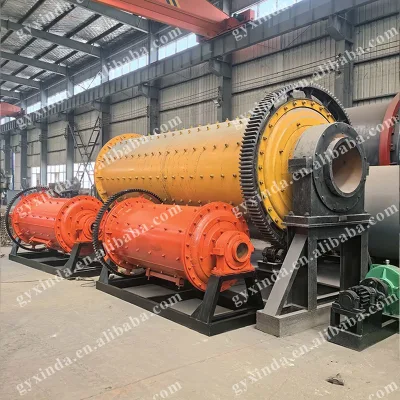

Advanced Ultrafine Grinding Mill for Cement and Limestone Production
$49999.00 - $150000.00
MOQ: 1 set

Flour Mill Limestone Mill Grinding Equipment Limestone Powder Grinder Small Limestone Mill Machine
$60000.00 - $65000.00
MOQ: 1 Pieces

High-Efficiency Limestone Vertical Roller Mill for Optimal Grinding
$125000.00 - $130000.00
MOQ: 1 Sets


Efficient Limestone Grinding Mill with Advanced Technology Features
$125000.00 - $130000.00
MOQ: 1 Sets


Ball Grinder Mill Mining Machine Limestone Machine Stone Grinding Ball Mill
$9500.00 - $10000.00
MOQ: 1 Sets


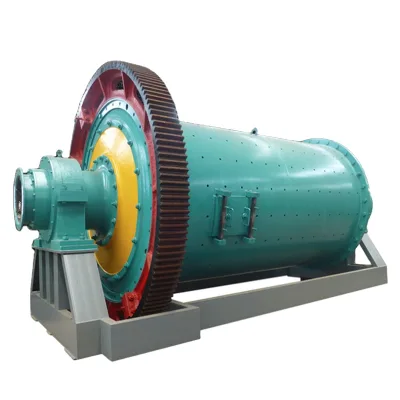


Comprehensive Sourcing Guide
Automatic Semi-Dry Limestone Grinding Mill Sourcing Guide
Sourcing an automatic semi-dry limestone grinding mill requires a disciplined approach to aligning technical specifications with operational goals. Buyers must navigate a market where terminology varies significantly, often blending "ball mill," "grinder," and "grinding mill" into single listings. The core keyword suggests a focus on limestone processing, yet observed product attributes indicate versatility across diverse materials including gold ore, chrome iron ore, fly ash, bituminous coal, coke, and lignite. This breadth implies that while the machine is capable of handling limestone, it is not exclusively dedicated to it. Procurement teams should therefore verify the specific liner materials and grinding media configurations required for limestone to prevent premature wear or contamination, ensuring the "semi-dry" designation aligns with the actual moisture content of the feed material.
The automation level described as "Automatic" in the product attributes suggests a streamlined operational workflow, reducing manual intervention during the grinding process. However, buyers must distinguish between basic automated controls and fully integrated smart systems. The presence of a "Full Design Team" attribute indicates that suppliers may offer custom engineering solutions, which is critical for integrating the mill into existing production lines. Procurement decisions should hinge on whether the automation includes automatic feeding, discharge control, and monitoring systems, or if it merely refers to the motor and engine operation. Clarifying the extent of automation ensures that the purchased equipment meets the desired labor efficiency and production consistency targets.
Product Scope and Observed Listing Signals
The observed market signals reveal a wide variance in product positioning, with prices ranging from $4,600 to $45,000,000 USD. This extreme range suggests that the listings encompass everything from small-scale laboratory units to massive industrial installations, potentially including entire plant configurations rather than just the mill itself. Buyers must carefully scrutinize the "Various Model" and specific model codes like "ZK" or "Dry Grinding Mill" to identify the exact scale of equipment being offered. The minimum order quantity (MOQ) is consistently observed as 1 unit, indicating that suppliers are willing to sell single units, which is advantageous for pilot projects or small-scale operations but requires careful verification of shipping and installation costs for single-item orders.
Product attributes highlight a "New" condition with a "1 Year" warranty, which is standard for new industrial machinery but should be confirmed for critical components like the motor and engine. The "Key Selling Points" of "Long Service Life" and "High Efficiency" are common marketing claims that require technical substantiation. Buyers should look for evidence supporting these claims, such as the type of grinding media or the design of the mill chamber. The "Standard Export Packing" and "Steel Framework" options suggest that the equipment is designed for international shipping, but the single package size of 500x40x70 cm seems inconsistent with the larger dimensions listed (e.g., 1500x3000 mm), indicating that the mill may be disassembled for transport. This disassembly process must be accounted for in the installation and commissioning plan.
Technical Specifications to Verify
The technical specifications provided indicate a motor power range of 15KW to 18.5KW, with an AC motor type and a rotational speed of 20-22r/min. These parameters suggest a medium-scale grinding operation, suitable for processing materials like limestone into fine powders. The output size is specified as 0.074-0.4mm, with the finest particle size reaching 2500 mesh, which is exceptionally fine and requires verification of the classifier system's efficiency. Buyers must confirm whether the "semi-dry" process involves specific moisture control mechanisms or if it simply refers to the feed state. The maximum feeding size of 20-25 mm is a critical constraint that determines the upstream crushing requirements, ensuring that the feed material is appropriately sized before entering the mill.
Dimensional specifications vary, with options like 900x1800 mm, 900x2100 mm, 1200x2400 mm, and 1500x3000 mm, indicating different capacities and footprints. The weight of approximately 1000 kg per unit suggests a robust construction, likely requiring a reinforced foundation. Voltage options include 380V, 415V, and 440V, with customization available, which is essential for compatibility with local power grids. Buyers must verify the power source, as one attribute lists "Gas," which is unusual for a ball mill typically driven by electricity. This discrepancy requires clarification to ensure the correct energy supply is planned for the installation site. The grinding type is listed as "Wet or dry type," so the specific configuration for semi-dry operation must be explicitly defined in the purchase order.
Compliance and Safety Documentation
Compliance with international standards is a key requirement for industrial machinery, and the observed certifications include ISO9001, ISO14000, CE, CCS, and ISO9001-2008. These certifications indicate that the manufacturer adheres to quality management, environmental management, and safety standards, which is crucial for risk mitigation in procurement. Buyers should request copies of these certificates to verify their validity and scope, ensuring they cover the specific model of the mill being purchased. The CE mark, in particular, is essential for equipment intended for use in European markets, indicating conformity with health, safety, and environmental protection standards.
Safety documentation should include detailed operation manuals, maintenance guides, and safety warnings specific to the mill's operation. The "Video outgoing-inspection" attribute suggests that suppliers provide visual evidence of the machine's condition before shipment, which can be a valuable tool for remote quality verification. Buyers should request these videos to inspect the assembly quality, weld integrity, and component installation. Additionally, the "Automatic Grade" implies the presence of electrical control systems, which must comply with relevant electrical safety standards. Procurement teams should ensure that all safety interlocks and emergency stop mechanisms are clearly documented and tested before commissioning.
Cost Drivers and Commercial Terms
The cost of an automatic semi-dry limestone grinding mill is influenced by several factors, including motor power, dimensions, and customization options. The observed price range of $4,600 to $45,000,000 USD highlights the significant impact of scale and complexity on pricing. Buyers should focus on the specific configuration required for their application, avoiding over-specification that drives up costs unnecessarily. The "Customization" attribute indicates that modifications to the mill design, such as liner material or grinding media, can affect the final price. Procurement teams should obtain detailed quotes that break down the cost of standard components versus custom features to identify potential savings.
Commercial terms such as warranty, packing, and shipping are critical components of the total cost of ownership. The "1 Year" warranty covers the equipment, but buyers should clarify whether it includes labor and travel costs for repairs. The "Standard Export Packing" and "Steel Framework" options suggest that packaging costs are included, but buyers should verify if these are sufficient for long-distance sea freight. The "Single gross weight" of 1000.000 kg and "Single package size" of 500x40x70 cm indicate that the equipment is shipped in multiple packages, which affects logistics and handling costs. Buyers should negotiate clear terms for delivery, insurance, and risk transfer to avoid unexpected expenses during transit.
Supplier Qualification and Quality Control
Supplier qualification is essential for ensuring the reliability and performance of the grinding mill. The observed origins in Zhengzhou and Heze, China, indicate a concentration of manufacturers in specific industrial hubs. Buyers should verify the supplier's manufacturing capabilities, including their production capacity, quality control processes, and after-sales service network. The "Full Design Team" attribute suggests that the supplier has engineering resources to support customization and technical problem-solving. Procurement teams should request references from previous clients, particularly those in the limestone or mining industry, to assess the supplier's track record.
Quality control measures should be established before production begins, including factory acceptance tests (FAT) and pre-shipment inspections. The "Video outgoing-inspection" is a basic form of quality verification, but buyers should consider hiring third-party inspection agencies for more comprehensive assessments. Key quality indicators include the precision of the grinding chamber, the durability of the liners, and the performance of the motor and drive system. Buyers should specify acceptance criteria in the purchase agreement, including tolerance levels for output particle size and energy consumption. Regular communication with the supplier during the manufacturing process can help identify and resolve issues early, reducing the risk of delays or defects.
Long-Term Procurement Checks
Long-term procurement success depends on the availability of spare parts and the quality of after-sales support. Buyers should verify the supplier's inventory of critical spare parts, such as grinding balls, liners, and motor components, to minimize downtime during maintenance. The "Long Service Life" claim should be supported by data on the expected lifespan of key components under typical operating conditions. Procurement teams should negotiate service level agreements (SLAs) that define response times for technical support and repair services. Regular maintenance schedules should be established based on the manufacturer's recommendations to ensure optimal performance and extend the equipment's lifespan.
Continuous improvement and technology updates are also important considerations for long-term procurement. Buyers should inquire about the supplier's roadmap for product improvements and whether they offer upgrades for existing equipment. The "Customization" capability suggests that the supplier can adapt the mill to changing production requirements, such as different feed materials or output specifications. Procurement teams should maintain a close relationship with the supplier to stay informed about new technologies and best practices in grinding mill operation. Regular performance reviews of the installed equipment can help identify opportunities for optimization and cost savings, ensuring that the investment continues to deliver value over time.
FAQs
What is the motor power of the automatic semi-dry limestone grinding mill?
The motor power is available in 15KW or 18.5KW configurations depending on the specific model selected. These AC motors ensure efficient operation for processing limestone and other hard materials in mining applications.
Which certifications does the automatic semi-dry limestone grinding mill hold?
The equipment holds ISO9001, ISO14000, CE, and CCS certifications to ensure quality and safety standards. These credentials verify that the manufacturing process meets international requirements for industrial machinery used in mining and stone processing.
Can the automatic semi-dry limestone grinding mill be customized for specific needs?
Yes, customization is available for voltage, model specifications, and packing requirements to suit different project needs. Buyers can request specific dimensions or power sources to align with their existing facility infrastructure and production goals.
What is the warranty period for the automatic semi-dry limestone grinding mill?
The standard warranty period provided is one year for the entire machine assembly. This coverage ensures protection against manufacturing defects and supports long-term operational reliability for buyers in the mining and stone processing sectors.
How is the automatic semi-dry limestone grinding mill packed for export?
The machine is packed using standard export packaging, often featuring a steel framework for added protection during transit. This method ensures the equipment arrives safely at the destination, whether it is Zhengzhou or Heze, China, or further abroad.
What is the maximum feeding size for the automatic semi-dry limestone grinding mill?
The maximum feeding size ranges from 20 to 25 millimeters for optimal grinding performance. This specification allows the mill to efficiently process raw materials like limestone, gold ore, and bituminous coal without clogging the system.