Source Automotive Cooling System Water Pump for engines, AC, and pumps
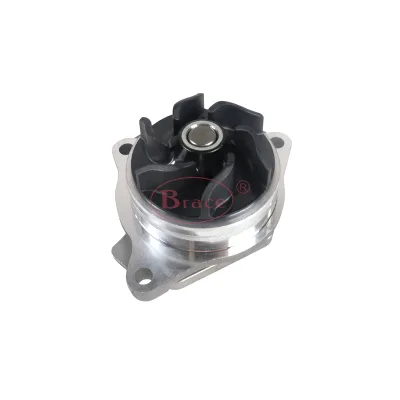
Explore 30 listings for Automotive Cooling System Water Pump options including steel and brass models with certifications like CCC, CE, and RoHS. Buyers can compare specifications such as voltage, flow rate, and pump types to find suitable components for various cooling applications.
Key considerations
Products List




Comprehensive Sourcing Guide
Strategic Sourcing Guide for Automotive Cooling System Water Pumps
The global automotive supply chain relies heavily on the reliability of thermal management components, with the water pump serving as a critical element in the engine cooling system. For procurement professionals sourcing automotive cooling system water pumps, the market presents a complex landscape of materials, certifications, and technical specifications. This guide synthesizes observed market data and trusted category knowledge to provide a disciplined framework for evaluating suppliers and products. The focus remains strictly on verifiable attributes, ensuring that procurement decisions are grounded in factual evidence rather than speculative claims.
Technical Specifications and Component Variability
Understanding the technical diversity of water pumps is the first step in effective sourcing. The market does not offer a monolithic product; rather, it presents a range of configurations designed for specific engine architectures and cooling requirements. Based on observed product attributes, the primary material composition for these units is often steel, which provides the necessary structural integrity for high-pressure environments. However, specific components, such as impellers or internal bearings, may utilize brass to enhance corrosion resistance and reduce friction.
The mechanical design varies significantly between models. Some units are classified as centrifugal pumps, utilizing the theory of centrifugal force to move fluid, while others may be categorized under positive-displacement pumps depending on the specific application. The driving mechanism is another critical differentiator. While traditional mechanical pumps are driven by the engine belt, modern sourcing trends include electric pumps, which offer precise control over cooling rates. These electric variants may feature DC brushless motors (BLDC) or standard DC motors, operating at voltages such as 12V or 24V DC.
Impeller design is equally vital. The observed data indicates the presence of open impellers, which are suitable for specific flow dynamics but require careful selection to prevent clogging. Furthermore, the pump structure can be single-stage, implying a specific pressure generation capability. Buyers must verify the "Max.Head" and "Max.Capacity" for their specific application, as observed ranges include heads under 10 meters and capacities under 50 liters per minute. The working pressure is often described as "High Pressure Pump" in certain contexts, necessitating a review of the specific model's pressure ratings against the vehicle's cooling system requirements.
Compliance and Certification Verification
In the automotive sector, compliance is not merely a formality but a prerequisite for market entry and operational safety. The supply chain for water pumps is heavily regulated, and buyers must rigorously verify the certification status of potential suppliers. Observed product data highlights a consistent presence of international and regional certifications. Commonly cited certifications include CCC (China Compulsory Certification), CE (Conformité Européenne), and RoHS (Restriction of Hazardous Substances). These indicate that the product meets specific safety, health, and environmental protection requirements for the Chinese and European markets.
Beyond these, ISO standards play a pivotal role. The data references ISO certifications, including ISO9001 for quality management and IATF16949, which is the specific automotive quality management standard. The presence of these certifications suggests a supplier's commitment to standardized processes. However, buyers should note that while some listings mention "International" standards or "some different specs," the exact standard applicable to a specific batch must be confirmed. The "prod_standard" field in product data often lists multiple standards, such as ISO9001, CE, RoHS, and IATF16949, but this should be treated as a range of capabilities rather than a guarantee for every unit.
It is essential to distinguish between product certifications and manufacturing process certifications. A supplier may hold ISO9001 for their facility but lack specific product-level certifications for a new pump model. Therefore, procurement teams must request current, valid certificates for the specific product model being sourced, rather than relying on general company claims. The "Standard" attribute often notes "too many specs" or "some different specs," reinforcing the need for detailed verification of the exact standard compliance for the intended application.
Cost Drivers and Pricing Dynamics
The pricing of automotive water pumps is influenced by a complex interplay of factors, including material costs, manufacturing complexity, and certification requirements. The observed price range in the market spans from 0 to 640 USD, a wide variance that reflects differences in product complexity, brand positioning, and order volume. This range indicates that low-cost options exist, likely corresponding to basic steel pumps with standard specifications, while higher-priced units may incorporate advanced features such as electric motors, magnetic driving types, or specialized materials like brass.
Material composition is a primary cost driver. Steel pumps are generally more cost-effective than those incorporating significant brass components or advanced magnetic drive systems. The "Magnetic" driving type observed in some listings suggests a higher manufacturing cost due to the complexity of the magnetic coupling and the associated motor technology. Similarly, the inclusion of "DC Brushless Motor" technology adds to the unit cost compared to traditional mechanical pumps.
Order volume also significantly impacts the final price. The observed Minimum Order Quantity (MOQ) ranges from 1 to 500 units. Suppliers offering an MOQ of 1 are likely catering to sample orders or small-batch customization, which typically carries a higher per-unit cost. Conversely, orders approaching the 500-unit threshold may benefit from economies of scale. Buyers should be aware that the "Customization" attribute is available, which can further influence pricing. Customized packaging, specific model modifications, or tailored specifications will invariably increase the cost compared to standard off-the-shelf inventory.
Typical Applications and Industry Segmentation
Automotive cooling system water pumps are not limited to a single vehicle type; they serve a broad spectrum of applications ranging from standard internal combustion engines to specialized industrial cooling systems. The observed data categorizes these pumps under "Cooling System Auto Engine Water Pump" and "Auto Water Pump Cooling System," clearly identifying their primary use in automotive thermal management. However, the versatility of these components extends to other sectors.
The "Industry" attribute lists "Air Conditioning Pump" and "Assembly: Liquid Pumps," suggesting that the technology is adaptable to HVAC systems and broader liquid handling applications. The "Application" field mentions "Submersible Pump," indicating that certain designs are suitable for underwater or submerged environments, which is a critical consideration for marine or specialized industrial applications. Additionally, the "Cold Style" is noted as "Water-cooled," which is a standard configuration for high-performance engines requiring efficient heat dissipation.
The "Deck" attribute specifies "Double," which may refer to a double-deck housing design or a specific mounting configuration, relevant for engines with complex cooling jacket layouts. The "Muffler Type" is listed as "Center Muffler," a feature that might be relevant for noise reduction in specific engine bay configurations. Buyers must align the pump's application with their specific vehicle or machinery requirements, ensuring that the "Using" attribute matches the intended cooling system architecture.
Supplier Evaluation and Geographic Origins
When evaluating suppliers, geographic origin and production capabilities are key indicators of reliability and logistical efficiency. The observed data consistently points to "Zhejiang, China" and "China" as the primary production origins. Zhejiang is a well-known manufacturing hub in China, particularly for automotive components, offering a mature supply chain and a high density of specialized factories.
Supplier evaluation should extend beyond location to include their capacity for customization and packaging. The "prod_packing" attribute indicates that suppliers offer "Carton" packaging or "According to Client's Request," with some specifying "Standard Export Packing or OEM Packing." This flexibility is crucial for buyers with specific branding or logistics requirements. The "Customization" and "Customized" attributes confirm that many suppliers are willing to adapt products to client needs, which is a significant advantage for OEMs and aftermarket distributors.
However, buyers must exercise caution regarding the "Standard" attribute, which sometimes notes "too many specs" or "some different specs." This suggests that while a supplier may have the capability to meet various standards, the specific compliance of a given order must be verified. The "Service Life" attribute mentions "30,000hrs," a metric that should be treated as an observation of potential performance rather than a guaranteed lifespan for every unit. Buyers should request test data or warranty terms to substantiate such claims.
Quality Control and Long-Term Procurement Considerations
Ensuring long-term supply chain stability requires a robust quality control strategy. The "Protection Level" of "IP68" observed in some listings indicates a high degree of dust and water resistance, a critical feature for pumps operating in harsh environments. However, not all products may meet this standard, and buyers must verify the IP rating for their specific application. The "Performance" attribute lists "Automatic Pump," suggesting that some units come with integrated control systems, which adds a layer of complexity to quality assurance.
Long-term procurement considerations include the "Service Life" and the "Working Pressure" consistency. The "Working Pressure" is described as "High Pressure Pump" in some contexts, which requires rigorous testing to ensure durability under sustained load. Buyers should establish clear acceptance criteria based on the observed specifications, such as the "Max.Head" and "Max.Capacity" limits.
The "Standard" attribute often lists multiple certifications like "ISOCE, RoHS," but the presence of these marks does not guarantee continuous compliance. Procurement teams should implement a system for periodic audits and sample testing to ensure that the quality remains consistent over time. The "Starting Up" attribute mentions "Electric Pump," which introduces electronic components that may require additional quality checks for reliability and longevity.
Comparative Analysis of Product Attributes
To facilitate decision-making, it is helpful to compare the key attributes of different product categories observed in the market. The following table summarizes the primary distinctions between the various types of water pumps and related components found in the sourcing data.
| Attribute Category | Observation A (Standard Auto) | Observation B (Electric/Advanced) | Observation C (Specialized) |
|---|---|---|---|
| Material | Steel | Steel / Brass | Steel |
| Driving Type | Motor (Mechanical implied) | Magnetic / Electric | Motor |
| Model Examples | uf-15, WP-002 | DC60D, DC80D, DC50D | TA50 |
| Certifications | CCC, CE, RoHS | ISO, CE | ISO9001, IATF16949 |
| Pump Type | Centrifugal / Positive-Displacement | Centrifugal | Centrifugal |
| Voltage | N/A (Mechanical) | 12V 24V DC | N/A |
| Protection Level | N/A | IP68 | N/A |
| Origin | Zhejiang, China | China | China |
| Customization | Available | Customized | Available |
This comparison highlights the diversity in the market. Observation A represents the traditional automotive pump, focusing on mechanical reliability and standard certifications. Observation B represents the modern, electric-driven pump with advanced features like magnetic driving and high protection levels. Observation C suggests specialized units with comprehensive quality standards like IATF16949. Buyers must select the category that best aligns with their specific vehicle requirements and performance expectations.
Conclusion
Sourcing automotive cooling system water pumps requires a meticulous approach that balances technical specifications, compliance verification, and cost management. The market offers a wide array of options, from standard steel pumps to advanced electric units with magnetic drives. By focusing on verified attributes such as certifications (CCC, CE, RoHS, ISO), material composition (Steel, Brass), and specific performance metrics (Max.Head, Voltage), buyers can make informed decisions. The observed data underscores the importance of verifying specific model standards and avoiding assumptions about universal compliance. With a clear understanding of these factors, procurement professionals can build a resilient supply chain that ensures the reliability and efficiency of automotive cooling systems.
FAQs
What certifications do automotive cooling system water pumps typically have?
These pumps commonly hold CCC, CE, and RoHS certifications. Some listings also indicate ISO and IATF16949 standards, but buyers must verify the specific certificate for each model as standards vary by batch.
Which materials are used to construct these water pumps?
The primary material is often steel for structural integrity. Certain components like bearings or impellers may utilize brass to reduce friction and enhance corrosion resistance in the cooling system.
Can I find electric automotive cooling system water pumps?
Yes, electric variants are available with DC brushless or standard DC motors. These units typically operate at 12V or 24V DC and offer precise control over cooling rates compared to mechanical drives.
What is the typical price range for these pumps?
The observed price range spans from 0 to 640 USD. Costs vary based on complexity, material composition like brass or steel, and whether the unit includes advanced features like magnetic driving types.
How does the minimum order quantity affect pricing?
MOQs range from 1 to 500 units. Lower quantities often carry higher per-unit costs, while orders approaching 500 units may benefit from economies of scale and lower pricing tiers.
Where are these water pumps manufactured?
Most products originate from Zhejiang, China. This region is a known manufacturing hub offering a mature supply chain for automotive components with flexible packaging options like standard export or OEM packing.