Source Automotive Cooling System Condenser Radiator for Trucks, Cars, Machinery
Compare 22 listings for Automotive Cooling System Condenser Radiator from verified suppliers. View specifications including material, certifications, and customization options to find the right solution for trucks, cars, and industrial machinery applications.
Key considerations
Products List


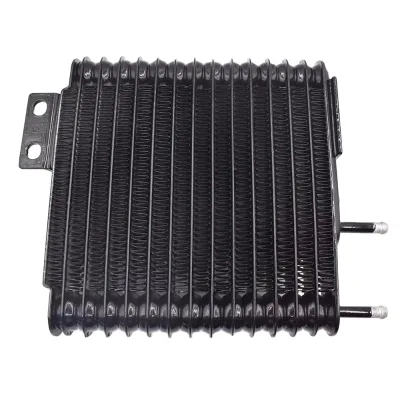
Auto Aluminum Cooling System Plastic Radiator for Car Condenser Oil Cooler Spare Parts
$10.00 - $100.00
MOQ: 100 Pieces


Comprehensive Sourcing Guide
Strategic Sourcing Guide for Automotive Cooling System Condenser Radiators
Navigating the global market for automotive cooling system condensers and radiators requires a disciplined approach that balances technical precision with rigorous supplier verification. The core keyword "Automotive Cooling System Condenser Radiator" encompasses a diverse range of components, from serpentine designs to direct-flow units, each serving specific thermal management needs within vehicle architectures. Buyers must move beyond generic listings to understand the granular specifications that define performance, longevity, and compatibility. This guide provides a structured framework for evaluating products based on observed market data, ensuring procurement decisions are grounded in verifiable facts rather than speculative claims.
Technical Specifications and Design Architecture
The engineering integrity of a radiator or condenser is primarily defined by its material composition, core structure, and fluid dynamics. In the current supply landscape, Aluminum is the dominant material of choice for these components, offering an optimal balance of thermal conductivity and weight reduction. Observed product attributes frequently cite "Aluminum" and "Aluminium" as the primary body materials, which is critical for managing heat transfer efficiency in high-performance automotive applications. The structural design varies significantly; some units are identified as "Serpentine" type, while others utilize a "Direct-flow" configuration. These design choices directly impact the surface area available for heat exchange and the pressure drop across the system.
The core type is another pivotal specification. Data indicates the prevalence of "Tube-fin" structures, which are standard for maximizing heat dissipation in compact spaces. Furthermore, the system architecture often includes a "Sealed Type" structure, ensuring that the cooling fluid remains contained and protected from external contaminants. The cooling fluid itself is a variable that requires careful attention; while "Industrial Water" and "Alcohol" are noted as potential fluid types in broader industrial contexts, automotive applications typically demand specific coolant formulations compatible with the radiator's internal chemistry. Buyers should verify the specific "Cooling Fluid Type" and "Cooling Water" compatibility for their specific vehicle model, as mismatches can lead to corrosion or freezing issues.
The physical dimensions and packing standards also play a role in logistics and installation. Observed standard dimensions include specific measurements such as "28cm * 19cm * 22cm" or larger industrial pallets like "807060cm". These variations suggest that the market serves both compact passenger vehicles and larger machinery or heavy-duty trucks. The "Product Model" codes, such as "CP648", "JDC-27001", and "ZHF1786LY", serve as unique identifiers for these configurations. When sourcing, it is essential to cross-reference these model numbers with the vehicle's original equipment manufacturer (OEM) specifications to ensure a precise fit.
Compliance, Certification, and Regulatory Standards
In the automotive sector, regulatory compliance is not merely a formality but a prerequisite for market entry and operational safety. The supply chain for radiators and condensers is heavily regulated, with a wide array of certifications observed in product listings. Key certifications include "ISO", "CE", "RoHS", "CCC", and "IATFISO". The presence of "IATFISO" suggests adherence to international automotive quality management standards, which is critical for suppliers targeting major OEMs. "CE" certification indicates compliance with European health, safety, and environmental protection standards, while "RoHS" ensures the absence of hazardous substances, a requirement for electronics and materials used in modern vehicles.
It is important to note that certification status can vary between individual product listings. Some entries list "ISO,CE,CCC" while others specify "TSCold Style:Water-cooled" alongside certification data. Buyers must verify that the specific batch or model they intend to purchase carries the necessary certifications for their target market. For instance, selling into the Chinese market may require "CCC" certification, whereas European exports demand "CE". The "Standard" attribute also varies, with some products listed as "Customizable" and others adhering to specific dimensional standards. This variability underscores the need for buyers to request explicit certification documentation for the exact SKU before finalizing a purchase order.
Cost Drivers and Pricing Dynamics
The pricing of automotive cooling components is influenced by a complex interplay of material costs, manufacturing complexity, and order volume. The observed price range in the market spans from $6.6 to $2,000 USD. This wide disparity reflects the diversity of the products, ranging from small, simple condensers to large, complex radiator assemblies with integrated fans and sensors. The "Aluminum" material cost is a significant driver, as global fluctuations in metal prices directly impact the final unit cost. Additionally, the "Customization" attribute is a major cost factor; products that are "Customizable" or feature specific OEM codes like "Dz11241845501" often command higher prices due to the specialized tooling and engineering required.
Minimum Order Quantity (MOQ) is another critical cost driver. The observed MOQ range is between 1 and 500 units. Suppliers offering an MOQ of 1 are typically catering to sample orders or small-scale testing, while those requiring 500 units are geared toward mass production. Buyers must align their procurement volume with the supplier's MOQ structure to optimize unit economics. Furthermore, the "Condition" of the product, whether "New" or refurbished, affects pricing, though the data primarily points to new industrial and automotive units. The "Packing" method, such as "Carton", "Netural Package with Carton", or "Polywood", also adds to the logistics cost, especially for heavy aluminum components that require robust protection during transit.
Typical Applications and Performance Metrics
Automotive radiators and condensers are integral to the thermal management of a wide range of vehicles and machinery. The "Application Fields" listed include "Machinery" and general "Automotive vehicle" use. The "System Type" is often described as "Combined", indicating that these units may handle multiple cooling functions, such as engine cooling and intercooler duties. Performance metrics are equally important; observed attributes highlight "Low Noise Fan" and "Double-speed fan" capabilities, which are essential for maintaining cabin comfort and operational efficiency. The "Life" expectancy of these components is a key performance indicator, with some listings citing a lifespan of "10000h", suggesting robust durability for long-haul or industrial applications.
The "Cooling Fluid Brand" and "Water Temperature Sensor Type" are specific details that buyers must verify for compatibility. While "Great Wall" is mentioned as a fluid brand in some contexts, and "Digital Type" sensors are observed, these details must be matched against the vehicle's specific requirements. The "Type" of the cooling system, whether "Air-Cooled" or "Water-cooled", dictates the design of the radiator. "Water-cooled" systems, often associated with "TSCold Style", are prevalent in high-performance engines, while "Air-Cooled" variants may be used in specific auxiliary applications. Understanding these application nuances ensures that the selected component can handle the thermal load of the specific vehicle or machinery.
Supplier Evaluation and Sourcing Strategy
Evaluating suppliers requires a focus on their ability to meet the diverse technical and logistical demands of the automotive industry. The "Product Origin" is consistently listed as "Hangzhou, China" or simply "China", indicating a strong manufacturing hub for these components. Buyers should verify the specific location and capacity of the supplier to ensure they can meet demand without supply chain disruptions. The "Shipping" options, including "Air" and "Sea", provide flexibility for different urgency levels, but buyers must consider the lead times associated with each method.
The "Customization" availability is a significant differentiator among suppliers. Some suppliers offer "Customizable" standards and models, while others provide fixed OEM codes like "Dz11241845501". Buyers should assess whether the supplier has the engineering capability to adapt products to specific needs or if they are limited to off-the-shelf solutions. The "Sample" availability is also a crucial factor; most suppliers indicate they "Accept" samples, allowing buyers to validate quality before committing to large orders. When evaluating suppliers, it is essential to review their "Certification" portfolio and ensure it aligns with the regulatory requirements of the target market.
Quality Control and Long-Term Procurement Considerations
Quality control in the radiator and condenser sector must address both material integrity and assembly precision. The "Sealed Type" structure and "Tube-fin" core require rigorous testing to prevent leaks and ensure efficient heat transfer. Buyers should request test results or quality assurance reports that verify the "Condition" of the product as "New" and confirm the absence of defects. The "Noise Level" and "Performance" attributes, such as "Low Noise Fan", should be validated through acoustic testing to ensure they meet the vehicle's comfort standards.
Long-term procurement considerations involve establishing a relationship with suppliers who can provide consistent quality and support. The "Life" expectancy of "10000h" is a target that must be maintained over the product's lifecycle. Buyers should also consider the "Packing" standards, such as "Wooden Pallet" or "Polywood", which protect the components during long-distance shipping and storage. Ensuring that the "Product Model" remains consistent across orders is vital for maintaining inventory compatibility. Finally, buyers should monitor the "Standard" and "Specification" updates, as automotive regulations and engineering standards evolve, requiring suppliers to adapt their products accordingly.
Summary of Key Sourcing Parameters
To facilitate a streamlined procurement process, the following table summarizes the critical parameters observed in the market for automotive cooling system condensers and radiators. This summary serves as a checklist for buyers to verify against supplier data sheets and product listings.
| Parameter Category | Observed Attributes & Values | Verification Requirement |
|---|---|---|
| Material | Aluminum, Aluminium | Confirm alloy grade and thickness |
| Certification | ISO, CE, RoHS, CCC, IATFISO | Match to target market regulations |
| Type/Design | Serpentine, Direct-flow, Tube-fin | Verify fitment and flow dynamics |
| Dimensions | 28cm19cm22cm, 807060cm | Check against vehicle bay space |
| Fluid/Sensor | Industrial Water, Alcohol, Digital Type | Ensure chemical compatibility |
| Performance | Low Noise, Double-speed fan, 10000h Life | Validate acoustic and durability specs |
| Origin | Hangzhou, China | Confirm factory location and capacity |
| Packing | Carton, Polywood, Wooden Pallet | Assess logistics and protection needs |
| MOQ/Price | 1-500 units, $6.6-$2000 USD | Align with budget and volume needs |
By adhering to these structured guidelines and verifying each parameter against the specific needs of the application, buyers can navigate the complex landscape of automotive cooling components with confidence. The focus on evidence-based evaluation ensures that the sourced radiators and condensers meet the rigorous demands of modern automotive engineering, delivering reliability and performance throughout their operational life.
FAQs
What certifications do automotive cooling system condenser radiators have?
These components typically hold ISO, CE, RoHS, CCC, and IATFISO certifications. Buyers must verify that the specific batch carries the necessary certifications for their target market, as requirements vary between regions like Europe and China.
Which materials are used for automotive cooling system condenser radiators?
Aluminum is the dominant material choice for these components due to its thermal conductivity and weight reduction benefits. The observed products consistently cite Aluminum or Aluminium as the primary body material for managing heat transfer efficiency.
How is the pricing structured for automotive cooling system condenser radiators?
The observed price range spans from 6.6 to 2000 USD depending on complexity and customization. Costs are driven by material prices, manufacturing complexity, and order volume, with customization often commanding higher prices due to specialized tooling.
Can I find automotive cooling system condenser radiators with low noise fans?
Yes, observed attributes highlight low noise fan and double-speed fan capabilities for operational efficiency. These performance metrics are essential for maintaining cabin comfort and ensuring the component handles the thermal load of the specific vehicle.
What is the typical minimum order quantity for automotive cooling system condenser radiators?
The observed minimum order quantity ranges between 1 and 500 units for different suppliers. Buyers must align their procurement volume with the supplier's MOQ structure to optimize unit economics, as some cater to samples while others target mass production.
Where are automotive cooling system condenser radiators manufactured?
The product origin is consistently listed as Hangzhou, China or simply China. Buyers should verify the specific location and capacity of the supplier to ensure they can meet demand without supply chain disruptions.